
Article Summary: Key Insights at a Glance
- The global thermal printing market is estimated at $51.29 billion in 2025 and is forecast to reach $79.07 billion by 2033 at a 5.7% CAGR, with North America holding 35.85% of global share and direct thermal technology accounting for 52.59% of revenue.
- In the label consumables layer, direct thermal labels held 59.55% of volume in 2025, and mobile printers are the fastest-growing printer type at a projected 6.38% CAGR through 2031. Growth is shifting toward small, wireless and phone-driven devices.
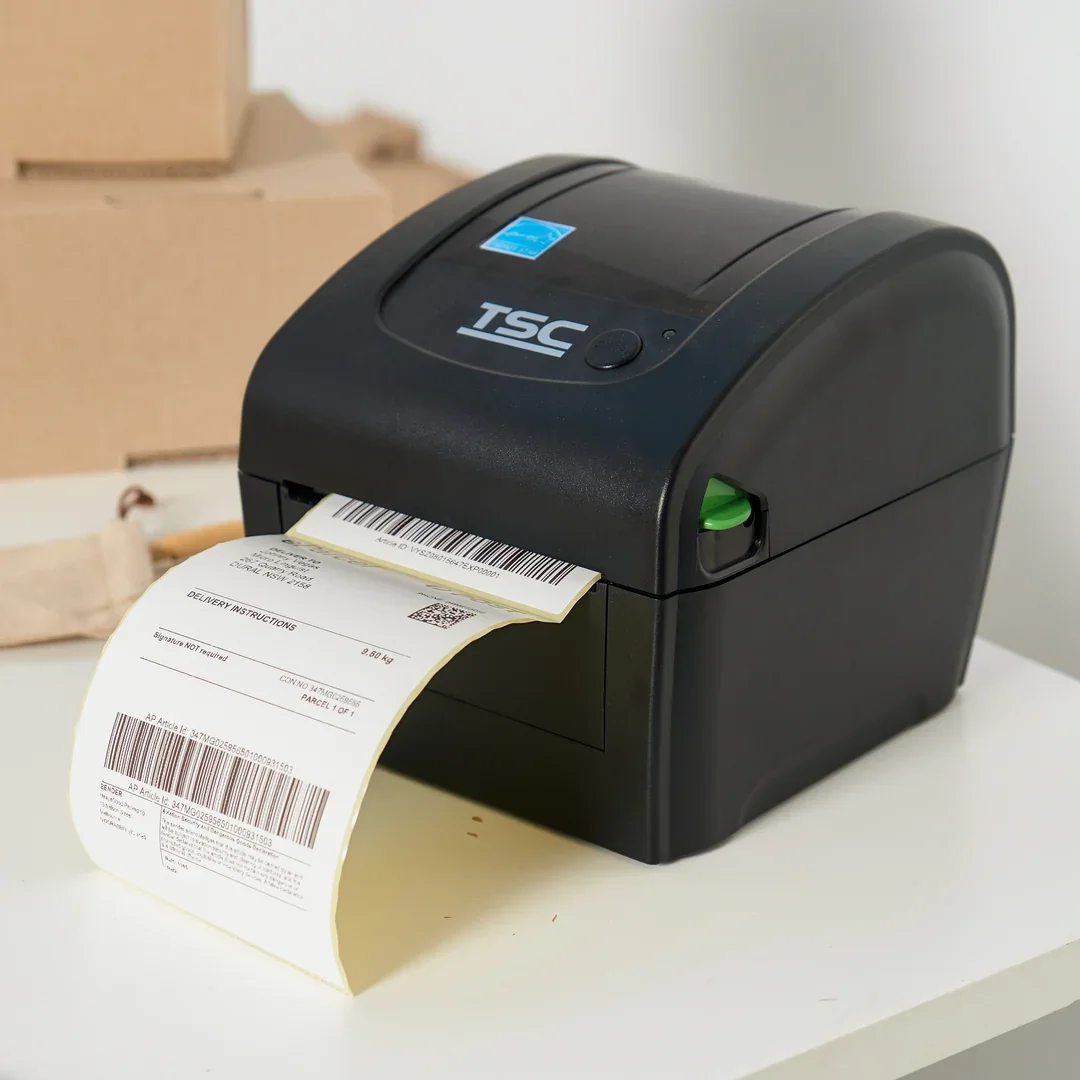
- The desktop 4x6 shipping printer is now a commodity. The category's best-selling open-format unit sits at roughly $199 with more than 16,000 ratings, capable Bluetooth units start near $60, and Chinese factories quote mid-range 4x6 printers at $28 to $55 wholesale. Hardware margin for a new seller is thin.
- The loudest buyer frustration is consumable lock-in. RFID-chipped label rolls on some branded printers mean third-party labels simply will not print, and one widely cited cost comparison puts branded labels at roughly $0.21 each against $0.02 to $0.05 for open-format generics.
- The second and third complaint clusters are skipped and wasted labels caused by calibration and page-size mismatches, and driver friction on Mac, Chromebook and phones. Buyers now actively search for printers and labels that avoid all three problems.
- Regulation is quietly reshaping the label aisle. Washington State's ban on bisphenols in thermal paper took effect on 1 January 2026, California requires Proposition 65 warnings for BPA and BPS, and the EU has banned BPA in thermal paper since 2020. Phenol-free labels are moving from niche to default.
- The strongest opportunity for a small seller is specialty and small-format label rolls (kraft, clear, waterproof synthetic, freezer-grade, jewellery tags and round labels) for open-format 2 inch printers, with 45% to 55% gross margins on a lightweight, low-return product.
- Standard 4x6 labels are a margin trap on Amazon FBA. They are heavy and cheap, so fulfilment fees consume most of the spread. The 4x6 opportunity lives in phenol-free positioning, direct-to-consumer subscriptions and merchant-fulfilled multipacks.
- Used open-format printers on eBay are a capital-light arbitrage, with pre-owned units of the leading open-format model listing between roughly $70 and $110, and a steady stream of buyers leaving locked ecosystems.
- Tariff exposure changed again in July 2026. A new 12.5% Section 301 forced-labor duty applies to China-origin goods from 24 July 2026, stacking on the existing 7.5% List 4A duty that covers many printers, while the temporary Section 122 surcharge has expired. Landed cost models built before August are out of date.
1. Actionable Insights First: Executive Opportunity Summary
Top 3 Selling Opportunities Right Now
Opportunity 1: Specialty and small-format label rolls for open-format printers
Opportunity Score: 9/10
The explosion of 2 inch Bluetooth label makers and compact desktop printers has created millions of devices that need consumables, and the branded rolls sold alongside them are narrow in range. Makers, candle and bakery businesses, jewellery sellers and home organisers want kraft labels, clear labels, round labels, waterproof synthetic stock, freezer-grade adhesive and small jewellery tags. Most of that demand is poorly served by generic white rolls.
The product is light, cheap to ship, rarely returned and easy to photograph. It also sidesteps the biggest risk in the category, because the seller is not responsible for firmware, drivers or radio certification. The one caution is ecosystem locks: some popular mini printer brands reject rolls that are not their own, so compatibility must be tested and stated precisely.
- Profit margin range: 45% to 55% gross before advertising
- Typical price points: $12.99 to $34.99 for multi-roll packs and kits
- Growth signal: mobile printers are projected to grow faster than any other printer type through 2031, and every new device sold creates recurring roll demand
Opportunity 2: Tested used and refurbished open-format printers on eBay
Opportunity Score: 8/10
The open-format desktop printer has become the default recommendation for small sellers precisely because it accepts any 4x6 direct thermal label. That reputation carries into the used market, where pre-owned units list well below new pricing and sell quickly to new resellers setting up a first shipping station. Commercial desktop units from the major industrial brand are also retired from warehouses in volume and resold with plenty of life left in them.
The edge comes from testing and presentation. A listing that shows a calibrated test print, a cleaned printhead, the firmware or configuration page and a starter stack of labels solves the exact anxiety that keeps buyers away from private sellers: will it actually print my label on day one?
- Profit margin range: 30% to 45% net
- Typical acquisition: $40 to $80 for consumer open-format units, $90 to $180 for retired commercial desktop units
- Typical resale: $70 to $120 consumer, $180 to $320 commercial
- Growth signal: buyers leaving RFID-locked ecosystems actively search for printers that accept any label
Opportunity 3: Phenol-free 4x6 labels sold direct and by subscription
Opportunity Score: 8/10
The 4x6 shipping label is the highest-volume consumable in the category and one of the worst products to push through Amazon FBA, because a 500-label fanfold stack is heavy relative to its price. The winning play is to reposition it. Phenol-free, BPA-free and BPS-free labels answer a real regulatory shift, command a price premium, and suit a subscription model where the seller ships monthly or quarterly replenishment direct from a US 3PL at negotiated rates.
This is a relationship product rather than a search product. Sellers who capture a small business once tend to keep it for years, because nobody wants to think about labels.
- Profit margin range: 25% to 38% net on direct and merchant-fulfilled orders
- Typical price points: $24.99 to $34.99 per 500-label phenol-free stack, with 4 and 8 stack subscription tiers
- Growth signal: bisphenol restrictions in Washington, Proposition 65 warnings in California and the long-standing EU ban all push buyers toward phenol-free stock
Quick Action Items
Source small-format specialty rolls first. Request samples of kraft, clear, round, synthetic waterproof and freezer-grade rolls in 2x1, 1.5x1, 2x2 and 40x30 mm formats from label converters in Guangdong, Fujian and Zhejiang. Test every roll in at least four open-format 2 inch printers before placing a 1,000 kit order, and reject any supplier whose gap spacing varies between rolls.
Build listings around the compatibility promise. Put the printer families the roll fits in the title and the first image, and state clearly which locked ecosystems it does not fit. A precise "does not work with" line prevents more returns than any other single listing change in this category.
Buy used printers in the January to March lull and list from August. Businesses that closed after the holidays and warehouses refreshing hardware release units early in the year. Target open-format consumer units under $80 and commercial desktop units under $180, then clean, calibrate, photograph a test label and include 50 starter labels.
Bundle for the pain point, not the product. A "No-Skip Starter Kit" that combines a printer-specific calibration card, a printhead cleaning pen and a 100-label test stack outperforms bare labels, because skipped labels are the most common complaint new owners have.
Shoot images that answer the three objections. Show the label roll loaded in a named open-format printer, show a phone printing a label with no computer in frame, and show a clean test strip with no skipped labels. These three images address lock-in, driver friction and calibration in one scroll.
Red Flags to Avoid
Claiming compatibility with RFID-locked printers. Some branded desktop printers and some mini label makers only print on chipped rolls. Listing a generic roll as compatible with those devices produces immediate returns, one-star reviews and possible listing suppression. If a device reads a chip, leave it off the compatibility list unless the rolls are genuinely tested and chipped for it.
Standard 4x6 labels through FBA at commodity prices. Weight-based fulfilment fees consume most of the margin on a $15 to $17 stack. Unless the product carries a premium (phenol-free, synthetic, colour) or ships merchant-fulfilled, it is a volume business for converters with their own freight rates, not for a new private label brand.
Private label wireless printers without proper certification and firmware support. Any Bluetooth or Wi-Fi device sold in the US needs a valid FCC authorisation, and marketplaces check for it. Beyond compliance, a printer whose driver fails on the latest macOS release or whose app breaks after an update will generate returns faster than it generates sales. Do not use platform trademarks or certification claims you cannot document.
Best Entry Point for New Sellers
Product recommendation: A six-roll "Maker Label Kit" for open-format 2 inch thermal printers: white 2x1, kraft 1.5x1, clear 2x1, waterproof synthetic 2x2, freezer-grade 2x1 and 1 inch round, plus a printhead cleaning pen and a printed fit chart.
Primary marketplace: Amazon US
Secondary marketplace: TikTok Shop, with the same kit demonstrated on candle, bakery and jewellery packaging
Price range: $26.99 to $34.99 for the kit
Startup cost breakdown for a 1,000 kit first order:
| Line Item | Cost | Notes |
|---|---|---|
| Specialty label rolls (6,000 rolls) | $2,520 | $0.42 average FOB per roll across six SKUs, 2 inch and under |
| Printhead cleaning pens (1,000 units) | $350 | $0.35 FOB, 99% isopropyl alcohol tip |
| Retail box and compatibility insert | $900 | $0.90 per kit, printer fit chart printed inside the lid |
| Sea freight and drayage | $1,100 | LCL, roughly 0.5 kg per kit, about $1.10 per kit |
| Duties and customs brokerage | $1,550 | Planning allowance of about 35% of FOB plus brokerage. Confirm HTS line with a broker |
| Compatibility testing and samples | $600 | Four open-format 2 inch printers bought at retail plus three supplier sample rounds |
| Product photography and video | $900 | Lifestyle set plus two 30-second demos for TikTok Shop |
| Brand registry, GS1 barcodes, trademark filing | $650 | Required for A+ content and brand protection |
| Launch advertising (8 weeks) | $2,000 | Sponsored products plus TikTok Shop affiliate commissions |
| Contingency | $1,100 | Roughly 10% buffer for reprints, rejected rolls and freight swings |
| Total startup cost | $11,670 | Roughly $11.67 fully loaded per kit at 1,000 kits |
Why this works:
Three things make this the right first move. First, the kit is lightweight and compact, so freight and fulfilment fees stay small relative to price, which is the opposite of the 4x6 label problem. Second, the buyer already owns a printer and has a specific packaging job to finish, which makes the purchase low-risk and low-return. Third, the kit lets a new brand learn which formats sell before committing to deeper single-SKU inventory, and every winning roll can later be sold individually or by subscription.
The alternative entry point, importing a private label 4x6 printer, fails on the same three counts. It is heavy, it competes against a $199 category leader and $60 Bluetooth units, and the seller inherits every driver, app and connectivity complaint the buyer ever has.
2. Quick Data Scans: Marketplace Sales Opportunity Analysis
Legend
| Score Range | Meaning | Action |
|---|---|---|
| 8 to 10 | High demand, low to moderate competition | Enter now |
| 5 to 7 | Moderate demand, moderate competition | Test carefully |
| 1 to 4 | Low demand or oversaturated | Avoid |
Marketplace Opportunity Matrix
| Marketplace | Opportunity Score | Product Segment | Est. Weekly Unit Sales | Est. Weekly Revenue | Avg Price Range | Est. Profit Margin |
|---|---|---|---|---|---|---|
| Amazon US | 9 | Specialty small-format label rolls (kraft, clear, round, synthetic, freezer) | 260 to 480 | $4,200 to $8,600 | $12.99 to $22.99 | 45% to 55% |
| 7 | Phenol-free 4x6 label multipacks (merchant fulfilled preferred) | 120 to 240 | $3,000 to $7,200 | $24.99 to $34.99 | 22% to 35% | |
| 6 | Private label open-format 4x6 printers (USB, Bluetooth, Wi-Fi) | 40 to 110 | $4,000 to $13,000 | $89 to $139 | 22% to 30% | |
| 3 | New branded commercial printers (third-party resale) | 8 to 20 | $3,700 to $12,000 | $460 to $700 | 5% to 10% | |
| eBay US | 8 | Tested used open-format and commercial desktop printers (calibrated, starter labels included) | 25 to 60 | $3,000 to $11,000 | $70 to $320 | 30% to 45% |
| 8 | Printheads, platen rollers and replacement parts | 40 to 90 | $1,800 to $5,400 | $25 to $90 | 40% to 55% | |
| 7 | Labels for legacy notched-label printers (non-RFID models only) | 90 to 180 | $1,600 to $3,600 | $14 to $24 | 35% to 48% | |
| Shopify / DTC | 8 | Phenol-free 4x6 label subscriptions | 60 to 150 | $1,800 to $5,200 | $29 to $39 per box | 30% to 38% |
| 7 | No-Skip starter kits and shipping station bundles (printer, labels, stand, cleaning) | 15 to 40 | $2,000 to $5,600 | $129 to $149 | 28% to 36% | |
| TikTok Shop | 7 | Specialty sticker and label rolls for small-business packaging | 180 to 400 | $2,700 to $6,800 | $12.99 to $19.99 | 40% to 52% |
| 5 | 2 inch Bluetooth mini label makers (crowded, price-led) | 90 to 250 | $2,300 to $7,500 | $22 to $35 | 18% to 30% | |
| Walmart Marketplace | 6 | Label multipacks, 4x6 and 2 inch | 70 to 160 | $1,200 to $3,500 | $15 to $25 | 25% to 40% |
| 5 | Entry 4x6 printer and label bundles | 20 to 60 | $1,900 to $6,500 | $89 to $119 | 20% to 28% | |
| Etsy | 7 | Craft-supply label rolls (kraft, gold foil look, round, jewellery tags) | 60 to 140 | $900 to $2,500 | $12 to $22 | 42% to 55% |
| Amazon Business / B2B | 6 | Case-pack 4x6 fanfold for warehouses | 15 to 40 cases | $1,200 to $3,600 | $80 to $95 per case | 15% to 24% |
| Faire (wholesale) | 5 | Home organisation label maker gift sets for boutiques | 10 to 30 | $300 to $900 | $28 to $32 wholesale | 30% to 40% |
| Target Plus | 5 | Home organisation label makers and pantry label rolls | 25 to 70 | $700 to $2,100 | $20 to $35 | 25% to 35% |
| Instagram Shopping | 5 | Branded packaging label kits for creators | 10 to 30 | $300 to $1,000 | $24 to $39 | 40% to 50% |
| Facebook Marketplace | 5 | Local used printer acquisition and flips | 3 to 10 | $250 to $1,200 | $60 to $150 | 30% to 45% |
| Mercari | 4 | Used mini label makers and loose rolls | 10 to 25 | $200 to $600 | $15 to $30 | 20% to 35% |
| Temu-style discount marketplaces | 3 | Generic mini printers and plain white rolls | Variable | Variable | $8 to $20 | Under 12% |
Table Notes and Methodology
Unit and revenue estimates describe what a competent single seller with an established, well-reviewed listing can expect during a typical in-season week between September and January, not total marketplace category volume. Summer weeks outside Prime Day typically run at 60% to 75% of the values shown, and the October to mid-December shipping peak can run 25% to 40% above the top of each range.
Margin figures are net after marketplace fees, payment processing, inbound and outbound shipping, an assumed 3% to 6% return rate on consumables and 6% to 10% on printers, and an advertising allocation of 8% to 12% of revenue. They do not include the seller's own labour, storage rent or software subscriptions. Duty assumptions reflect China-origin goods after the July 2026 Section 301 changes described in Section 4.
Opportunity scores weigh four inputs equally: repeat purchase potential, competitive density on the channel, the seller's ability to differentiate on something other than price, and exposure to firmware, driver or compatibility failure. Private label printers score lower than their revenue suggests because the seller carries every software complaint. New branded commercial printers score lowest because listings for the same model on Amazon swing widely in price between resellers, with no first-party store to anchor them, which leaves almost no durable spread.
Used channel figures assume the seller performs basic servicing: printhead cleaning, sensor calibration, a documented test print and inclusion of starter labels. Listings without that work sell at private-party prices and score two to three points lower.
3. Deeper Context: Market Landscape and Buyer Intelligence
A. Market Overview
Category Definition and Size
The thermal label printer category covers any device that uses a heated printhead to create an image on label stock, either directly on heat-sensitive paper (direct thermal) or by melting ink from a ribbon (thermal transfer). For a marketplace seller it splits into five practical segments:
- Desktop 4x6 shipping printers, the workhorse of small e-commerce. Direct thermal, 203 or 300 dpi, USB, Bluetooth or Wi-Fi.
- Mini and portable label makers, 1 to 2 inch Bluetooth devices driven from a phone app, used for product, price, organisation and small shipping labels.
- Networked office label printers, which add Ethernet and Wi-Fi for shared use and often rely on cassette systems.
- Commercial desktop and industrial printers, built for warehouses, labs and manufacturing, usually supporting both direct thermal and thermal transfer.
- Consumables and parts, including label rolls, fanfold stacks, ribbons, printheads, platen rollers and cleaning supplies.
The broad thermal printing market, which includes receipt, barcode, RFID and industrial printing, is estimated at $51.29 billion in 2025 and projected to reach $79.07 billion by 2033, a 5.7% CAGR. North America accounted for 35.85% of that market in 2025, and direct thermal technology held 52.59% of revenue. An independent estimate places the market at $53.90 billion in 2026, rising to $74.34 billion by 2033 at a 4.7% CAGR, so the growth rate range across analysts is roughly 4.5% to 6%.
The labels themselves are tracked by area. The thermal print label market is estimated at 595.32 million square meters in 2026, growing at 3.62% annually to 711.16 million square meters by 2031. Direct thermal held 59.55% of that volume in 2025, thermal transfer is growing fastest at 4.72%, and mobile printers are projected to grow at 6.38% a year, faster than any other printer type. North America represented 35.12% of label demand.
Sellers should treat these headline figures with care. The largest numbers are dominated by enterprise, retail point-of-sale and industrial buyers who never shop on Amazon. The addressable market for an independent seller is the small business and prosumer slice: desktop 4x6 units, mini label makers, and the consumables they burn through every week.
Seasonality is moderate rather than extreme. Shipping label demand follows parcel volume, peaking from October to December, while mini label makers pick up during back-to-school, home organisation and gifting windows.
Product Evolution and Recent Trends
The category has moved through three phases that matter to sellers.
Phase one, before roughly 2018, belonged to commercial brands. Small sellers printed on inkjet half-sheets or bought legacy commercial units secondhand. Desktop thermal printers were office equipment with office pricing.
Phase two, roughly 2018 to 2022, brought the direct-to-consumer 4x6 printer. Open-format devices priced around $150 to $200 made thermal printing a default for home-based resellers, and Chinese OEMs followed with cheaper Bluetooth clones. The pandemic parcel boom accelerated adoption.
Phase three, 2023 to 2026, is commoditisation plus lock-in backlash. Entry Bluetooth 4x6 printers now start around $60, and wholesale pricing for mid-range 4x6 units has stabilised around $28 to $55. At the same time, one major brand added RFID-chipped rolls to its newer desktop line, so third-party and older labels no longer work, and some mini label maker brands reject unbranded rolls or place features behind app subscriptions. The result is a market where hardware is cheap and trust is expensive.
Four trends define 2026:
Open format as a selling point. Reviewers now lead with whether a printer accepts any label. The leading open-format model is repeatedly described as the one machine that does not try to lock buyers into its own consumables.
Driverless and phone-first printing. AirPrint, Bluetooth and Wi-Fi printing without driver installs is now a purchase criterion, particularly for Mac and iPad users. One comparison notes that a popular budget brand requires a macOS driver install while the category leader runs driverless across Mac, Windows, Chromebook, Android and iOS.
Phenol-free consumables. Bisphenols help the thermal coating darken, but regulation is pushing them out. Washington State prohibits bisphenols in thermal paper from 1 January 2026, California requires Proposition 65 warnings, and the EU ban has applied since 2020.
Thermal printers used for product labels, not just shipping. Makers use compact thermal printers for ingredient labels, price tags, candle warnings and jewellery tags, which widens demand for specialty stock such as kraft, clear, synthetic and colour labels. Ribbon-based colour mini printers are an early signal of where this goes next.
Leading Brands and Market Disruptors
Rollo is the reference brand for small e-commerce. Its USB model sits around $199 with more than 16,000 Amazon ratings, and its wireless model around $200, with dual-band Wi-Fi, AirPrint, Bluetooth and USB. Its strength is open-format labels and driverless setup. Its main limitations are 203 dpi resolution and some reports of label waste.
MUNBYN has pushed hard into the value tier, with entry models starting near $60 and the RW403B, rated for up to 970,000 labels, selling around $76 on sale against a $120 list price. It is widely reviewed as quiet and reliable, though its Mac setup requires a driver.
DYMO remains well known, but the LabelWriter 5XL and 550 series only print on DYMO rolls with an Automatic Label Recognition chip. One published cost comparison puts first-year cost at 10,000 labels at $2,344.91 for the 5XL against $200 to $500 in labels on an open-format printer. This is the single largest source of buyer resentment in the category.
Zebra dominates warehouses. The ZD421 supports both direct thermal and thermal transfer, prints up to 6 inches per second at 203 dpi, and offers USB, Bluetooth, Wi-Fi and Ethernet. On Amazon, however, there is no first-party store, and the same model has been observed ranging from $466 to $800 between resellers. Zebra's consumer-focused ZSB line uses proprietary cartridges.
Brother occupies the networked office position. The QL-1110NWBc prints at 300 dpi with Wi-Fi and Ethernet for around $325, but it relies on DK cassettes rather than standard open rolls.
Niimbot and Phomemo lead the mini label maker boom, with devices frequently sold between roughly $18 and $32 and heavy TikTok visibility. Niimbot app reviews highlight subscription fees, crashes after updates and rejection of non-branded labels, which creates room for open-format alternatives such as models marketed explicitly as having no RFID lock.
Chinese OEMs including Rongta, Zhuhai Elmer (AIMO), Zywell and a long list of Xiamen and Guangzhou factories supply much of the unbranded and private label market. Minimum orders range from a handful of units on marketplace listings to around 50 units for more customised builds.
Private label opportunity assessment: Open at the consumables tier, cautious at the entry printer tier, closed above it. Labels are a physical product whose quality is visible and testable. Printers are firmware, drivers, apps and radio certification, and a first-time importer inherits every failure.
Price Tiers and Popular Brands
| Tier | Price Range | Representative Products | Reseller Margin | Sourcing Strategy |
|---|---|---|---|---|
| Tier 1: Consumables | $8 to $40 | 4x6 fanfold and rolls, 2 inch rolls, specialty stock, cleaning pens (generic 4x6 runs about $0.02 to $0.05 per label) | 25% to 55% | Private label from converters in Guangdong, Fujian and Zhejiang, or US converters for heavy 4x6 stock |
| Tier 2: Mini label makers | $18 to $40 | Niimbot D11 and B1, Phomemo D30, M100 and M110 (D11 from $23.99, M100 at $31.99) | 15% to 30% | OEM from Shenzhen and Xiamen factories. Crowded and app-dependent |
| Tier 3: Entry open-format 4x6 | $60 to $130 | MUNBYN RW403B, JADENS, Polono, Phomemo 241BT, iDPRT | 20% to 30% | OEM at $28 to $55 FOB for mid-range units, with firmware and certification checks |
| Tier 4: Prosumer and networked | $199 to $350 | Rollo USB and Rollo Wireless (about $200), Brother QL-1110NWBc (about $325), DYMO LabelWriter 5XL | 8% to 15% | Authorised resale only, or used acquisition |
| Tier 5: Commercial desktop and industrial | $450 to $3,000+ | Zebra ZD421 (about $450 to $695), Honeywell, SATO, TSC industrial lines | 5% to 12% new | Authorised channel only for new stock. Used and refurbished units are the seller opportunity |
B. Buyer Persona Deep Dive
Demographic splits below are modelled estimates built from marketplace review profiles and seller community composition, not survey data.
Persona 1: The Home-Based Reseller
Demographics: Age 28 to 55. Roughly 55% female, 45% male. Sells secondhand goods on eBay, Poshmark, Mercari or Whatnot from a spare room or garage, shipping 5 to 40 parcels a day.
Purchase motivations, ranked: 1) Lowest cost per label. 2) Printing straight from marketplace apps on a phone or laptop. 3) Speed during end-of-day packing.
Price sensitivity: High. Sweet spot $60 to $200 for the printer, and $0.02 to $0.04 per label.
Pain points:
- Buying a printer and discovering it only accepts expensive branded rolls.
- Labels skipping or printing across two labels after switching suppliers.
- Page size settings that print a tiny label in the corner or cut off the barcode.
- Bluetooth dropouts when printing from a phone.
- Label stacks running out mid-batch because the reorder was forgotten.
What they are solving for: A cheap, reliable, set-and-forget shipping desk.
Decision factors: Open-format support, review volume, phone printing and price per label.
Brand loyalty: Low on labels, moderate on printers once one works.
Persona 2: The Etsy and Market Maker
Demographics: Age 24 to 45. Roughly 78% female, 22% male. Makes candles, soap, baked goods, jewellery or stickers and sells on Etsy, at markets and through Instagram.
Purchase motivations, ranked: 1) Professional-looking product labels. 2) Label stock variety such as kraft, clear and round. 3) Durability against oil, water and handling.
Price sensitivity: Moderate. Sweet spot $25 to $120 for a printer and $12 to $25 per specialty roll pack.
Pain points:
- Plain white rolls that make handmade packaging look generic.
- Labels smudging on oily or damp products.
- Small text and logos looking soft at 203 dpi.
- App-based mini printers placing templates or fonts behind a subscription.
- Uncertainty about which specialty rolls fit their printer.
What they are solving for: Branded packaging without paying a print shop.
Decision factors: Photos of real products, material options, compatibility lists and print sharpness.
Brand loyalty: Moderate. Loyal to a roll supplier that consistently fits.
Persona 3: The Scaling Shopify Brand
Demographics: Age 28 to 45. Roughly 52% male, 48% female. Ships 50 to 400 orders a day with two to six staff, using ShipStation, Shippo or a similar platform.
Purchase motivations, ranked: 1) Reliability at volume. 2) Multi-station printing over a network. 3) Predictable consumables cost.
Price sensitivity: Low on hardware, high on consumables. Sweet spot $200 to $700 per printer, with labels bought by the case.
Pain points:
- Printers that slow down or jam during peak batches.
- Driver and network setup that nobody on the team owns.
- Inconsistent label quality between bulk shipments.
- Carrier scan failures from faded or low-contrast barcodes.
- Warehouse staff asking whether the labels are safe to handle all day.
What they are solving for: A shipping line that does not stop in December.
Decision factors: ZPL support, duty rating, supplier consistency and phenol-free certification.
Brand loyalty: High once a workflow is established.
Persona 4: The Home Organiser
Demographics: Age 25 to 50. Roughly 82% female, 18% male. Discovers mini label makers through TikTok and Instagram organisation content.
Purchase motivations, ranked: 1) An aesthetic, uniform look. 2) Ease of use from a phone. 3) A device that looks good on a shelf.
Price sensitivity: High. Sweet spot $18 to $35, with repeat roll purchases at $8 to $15.
Pain points:
- Apps that crash or stop printing after an update.
- Features or templates hidden behind subscriptions.
- The printer refusing labels that are not the brand's own.
- Labels peeling in fridges, freezers and bathrooms.
- Blank labels feeding out with no clear reason.
What they are solving for: A tidy home that looks as good as the video that inspired it.
Decision factors: Look of the device, colour and clear roll options, video demonstrations and price.
Brand loyalty: Low. Switches quickly after a frustrating app update.
Persona 5: The Warehouse and Operations Buyer
Demographics: Age 30 to 58. Roughly 64% male, 36% female. Buys for a 3PL, distributor, lab or light manufacturer.
Purchase motivations, ranked: 1) Uptime and spare parts availability. 2) Compatibility with existing systems. 3) Compliance on materials and durability.
Price sensitivity: Low on uptime, high on consumables at scale. Sweet spot $450 to $1,500 per commercial unit and negotiated case pricing.
Pain points:
- Printheads and platen rollers wearing out with long lead times on replacements.
- Legacy printers without current drivers.
- Labels failing in cold storage or abrasion.
- Media sensor calibration drifting after roll changes.
- Supplier substitutions that change adhesive or coating without notice.
What they are solving for: Fewer stoppages and fewer mislabelled shipments.
Decision factors: Parts availability, material specifications, consistent supply and invoicing terms.
Brand loyalty: High on printer brand, moderate on label supplier.
Persona 6: The Food and Cottage Producer
Demographics: Age 30 to 60. Roughly 70% female, 30% male. Runs a bakery, meal prep, sauce, honey or cottage food business under local labelling rules.
Purchase motivations, ranked: 1) Clear ingredient and date labels. 2) Labels that survive refrigeration and freezing. 3) Quick batch printing of variable information.
Price sensitivity: Moderate. Sweet spot $60 to $250 for a printer and $15 to $30 for freezer-grade roll packs.
Pain points:
- Standard adhesive letting go in the freezer.
- Direct thermal print darkening near heat sources.
- Difficulty fitting ingredient panels on small labels.
- Not knowing whether labels are safe near food packaging.
- Date codes smudging on condensation.
What they are solving for: Compliant, legible labels that survive the product's real life.
Decision factors: Adhesive rating, temperature range, phenol-free claims and label size options.
Brand loyalty: Moderate to high once a roll performs.
Persona 7: The Locked-Out Upgrader
Demographics: Age 35 to 65. Roughly 50% male, 50% female. Owned an older branded desktop printer, upgraded to a newer model and found it will not print on existing or third-party labels.
Purchase motivations, ranked: 1) Escaping proprietary consumables. 2) Keeping existing label stock useful. 3) Avoiding another bad purchase.
Price sensitivity: Moderate. Sweet spot $100 to $250 for a replacement.
Pain points:
- Existing label inventory becoming unusable overnight.
- "Genuine labels required" lockout messages, sometimes even on genuine rolls.
- Branded labels costing several times more than generics.
- Feeling misled by a feature marketed as a convenience.
- Uncertainty about which alternatives truly accept any label.
What they are solving for: Control over their own consumables.
Decision factors: Explicit open-format claims, reviews from other switchers and a clear return policy.
Brand loyalty: Negative toward the previous brand, which makes them unusually receptive to a trustworthy newcomer.
C. Keyword and Search Trends
Search Volume and Term Structure
Search behaviour divides into four intent classes, and profitability runs close to inverse to volume. Volume ranges below are modelled estimates for US search across Google and marketplace search.
Class 1: Category discovery. Terms like thermal label printer, shipping label printer, label maker and 4x6 label printer. Highest volume, roughly 180,000 to 300,000 combined US monthly searches at the Q4 peak, falling to roughly 120,000 to 170,000 mid-year. Lowest conversion and highest advertising cost.
Class 2: Brand and model. Terms like Rollo, MUNBYN, Zebra ZD421, DYMO 5XL, Niimbot D11 and Phomemo M110. Moderate volume, roughly 80,000 to 150,000 combined, dominated by brand stores and authorised resellers.
Class 3: Consumables and compatibility. Terms like 4x6 fanfold labels, labels for Phomemo M110, clear thermal labels, kraft thermal labels, freezer thermal labels and labels compatible with Rollo. Moderate volume, roughly 60,000 to 110,000 combined, highest repeat purchase and the most accessible to independent sellers. This is where independent sellers should concentrate.
Class 4: Problem and trust. Terms like label printer skipping labels, label printer for Mac without driver, label printer without RFID, BPA-free thermal labels and label maker no subscription. Lower volume, roughly 15,000 to 35,000, but these searchers are ready to switch and receptive to an honest brand.
Seasonal Demand Patterns
| Window | Dates | Share of Annual Volume | Demographic Skew | Seller Action |
|---|---|---|---|---|
| New business season | January to March | 20% to 24% | New resellers and makers setting up a first shipping station after the holidays | Push starter kits and printer bundles. Acquire used printers from closing businesses |
| Spring and Prime Day | April to July | 20% to 23% | Deal-driven replacement buyers and home organisers | Run Prime Day deals on multipacks. Place Q4 consumables orders by late June |
| Organisation and ramp | August to mid-October | 22% to 26% | Back-to-school and home organisation buyers, then sellers stocking for Q4 | List used printer inventory. Lead mini label maker content with pantry and classroom use |
| Shipping peak | Mid-October to December | 30% to 35% | Every active seller, plus gift buyers for mini label makers | Keep 4x6 labels in stock at all costs. Pause printer ads after early December when delivery windows close |
Rising and Declining Queries
Directional changes below are estimated from search trend patterns and marketplace listing activity, and should be read as relative signals rather than exact measurements.
| Direction | Query Theme | Est. YoY Change | Interpretation |
|---|---|---|---|
| Rising | Label printer that works with any labels, no RFID | +85% | Direct backlash to chipped consumables. The core positioning opportunity of 2026 |
| Rising | Phenol-free and BPA-free thermal labels | +70% | Regulation reaching small sellers. Premium pricing is accepted |
| Rising | AirPrint and driverless label printer for Mac | +55% | Mac, iPad and phone-first sellers want no driver installs |
| Rising | Label maker without subscription | +48% | App paywalls on mini printers are pushing buyers to open alternatives |
| Rising | Clear, kraft and waterproof thermal labels | +44% | Makers using thermal printers for product labels, not just shipping |
| Rising | 2 inch label printer for small business | +38% | Product and price labelling moving onto compact thermal devices |
| Rising | Colour thermal label printer and ribbon labels | +33% | Early interest in ribbon-based colour mini printers |
| Rising | Used and refurbished shipping label printer | +27% | Price-sensitive new resellers entering the category |
| Declining | Half-sheet inkjet shipping labels | -29% | Thermal adoption among small sellers is close to complete |
| Declining | Legacy USB-only desktop printer drivers | -24% | Older commercial models aging out of home use. Parts demand remains |
| Declining | Branded chipped label rolls | -18% | Buyers switching ecosystems rather than paying the premium |
| Declining | Thermal receipt printer for shipping | -15% | Buyers now understand receipt printers cannot handle 4x6 stock |
Consumer Insights from Community Forums
Discussion across seller and organisation communities, including r/Flipping, r/EtsySellers, r/Etsy, r/ecommerce, r/shopify, r/smallbusiness, r/eBaySellers, r/poshmark, r/Mercari, r/Organization and r/homeorganization, together with app store reviews, long-form printer reviews and manufacturer troubleshooting guides, surfaces a consistent complaint hierarchy. These are the twelve themes that recur most often:
Consumable lock-in. Printers that only accept chipped, branded rolls are the most resented design choice in the category. Buyers describe existing label stock becoming useless after an upgrade.
Skipped and wasted labels. Skipping is widely described as the most common thermal printer fault, usually caused by a misaligned or dirty media sensor, and it returns every time the label stock changes unless the printer is recalibrated.
Page size and driver mismatches. The system treats each label as a page, so a wrong default page size produces tiny labels, cropped barcodes or content spilling across two labels. PDF viewers can override driver settings without warning.
Mac, Chromebook and phone setup friction. Driver installs on macOS and limited Chromebook support push buyers toward driverless and AirPrint devices.
Bluetooth dropouts at the budget tier. Reviewers note that connectivity complaints concentrate in the sub-$70 price band.
App subscriptions and paywalls on mini printers. Users of popular mini label makers report subscription requirements, crashes after updates and templates that cannot be edited.
Label rejection and reader errors. Some mini printers reject rolls that are not brand-supplied, which owners often misread as a defect after long troubleshooting sessions.
Fading and heat damage. Printed direct thermal labels typically last six months to two years, less when exposed to heat, light or humidity, which surprises makers using them as product labels.
Chemical safety questions. Buyers increasingly ask whether labels contain BPA or BPS, especially warehouse staff and food producers who handle them all day.
Adhesive failure in cold and damp environments. Freezer, fridge and bathroom use exposes standard adhesive.
Soft print on small text and logos. 203 dpi is fine for carrier barcodes but looks soft on small product labels and dense codes.
Price confusion on commercial printers. Buyers comparing reseller listings for the same commercial model see wide price gaps and struggle to know who is authorised.
What these complaints tell a seller:
The category's unsolved problems are not print speed or resolution. They are control and confidence: control over which labels to buy, and confidence that the first label will print correctly without a driver hunt. A seller who guarantees open compatibility, tests every roll in named printers, ships a calibration card with every order and states material chemistry plainly is solving the problems the big brands either created or ignore.
4. Tools and Resources: Sourcing Decision Framework
Private Label Sourcing Calculator
| Product Type | Factory Price | MOQ | Shipping | Duties | Landed Cost | Amazon Fees | Total Cost | Retail Price | Profit Margin |
|---|---|---|---|---|---|---|---|---|---|
| 4x6 fanfold labels, 500 count (standard direct thermal, perforated) | $3.25 | 2,000 | $0.95 | $1.14 | $5.34 | $7.85 | $13.19 | $16.99 | 22.4% |
| 4x6 fanfold labels, 500 count (phenol-free, BPA and BPS free) | $4.60 | 2,000 | $0.95 | $1.61 | $7.16 | $9.05 | $16.21 | $24.99 | 35.1% |
| 2 inch label rolls, 3 pack (2x1 inch, open-format core, perforated) | $1.20 | 1,000 | $0.18 | $0.42 | $1.80 | $5.30 | $7.10 | $12.99 | 45.3% |
| Clear waterproof synthetic rolls, 2 pack (2x2 inch, freezer-grade adhesive) | $2.10 | 1,000 | $0.22 | $0.73 | $3.05 | $6.00 | $9.05 | $16.99 | 46.7% |
| Maker Label Kit (six specialty rolls, cleaning pen, fit chart) | $3.77 | 1,000 | $1.10 | $1.32 | $6.19 | $8.70 | $14.89 | $29.99 | 50.4% |
| 2 inch Bluetooth mini label maker (203 dpi, rechargeable, FCC authorised) | $9.50 | 1,000 | $0.60 | $1.90 | $12.00 | $8.10 | $20.10 | $29.99 | 33.0% |
| 4x6 open-format printer, USB and Bluetooth (203 dpi, 150 mm/s, auto calibration) | $38.00 | 300 | $3.80 | $7.60 | $49.40 | $22.90 | $72.30 | $99.99 | 27.7% |
| 4x6 open-format printer, Wi-Fi and AirPrint (203 dpi, driverless, auto calibration) | $55.00 | 300 | $3.80 | $11.00 | $69.80 | $28.90 | $98.70 | $139.99 | 29.5% |
Standard Assumptions Used
Factory price methodology. Label prices reflect FOB quotes typical of converters in Guangdong, Fujian and Zhejiang, with 4x6 direct thermal labels modelled at about $0.0065 per label and phenol-free stock about 40% higher. Printer prices sit within the published wholesale range of roughly $28 to $55 for mid-range 4x6 units, with Wi-Fi and AirPrint builds at the upper end. Prices assume a repeat order with an established supplier, not a first sample order, which typically runs 15% to 25% higher.
Shipping assumptions. Sea freight, LCL, port to Amazon fulfilment centre including drayage and inbound placement. Paper labels are dense and heavy, which is why 4x6 stacks carry freight costs that look disproportionate to their factory price. Air freight is not modelled and would make standard 4x6 labels unprofitable.
Duty rates. Printers are modelled under HTS 8443.32, where many China-origin lines such as 8443.32.1040 carry an additional 7.5% Section 301 List 4A duty. Since 24 July 2026, a separate 12.5% Section 301 forced-labor duty applies to China-origin goods unless an exemption applies, and it stacks on the original China layer. The temporary Section 122 surcharge expired on the same date and is not included. Printer duty is therefore modelled at about 20% of FOB. Label products are modelled with a more conservative 35% planning allowance, because paper label classifications vary and some fall under higher Section 301 lists. Vietnam-origin goods currently attract the 12.5% forced-labor layer but not the original China layer. China-origin shipments also no longer qualify for de minimis entry. Tariff schedules have changed repeatedly, so confirm every 10-digit classification and rate with a licensed customs broker before paying a deposit.
Fee breakdown. Amazon figures combine a 15% referral fee with estimated FBA fulfilment charges scaled by size and weight tier. 4x6 stacks fall into heavier large standard tiers, while small rolls and kits sit in lighter tiers. Sellers who fulfil heavy label stacks themselves or through a 3PL with negotiated carrier rates can typically recover 8 to 15 percentage points of margin and should model that separately.
MOQ context. Label converters commonly accept 1,000 to 2,000 units per SKU for printed cores and custom packaging, and lower quantities for plain stock. Printer factories range from very low trial quantities on marketplace listings to around 50 units for customised builds, with 300 units a realistic minimum for branded packaging and firmware settings. Wireless devices require valid FCC authorisation, which should be confirmed with the factory before ordering.
Retail benchmarking. Retail prices are set against observed comparables: open-format 4x6 printers from about $60 to $200, networked units around $325, commercial desktop units from about $450, mini label makers from about $18 to $32, and generic 4x6 labels at roughly $0.02 to $0.05 per label. The calculator avoids the very bottom of each band, because the cheapest listings in this category attract the compatibility complaints a new brand cannot afford.
Margin notes. Margins are gross profit after landed cost and marketplace fees only. They do not deduct advertising, which realistically consumes 8% to 12% of revenue during launch and 4% to 8% at steady state, nor returns, which run 3% to 6% on consumables and 6% to 10% on printers. A 50% calculated margin therefore translates to roughly 35% to 40% net contribution in a mature account. The standard 4x6 line shows why commodity labels are a poor FBA product: the calculated margin is thin before advertising.
Key Takeaways
The printer is a commodity and the label is the business. With open-format printers from about $60 and a category leader at about $200, the recurring purchase is where a small seller earns durable margin.
Weight decides where 4x6 labels should be sold. Standard stacks barely clear a margin on FBA. Phenol-free positioning, subscriptions and merchant fulfilment turn the same product into a viable line.
Specialty small-format rolls are the best entry point in 2026. They are light, testable, rarely returned and underserved by the brands that sell the devices.
Compatibility honesty is the brand. Lock-in, skipped labels and driver friction dominate complaints. A seller who states exactly what fits, what does not, and how to calibrate will out-convert a cheaper listing.
Re-cost everything after July 2026. The new forced-labor Section 301 layer changed China-origin landed costs overnight, and any model built earlier in the year understates duty.
Additional Strategy Tables
Strategy A: Bundle Architecture and Attach Rate
| Bundle | Contents | Target Persona | Bundle Price | Sum of Parts | Est. Margin |
|---|---|---|---|---|---|
| Maker Label Kit | Six specialty rolls, cleaning pen, printed fit chart | Etsy and Market Maker | $29.99 | $41.94 | 50% |
| No-Skip Starter Kit | 100-label 4x6 test stack, 2 inch test roll, printer-specific calibration card, cleaning pen | Home-Based Reseller | $14.99 | $19.97 | 48% |
| Freezer and Pantry Pack | Freezer-grade 2x1, clear 2x2, round 1 inch rolls | Food and Cottage Producer, Home Organiser | $21.99 | $28.97 | 47% |
| Switcher Pack | 4 x 500 phenol-free 4x6 stacks, open-format compatibility guide, cleaning pens | Locked-Out Upgrader | $79.99 | $99.96 | 34% |
| Shipping Station Bundle | Open-format Wi-Fi printer, 500 phenol-free labels, fanfold tray, cleaning kit | Home-Based Reseller, Scaling Brand | $149.99 | $184.95 | 31% |
Strategy B: Seasonal Inventory Planning Calendar
| Month | Consumables Action | Used Printer Action | Marketing Focus | Notes |
|---|---|---|---|---|
| January | Restock 4x6 after peak, launch starter kits | Buy from closing businesses and warehouse refreshes | New business setup | Resolution and new-seller demand is real and practical |
| February to March | Test new specialty formats | Keep buying under target prices | Makers preparing spring markets | Best time for supplier sampling and compatibility testing |
| April to May | Place orders for Prime Day stock | Service and photograph units | Home organisation content | Allow 6 to 9 weeks sea freight plus inbound time |
| June | Place Q4 consumables orders | Hold inventory | Prime Day preparation | Tariff changes can land mid-year. Re-cost before paying deposits |
| July | Prime Day deals on multipacks | List a small share of units | Deal shoppers | Avoid deep discounts on specialty kits |
| August to September | Second Q4 order arrives | List most used inventory | Back-to-school and organisation | Mini label maker gifting starts to build |
| October to November | Never stock out of 4x6 | Sell through at full price | Shipping efficiency and phenol-free messaging | Peak parcel volume. Subscription sign-ups rise |
| December | Hold stock, pause printer ads mid-month | Clear remaining units | Gift sets for mini label makers | Printer demand drops once delivery windows close |
Sources and References
Grand View Research, Thermal Printing Market Size and Share Report, 2026 to 2033
Coherent Market Insights, Thermal Printing Market Size and Forecast to 2033
Mordor Intelligence, Thermal Print Label Market Size, Share and Industry Research Analysis 2026 to 2031
Global Market Insights, Industrial Label Printer Market Size and Share 2026 to 2035
Shippo, 5 Best Shipping Label Printers for E-commerce Stores, 2026 update
Shopify, The Best Thermal Label Printers for 2026: A Buyer's Guide
Cuttles, Label Printer Reviews and 4x6 Thermal Label Printer buying guides, 2026
GadgetsChamp, Best Thermal Shipping Label Printers and Best 4x6 Thermal Label Printers, 2026
TechRadar, MUNBYN RealWriter 403B review and deal coverage
Smith Corona Barcode Blog and LabelValue, DYMO LabelWriter 5XL and 550 series label compatibility coverage
Label LIVE, Armis Labels and McAuley Labels, thermal printer troubleshooting and calibration guides
NIIMBOT App, Apple App Store user reviews
Alibaba.com, 4x6 thermal printer and direct thermal label supplier listings and wholesale pricing
4x6Labels.com, Taylor and Doolly, phenol-free and BPA-free direct thermal label guidance
U.S. Customs and Border Protection Ruling N336858, classification under HTS 8443.32.1040
The Trade Lab, Section 301 Tariffs 2026 guide, reviewed July 2026, referencing 91 FR 47318
Seller community discussion across r/Flipping, r/EtsySellers, r/ecommerce, r/shopify, r/smallbusiness, r/eBaySellers and r/Organization