
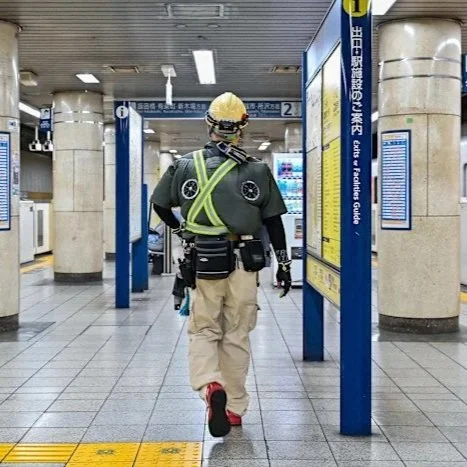
Article Summary: Key Insights at a Glance
- Air conditioned clothing (fan-cooled jackets, vests and hoodies) is one of the fastest growing niches in wearable technology, with the global category valued near $1.8 billion in 2025 and projected to compound at roughly 11 percent annually through the mid-2030s.
- The US market is still early. Japan has had a mature fan jacket industry since the early 2000s, while American buyers are only now discovering the category through TikTok, jobsite word of mouth and record heat seasons.
- Four complaints dominate every review corpus: batteries that die before the shift ends, fan noise that makes conversation and phone calls impossible, the inflated "balloon man" silhouette, and garments that cannot be washed without destroying the electronics.
- The single largest unserved segment is ANSI-compliant hi-vis fan apparel. Almost no low-cost seller offers a Class 2 or Class 3 certified fan-cooled garment, yet construction, roadwork, utility and warehouse buyers are legally required to wear one.
- Factory pricing for a two-fan jacket with battery runs $11 to $28 per unit at moderate volume. Retail in the US sits between $39 and $189 depending on positioning, giving disciplined private label operators 38 to 55 percent net margins after fees, freight and duty.
- Duty exposure is the biggest modeling risk. Synthetic apparel from China stacks MFN, Section 301 and the Section 122 surcharge into an effective 30 to 50 percent range, and the lithium battery component adds separate compliance cost.
- Seasonality is brutal and predictable. Roughly 70 percent of US category revenue lands between May and August, which means inventory decisions made in January determine the entire year's profit.
- The best entry point for a new seller is a quiet, slim-cut cooling vest with a removable 12V battery and washable fan modules, priced at $69 to $89, launched on Amazon in March with a Shopify hi-vis line following in June.
- B2B and safety-distributor channels are dramatically less competitive than Amazon and carry higher order values. A single utility contractor kitting out a 40-person crew is worth more than 200 consumer orders.
- The category's biggest credibility problem is the word "air conditioned." Fan garments do not chill air, they accelerate sweat evaporation. Brands that explain this honestly convert better and get returned less.
1. Executive Opportunity Summary
Top 3 Selling Opportunities Right Now
Opportunity 1: ANSI Class 2 Hi-Vis Fan-Cooled Vest
Opportunity Score: 9/10
Product segment: Certified high-visibility fan vest with 12V removable battery, reflective tape, and washable fan modules.
Marketplace combination: Amazon Business plus direct outreach to safety distributors and Shopify B2B.
Profit margin range: 44 to 55 percent net.
Growth context: Occupational heat exposure has become a compliance topic rather than a comfort topic. OSHA issued a revised Heat National Emphasis Program on April 10, 2026, citing the continued need for heat-related outreach, compliance assistance, and enforcement in workplaces where workers may face serious heat-related illness or injury. The original Heat National Emphasis Program expired April 8, 2026, and was replaced two days later with a revised, expanded program effective through April 2031. Safety managers now need documented cooling interventions, and almost nobody is selling them a garment that is simultaneously fan-cooled and hi-vis certified. The overlap between the two product worlds is close to empty on every US marketplace.
Why it scores 9: high average order value, repeat institutional purchasing, weak competition, defensible certification moat, and a buyer who does not price shop the way a consumer does.
Opportunity 2: Quiet, Slim-Fit Cooling Vest for Non-Jobsite Buyers
Opportunity Score: 8/10
Product segment: Low-decibel dual-fan vest cut close to the body, in neutral colorways, sized to US measurements rather than Asian sizing.
Marketplace combination: Amazon primary, TikTok Shop secondary, Shopify DTC for the premium version.
Profit margin range: 40 to 50 percent net.
Growth context: The consumer half of this category is being created right now by heat waves, theme park visitors, festival goers, dog walkers, motorcyclists, gardeners and menopausal buyers. These shoppers reject the workwear aesthetic outright. Almost every listing on the market today is styled as jobsite gear in silver or navy with a boxy cut, which leaves the entire lifestyle segment underserved.
Why it scores 8: rising search volume, near-zero brand loyalty, easy visual differentiation, and a buyer willing to pay a premium for something that does not look industrial.
Opportunity 3: Battery and Fan Module Upgrade Ecosystem
Opportunity Score: 8/10
Product segment: High-capacity 26,000 mAh battery packs, quiet replacement fan units, universal fan-to-garment adapter rings, and spare charging cables.
Marketplace combination: eBay and Amazon, with an attach-rate play on your own Shopify store.
Profit margin range: 48 to 62 percent net.
Growth context: Millions of fan garments have already been sold globally. Their weakest components are the battery and the fan motor, and both fail long before the fabric does. Nobody has built the aftermarket brand for this. The accessory economics are excellent because the items are small, light, high-margin and repeat-purchase.
Why it scores 8: low unit weight keeps freight cheap, the buyer already owns the garment so acquisition cost is minimal, and the failure cycle guarantees repeat demand.
Quick Action Items
- Source from the Dongguan and Shenzhen cluster before February. The garment-electronics hybrid factories concentrated around Dongguan, Shenzhen and Xiamen quote $11 to $28 per unit for two-fan jackets at MOQs between 50 and 500 pieces, and their capacity books out from March onward as Japanese and Korean buyers place their summer orders first. Get samples in hand in November, place production in December or January.
- Buy the certification, not just the garment. Insist on UN38.3 test reports for the battery, an IEC 62133 cell certificate, and an FCC SDoC for the fan controller. If you are building hi-vis, require an accredited ANSI/ISEA 107 test report on the finished garment, not on the fabric roll. This documentation is what unlocks the safety distributor channel and protects you from Amazon compliance takedowns.
- Time inventory to a March landing. US search volume for cooling apparel begins climbing in April, peaks in late June through July, and collapses in September. Product landed in May has already missed the best 30 percent of the season, and product landed in July is next year's inventory.
- Differentiate on the four complaints, not on price. Battery runtime, fan noise, silhouette and washability are the four axes buyers actually judge. A garment that runs 18 hours on low, sits under 42 decibels, has a tailored cut and detachable fans will outsell a cheaper competitor at a 40 percent price premium.
- Photograph the fit on real bodies in real conditions. The category's dominant visual problem is that garments look absurd inflated. Show the garment at rest and inflated, on multiple body types, under a hi-vis vest, worn while driving, and with the fans removed for washing. Include a decibel comparison graphic and a runtime chart. These four assets alone lift conversion measurably against listings that use factory renders.
Red Flags to Avoid
Red flag 1: The undifferentiated $35 Amazon clone. The low end of this category is a bloodbath of unbranded listings shipped from the same handful of Guangdong factories, competing purely on price, with review averages hovering in the low threes. Margin after PPC, returns and storage frequently lands under 12 percent. Entering here is entering a race you cannot win.
Red flag 2: Lithium battery compliance and shipping exposure. Fan garments ship with lithium-ion packs, which triggers dangerous goods rules on air freight, restricts some 3PL and FBA intake, requires UN38.3 documentation, and creates a real product liability tail. Sellers who treat the battery as just another component discover this at the port. Budget for compliance testing and for the higher cost of sea freight with proper DG declaration.
Red flag 3: Overpromising the word "cooling." The physics are specific. A fan-attached jacket transfers ambient air underneath the garment and promotes the evaporation of sweat; the company that developed the original design does not recommend its use in hot, humid environments because the fan transfers hot air that can exceed body temperature to the skin surface. Listings that promise refrigerated air generate a return rate that destroys the P&L. The counterintuitive research finding is that these garments still work in extreme heat, but the mechanism is evaporative, not refrigerative, and the marketing has to say so.
Best Entry Point for New Sellers
Recommendation: A quiet, slim-cut, two-fan cooling vest with a removable 12V 20,000 mAh battery, detachable fan modules for machine washing, sized to US body measurements, in three neutral colorways.
Primary marketplace: Amazon US.
Secondary marketplace: TikTok Shop for June and July demand spikes, with Shopify as the margin capture layer.
Price range: $69 to $89 retail, positioning above the commodity cluster and below the tool-brand tier.
Detailed startup cost breakdown for a 500-unit first order:
| Cost Item | Detail | Cost |
|---|---|---|
| Product samples | 8 samples from 4 suppliers, air freight included | $420 |
| Unit cost | 500 units at $16.80 FOB, vest with battery and 2 fans | $8,400 |
| Tooling and branding | Custom fan bezel mold, woven labels, hangtags, poly mailers | $1,150 |
| Battery compliance testing | UN38.3 report, IEC 62133 cell cert, FCC SDoC | $1,600 |
| Sea freight and DG handling | LCL, approx 3.1 CBM, dangerous goods surcharge | $1,340 |
| Duties and fees | Stacked rate modeled at 38 percent of FOB plus MPF and HMF | $3,290 |
| Customs brokerage and bond | Single entry bond, brokerage, ISF filing | $480 |
| Photography and video | Two-model shoot, inflated and at-rest sets, 3 short-form videos | $900 |
| Amazon launch PPC | First 60 days of sponsored products and brand defense | $2,400 |
| Brand registry and admin | Trademark filing, GS1 barcodes, insurance binder | $1,250 |
| Total startup capital | 500-unit launch, fully compliant | $21,230 |
Why this works: The vest form factor sidesteps the two worst complaints in the category simultaneously. It has no sleeves, so it cannot trap air in the arms and produce the balloon silhouette that buyers mock, and it layers under existing workwear or over a t-shirt without looking like specialist equipment. A removable battery means the garment goes in the washing machine, which is the single most requested feature in the review corpus and the one nearly every budget seller ignores. Detachable fans mean a $9 replacement part instead of a $70 warranty claim. At $79 you sit in clean air above the $35 clone cluster and well below the tool-brand kits, in a band where buyers evaluate on features rather than on price alone. The 500-unit order is small enough to survive being wrong and large enough to unlock real factory pricing and custom branding.
2. Marketplace Sales Opportunity Analysis
Opportunity Score traffic light ranges:
- 8-10: High demand, low to moderate competition (ENTER NOW) - Green
- 5-7: Moderate demand, moderate competition (TEST CAREFULLY) - Yellow
- 1-4: Low demand or oversaturated (AVOID) - Red
Marketplace Opportunity Score Product Segment Est. Weekly Unit Sales Est. Weekly Revenue Avg Price Range Est. Profit Margin Amazon US 8 Premium quiet cooling vest, removable battery 180 - 420 $14,200 - $33,200 $69 - $99 38 - 46% 6 Full-sleeve fan jacket, workwear styling 240 - 550 $16,800 - $38,500 $59 - $89 26 - 34% 3 Generic sub-$40 fan vest, no brand 600 - 1,400 $21,000 - $49,000 $29 - $42 8 - 14% Amazon Business 9 ANSI Class 2 hi-vis fan vest, case packs 45 - 130 $5,800 - $17,600 $119 - $149 44 - 55% 8 Fleet battery and charger multi-packs 30 - 85 $3,200 - $9,100 $99 - $129 48 - 58% Shopify / DTC 8 Lifestyle cooling vest, neutral colorways 60 - 210 $5,900 - $21,600 $89 - $129 46 - 58% 7 B2B crew kits, 10 to 50 unit orders 4 - 18 orders $4,400 - $22,000 $1,100 - $1,300 per kit 42 - 52% eBay 8 Replacement fans, batteries, adapter rings 140 - 380 $3,600 - $10,200 $18 - $39 48 - 62% 6 Japanese import fan jackets, enthusiast tier 25 - 70 $3,500 - $11,900 $139 - $189 22 - 32% Walmart Marketplace 6 Mid-tier fan vest, value positioning 90 - 260 $4,700 - $13,500 $44 - $59 24 - 33% TikTok Shop 8 Demo-friendly cooling vest, summer spike 120 - 640 $7,100 - $37,800 $49 - $79 30 - 40% Safety distributor network 9 Certified hi-vis fan apparel, wholesale terms 80 - 300 $5,600 - $21,000 $68 - $78 wholesale 34 - 42% Target Plus 5 Lifestyle cooling vest, seasonal placement 20 - 75 $1,400 - $5,600 $69 - $79 28 - 36% Instagram / Meta Shopping 6 Motorcycle and equestrian cooling vests 35 - 120 $3,400 - $11,900 $95 - $135 38 - 48% Home Depot / Lowe's marketplace 7 Contractor-grade fan jacket with tool-battery adapter 40 - 150 $3,800 - $14,300 $89 - $119 30 - 38% Etsy 3 Any electronic garment, policy-constrained Under 10 Under $700 $65 - $90 Not viable Temu / Shein 2 Ultra-budget fan vest Very high volume Not brand-viable $14 - $28 Under 8% Equestrian and powersports specialty retail 7 Under-armor cooling vest for riders 18 - 60 $2,300 - $7,800 $119 - $139 40 - 50%
Table Notes and Methodology
Unit and revenue estimates represent peak-season weekly performance for a well-optimized listing or storefront in the stated segment, not category totals and not annualized averages. Peak season is defined as the eight weeks from mid-June through mid-August, when the category does the bulk of its business. Off-season figures for the same listings typically run 70 to 85 percent lower.
Profit margin figures are net after cost of goods, inbound freight, duty at a modeled stacked rate, marketplace referral and fulfillment fees, advertising at a category-typical spend, and a returns provision. The returns provision is set higher than general apparel because electronic garments generate both fit returns and functional returns.
The safety distributor row assumes wholesale pricing to a distributor who then marks up to end customers, so the margin shown is the brand's margin, not the distributor's. Volumes in that channel are lumpier than the weekly figures suggest, since a single procurement cycle can absorb several weeks of output at once.
Scores weigh five factors: current demand signal, competitive density, ability to differentiate on the dominant complaints, gross margin headroom, and barrier to entry for copycats. A channel scores high when a defensible product can be sold at a defensible price to a buyer who is not primarily price-driven.
3. Market Landscape and Buyer Intelligence
A. Market Overview
Category Definition and Size
Air conditioned clothing describes garments with integrated electric fans that force ambient air into the space between fabric and skin, accelerating sweat evaporation and creating a moving microclimate. The category name is a marketing convention rather than a technical description. No refrigeration cycle is involved. The garment inflates, air travels up the torso and exits at the collar and cuffs, and the wearer feels cooler because evaporation is happening faster than it would in still air.
Market estimates place the global air conditioned clothing segment at roughly $1.8 billion in 2025, with projections toward $4.6 billion by 2034 at a compound annual growth rate near 11 percent. The broader thermal comfort wearables category, which includes cooling and heating garments together, was valued around $1.59 billion in 2025 and is forecast to grow at roughly 9.5 percent annually over the following decade. Cooling vests specifically, including non-fan evaporative and phase-change designs, represent a smaller sub-segment valued in the hundreds of millions.
Those numbers hide an important geographic asymmetry. Japan is the mature market and has been since the early 2000s, with an established competitive field, its own bestseller charts, and a supply chain built around annual model refreshes. The United States is early-stage. Most American buyers encountering a fan jacket for the first time in 2026 do not know the category exists as a category, which is precisely why brand-building is still possible here and largely closed in Japan.
Product range spans four form factors. Vests are the volume leader in the US because they layer easily and avoid the inflated-sleeve problem. Full jackets, usually long-sleeve with a hood, dominate in Japan and among American roofers and welders who want sun coverage. Hoodies and sun-protection shirts occupy a growing middle. Fan-cooled trousers and coveralls exist but remain niche outside industrial specialty use.
Product Evolution and Recent Trends
The original concept came out of Japan as kuchofuku, a garment designed to help the body's own evaporative cooling system work faster rather than to chill air directly. Early versions were bulky, ran on heavy battery packs and were sold almost entirely to industrial buyers. The design has iterated steadily since.
Four shifts define the current generation. Battery voltage has climbed from 5V USB packs to 12V, 17V and 21V systems, trading runtime for airflow volume. Capacity has increased in parallel, with premium models now claiming multi-shift performance rather than a few hours. Fabric has moved from plain polyester toward titanium-coated and aluminum-laminated shells that reflect radiant heat, which matters enormously for roofers and anyone working in direct sun. Fan modules have become detachable on better products, solving the washability problem. And the power tool brands have entered, which legitimizes the category for trade buyers while creating a battery-ecosystem lock-in dynamic familiar to anyone who has watched cordless tool platforms compete.
The emerging trend worth watching is the split between industrial and lifestyle. In Japan the two converged years ago, with commuters and festival-goers buying the same jackets as construction crews. The US market is currently only building the industrial half. The lifestyle half is where the next few years of growth will come from, and where nobody has established a brand.
A second emerging trend is hybridization. Fan garments combined with phase-change cooling inserts, or with evaporative cooling liners, address the humidity limitation that pure airflow cannot solve. These hybrids cost more to make and are almost absent from the US market at consumer price points.
Leading Brands and Market Disruptors
The Japanese specialists remain the reference standard for the category and are widely imported into the US at premium prices through eBay and specialty importers, typically $79 to $189 landed plus shipping. They own the enthusiast conversation and the "real thing" positioning.
The power tool brands are the most credible mainstream entrants. Makita has offered a fan-cooled jacket that runs off its existing tool battery platform, positioned explicitly at trades who already own the batteries. Reviewers have noted it works well in enclosed spaces like attics and crawl spaces and less well outdoors where ambient air movement already exists. Other cordless platforms have focused heavily on heated apparel, where the market is more established, with heated jacket and vest kits commonly retailing between $99 and $230 depending on configuration and promotion. The relative absence of cooling equivalents from most of the major tool platforms is a meaningful gap.
Below those tiers sit hundreds of unbranded and thinly-branded Amazon and Walmart listings, most sourced from the same Guangdong cluster, differentiated mainly by keyword stuffing in the title. Ratings in this tier cluster in the low-to-mid threes, which is unusually poor for apparel and tells you the products are underdelivering against expectations.
The private label opportunity sits in the empty band between the $40 clone tier and the $150 import tier. That band is where a brand can afford real components, real certification and real photography while still being an impulse-adjacent purchase.
Price Tiers and Positioning
| Tier | Retail Range | Typical Specification | Gross Margin | Sourcing Strategy |
|---|---|---|---|---|
| Disposable / clone | $19 - $39 | 5V USB fans, no battery included, sealed electronics, Asian sizing | 8 - 16% | Avoid. Unwinnable on price against direct-from-factory listings |
| Value | $40 - $65 | Two fans, small included battery, basic polyester, limited sizes | 24 - 34% | Viable as a second SKU for price-comparison shoppers, not as a flagship |
| Core private label | $66 - $99 | 12V removable battery, detachable washable fans, US sizing, quiet motors | 38 - 50% | Primary target band. Real differentiation is affordable here |
| Professional / certified | $100 - $159 | ANSI hi-vis, reflective tape, 21V high-airflow, reflective shell, multi-shift battery | 42 - 55% | Highest-value band. Requires accredited testing and B2B selling motion |
| Import / enthusiast | $160 - $220 | Japanese-market jackets, titanium-lined shells, brand heritage | 20 - 32% | Resale arbitrage only. Thin margins after import freight and duty |
B. Buyer Persona Deep Dive
Persona 1: The Commercial Roofer
Demographic profile: Age 24 to 48, approximately 94 percent male, concentrated in the Sun Belt, household income $48,000 to $85,000.
Purchase motivations, ranked: survivability of a full shift on a hot roof, sun and radiant heat protection, durability against abrasion, battery runtime, price.
Price sensitivity and sweet spot: moderate. Will personally spend $80 to $130 if convinced it works, and expects the employer to reimburse or supply. The sweet spot for individual purchase is $89.
Pain points: batteries that die at hour four of a ten-hour shift; the garment traps heat rather than releasing it when the shell absorbs sun; fans clog with granules and debris; the battery pack digs into the lower back when kneeling; the garment cannot be washed and starts to smell within two weeks.
What they are solving for: staying on the roof through the afternoon instead of losing productive hours to heat breaks, and not ending the day with a headache.
Decision-making factors: recommendations from other trades, whether it works with their existing tool battery, and visible evidence in video of somebody doing real work in it.
Brand loyalty: low to the garment category, high to their tool battery platform. Battery compatibility is a powerful hook.
Persona 2: The Safety and Compliance Manager
Demographic profile: Age 35 to 58, roughly 60 percent male, employed by general contractors, utilities, municipalities, logistics operators and manufacturers.
Purchase motivations, ranked: documented compliance with heat illness prevention requirements, certification paperwork, worker acceptance, total cost of ownership, vendor reliability.
Price sensitivity and sweet spot: low sensitivity per unit, high sensitivity to procurement friction. Comfortable at $110 to $150 per unit if the paperwork is complete and there is a purchase order process.
Pain points: cannot find a fan-cooled garment that carries hi-vis certification; suppliers cannot produce test reports; no consistent sizing across a 60-person crew; batteries create a charging logistics problem on site; no clear answer on what happens when a battery is damaged on a jobsite.
What they are solving for: a defensible, documented heat mitigation program they can show an inspector, and workers who will actually wear the equipment.
Decision-making factors: certification documentation, distributor relationships, references from similar organizations, warranty and replacement part availability.
Brand loyalty: very high once qualified. Switching vendors means re-running an internal approval process, so incumbency is valuable.
Persona 3: The Warehouse and Logistics Worker
Demographic profile: Age 19 to 45, roughly 65 percent male, hourly, often buying with their own money.
Purchase motivations, ranked: price, quietness enough to hear a supervisor or forklift alarm, comfort under a company polo or hi-vis, weight, battery life across a shift.
Price sensitivity and sweet spot: high sensitivity. The sweet spot is $49 to $69, and $79 is a stretch purchase.
Pain points: fan noise masks safety alarms and makes it hard to hear; the garment is too bulky to wear under a required outer vest; battery bulk interferes with sitting in a forklift seat; charging opportunities during a shift are limited; the vest looks strange in a workplace where nobody else has one.
What they are solving for: getting through a 95 degree warehouse afternoon without the fatigue crash.
Decision-making factors: price, review count, whether a coworker has one, and whether it fits under existing required gear.
Brand loyalty: minimal. This buyer converts on price and social proof.
Persona 4: The Theme Park and Festival Family Buyer
Demographic profile: Age 30 to 55, approximately 62 percent female, suburban, household income $70,000 to $140,000, buying for themselves and often for a spouse or teenager.
Purchase motivations, ranked: not looking ridiculous in photographs, cooling that works while walking and standing in line, packability, ease of use for a non-technical wearer, price.
Price sensitivity and sweet spot: moderate. Sweet spot $69 to $89, framed as a vacation purchase rather than an equipment purchase.
Pain points: every product looks like construction gear; sizing is unpredictable and often runs small; the inflated look is unflattering; unclear whether the battery is allowed through park security or on a plane; nobody explains how it actually feels.
What they are solving for: a family day out in extreme heat that does not end early because somebody overheated.
Decision-making factors: lifestyle photography, video of ordinary people wearing it, clear sizing guidance, and honest expectation-setting about what the cooling feels like.
Brand loyalty: low but reviewable. This buyer leaves detailed reviews and recommends enthusiastically when satisfied.
Persona 5: The Motorcyclist and Powersports Rider
Demographic profile: Age 28 to 62, roughly 82 percent male, discretionary spend on gear is high and habitual.
Purchase motivations, ranked: works under an armored jacket, does not interfere with protective gear, handles stop-and-go heat, build quality, battery placement that does not press against the spine.
Price sensitivity and sweet spot: low sensitivity. This buyer already spends $400 on a jacket. Sweet spot $119 to $149.
Pain points: most fan garments are too bulky to layer under riding armor; fans positioned at the lower back conflict with a back protector; battery cables snag; nothing is designed with a riding posture in mind; airflow direction is wrong when leaning forward.
What they are solving for: the specific misery of being stationary in traffic in full protective gear in August.
Decision-making factors: forum and club recommendations, demonstrated compatibility with armored gear, and evidence the designer understands riding.
Brand loyalty: high. Powersports buyers stick with gear brands that get the details right and evangelize loudly.
Persona 6: The Heat-Sensitive Health Buyer
Demographic profile: Age 40 to 72, approximately 71 percent female, includes people managing menopause symptoms, multiple sclerosis, thyroid conditions, and medication-induced heat intolerance.
Purchase motivations, ranked: reliable relief, discreet appearance under normal clothing, quiet operation, simple controls, ability to wear indoors without drawing attention.
Price sensitivity and sweet spot: moderate to low sensitivity when the product is presented as genuinely helpful rather than as gimmick gear. Sweet spot $79 to $119.
Pain points: nothing on the market is designed for women's bodies; every product is styled as men's workwear; the noise is embarrassing in an office or restaurant; controls are unintuitive; product descriptions never address non-occupational use.
What they are solving for: functioning normally through summer, or through a hot flash, without visible distress.
Decision-making factors: reviews from people with similar conditions, discretion, quietness, and copy that speaks to their situation rather than to construction sites.
Brand loyalty: very high. This buyer is grateful when something works and stays with the brand.
Persona 7: The Outdoor Hobbyist
Demographic profile: Age 25 to 68, roughly 70 percent male, includes anglers, gardeners, campers, hunters, golfers and dog handlers.
Purchase motivations, ranked: sun protection combined with cooling, long battery life for a full day out, packability, water resistance, quiet enough not to disturb wildlife or a golf partner.
Price sensitivity and sweet spot: moderate. Sweet spot $69 to $99.
Pain points: fan noise scares fish and game; the garment snags on brush; no pockets useful for the activity; not rated for even light rain; batteries not rechargeable from a vehicle or power bank in the field.
What they are solving for: extending a hot-weather day outdoors from four hours to eight.
Decision-making factors: activity-specific marketing, field-condition photography, and community recommendations from activity forums.
Brand loyalty: moderate, driven by activity-community consensus.
C. Keyword and Search Trends
Search Volume and Term Landscape
The head term structure in this category is unusually fragmented, which is both a problem and an opportunity. Buyers search for the same object using at least six unrelated phrasings, meaning traffic is split and no single term dominates the way it does in mature categories.
The primary US term cluster centers on "cooling vest," which carries the highest volume but is ambiguous because it also captures ice-pack and evaporative products with no fans at all. "Fan jacket," "cooling jacket with fan," "air conditioned jacket," "air conditioned clothing" and "fan cooled vest" split the more specific intent. "Kuchofuku" and Japanese brand names carry small but extremely high-intent volume from buyers who already know what they want.
Long-tail structure is where the real opportunity sits. Queries like "cooling vest for construction workers," "quiet cooling vest," "cooling vest that fits under safety vest," "hi vis cooling vest with fan," "cooling vest for motorcycle riding" and "washable fan jacket" each carry modest volume but convert at multiples of the head terms because they encode a specific unmet requirement. Every one of those queries is a complaint expressed as a search.
Brand-name search is currently thin in the US, which is the clearest signal that no brand has been built here yet. In Japan the equivalent brand queries dwarf generic terms.
Seasonal Demand Patterns
| Window | Period | Share of Annual Volume | Demographic Skew | Seller Action |
|---|---|---|---|---|
| Early season | April to mid-May | 14 - 18% | Planners, safety managers, Sun Belt trades | Build review velocity at breakeven pricing. Reviews earned now compound in July |
| Peak season | Mid-June to mid-August | 62 - 70% | All personas, heavy consumer and impulse mix | Maximum ad spend, full price, never go out of stock |
| Late and residual | Late August to October | 12 - 18% | Southwest and Florida trades, indoor industrial buyers | Clear inventory progressively. Hold back accessory stock, which sells year round |
The residual window matters more than most sellers assume. Indoor industrial heat, in foundries, bakeries, laundries, warehouses and kitchens, does not follow the weather. That demand is smaller but flat across the year, and it is almost entirely uncontested because every competitor treats the category as purely seasonal.
Rising and Declining Queries
Rising:
Quiet cooling vest, growing sharply as first-generation buyers discover the noise problem
Hi vis cooling vest with fan, growing from a very small base with strong commercial intent
Cooling vest washable, reflecting hygiene complaints from second-season owners
Cooling vest for women, growing steadily and almost entirely unserved
Fan jacket battery replacement, growing as the installed base ages
Cooling vest under safety vest, a pure fit-compatibility query
Cooling vest for menopause, a distinct and growing non-occupational cluster
21V cooling jacket, reflecting the shift toward higher-voltage systems
Cooling vest for motorcycle, seasonal but strongly rising year over year
Titanium cooling jacket, following the reflective-shell trend from Japan Declining:
USB cooling vest, declining as buyers learn that 5V systems underperform
Cooling vest no battery included, declining as buyers reject the upsell structure
Neck fan, declining as attention shifts from accessory fans to garments
Ice pack cooling vest, declining in favor of fan-based and hybrid designs
Cheap cooling vest, softening as reviews teach the market that the bottom tier disappoints The interpretation is straightforward. The market is maturing from "does this exist" to "which one is good." That transition is exactly when brands get built, because buyers start evaluating on specifications instead of on novelty.
Consumer Insights from Community Forums
Community discussion of fan garments in English-language forums is concentrated in trade subreddits, tool enthusiast communities, motorcycle forums, Japan-resident expat communities and theme park planning groups. The complaint pattern is remarkably consistent across all of them.
Complaint 1: Battery runtime does not match the shift. The most common single grievance. Buyers report that manufacturer runtime claims are quoted at the lowest fan speed, which almost nobody uses, and that real-world performance on medium or high falls far short. A worker who needs ten hours gets four. This is the complaint that most reliably produces a one-star review and a return.
Complaint 2: Fan noise. Persistent across every community. In warehouses it masks alarms and voices. On phone calls the other party hears the fans clearly. In quiet settings the wearer feels self-conscious. The engineering fix is well understood, involving larger and slower fans with better bearings and internal baffling, and it is simply not being applied at the budget tier.
Complaint 3: The inflated silhouette. Discussion of fan jackets in tool communities frequently turns to how they look. Users describe feeling ridiculous, and the aesthetic objection is a genuine adoption barrier, not vanity. On jobsites where nobody else wears one, looking unusual is a real cost.
Complaint 4: Washability and odor. Sealed electronics mean the garment cannot go in a machine. After two weeks of heavy sweating it smells, and spot cleaning does not solve it. This complaint appears heavily in second-season reviews rather than initial ones, which means it drives brand abandonment rather than returns.
Complaint 5: The humidity limitation and honest expectations. A recurring and legitimate frustration is that buyers in humid climates find the effect underwhelming compared to what marketing promised. The underlying physics are real and researched. Laboratory work has examined whether blowing air hotter than body temperature under work clothing still helps, testing participants at 40 degrees Celsius and 50 percent relative humidity with a fan-attached jacket moving air at 30 liters per second. The finding that the approach still suppresses core temperature rise is genuinely useful for sellers, but it does not change the fact that buyers who expected refrigerated air feel misled. Honest copy converts better here than hype.
Complaint 6: Sizing chaos. Garments manufactured to Asian sizing and sold with US size labels produce systematic disappointment. Buyers report ordering two sizes up and still finding the fit wrong, especially through the chest and shoulders.
Complaint 7: Battery pack placement. The pack typically sits at the lower back, which is exactly where a person's back contacts a truck seat, a forklift seat, a motorcycle back protector or a ladder. Buyers describe removing the battery to drive and forgetting to reconnect it.
Complaint 8: No replacement parts. When a fan fails, and fans fail first, there is nowhere to buy a replacement. The garment becomes waste. This frustration is expressed with real irritation because the fabric is usually fine.
Complaint 9: Air escapes instead of circulating. Without adjustable cuffs and a snug hem, air exits at the nearest opening rather than traveling the full torso. Buyers who tighten the cuffs report a dramatically better experience, which means the fix is a drawcord and a listing that explains it.
Complaint 10: Cable management. Loose internal cables snag, disconnect and get caught in machinery. This is a safety complaint as much as a comfort one, and it is trivially solvable with routed channels.
Complaint 11: No women's fit. Repeatedly raised and almost never addressed. Every mainstream product is a men's boxy cut. Women describe buying small men's sizes and getting a garment that fits nowhere correctly.
Complaint 12: Unclear travel and site rules. Buyers are uncertain whether the battery can fly, whether it will pass venue security, and whether it can be charged on site. Nobody answers this in a listing, and a short FAQ addressing it removes a real purchase barrier.
Every single one of those twelve complaints is a product specification waiting to be written, and most of them cost less than three dollars per unit to fix at the factory.
4. Sourcing Decision Framework
Private Label Sourcing Calculator
| Product Type | Factory Price | MOQ | Shipping | Duties | Landed Cost | Amazon Fees | Total Cost | Retail Price | Profit Margin |
|---|---|---|---|---|---|---|---|---|---|
| Basic two-fan vest 5V USB, sealed fans, no battery, 2 colors | $7.40 | 100 | $1.85 | $2.81 | $12.06 | $11.20 | $23.26 | $39.99 | 14.6% |
| Core cooling vest 12V, 20000 mAh removable battery, detachable washable fans, US sizing | $16.80 | 300 | $2.68 | $6.38 | $25.86 | $19.90 | $45.76 | $79.99 | 42.8% |
| Long-sleeve fan jacket 17V, hooded, UPF shell, adjustable cuffs, 4 colors | $21.50 | 300 | $3.40 | $8.17 | $33.07 | $23.65 | $56.72 | $94.99 | 40.3% |
| ANSI Class 2 hi-vis fan vest Certified reflective tape, 21V, high-airflow fans, tested finished garment | $28.90 | 500 | $3.10 | $10.98 | $42.98 | $28.60 | $71.58 | $134.99 | 47.0% |
| Women's tailored cooling vest Contoured cut, 12V, low-noise fans, 3 colors, discreet controls | $18.60 | 300 | $2.55 | $7.07 | $28.22 | $21.15 | $49.37 | $89.99 | 45.1% |
| Accessory kit Spare 20000 mAh battery, 2 replacement fans, charger, adapter ring | $9.20 | 500 | $1.30 | $3.31 | $13.81 | $10.50 | $24.31 | $49.99 | 51.4% |
Standard Assumptions Used
Factory price methodology. Prices reflect FOB quotes from the Guangdong and Fujian garment-electronics cluster at the stated MOQ, verified across multiple supplier listings. Published showroom pricing for fan-cooled jackets and vests currently spans roughly $6.60 to $28.90 per piece depending on voltage, battery inclusion and order size, with MOQs ranging from single-piece sampling up to 1,000 pieces. Custom branding, US sizing grading and detachable fan tooling typically add 12 to 20 percent to a base quote. Any quote at the very bottom of that range almost certainly excludes the battery.
Shipping assumptions. LCL ocean freight from Yantian or Ningbo to a US West Coast port, with dangerous goods handling for lithium cells, drayage and first-mile into a 3PL. Vests are modeled at approximately 0.0058 CBM each compressed, jackets at 0.0072 CBM. Air freight is not modeled because lithium batteries make it both expensive and administratively painful. Sellers who miss the production window and need air should expect shipping cost per unit to rise by a factor of four to six.
Duty rates. Modeled at 38 percent of declared FOB value for synthetic knit and woven outerwear of Chinese origin. This is a blended assumption. Apparel imports currently stack a base MFN rate that can run from the low teens to the low thirties depending on the specific classification, Section 301 duties that sit at 7.5 percent for most consumer apparel lines and 25 percent on some, and a 10 percent Section 122 surcharge. Published guidance places the total for apparel from China in a wide 29.5 to 67 percent band, with most synthetic outerwear falling between 30 and 50 percent. The separately classified battery and fan components can carry different rates than the garment shell.
Tariff volatility warning. This is the least stable input in the model and it has moved repeatedly within the last eighteen months. The IEEPA-based surcharge was struck down in February 2026 and replaced with a Section 122 mechanism, fentanyl-related duties were cut in November 2025, and a large block of tariff exclusions is scheduled to lapse in November 2026. Sellers should re-verify the exact rate for their specific HTS classification with a licensed customs broker before committing to a purchase order, and should build a scenario at 50 percent duty to confirm the product still works if rates move against them. A single classification digit can change landed cost by several dollars per unit.
Fee breakdown. Amazon fees comprise the 17 percent apparel referral rate, FBA fulfillment for the applicable size and weight tier, a monthly storage allocation weighted for seasonal peak, an advertising allocation at 11 to 15 percent of revenue depending on tier competitiveness, and a returns provision of 9 percent for vests and 12 percent for jackets. The returns provision is deliberately conservative because electronic garments generate both fit and function returns.
MOQ context. The garment-electronics factories in this space are unusually flexible on MOQ because many serve dropshippers alongside brands, with plenty of suppliers accepting orders of one to ten pieces for sampling. Real private label pricing and custom tooling, however, begins around 300 units and improves meaningfully at 1,000. First orders below 200 units rarely justify the branding investment.
Retail benchmarking. Retail prices reflect observed US marketplace pricing in the current season. The budget cluster sits around $29 to $42, the mid-market around $50 to $79, and imported Japanese-brand jackets commonly list between $79 and $189 before shipping from Japan, which itself often runs $25 to $39. Cordless-platform heated apparel, the closest analogue with an established US retail structure, spans roughly $99 to $230 depending on configuration and promotional cycle, which is a useful ceiling reference for what trade buyers will pay for a battery garment.
Margin notes. Margins shown are net of all costs listed above but before overhead, salaries and income tax. They assume full-price selling at the stated retail rather than a discounted launch period. Expect the first 60 days of any launch to run 15 to 20 percentage points below the steady-state figure while review velocity builds.
Key Takeaways
- The four dominant complaints in this category are battery runtime, fan noise, silhouette and washability, and every one of them can be engineered out for under three dollars per unit at the factory. That gap between what a fix costs and what buyers will pay for it is the entire private label thesis.
- Certified hi-vis fan apparel is the highest-margin and least contested opportunity in the category, because the compliance world and the fan-garment world have barely met.
- The word "air conditioned" oversells the mechanism and undersells the credibility of the product. Sellers who explain evaporative cooling honestly see lower returns and better reviews than sellers who promise cold air.
- Duty exposure at 30 to 50 percent means margin modeling has to be stress-tested, not estimated. Verify the classification before the purchase order, not after the container ships.
- Seasonality concentrates roughly two-thirds of annual revenue into eight weeks. Product landed after May has already lost the year.
- Accessories are the quietly excellent business here: high margin, low freight, repeat purchase, and no meaningful competition.
Additional Strategy Tables
Bundle and Attach Strategy
| Bundle | Contents | Bundle Cost | Retail | Target Persona | Strategic Purpose |
|---|---|---|---|---|---|
| Full Shift Kit | Cooling vest plus second battery plus dual charger | $36.40 | $119.99 | Roofer, warehouse worker | Directly answers the number one complaint and lifts AOV by 50 percent |
| Crew Pack of 5 | Five hi-vis vests, five batteries, one five-bay charging rack | $218.90 | $599.99 | Safety manager, small contractor | Converts a consumer SKU into a procurement line item |
| Rider Bundle | Slim vest, low-profile battery, side-mount battery pouch | $32.10 | $139.99 | Motorcyclist, equestrian | Solves the back-protector conflict, commands premium pricing |
| Keep It Running Kit | Two replacement fans, adapter rings, spare cable, filter screens | $9.85 | $34.99 | Any second-season owner | Captures the aftermarket and creates a reason to return to your store |
| Park Day Pack | Two lifestyle vests, two batteries, packable stuff sack | $58.60 | $169.99 | Theme park family buyer | Two-unit household purchase at a single acquisition cost |
Seasonal Inventory Planning
| Month | Sourcing Action | Inventory Position | Marketing Focus |
|---|---|---|---|
| October to November | Sample four suppliers, wear-test in real conditions | Zero | Nothing. Build listing assets and certification paperwork |
| December to January | Place production order, complete battery testing | In production | Content and photography production |
| February to March | Ocean transit and customs clearance | In transit, target 100 percent landed by mid-March | Listing live, indexing begins, soft launch pricing |
| April to May | Place reorder based on early sell-through | Hold 100 percent of season one stock | Aggressive review building, Sun Belt geo-targeting |
| June to July | Air freight top-up only if stockout is imminent | Peak. Never allow a stockout | Maximum ad spend, TikTok demo content, full price |
| August to September | No new orders | Draw down to 20 percent by end of September | Staged discounting, B2B outreach for next-year budgets |
| October onward | Begin next-cycle sampling with this year's complaint data | Accessories only, which sell year round | Indoor industrial and Southwest evergreen campaigns |
Sources and References
Verified Market Reports, Global Air Conditioned Clothing Market Size, Share, Growth Trends and Forecast 2026-2034
Future Market Insights, Thermal Comfort Wearables Market Size, Share and Forecast to 2036
Fortune Business Insights, Heated Clothing Market Size and Share Global Report 2026-2034
Grand View Research, Cooling Fabrics Market Size, Share and Industry Report to 2030
Straits Research, Cooling Fabrics Market Size, Share and Growth Forecast by 2033
Occupational Safety and Health Administration, Heat Injury and Illness Prevention in Outdoor and Indoor Work Settings Rulemaking
Beveridge and Diamond, OSHA Refines Heat Enforcement Strategy While Federal Heat Rule Remains Pending, April 2026
Ogletree Deakins, OSHA's Heat Program to Expire While Heat Standard Stalls, April 2026
DLA Piper, OSHA's Proposed Heat Rule: Compliance and Enforcement Considerations Ahead of Finalization, April 2026
AlertMedia, OSHA Heat Regulations: What Employers Need to Know 2026
Hashimoto K, Horie S, Nagano C, et al., A fan-attached jacket worn in an environment exceeding body temperature suppresses an increase in core temperature, Scientific Reports, 2021
Otani H, Fukuda M, Tagawa T, Cooling Between Exercise Bouts and Post-exercise With the Fan Cooling Jacket on Thermal Strain in Hot-Humid Environments, Frontiers in Physiology, 2021
NPR, Company Attempts Air-Conditioned Clothing, coverage of the original kuchofuku concept
Pro Tool Reviews, Makita Cooling Jacket Review for Attics and Crawl Spaces
ToolGuyd, Makita 18V Fan-Powered Cooling Jacket coverage and reader discussion
Alibaba supplier showrooms for fan cooling jacket, air conditioned jacket and air conditioned shirt categories, FOB pricing and MOQ verification
Walmart Marketplace and eBay US current-season listing data for cooling vests, fan jackets and imported Japanese-brand garments
Home Depot and Walmart cordless heated apparel pricing as a comparable battery-garment retail benchmark
Camtom, China Tariffs Guide for US Importers 2026
TariffLens, Section 301 Tariff Rates on Apparel from China in 2026
Tariffstool, Import Duty from China to USA Full Guide 2026
MakeMine, Guide to Tariffs on Clothing From China 2026