
Article Summary: Key Insights at a Glance
- The global industrial sensors market is worth roughly $56.3 billion in 2026 and is forecast to reach $98.1 billion by 2035 at a 6.4% CAGR. North America holds the largest regional share at 35.2%, and proximity sensors alone are growing at roughly 6.1% a year.
- The market is extremely fragmented. The five biggest names together hold only about 3.4% of global value, which means there is no single brand gatekeeper controlling the aftermarket and resale channels.
- The real money for independent sellers is not in selling sensors to factories at list price. It is in solving downtime. When a photo-eye or proximity switch dies, a production line stops, and the buyer stops caring about price and starts caring about speed, authenticity and an exact match.
- Tested, verified surplus from plant closures and line upgrades is the highest-scoring opportunity in 2026. Digital upgrades and reshoring are pushing legacy equipment into the secondary market, and bidder activity in one major industrial surplus marketplace jumped 49.8% in early 2026.
- Counterfeit and relabelled "new" parts are the dominant buyer fear. A January 2026 regulator advisory warned that fake automation hardware bought from unauthorised online resellers is turning up in critical infrastructure. Trust has become the product.
- Buyer complaints cluster into three repeatable themes: "new" parts that are not genuine, near-miss part numbers (NPN instead of PNP, cable instead of connector, normally open instead of normally closed) and OEM lead times that leave lines idle for weeks.
- Private label is closed at the branded industrial sensor tier but wide open for M12 cordsets, mounting brackets, sensor testers and maker-grade sensor kits, where gross margins run 36% to 53% on Amazon after fees.
- The connected-sensor shift is real. The global IO-Link installed base reached 71 million nodes, with around 9.7 million added in 2025. Smart sensors push older non-connected stock into surplus, which feeds the resale opportunity.
- US tariff exposure is lower than many sellers assume but still volatile. The emergency-powers tariffs were struck down in February 2026 and the temporary replacement tariff expired in July, yet the 25% Section 301 duty on many Chinese-origin switch and cable products remains, and a new overcapacity investigation is still open.
- The best entry point for a new seller in 2026 is a compatibility-first M12 cordset and bracket line on Amazon and eBay, funded alongside a small tested-surplus resale operation. Total startup cost lands around $15,000 for a first order.
1. Actionable Insights First: Executive Opportunity Summary
Top 3 Selling Opportunities Right Now
Opportunity 1: Tested and verified surplus branded sensors on eBay
Opportunity Score: 9/10
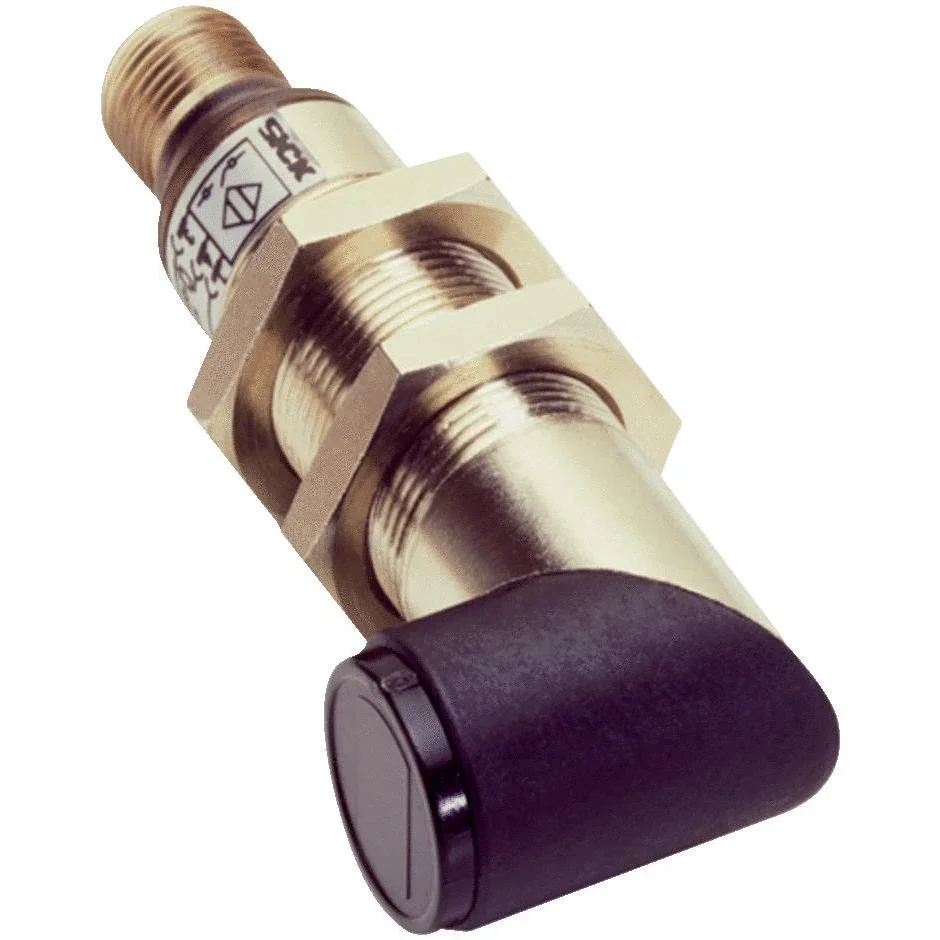
Factories are throwing away value. Every line upgrade, plant consolidation and reshoring retool releases bins of working photoelectric sensors, inductive proximity switches, encoders, pressure transmitters and level sensors from brands like SICK, Banner, Keyence, ifm, Balluff, Pepperl+Fuchs, Omron and Allen-Bradley. Liquidation buyers acquire these by the pallet. Maintenance teams elsewhere desperately need the exact same part number tomorrow morning.
The spread is large. A typical SICK compact photoelectric sensor sells for roughly $30 to $90 new on the open market, while used units of the same model trade in the $27 to $66 range. Higher-value items such as distance sensors and absolute encoders climb into the $170 to $600 band. Pallet-lot acquisition cost per sensor often lands at a small fraction of that.
What separates a profitable surplus seller from a junk dealer is verification. Bench testing on a 24 V supply, photographing the real label and date code, stating the exact suffix and including a short test video addresses the counterfeit fear head on.
- Profit margin range: 40% to 65% net on pallet-sourced stock
- Typical acquisition: $2 to $15 per sensor in mixed liquidation lots
- Typical resale: $25 to $180 per sensor, with outliers far higher
- Growth signal: legacy, non-connected equipment is accumulating in surplus as plants modernise, while bidder activity in the industrial surplus segment rose 49.8% in early 2026
Opportunity 2: Compatibility-first M12 cordsets, connectors and brackets on Amazon and eBay
Opportunity Score: 8/10
Almost every modern industrial sensor terminates in an M8 or M12 connector, and almost every failed sensor replacement exposes a second problem: a crushed cable, a wrong pin count, a straight connector where a right angle was needed, or a bracket that no longer fits. Cordsets and brackets are commodity parts with standardised specs, which makes them the rare industrial category where a private label seller can compete on clarity rather than certification.
Factory pricing is low. Moulded M12 4-pin PUR cordsets quote at roughly $1.60 to $3.80 FOB depending on length, and stainless mounting brackets at $0.40 to $2.00. Retail comparables sit at roughly $12 to $30 per cordset.
- Profit margin range: 45% to 50% gross after marketplace fees
- Best price points: $14.99, $17.99 and $21.99 per cordset, $16.99 for bracket kits
- Growth signal: the IO-Link installed base reached 71 million nodes worldwide, and every IO-Link device needs a standard M12 cable
Opportunity 3: Obsolete and hard-to-find sensor sourcing for legacy equipment
Opportunity Score: 8/10
Mechanical equipment routinely outlives its control hardware. A packaging line built in 2006 can run for another decade if someone can find the discontinued photo-eye or encoder that keeps it alive. Buyers in this situation are price-insensitive and loyal, and they search by exact part number.
A Shopify store or eBay shop built around a specific brand or machine type, with a cross-reference library and a "we will find it" request form, turns sourcing knowledge into margin. This is a slow-build business, but it is defensible because knowledge is the moat.
- Profit margin range: 50% to 120% markup on sourced units
- Typical price points: $80 to $900 per part
- Growth signal: OEM lead times on some industrial components still run 24 to 52 weeks, which pushes buyers toward secondary channels
Quick Action Items
Buy one mixed sensor lot at an industrial liquidation auction. Target lots that list brand names in the description. Budget $500 to $1,500 for a first lot, test every unit on a 24 V bench supply, and list the working ones individually with real photographs and the full part number in the title.
Write titles that match how maintenance techs search. Brand, exact part number, sensor type, output type (PNP or NPN), switching function (NO or NC), connection (M12 connector or cable) and condition. A tech with a dead line types the part number off the old sensor label, so the part number must appear exactly as printed.
Order a private label M12 cordset range in four SKUs. Straight 2 m, straight 5 m, right-angle 2 m with LED and an M8 to M12 adapter. Place a first order of 500 to 1,000 pieces per SKU with a Zhejiang or Guangdong cable manufacturer and request IP67 test reports and pin-out diagrams.
Publish a PNP versus NPN and pin-out guide on every listing. Wiring mismatches cause a large share of returns in this category. A simple wiring diagram image showing brown, blue, black and white wire functions cuts returns and builds trust.
Offer same-day dispatch and say so in the title. In this category, "ships today" outsells a lower price. Keep fast movers in stock and state the cut-off time clearly.
Red Flags to Avoid
Selling "new" branded sensors from grey-market Chinese suppliers. Listings claiming genuine SICK, Omron or Keyence parts at prices far below distributor cost are a known counterfeit pattern. Sellers who resell these risk marketplace suspension, trademark complaints and liability if a fake fails in a safety-critical application. A regulator advisory in January 2026 specifically named unauthorised online resellers as the source of counterfeit automation hardware found in the field.
Safety-rated devices. Safety light curtains, safety laser scanners, safety interlock switches and safety relays protect people from moving machinery. Selling used or untraceable safety devices exposes a seller to serious liability. Unless you have the testing capability and documentation, leave this segment alone.
Hazardous-area and certified process sensors. Intrinsically safe and explosion-proof sensors depend on certification that cannot be verified from a photograph. Pressure transmitters and level sensors for regulated process industries carry the same risk. Resell only with original documentation.
Calling untested stock "working". "Pulled from working machine" is the most-distrusted phrase in industrial resale. If you have not tested it, sell it as untested for parts, at an untested price.
Best Entry Point for New Sellers
Product recommendation: A private label M12 cordset and bracket line in four to six SKUs, paired with a modest tested-surplus sideline that builds feedback and cash flow while the private label stock is in transit.
Primary marketplace: Amazon US for cordsets and brackets
Secondary marketplace: eBay US for both cordsets and tested surplus sensors
Price range: $14.99 to $21.99 per cordset, $16.99 to $24.99 per bracket kit, $25 to $180 per surplus sensor
Startup cost breakdown for a first order:
| Line Item | Cost | Notes |
|---|---|---|
| M12 4-pin straight cordsets, 2 m PUR (1,000 units) | $1,850 | $1.85 FOB, moulded, IP67, colour-coded wires |
| M12 4-pin straight cordsets, 5 m PUR (500 units) | $1,700 | $3.40 FOB |
| M12 right-angle cordsets with LED, 2 m (500 units) | $1,150 | $2.30 FOB, PNP indicator LEDs |
| Stainless sensor bracket kits (500 kits) | $950 | $1.90 FOB, M8, M12 and M18 sizes |
| Retail packaging, pin-out cards and labels | $650 | Printed wiring diagram on every bag |
| Sea freight and drayage | $950 | Small dense goods, LCL shipment |
| Duties and customs brokerage | $1,700 | Base rates plus 25% Section 301 allowance on Chinese origin |
| Bench test equipment for surplus | $450 | 24 V supply, test leads, M12 breakout, target plates |
| First surplus sensor lots | $1,500 | Two mixed liquidation lots |
| Product photography and wiring graphics | $700 | White background plus wiring diagram infographics |
| Trademark filing, UPCs, brand registry | $650 | Needed for brand protection and A+ content |
| Launch advertising (8 weeks) | $2,000 | Sponsored products on part-number and spec keywords |
| Samples, IP67 testing and contingency | $900 | Three supplier samples plus buffer |
| Total startup cost | $15,150 | Roughly $4.50 fully loaded per private label unit, excluding surplus stock and ads |
Why this works:
Three things make this the right first move. First, cordsets and brackets are standardised by connector type, pin count and thread size, so a new brand can compete on clarity, documentation and dispatch speed without needing industrial certifications. Second, every sensor replacement and every new IO-Link installation creates demand for cables, which gives the line a steady base load rather than a seasonal spike. Third, the surplus sideline teaches you exactly which brands, connectors and part numbers move, which tells you what to add to the private label range next.
The alternative entry point, importing unbranded "industrial" sensors and selling them to factories, fails on trust. Maintenance managers buy brands they already have on the line because a mismatch costs more than the part. The unbranded sensor opportunity exists only at the maker and light-duty tier, covered later in this report.
2. Quick Data Scans: Marketplace Sales Opportunity Analysis
Legend
| Score Range | Meaning | Action |
|---|---|---|
| 8 to 10 | High demand, low to moderate competition (8 to 10) | Enter now |
| 5 to 7 | Moderate demand, moderate competition (5 to 7) | Test carefully |
| 1 to 4 | Low demand or oversaturated (1 to 4) | Avoid |
Marketplace Opportunity Matrix
| Marketplace | Opportunity Score | Product Segment | Est. Weekly Unit Sales | Est. Weekly Revenue | Avg Price Range | Est. Profit Margin |
|---|---|---|---|---|---|---|
| eBay US | 9 | Tested surplus branded sensors (photoelectric, inductive, ultrasonic) | 60 to 140 | $3,000 to $8,500 | $25 to $180 | 40% to 65% |
| eBay US | 8 | Obsolete encoders and specialty sensors | 10 to 30 | $2,500 to $9,000 | $90 to $600 | 45% to 70% |
| eBay US | 8 | M12 and M8 cordsets and adapters | 80 to 180 | $1,200 to $3,200 | $12 to $28 | 42% to 52% |
| eBay US | 3 | "New" branded sensors from grey sources | 40 to 120 | $1,500 to $5,000 | $20 to $60 | High risk, account threat |
| Amazon US | 8 | Private label M12 cordsets and brackets | 120 to 300 | $1,900 to $5,400 | $14 to $25 | 45% to 50% |
| Amazon US | 6 | Maker and CNC proximity sensor packs | 150 to 350 | $2,700 to $7,000 | $12 to $25 | 30% to 40% |
| Amazon US | 3 | Branded industrial sensors | 20 to 60 | $1,500 to $5,000 | $60 to $150 | 8% to 15% |
| Amazon Business | 7 | Multi-pack cordsets and bracket kits for maintenance stores | 30 to 80 | $1,500 to $4,500 | $45 to $65 per pack | 40% to 48% |
| Shopify / DTC | 7 | Legacy parts specialist store with sourcing requests | 5 to 20 | $1,500 to $8,000 | $80 to $900 | 50% to 120% markup |
| Direct B2B | 8 | Spares supply to local maintenance teams | 10 to 40 | $1,000 to $6,000 | $20 to $400 | 35% to 55% |
| Industrial liquidation auctions | 9 | Acquisition channel for mixed sensor lots | Buy side | Buy side | $2 to $15 per sensor landed | Feeds eBay margins |
| Facebook Marketplace | 7 | Local acquisition from closing shops and machine dealers | Buy side | Buy side | $1 to $10 per sensor | Feeds eBay margins |
| eBay UK and Germany | 7 | European brand surplus (SICK, ifm, Balluff, Pepperl+Fuchs) | 30 to 70 | $1,300 to $3,800 | $20 to $150 | 35% to 55% |
| eBay Australia | 6 | Surplus sensors and cordsets for mining and food plants | 10 to 30 | $500 to $2,000 | $30 to $200 | 35% to 55% |
| Newegg Business | 5 | Cordsets and industrial accessories | 10 to 30 | $200 to $700 | $14 to $30 | 35% to 45% |
| Tindie | 5 | Sensor breakout and tester modules for makers | 10 to 40 | $200 to $900 | $15 to $40 | 40% to 55% |
| Walmart Marketplace | 4 | Cordsets and maker sensors | 10 to 30 | $150 to $600 | $12 to $25 | 30% to 40% |
| TikTok Shop | 3 | Maker sensor demos and kits | 5 to 25 | $80 to $500 | $15 to $30 | 25% to 35% |
Table Notes and Methodology
Unit and revenue estimates describe what a competent single seller with established listings and positive feedback can expect, not total marketplace category volume. They are planning estimates built from observed listing counts, sold-listing pricing and typical sell-through for comparable industrial parts, and should be validated against your own first 60 days of data.
Margin figures are net after marketplace fees, payment processing, outbound shipping, an assumed 3% to 6% return rate and an advertising allocation of 6% to 12% of revenue where advertising applies. Surplus margins assume pallet or lot acquisition at liquidation prices plus testing labour valued at zero, so solo sellers should price their own time separately.
Opportunity scores weigh four inputs equally: demand stability, competitive density, ability to differentiate on something other than price, and risk exposure. "New" branded sensors from unverified suppliers score low despite strong demand because the counterfeit and trademark risk can end a selling account. Liquidation auctions and Facebook Marketplace appear as acquisition channels because in surplus, buying well is where the profit is made.
3. Deeper Context: Market Landscape and Buyer Intelligence
A. Market Overview
Category Definition and Size
Industrial automation sensors are the eyes and ears of a production line. They tell a controller that a part has arrived, a carton is in position, a tank is full, a shaft has turned, a pressure has been reached or a motor is vibrating more than it should. For resale and sourcing purposes the category splits into seven practical groups:
- Proximity sensors, mainly inductive (detect metal) and capacitive (detect almost anything). The highest-volume replacement part in most plants.
- Photoelectric sensors, including diffuse, retro-reflective, through-beam, fibre optic and laser distance types. Common on conveyors and packaging lines.
- Rotary and linear encoders, which measure position and speed on motors, axes and conveyors.
- Pressure, flow and level sensors, which dominate process industries such as food, beverage, chemicals and water treatment.
- Temperature and humidity sensors, from simple thermocouples to transmitters.
- Ultrasonic and vibration sensors, used for level, distance and machine condition monitoring.
- Connectivity and mounting accessories, meaning M8 and M12 cordsets, splitters, IO-Link masters, brackets and reflectors.
The global industrial sensors market is estimated at $56.3 billion in 2026, rising from $53.7 billion in 2025 and projected to reach $98.1 billion by 2035 at a 6.4% CAGR. Physical parameter sensors are the largest group at roughly $31.3 billion, wired sensors still dominate at roughly $29.2 billion, and wireless sensors are the fastest-growing connectivity type at about 6.7% a year. Manufacturing and industrial automation is the largest end market at around $14.7 billion, while pharmaceuticals is the fastest-growing at roughly 7.5%. North America leads with 35.2% share, and China is the fastest-growing major country at around 8.2%.
The most important structural fact for a seller is fragmentation. The five largest players hold only about 3.4% of global market value between them. There are thousands of sensor models from dozens of serious manufacturers, and each plant runs its own mix. That variety is exactly what makes the aftermarket and surplus channels profitable: no single distributor can stock everything, and no buyer can wait when the line is down.
Product Evolution and Recent Trends
From switches to smart devices. For decades a proximity sensor was a simple on and off switch. Today a growing share of sensors talk to the controller through IO-Link, a point-to-point digital standard that reports diagnostics, settings and process values over the same M12 cable. The IO-Link installed base reached 71 million nodes worldwide, with roughly 9.7 million devices and master ports added in 2025. Industry bodies describe the market as normalising after unusually high volumes, but at a still very high level.
Modernisation is flooding surplus with legacy stock. Plants upgrading to connected, AI-ready systems are retiring non-connected equipment. Industrial surplus specialists report a two-tier market: connected, automation-ready assets command premiums, while single-purpose legacy lines are what is actually accumulating as surplus. Reshoring is adding to the churn as older facilities are consolidated or retooled. This is the supply engine behind the surplus sensor opportunity.
Lead times have not fully normalised. The broad chip shortage is over for commodity parts, but some industrial-grade components still run long. Secondary reporting of a 2026 forecast puts industrial IoT component lead times at 24 to 36 weeks and the most advanced microcontrollers at up to 52 weeks. Analysts also flagged rare earth export restrictions from China in late 2025 as a risk for motion control hardware. When OEM supply tightens, maintenance buyers turn to secondary channels.
Counterfeits have become a mainstream concern. In January 2026, a US state environmental regulator issued an advisory after a counterfeit controller was discovered at a water system when a routine firmware update failed. The advisory pointed to long lead times and unauthorised online resellers as the root cause, and told operators to verify serial numbers, demand chain-of-custody documentation and test devices before deployment. The same logic applies to sensors.
Tariffs have shifted, not vanished. In the US, the emergency-powers tariffs were struck down by the Supreme Court on 20 February 2026, and the temporary 10% global replacement tariff expired on 24 July 2026. However, the long-standing Section 301 duty of 25% still applies to many Chinese-origin switch products classified under HTS 8536.50.90, whose general duty rate is free. A separate Section 301 investigation into industrial overcapacity is ongoing, with China as the most prominent target. Treat every landed cost model as provisional.
Leading Brands and Market Disruptors
SICK is one of the most common brands in surplus lots, with a deep range of photoelectric sensors, encoders and safety devices. Compact photoelectric models trade at roughly $20 to $90 new on the open market and $27 to $66 used, while distance sensors and absolute encoders reach $170 to $600.
Keyence sells direct with no distributor network, which makes its sensors scarce in authorised resale and valuable in surplus. Buyers often turn to eBay because they need one part fast and cannot wait for a direct sales process.
Banner Engineering is strong in North American packaging and material handling, with a large installed base of photoelectric and ultrasonic sensors and a popular range of tower lights and wireless nodes.
ifm, Balluff and Pepperl+Fuchs are dominant in European-built machinery and in IO-Link. Their products appear heavily on German and UK resale channels and in machines exported worldwide.
Omron, Panasonic and Autonics cover huge volumes of Asian-built equipment. Autonics in particular is common on smaller machines and is often a cost-effective replacement option.
Allen-Bradley (Rockwell Automation) is the default on many US lines. It is also the brand most targeted by counterfeit and misrepresented listings, according to specialist resellers who publish detection guides.
Honeywell, Siemens, Bosch, Emerson and TE Connectivity lead the overall industrial sensor market by revenue, with strength in process, pressure and temperature measurement rather than discrete factory sensors.
Generic Chinese sensors sold under model names such as LJ12A3 and E3F are the disruptors at the bottom of the market. They retail for a few dollars and dominate maker, 3D printer and hobby CNC builds. They are rarely accepted on production lines in regulated industries, but they define price expectations for light-duty buyers.
Private label opportunity assessment: Closed for branded production-line sensors, where buyers want the exact brand already installed. Partly open for maker and light-duty sensors, where documentation and quality control can beat anonymous listings. Wide open for cordsets, adapters, brackets, reflectors and test tools, where the specifications are standardised and incumbent listings are poorly documented.
Price Tiers and Popular Brands
| Tier | Price Range | Representative Products | Reseller Margin | Sourcing Strategy |
|---|---|---|---|---|
| Tier 1: Accessories | $5 to $30 | M8 and M12 cordsets, splitters, brackets, reflectors, test leads | 45% to 55% | Private label from Zhejiang and Guangdong cable and metalwork factories |
| Tier 2: Maker and light-duty sensors | $3 to $25 | LJ12A3 class inductive sensors, E3F class photoelectric sensors, generic capacitive sensors | 30% to 40% | Private label packs with datasheets and wiring guides. Not for production lines |
| Tier 3: Standard branded sensors | $20 to $150 | Compact photoelectric, inductive and capacitive sensors from SICK, Banner, ifm, Omron, Autonics (used units typically 15% to 40% below new) | 40% to 65% via surplus | Tested liquidation lots. Avoid unverified "new" stock |
| Tier 4: Advanced and process sensors | $150 to $900 | Laser distance sensors, absolute encoders, pressure transmitters, IO-Link smart sensors, vision sensors | 35% to 70% via surplus | Surplus with full documentation, or sourcing service for specific requests |
| Tier 5: Safety and certified devices | $200 to $3,000+ | Safety light curtains, safety scanners, explosion-proof transmitters | Not recommended | Avoid unless you can test and document to standard |
B. Buyer Persona Deep Dive
Demographic splits below are planning estimates based on industry workforce patterns and observed buyer behaviour, not survey data.
Persona 1: The Line-Down Maintenance Technician
Demographics: Age 25 to 55. Roughly 90% male, 10% female. Works shifts in a manufacturing, packaging or food plant. Often on a mobile phone at the machine when searching.
Purchase motivations, ranked: 1) Getting the line running again today. 2) An exact match to the dead part, so no rewiring or reprogramming. 3) Confidence that the part is genuine and working.
Price sensitivity: Very low during a breakdown. Will pay 2x to 3x the normal price for overnight delivery of the exact part.
Pain points:
- OEM distributor quotes lead times of weeks for a part that failed this morning.
- Listings that show a stock photo and a vague title, with no visible part number.
- Receiving a near-miss part, such as an NPN sensor when the PLC input needs PNP.
- "New" parts that arrive in damaged or non-original packaging.
- No phone or chat contact to confirm a detail before ordering.
What they are solving for: Downtime, which can cost a plant far more per hour than the sensor itself.
Decision factors: Exact part number match, real photographs of the label, dispatch time and seller feedback.
Brand loyalty: Loyal to the brand on the machine, and loyal to any seller who saves them once.
Persona 2: The MRO and Spares Buyer
Demographics: Age 30 to 60. Roughly 65% male, 35% female. Works in purchasing or stores at a mid-size plant.
Purchase motivations, ranked: 1) Building a critical spares inventory before failures happen. 2) Reducing cost against distributor list prices. 3) Traceable paperwork for audits.
Price sensitivity: Moderate. Expects 20% to 50% below distributor list for surplus, and is comfortable buying in quantity.
Pain points:
- Sellers who cannot supply an invoice, warranty terms or condition documentation.
- Inconsistent condition grading between listings.
- No ability to buy multiple units of the same part number.
- Procurement rules that exclude unknown marketplace sellers.
What they are solving for: A defensible spares list ranked by production impact.
Decision factors: Warranty, quantity available, invoicing, payment terms and repeatability.
Brand loyalty: Moderate. Loyal to sellers who become reliable suppliers.
Persona 3: The Small Machine Builder
Demographics: Age 30 to 55. Roughly 85% male, 15% female. Runs or works at a small business building custom machines, fixtures or conveyors.
Purchase motivations, ranked: 1) Keeping build cost down on low-volume projects. 2) Specifying parts the end customer can replace easily. 3) Reliable supply for repeat builds.
Price sensitivity: High on prototypes, moderate on production builds. Sweet spot $20 to $80 per sensor.
Pain points:
- Distributor minimum order quantities and pricing that punish small volumes.
- Uncertain long-term availability of a chosen model.
- Cheap generic sensors that fail customer acceptance tests.
- Cable lengths and connector styles that do not suit the machine layout.
What they are solving for: A cost-effective, supportable bill of materials.
Decision factors: Datasheet quality, IP rating, connector type and whether the end customer will recognise the brand.
Brand loyalty: Moderate to high once a standard part list is established.
Persona 4: The Legacy Equipment Owner
Demographics: Age 40 to 65. Roughly 80% male, 20% female. Owns or manages a small plant running older machinery that is mechanically sound.
Purchase motivations, ranked: 1) Keeping a paid-off machine alive. 2) Avoiding an expensive retrofit. 3) Finding someone who understands old equipment.
Price sensitivity: Low for critical parts. Sweet spot $100 to $900 for an obsolete part that saves a five-figure upgrade.
Pain points:
- Discontinued part numbers with no direct replacement.
- Cross-reference advice that is wrong or incomplete.
- Surplus listings without clear condition or testing information.
- Fear of buying the last unit and then having no spare.
What they are solving for: Extending equipment life on their own terms.
Decision factors: Seller expertise, test evidence, return policy and willingness to source on request.
Brand loyalty: Very high to the seller who finds the impossible part.
Persona 5: The Maker and Hobby CNC Builder
Demographics: Age 18 to 50. Roughly 88% male, 12% female. Builds 3D printers, CNC routers, robots and home automation projects.
Purchase motivations, ranked: 1) Low cost. 2) Easy wiring to a microcontroller or controller board. 3) Clear documentation.
Price sensitivity: Very high. Sweet spot $3 to $8 per sensor, ideally sold in packs.
Pain points:
- Generic sensors with no datasheet and incorrect sensing distance claims.
- Voltage confusion when a 6 to 36 V sensor meets a 5 V or 3.3 V board.
- NPN and PNP terminology that nobody explains.
- Brackets and mounting hardware that do not come in the box.
What they are solving for: Reliable homing, limit and detection for a project.
Decision factors: Price per unit, wiring diagram, reviews and bundled hardware.
Brand loyalty: Low, but strong to sellers whose guides actually helped.
Persona 6: The Small Food and Packaging Plant Owner
Demographics: Age 35 to 60. Roughly 70% male, 30% female. Runs a business with one to three production lines and no dedicated controls engineer.
Purchase motivations, ranked: 1) Avoiding expensive service call-outs. 2) Sensors that survive washdown and cleaning chemicals. 3) Simple replacement instructions.
Price sensitivity: Moderate. Sweet spot $40 to $150.
Pain points:
- Sensors failing early because the replacement was IP67 when the line needs washdown-rated protection.
- No in-house knowledge of wiring, so mistakes are costly.
- Integrators who charge high call-out fees for a simple swap.
- Photo-eyes false-triggering on shiny or clear packaging.
What they are solving for: Running the plant without paying for every small fix.
Decision factors: Plain-language listing details, washdown rating, phone support and installation guides.
Brand loyalty: Moderate.
Persona 7: The Training and Education Buyer
Demographics: Age 30 to 60. Roughly 70% male, 30% female. Teaches at a technical college, runs an apprenticeship programme or builds training rigs.
Purchase motivations, ranked: 1) Realistic industrial hardware on a limited budget. 2) Multiple units of the same model for a classroom. 3) Variety of sensor types for teaching.
Price sensitivity: High. Sweet spot $15 to $60 per sensor, bought in sets.
Pain points:
- New industrial parts are too expensive for training budgets.
- Hard to buy matching sets of five to twenty units.
- Lack of teaching documentation.
What they are solving for: Hands-on learning that reflects real plant equipment.
Decision factors: Quantity, matched sets, documentation and invoicing for institutions.
Brand loyalty: Moderate, influenced by what local employers use.
C. Keyword and Search Trends
Search Volume and Term Structure
Search behaviour in this category is unusual. Instead of broad product phrases, the highest-value buyers type exact part numbers copied from a label. That splits demand into four intent classes, with profitability close to inverse to volume.
Class 1: Part-number searches. Exact model codes such as a SICK WL or WTB series number, an ifm IFS or IGS code, or an Omron E2E code. Each individual part number has tiny volume, but there are tens of thousands of them, and conversion rates are the highest in the category. This is where surplus sellers win.
Class 2: Generic discovery. Terms like proximity sensor, photoelectric sensor, inductive sensor and industrial sensor. High combined volume but low intent, dominated by distributors and maker buyers.
Class 3: Problem and compatibility. Terms like PNP to NPN converter, M12 cable pinout, replacement for discontinued sensor, sensor cross reference and washdown proximity sensor. Moderate volume, high conversion and weak competition.
Class 4: Maker and DIY. Terms like LJ12A3 sensor, CNC limit switch, 3D printer auto bed level sensor and Arduino proximity sensor. High volume and very price-driven.
Year-on-year direction figures below are directional estimates from search trend tools and marketplace listing behaviour, not exact measurements.
Rising and Declining Queries
| Direction | Query Theme | Est. YoY Change | Interpretation |
|---|---|---|---|
| Rising | IO-Link sensor and IO-Link master | +30% to +45% | Connected sensor adoption continues. Cables and masters benefit |
| Rising | Sensor cross reference and replacement for discontinued models | +25% to +40% | Legacy equipment kept running longer. Knowledge-led sellers win |
| Rising | Counterfeit check and genuine part verification | +20% to +35% | Trust anxiety is growing. Verification sells |
| Rising | M12 cable pinout and M12 cordset | +20% to +30% | Standard connectors on almost every new sensor |
| Rising | Washdown and IP69K sensors | +15% to +25% | Food and beverage investment. Higher-value replacement parts |
| Rising | Vibration sensor for predictive maintenance | +15% to +30% | Condition monitoring moving into smaller plants |
| Declining | AC two-wire proximity sensors | -10% to -20% | Older wiring standard being phased out. Surplus only |
| Declining | Mechanical limit switch replacement | -5% to -15% | Gradual shift to non-contact sensing |
| Declining | Sensor in-stock alerts and shortage searches | -30% to -50% | Broad shortage behaviour has faded, though specific parts remain tight |
Consumer Insights from Community Forums
Discussion in controls and maintenance communities, including r/PLC, r/IndustrialMaintenance, r/AskEngineers, PLCtalk, Eng-Tips and maker forums such as r/hobbycnc and r/3Dprinting, keeps returning to the same frustrations. These are the twelve themes that recur most often:
"New" parts that are not genuine. The single biggest fear. Buyers describe parts arriving in the wrong packaging, with fuzzy labels, or behaving differently from the original. Specialist resellers note that sellers have a strong incentive to mislabel used stock as new, because buyers pay substantially more for new or new-old-stock parts.
Misrepresented seller location. Listings claiming domestic stock that turn out to ship from overseas, adding weeks to delivery for a buyer who chose the listing precisely for speed.
Near-miss part numbers. A single suffix change can switch output type, switching function, connection style or sensing range. Buyers repeatedly receive "the same sensor" that is wrong for their machine.
PNP versus NPN confusion. European and American machines mostly use PNP, many Asian machines use NPN, and generic listings often get it wrong. This is a top cause of returns.
Flush versus non-flush mounting. Shielded and unshielded inductive sensors look identical but behave differently when mounted in metal, which leads to false readings after replacement.
Photo-eyes false-triggering. Shiny film, clear bottles and changing light conditions defeat cheap diffuse sensors. Buyers want guidance on which type to use, not just a part.
Early failure in harsh environments. Washdown chemicals, coolant, weld spatter and vibration kill sensors that were not rated for the job.
Cable failures. Flexing cables in moving equipment crack, and buyers often replace a working sensor when only the cordset failed.
Generic sensors with false specifications. Maker buyers complain that cheap sensors detect at half the claimed distance or fail at the claimed voltage range.
Untested surplus. "Pulled from a working machine" is widely distrusted. Buyers want proof of testing.
OEM lead times and direct-only brands. Some brands sell only through direct sales channels or quote long lead times, pushing urgent buyers to marketplaces.
Poor packaging. Sensitive sensors and encoders arriving damaged after being shipped loose in a padded envelope.
What these complaints tell a seller:
The category's unsolved problems are not about sensing technology. They are about trust, exactness and speed. Brands are racing toward smarter, connected sensors. Buyers on the ground are struggling to get a genuine, correctly specified part on the machine before the next shift. Every one of those gaps can be filled by a seller who tests, documents, photographs and dispatches better than the anonymous competition.
4. Tools and Resources: Sourcing Decision Framework
Private Label Sourcing Calculator
| Product Type | Factory Price | MOQ | Shipping | Duties | Landed Cost | Amazon Fees | Total Cost | Retail Price | Profit Margin |
|---|---|---|---|---|---|---|---|---|---|
| M12 4-pin straight cordset, 2 m (PUR jacket, moulded, IP67) | $1.85 | 1,000 | $0.25 | $0.51 | $2.61 | $5.55 | $8.16 | $14.99 | 45.6% |
| M12 4-pin straight cordset, 5 m (PUR jacket, moulded, IP67) | $3.40 | 500 | $0.45 | $0.94 | $4.79 | $7.20 | $11.99 | $21.99 | 45.5% |
| M12 right-angle cordset with LED, 2 m (PNP status LEDs, IP67) | $2.30 | 500 | $0.25 | $0.63 | $3.18 | $6.00 | $9.18 | $17.99 | 49.0% |
| Inductive proximity sensor 5-pack (M12 PNP NO, light-duty, with datasheet) | $4.75 | 500 packs | $0.40 | $1.19 | $6.34 | $6.40 | $12.74 | $19.99 | 36.3% |
| Diffuse photoelectric sensor 2-pack (M18, adjustable range, NPN or PNP) | $5.20 | 300 packs | $0.45 | $1.30 | $6.95 | $7.15 | $14.10 | $24.99 | 43.6% |
| Stainless sensor bracket kit (6 pieces, M8, M12 and M18) | $1.90 | 500 | $0.30 | $0.54 | $2.74 | $5.85 | $8.59 | $16.99 | 49.4% |
| Handheld sensor signal tester (PNP and NPN, 24 V, M12 and flying lead) | $6.50 | 300 | $0.60 | $1.62 | $8.72 | $9.90 | $18.62 | $39.99 | 53.4% |
Standard Assumptions Used
Factory price methodology. Prices reflect FOB ranges for comparable goods from cable assembly and sensor manufacturers in Zhejiang (Yueqing and Wenzhou) and Guangdong (Shenzhen and Dongguan), the two main clusters for low-cost industrial connectors and generic sensors. Figures assume a second order with a vetted supplier. First sample orders typically run 15% to 25% higher. Sensor packs are priced at the pack level.
Shipping assumptions. Sea freight LCL from Ningbo or Shenzhen to a US fulfilment centre, including drayage and inbound placement. Cordsets and sensors are small and dense, so freight per unit is low. Air freight would add roughly $0.40 to $1.50 per unit and suits urgent restocks of fast movers.
Duty rates. Insulated cable assemblies with connectors generally classify under HTS 8544.42, which carries a low general rate. Proximity and photoelectric switching devices frequently classify under HTS 8536.50.90, which has a free general rate. Many Chinese-origin goods in these headings carry an additional 25% Section 301 duty, which is the main cost driver modelled above. Brackets classify as articles of steel. Since February 2026 the US tariff picture has changed repeatedly: emergency-powers tariffs were struck down, a temporary global tariff expired in July, new Section 301 measures have been applied to some trading partners and an overcapacity investigation is still open. Always confirm current classification and rates with a licensed customs broker before ordering.
Fee breakdown. Amazon fees combine a 15% referral fee with standard small-size FBA fulfilment estimates of $3.30 to $3.90 per unit. All products here fit standard size tiers, which keeps fees predictable. Sellers fulfilling from their own stock on eBay typically recover several percentage points of margin.
MOQ context. Cable assembly factories routinely accept 300 to 500 pieces per SKU on a first order, especially for standard lengths. Custom printed bags and branded cable labels may raise MOQs to 1,000. Generic sensors are widely available at low MOQs, but quality varies enormously, so sample at least three suppliers and test sensing distance and voltage range yourself.
Compliance notes. Request IP67 test reports and RoHS declarations from suppliers. Avoid using UL, CE or brand compatibility marks on packaging unless the supplier provides genuine documentation. Use compatibility language such as "fits standard M12 A-coded sensors" rather than implying endorsement by a sensor brand.
Margin notes. Margins are gross after landed cost and marketplace fees only. Advertising realistically consumes 6% to 12% of revenue at launch and 3% to 6% at steady state, and returns run 3% to 6% in this category, mostly from wiring mistakes. A 45% calculated margin therefore translates to roughly 32% to 38% net contribution. The sensor packs carry the thinnest margins because they compete with very cheap anonymous listings, so they work best as a traffic driver for cordsets and brackets.
Additional Strategy Tables
Strategy A: Bundle Architecture
| Bundle | Contents | Target Persona | Bundle Price | Sum of Parts | Est. Margin |
|---|---|---|---|---|---|
| Line-Down Swap Kit | Matching surplus sensor, new M12 cordset, bracket | Line-Down Maintenance Technician | Sensor price plus $19.99 | Sensor price plus $31.98 | 45% to 60% |
| Conveyor Photo-Eye Kit | Retro-reflective sensor, reflector, bracket, 5 m cordset | Small Food and Packaging Plant Owner | $69.99 | $89.96 | 42% to 50% |
| CNC Homing Kit | Three inductive sensors, three brackets, wiring guide | Maker and Hobby CNC Builder | $29.99 | $41.97 | 38% to 45% |
| Cordset Maintenance Pack | Five 2 m cordsets, two right-angle cordsets | MRO and Spares Buyer | $84.99 | $110.93 | 44% to 48% |
| Training Bench Set | Inductive, capacitive, photoelectric and ultrasonic sensors with cordsets and lesson sheets | Training and Education Buyer | $149.99 to $249.99 | $190 to $320 | 40% to 55% |
Strategy B: Seasonal Inventory Planning Calendar
Industrial demand is less seasonal than consumer goods, but it follows plant budgets and shutdown schedules. The calendar below reflects typical US and European manufacturing patterns.
| Month | Demand Pattern | Seller Action |
|---|---|---|
| January | Slow start as new budgets open. Maintenance catches up after holiday shutdowns | List surplus bought in Q4. Restock cordsets |
| February to March | Steady demand. Capital projects begin | Pitch spares packs to MRO buyers. Run Amazon ads on part-type keywords |
| April to May | Steady. Food plants prepare for summer volume peaks | Push washdown sensors and photo-eye kits |
| June to July | Planned summer shutdowns around early July bring a spike in maintenance and replacement buying | Have fast movers in stock by mid-June. Offer same-day dispatch |
| August | Quieter. Liquidation auctions busy as plants consolidate after mid-year reviews | Acquire surplus lots aggressively |
| September to October | Strong demand as plants prepare for Q4 production and fiscal year planning | Expand listings. Approach local plants for spares agreements |
| November | Year-end budget spending begins | Promote multi-packs and spares kits to MRO buyers |
| December | Budget flush early in the month, then holiday shutdowns and maintenance work | Ship early. Stock up on surplus lots from year-end closures |
Sourcing Methodology Notes
Surplus acquisition. The best surplus comes from industrial liquidation auctions, plant closure sales, machine dealers and local business clear-outs. Prioritise lots that name brands and part numbers, avoid lots photographed only from a distance, and factor in that perhaps 10% to 25% of a mixed lot may be unsaleable. Keep receipts and lot records, because provenance is part of what you are selling.
Testing standard. A simple bench setup covers most discrete sensors: a 24 V DC supply, an M12 breakout cable, a multimeter or indicator lamp, and metal and reflective targets. Record a short video of each sensor switching. For encoders and analogue sensors, test the output signal against the datasheet. Write the test result in the listing.
Authenticity checks. Compare labels, fonts, date codes and packaging against known genuine examples. Where a manufacturer offers serial or authenticity verification, use it for high-value parts. Never list a part as new unless it is new, sealed and from a traceable source.
Private label supplier vetting. Ask cordset suppliers for pin-out drawings, IP67 test reports, cable jacket specifications and flex-cycle ratings. Order samples from at least three factories, test them on real sensors, and check connector thread quality and coupling nut grip.
Pricing research. Benchmark every surplus listing against sold prices for the same exact part number, not just active listings. Prices for the same model vary widely by condition and packaging, and new-in-box units can command substantial premiums over used.
Key Takeaways
Downtime is the product, not the sensor. A maintenance buyer with a stopped line pays for speed, certainty and an exact match. Sellers who organise their entire listing strategy around that moment out-earn sellers who compete on price.
Surplus is the strongest capital-light opportunity in 2026. Modernisation and reshoring are pushing legacy equipment into the secondary market at the same time as buyers need parts to keep older lines running. Bidder activity in industrial surplus has rebounded sharply.
Trust is scarce and valuable. Counterfeits and misrepresented stock have become a regulator-level concern. Testing, honest grading and real photographs are a competitive weapon.
Private label belongs in accessories. Cordsets, brackets and testers have standardised specs, steady demand and gross margins in the mid-40s to low-50s percent. Branded production-line sensors are not a private label game.
Tariff risk has eased but not disappeared. The 25% Section 301 duty still shapes landed costs for Chinese-origin goods, and further measures are under investigation. Keep landed cost models live and broker-verified.
Sources and References
Global Market Insights, Industrial Sensors Market Size and Share Report, 2026 to 2035
IO-Link Community, IO-Link Continues Growth in Automation, April 2026
Liquidity Services, 2026 Mid-Year Update: Industrial Manufacturing Surplus Asset Market Trends
New Hampshire Department of Environmental Services, Counterfeit PLCs Advisory for Water and Wastewater Systems, January 2026
NJT Automation, How to Spot Fake Allen-Bradley Parts on eBay
Used Industrial Parts, Obsolete Automation Parts Trends in 2026
Interact Analysis via Industrial Automation India, supply chain and rare earth risk for automation OEMs
Lifeboat Foundation blog, Industrial IoT lead times in 2026, citing Utmel forecast
American Bar Association, IEEPA Tariffs Struck Down and Replacement Tariffs Expired, Fall 2026
US Harmonized Tariff Schedule, subheading 8536.50.90, 2026 revisions
eBay US bestseller listings for SICK sensors, October 2026 pricing snapshot
Community discussion analysis across r/PLC, r/IndustrialMaintenance, r/AskEngineers, r/hobbycnc, PLCtalk and Eng-Tips
Data Collection Methodology: Market sizing uses published third-party research at the broad industrial sensors definition, which includes process and physical parameter sensors beyond discrete factory automation. Pricing was checked against marketplace listings current in October 2026, with new and used pricing noted separately. Marketplace volume, persona demographics and search trend directions are planning estimates derived from listing behaviour and industry patterns rather than audited data. Complaint themes were drawn from recurring discussion in public maintenance and controls communities and cross-checked against published reseller guidance and regulator advisories. Sourcing figures reflect typical supplier ranges rather than negotiated quotes.
Tariff and Compliance Notes: US duty treatment for Chinese-origin electrical goods changed several times during 2026. Rates in this report reflect the position in October 2026 and should be verified with a customs broker at the time of each order. Sellers in Australia, the UK and the EU should apply their own import duty, GST or VAT rules.