
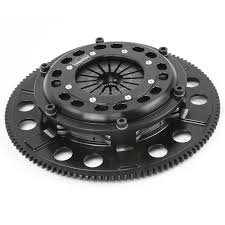
Clutch Plates Research Summary
Market Size: The North American automotive clutch market reached $5.43 billion in 2024, growing at 5.2% CAGR through 2031
Opportunity Window: US aftermarket demand is strong with 292 million vehicles in operation and average vehicle age at 12.6 years
Best Segments: Performance clutch kits (22-32% margins), classic vehicle applications (25-35% margins), and motorcycle clutch plates (28-38% margins) offer highest profit potential
Underserved Niches: Diesel pickup trucks for heavy towing, 1990s-2000s Japanese imports, agricultural/industrial equipment crossovers, and engine swap applications all lack dedicated suppliers, creating opportunity for specialized sellers.
Sourcing Advantage: China-sourced clutch plates at $8-25 per unit enable 3-5x retail markup potential
Platform Strategy: eBay leads for specialty/vintage applications; Amazon dominates OEM replacement volume; DTC/Shopify delivers highest margins for performance segments
Key Risk: EV adoption reducing long-term demand for traditional clutch components, but 87%+ of vehicles remain internal combustion through 2030
Recommended Entry Point: Motorcycle clutch plate kits or performance automotive clutches offer best margin-to-competition ratio for new sellers
1. Introduction: Understanding the Vehicle Clutch Plate Category
What Is a Clutch Plate?
A clutch plate (also called a clutch disc) is the friction component in a manual transmission system that connects the engine's rotating crankshaft to the transmission, allowing drivers to engage and disengage power flow to shift gears. The clutch assembly typically consists of three main components: the clutch disc (or plate), the pressure plate, and the throw-out (release) bearing.
When the clutch pedal is pressed, the pressure plate releases the clutch disc from the flywheel, disconnecting engine power and allowing gear changes. Releasing the pedal re-engages the components, transferring engine torque to the wheels.
Market Landscape and Product Evolution
The automotive clutch industry has evolved significantly from basic friction materials to sophisticated multi-material systems designed for specific performance characteristics.
Historical Evolution:
The journey from basic asbestos-lined clutches in early automobiles to today's carbon composite and ceramic performance clutches reflects decades of materials science advancement. The 1970s saw the shift away from asbestos, while the 1990s introduced dual-mass flywheels and improved organic friction compounds. Today's market features advanced materials including carbon fiber composites, Kevlar-reinforced organic materials, and ceramic/metallic compounds designed for high-performance applications.
Current Market Dynamics:
The global automotive clutch plate market reached approximately $4.74 billion in 2024 and is projected to grow to $7.99 billion by 2032, representing a 6.28% compound annual growth rate. North America commands roughly 40.76% of global market share, making it the largest regional market for clutch components.
Several factors drive this growth. The aging US vehicle fleet (average age now exceeding 12 years) creates sustained replacement demand. Despite the rise of automatic transmissions domestically, manual transmissions remain popular in performance vehicles, commercial trucks, and motorcycles. The robust automotive aftermarket industry, valued at over $400 billion domestically, continues expanding as consumers opt to maintain existing vehicles rather than purchase new ones.
Leading Brands and Market Players:
The clutch market features both OEM-tier manufacturers and aftermarket specialists:
Premium OEM/Tier-1 Brands:
LuK (Schaeffler Group) is the OEM supplier to Ford, GM, and European manufacturers, known for reliability and OE-spec replacement.
Valeo, a French multinational supplying major automakers, maintains a strong presence in European vehicle applications.
Exedy stands as Japan's largest clutch manufacturer, serving as OEM to all 11 Japanese automakers while offering both OE replacement and performance lines.
Sachs (ZF) brings German engineering heritage with premium pricing, serving as OEM to BMW, Mercedes, and others.
Aisin, a Toyota group company, excels in Asian vehicle applications.
Performance/Aftermarket Specialists:
ACT (Advanced Clutch Technology) is US-based and focused on high-performance and racing applications.
Clutch Masters offers performance-oriented products known for adjustable pressure plates.
Competition Clutch is popular in import tuner markets serving Honda, Subaru, and Mitsubishi enthusiasts. Centerforce, a US manufacturer, is known for dual-friction technology.
RAM Clutches specializes in drag racing and high-torque applications.
Spec Clutch provides stage-rated performance clutches for various platforms.
Value/Private Label Segment:
Rhino Pac serves as a budget aftermarket option, while
Beck Arnley offers value-tier replacement parts. Various white-label suppliers serve auto parts retailers across the country.
Product Segments, Categories, and Price Ranges
By Application Type:
Passenger Car OEM Replacement kits provide direct-fit solutions for common vehicles, typically retailing between $120 and $350.
Performance/Stage Clutches offer enhanced holding capacity for modified vehicles in the $250 to $800 range. Racing/Competition clutches deliver maximum performance with minimal street comfort, commanding $600 to over $2,000.
Heavy Duty Truck clutches serve commercial vehicle applications from $300 to $1,200.
Motorcycle clutch plates for powersports range from $25 to $200.
Classic/Vintage applications with limited supply typically sell between $150 and $600. Agricultural/Industrial clutches for tractors and equipment fall in the $100 to $500 range.
By Component Type:
Complete Clutch Kits include the disc, pressure plate, bearing, and alignment tool, retailing from $120 to $800.
Clutch Discs Only (the friction plate component) range from $35 to $150.
Pressure Plates (the spring-loaded clamping mechanism) sell for $75 to $250.
Flywheels that connect to the crankshaft and provide the friction surface cost $100 to $400.
Throw-Out Bearings that engage and disengage the pressure plate retail from $15 to $80.
By Material Type:
Organic materials offer smooth engagement ideal for daily drivers and OEM replacement street use. Ceramic materials provide high heat resistance with aggressive engagement suited for racing and high-performance applications.
Kevlar delivers durability with moderate aggression, perfect for performance street and light track use. Carbon materials are lightweight for extreme performance in professional racing.
Sintered Iron offers maximum durability for commercial use in heavy trucks and industrial applications.
Private Label Sourcing: Cost Analysis and MOQ Requirements
For sellers considering private label or white-label clutch plates, understanding landed costs is critical for margin calculations. The following breakdown provides estimated sourcing costs based on typical Chinese manufacturer pricing and standard import assumptions.
| Cost Component | Economy Disc | Standard Kit | Performance Kit | HD Truck Kit |
|---|---|---|---|---|
| Factory FOB Price | $8 - $15 | $22 - $45 | $55 - $120 | $85 - $180 |
| Ocean Freight (per unit)* | $1.50 - $2.50 | $3 - $5 | $4 - $7 | $8 - $15 |
| Import Duty (2.5%) | $0.25 - $0.40 | $0.60 - $1.25 | $1.50 - $3.20 | $2.35 - $4.90 |
| Customs Brokerage | $0.50 - $1 | $0.75 - $1.50 | $1 - $2 | $1.50 - $3 |
| US Warehousing/Handling | $0.50 - $1 | $1 - $2 | $1.50 - $3 | $3 - $6 |
| Total Landed Cost | $10.75 - $20 | $27 - $55 | $63 - $135 | $100 - $210 |
| Pricing and Margins | ||||
| Typical Retail Price | $35 - $75 | $120 - $220 | $280 - $500 | $350 - $700 |
| Gross Margin Potential | 55% - 73% | 65% - 77% | 68% - 77% | 65% - 71% |
| Order Requirements | ||||
| Typical MOQ (Test Order) | 50 - 100 pcs | 50 - 100 sets | 20 - 50 sets | 20 - 50 sets |
| Test Order Investment | $540 - $2,000 | $1,350 - $5,500 | $1,260 - $6,750 | $2,000 - $10,500 |
| Lead Time | 30 - 45 days production + 25 - 35 days ocean freight | |||
Important Notes
*Ocean freight based on LCL rates to West Coast US ports; full container loads reduce per-unit shipping significantly. Gross margins shown are before platform fees, advertising, and fulfillment costs. Actual net margins typically run 18-35% after all expenses. MOQs are negotiable for established relationships or sample orders.
Key Sourcing Considerations
Look for IATF 16949 (automotive quality management) or ISO 9001 certified manufacturers. ECE R90 certification is required for European markets.
Always request samples before committing to MOQ. Test for dimensional accuracy, material composition, and friction coefficient if possible.
Clutch plates are vehicle-specific. Ensure supplier can provide correct specifications for your target applications.
Factor in professional packaging costs ($2-5 per kit) for retail presentation with installation instructions.
Many manufacturers offer 12-month warranties; factor potential returns into margin calculations.
2. Marketplace Sales Opportunity Analysis
| Marketplace | Score | Product Segment | Est. Weekly Units | Est. Weekly Revenue | Avg. Price Range | Est. Profit Margin |
|---|---|---|---|---|---|---|
| Amazon | 7 | OEM Replacement Clutch Kits | 2,800 - 3,500 Med | $420K - $700K | $120 - $350 | 18% - 25% |
| 8 | Performance/Stage Clutch Kits | 1,200 - 1,800 Med | $360K - $720K | $250 - $600 | 22% - 32% | |
| 6 | Individual Clutch Discs/Plates | 3,200 - 4,000 Med | $160K - $280K | $35 - $95 | 20% - 28% | |
| 5 | Pressure Plates Only | 1,500 - 2,200 Low | $135K - $264K | $75 - $180 | 15% - 22% | |
| eBay | 8 | Classic/Vintage Vehicle Clutch Kits | 800 - 1,200 Med | $160K - $360K | $150 - $450 | 25% - 35% |
| 7 | Heavy Duty/Commercial Truck Clutches | 450 - 700 Med | $225K - $490K | $350 - $900 | 20% - 28% | |
| 7 | Motorcycle Clutch Plates/Kits | 1,800 - 2,400 High | $90K - $192K | $40 - $120 | 28% - 38% | |
| 6 | Import Vehicle Clutch Kits | 1,100 - 1,600 Med | $165K - $320K | $130 - $280 | 18% - 26% | |
| Walmart | 6 | Budget OEM Replacement Kits | 1,400 - 2,000 Low | $140K - $260K | $85 - $180 | 12% - 18% |
| 5 | Popular Vehicle Clutch Discs | 900 - 1,300 Low | $45K - $91K | $40 - $90 | 10% - 16% | |
| 4 | Economy Clutch Components | 600 - 900 Low | $24K - $54K | $30 - $75 | 8% - 14% | |
| Shopify/DTC | 9 | Racing/Competition Clutch Systems | 150 - 300 Med | $120K - $360K | $600 - $1,500 | 35% - 48% |
| 8 | Specialty Performance Kits (JDM/Euro) | 250 - 450 Med | $87K - $225K | $280 - $650 | 30% - 42% | |
| 7 | Vehicle-Specific Complete Kits | 400 - 650 Med | $80K - $195K | $180 - $400 | 25% - 35% | |
| RockAuto/Parts Retailers | 5 | Full Catalog OEM Replacements | 4,500 - 6,000 High | $675K - $1.2M | $100 - $300 | 12% - 18% |
| 6 | Premium Brand Distributorship | 1,800 - 2,500 Med | $360K - $625K | $180 - $350 | 15% - 22% | |
| B2B/Wholesale | 7 | Auto Shop/Garage Bulk Supply | 800 - 1,200 Med | $120K - $240K | $90 - $250 | 18% - 25% |
| 6 | Fleet/Commercial Accounts | 350 - 600 Low | $140K - $360K | $300 - $800 | 15% - 22% |
Key Platform Insights:
Amazon dominates volume for OEM replacement clutch kits with strong search traffic. Competition is moderate to high in commodity segments but opportunities exist in performance categories. FBA is preferred for Prime eligibility and customer trust. Vehicle fitment data is critical for listing optimization. The best opportunities include performance/stage clutch kits (score 8) with estimated weekly revenues of $360K to $720K and margins of 22-32%.
eBay holds a strong position for specialty applications including classic/vintage vehicles, motorcycles, and heavy-duty truck components. Lower competition exists in niche segments. The buyer base includes DIY mechanics and enthusiasts with higher technical knowledge. Auction format remains relevant for rare applications. Classic vehicle clutch kits score highest (8) with 25-35% margins.
Walmart Marketplace shows growing presence in automotive but lower seller sophistication creates opportunity. Price-sensitive buyers favor budget options. Walmart Fulfillment Services (WFS) is gaining traction. This platform works best for high-volume, lower-margin OEM replacement parts, though margins run tighter at 10-18%.
Shopify/DTC offers the highest margin potential for performance and specialty brands. This approach requires investment in brand building, content marketing, and customer education. Racing/competition clutch buyers prefer direct brand relationships. Vehicle community engagement is critical for success. Racing clutch systems score 9 with margins reaching 35-48%.
B2B/Wholesale provides steady demand from repair shops and fleet operators. This channel is relationship-driven with repeat purchase patterns. It requires credit terms and volume pricing capabilities. Lower per-unit margins are offset by order consistency. Auto shop bulk supply scores 7 with 18-25% margins.
3. Buyer Demand and Keyword Trends Analysis
Primary Buyer Personas
Persona 1: The DIY Home Mechanic
This buyer is typically male, aged 35-55, owns older vehicles, and possesses moderate to high mechanical aptitude. Their primary motivation is cost savings over shop labor, with clutch replacement typically saving $400-800 in labor costs. They value clear fitment information, complete kits, installation guides, and quality that matches OEM standards. Their search behavior focuses on specific vehicle searches like "2015 Mustang GT clutch kit" and brand searches. Price sensitivity is medium as they're willing to pay for quality but seek value.
Persona 2: The Performance Enthusiast
Generally male, aged 25-45, this buyer owns modified vehicles and is active in car communities. Their motivation centers on upgraded holding capacity for power modifications and track use. They value performance specifications, brand reputation, community reviews, and stage ratings. Search behavior includes performance terms like "stage 2 clutch WRX" and brand-specific searches. Price sensitivity is low as quality and performance trump price considerations.
Persona 3: The Professional Mechanic/Shop
This segment includes auto repair businesses and fleet maintenance operations. Their motivation is finding reliable parts for customer vehicles with reasonable margins and warranty support. They value consistent quality, fast availability, wholesale pricing, and easy returns. Search behavior focuses on part numbers, bulk searches, and distributor relationships. Price sensitivity is high as margins are tight and they seek the best wholesale pricing.
Persona 4: The Classic Car Restorer
Typically male, aged 45-65, this buyer is restoring vintage vehicles and often collects them. Their motivation is finding correct-fit parts for specific model years to achieve quality restoration. They value application accuracy, OE specifications, and availability for rare applications. Search behavior is year/make/model specific, and they're often willing to search extensively for hard-to-find parts. Price sensitivity is low as they will pay premium prices for correct, quality parts.
Persona 5: The Motorcycle/Powersports Owner
This segment spans a broader age range of 25-60 and includes motorcycle and ATV owners. Their motivation is maintenance and upgrades for powersports vehicles. They value OEM compatibility, friction material quality, and complete plate sets. Search behavior centers on specific bike model searches and OEM part number cross-references. Price sensitivity is medium as they're brand conscious but value-aware.
Search Volume and Keyword Trends
Based on search data analysis, the following keyword patterns demonstrate consistent demand:
High-Volume Search Terms:
Generic product searches like "clutch kit" and "clutch plate" generate 40,000 to 60,000 monthly US searches with stable trends. Vehicle-specific searches such as "[vehicle] clutch kit" see 15,000 to 25,000 monthly searches, also stable. Brand searches including "Exedy clutch" and "LuK clutch kit" generate 8,000 to 15,000 monthly searches with growing trends. Performance terms like "stage 2 clutch" and "performance clutch" attract 5,000 to 10,000 monthly searches and are growing. Component-specific searches for "clutch disc" and "pressure plate" see 12,000 to 20,000 monthly searches with stable trends. Motorcycle searches for "motorcycle clutch plates" generate 8,000 to 12,000 monthly searches and are growing.
Seasonal Patterns:
Clutch plate demand shows moderate seasonality with peaks in spring (March through May) as vehicle owners prepare for summer driving season and address winter-delayed maintenance. A secondary peak occurs in early fall (September through October) before winter. Summer months show steady demand for performance parts as track season peaks.
Rising Search Queries:
Electric vehicle clutch systems represent an emerging niche for hybrid applications. Dual-clutch transmission components are gaining interest. Competition/racing clutch specifications show increased search activity. Specific performance vehicle applications including the GR86, WRX, and Civic Si/Type R demonstrate growing demand.
Declining Queries:
Generic manual transmission terms are declining as vehicles shift toward automatic transmissions. Older economy vehicle applications are decreasing as these vehicles age out of the active fleet.
Community Feedback and Product Improvement Opportunities
Analysis of enthusiast forums, Reddit communities (r/MechanicAdvice, r/Cartalk, r/cars), and product reviews reveals consistent consumer pain points representing product development opportunities:
Installation Challenges:
Alignment tools are often low quality or wrong size, creating an opportunity for premium alignment tool inclusion. Pilot bearing/bushing is frequently overlooked, so emphasizing complete kit inclusion adds value. Flywheel surface preparation guidance is often lacking, so including resurfacing recommendations helps customers succeed.
Quality Concerns:
Cheap throwout bearings failing prematurely creates demand for quality bearing upgrades. Clutch chatter on break-in frustrates customers, making better break-in instructions valuable. Inconsistent friction material quality in budget options drives requests for material specification transparency.
Fitment Frustrations:
Incorrect parts despite "fits" claims erode trust, making accurate vehicle compatibility data critical. Missing installation hardware frustrates buyers, so comprehensive hardware kits are appreciated. No acknowledgment of mid-year production changes confuses customers, creating value for VIN-specific fitment guidance.
Information Gaps:
Limited torque specifications provided with products means technical documentation is welcomed. Unclear performance ratings drive requests for standardized capacity ratings. Lack of comparison between OEM and aftermarket options represents an educational content opportunity.
Underserved Applications:
Diesel pickup trucks with heavy towing needs remain underserved. Older import vehicles from the 1990s and 2000s Japanese manufacturers need more options. Agricultural and industrial equipment crossovers lack dedicated suppliers. Converted/swapped engine applications represent a niche opportunity.
Sources and References
Auto Care Association and AASA - 2024 Joint Channel Forecast Model - US Aftermarket Industry Data
Credence Research - Automotive Clutch Plate Market Size, Share and Forecast 2032 - July 2025
Fortune Business Insights - Automotive Clutch Market Size, Share, Growth Report 2032
IMARC Group - Automotive Clutch Market Size and Forecast 2033
Verified Market Reports - Automotive Clutch Plate Market Size, Competitive Dynamics and Forecast 2033
Cognitive Market Research - North America Automotive Clutch Industry Report 2025
Hedges and Company - Automotive Aftermarket Industry Size and Statistics - June 2025
Mordor Intelligence - USA Aftermarket Car Parts Market Trends and Size
MEMA Aftermarket Suppliers - US Automotive Aftermarket Industry Growth Report 2024
Made-in-China.com and Alibaba.com - Clutch Plate Manufacturer Directories and Pricing Data
This analysis was prepared for ShelfTrend subscribers seeking e-commerce opportunities in the automotive aftermarket sector. Data represents estimates based on publicly available market research, industry reports, and marketplace analysis. Actual results will vary based on execution, market conditions, and competitive dynamics.