
Article Summary: Key Insights at a Glance
- Smart hoop AI tracker cameras sit inside the sports auto-camera AI category, estimated at roughly $486 million in 2024 and forecast to reach about $5.18 billion by 2034 at a 26.7% CAGR, with North America holding around 45.8% of global revenue and the US alone at roughly $200 million growing at 24.3%. Competing estimates run far higher because they fold in broadcast infrastructure, so sellers should plan against the narrow consumer and grassroots slice.
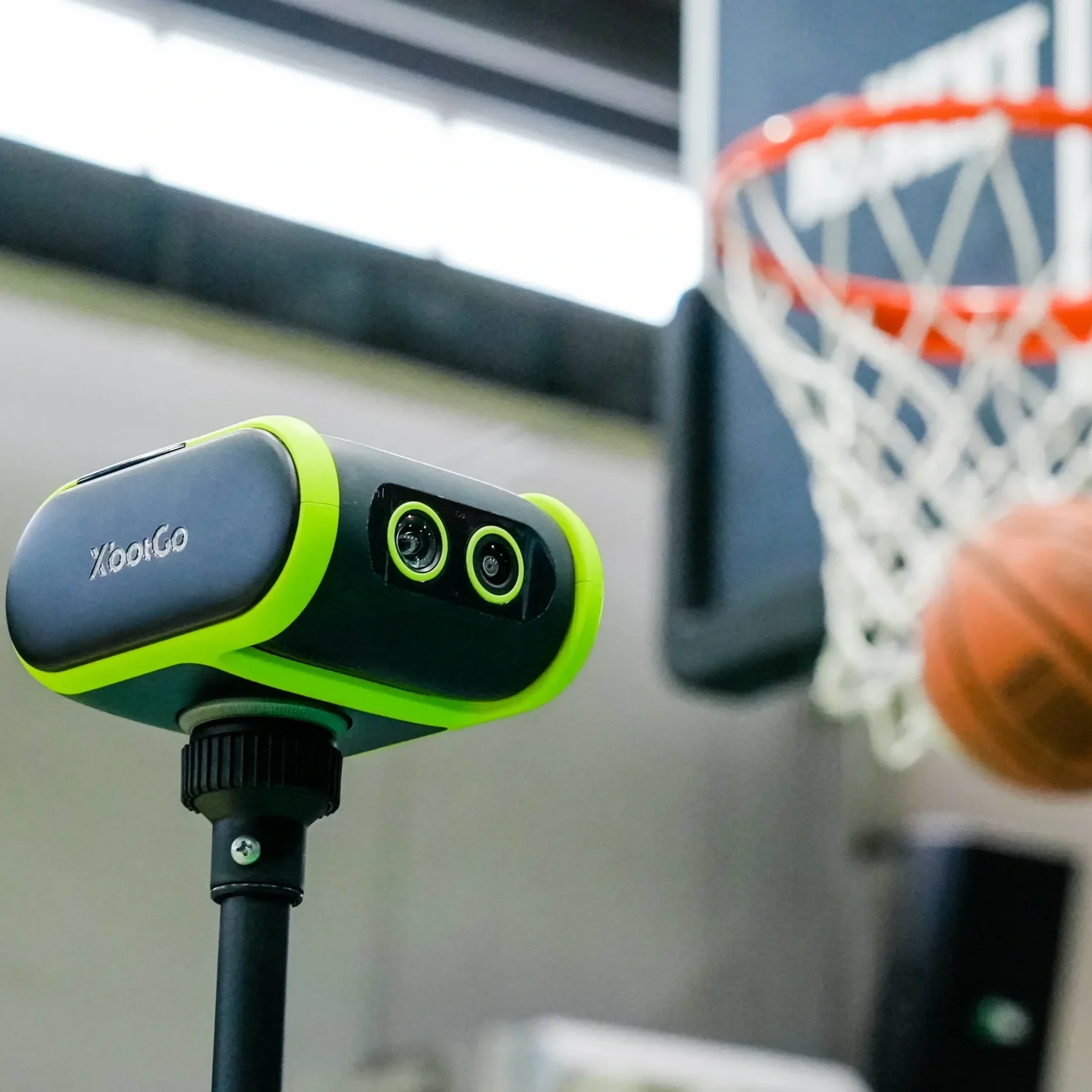
- The category has split into three architectures that buyers routinely confuse: hoop-mounted sensor systems (huupe ARENA at $2,995 for the 60 inch and $3,495 for the 72 inch), motorised phone-mount trackers (XbotGo Chameleon at roughly $299 to $369, Pivo Pod around $120), and phone-only computer vision apps (HomeCourt, free tier plus $7.99 per month or $69.99 per year).
- Hardware margin on branded systems is thin and getting thinner. Retail comparables show the Chameleon discounting from a $329.99 comparable value, and earlier-generation XbotGo AI gimbals already trading used on eBay at $62 to $95. Authorised resale of these systems is a 6% to 14% margin business.
- The profit is in the mounting, power, protection and transport layer, which every one of these systems needs and almost none of them include. Clamps, 13 foot tripods, ball-strike guards, weather skins, power banks and padded cases carry 45% to 68% margins against single digits on the cameras themselves.
- Buyer complaints cluster into four repeatable themes: tracking that drops the ball or the play (one published review reported tracking failing to hold the ball beyond about nine minutes), mounting that does not survive a real gym (tripod bans, 13 foot height requirements, ball strikes), phone and device battery collapse during tournament days, and subscription and platform lock-in discovered after purchase.
- Accuracy claims are the category's trust problem. Independent commentary flags false precision in app-based form analysis, noting a phone shooting at 30 or 60 frames per second through a generalised pose model cannot deliver decimal-point joint angles. Sellers who sell consistency rather than laboratory precision will out-convert sellers who repeat vendor marketing.
- Privacy is a live purchase objection, not a footnote. One major brand deliberately built a non-camera sensor product using radar and LiDAR because parents and schools object to cameras pointed at minors. Listings that answer the privacy question directly convert better in the youth and school segments.
- Seasonality is double-peaked and that is the category's structural advantage. US school basketball drives an October through February peak, and club and AAU play drives a second April through July peak. Unlike single-season sporting goods, this category never goes fully dark.
- Private label is closed at the AI camera tier where computer vision, firmware and app ecosystems form the moat, and wide open at the rig tier where the goods are aluminium, silicone, foam and nylon at $3.60 to $26.00 FOB.
- The best entry point for a new seller in 2026 is a gym-legal filming rig bundle in the $79 to $129 range on Amazon and TikTok Shop, built from mounts and tripods rather than cameras.
1. Actionable Insights First: Executive Opportunity Summary
Top 3 Selling Opportunities Right Now
Opportunity 1: Mount and rig kits for AI tracker cameras on Amazon
Opportunity Score: 9/10
Every auto-tracking camera system in this category ships as a device and a clamp. It does not ship as a working courtside setup. The manufacturer's own guidance makes the gap explicit: small indoor courts want a roughly four foot portable tripod, larger fields want a 13 foot stand, the unit must sit near the centreline, obstacles must be cleared from the tracking lens, and the phone must be centred on the mount for balanced operation. Every one of those requirements is a product the buyer has to source separately.
The buyer discovers this on the first game day, which is the most urgent and least price-sensitive moment in the ownership cycle. A parent who has already spent $300 on a tracker and cannot get a usable angle will pay $79 for a tripod that same week.
- Profit margin range: 45% to 62% net
- Best price points: $39.99, $79.99 and $119.99
- Growth signal: the installed base is compounding fast, with one brand claiming over 150,000 users across coaches, parents and athletes, and each of those users is a mount-and-tripod buyer within the first month
Opportunity 2: Used and open-box AI tracker cameras on eBay and Facebook Marketplace
Opportunity Score: 9/10
This category generates abandoned hardware at an unusual rate, because a meaningful share of buyers purchase for one child's season and stop. Superseded generations trade cheaply: earlier XbotGo AI gimbals list used and open-box between roughly $62 and $95, against current-generation systems at $299 and up. Seasonality does the rest. Units are dumped in March when the school season ends and in August when families reassess, and they are bought in late September and again in April when club season starts.
The trust premium here is larger than in most used electronics, because the buyer's core anxiety is whether the tracking still works. A seller who posts a 60 second clip of the unit actually tracking a live drill, states the firmware version and confirms app compatibility with current iOS and Android versions removes the entire objection.
- Profit margin range: 32% to 48% net
- Typical acquisition: $55 to $140 off-season
- Typical resale: $120 to $260 in season
- Growth signal: two annual dumping windows and two annual buying windows make the spread repeatable twice a year rather than once
Opportunity 3: Gym-legal and rim-mount hardware, including small-batch and 3D printed mounts
Opportunity Score: 8/10
Many school gyms, community centres and tournament venues restrict tripods in walkways and baseline areas for liability reasons. Home driveway users have the opposite problem, which is that they want the camera on the pole or backboard rather than on a stand at all. Neither need is served well by the brands, because the brands sell a universal quarter-inch thread and leave the rest to the buyer.
Clamp mounts for basketball poles, backboard brackets, fence and railing clamps, ceiling and wall plates, and net-guarded tripod collars are all low-complexity mechanical goods with high search intent and almost no brand competition. Sellers who organise listings by mounting surface rather than by SKU convert at high rates because the buyer arrives with a specific problem, not a browsing habit.
- Profit margin range: 50% to 68%
- Typical price points: $24.99 to $89.99
- Growth signal: rising installation of home smart hoop systems keeps expanding the pool of users who need a fixed mount rather than a portable stand
Quick Action Items
Source the rig, not the camera. Place a first order of universal clamp mounts, ball-strike tripod guards and padded transport cases with a Shenzhen or Guangzhou supplier. Published supplier ranges for tracking camera mounts run from roughly $4.50 to $139.99 with minimums as low as a single unit for sampling, and volume ODM gimbal mounts are available from suppliers quoting sub-$40 units at 50 piece minimums. Confirm motor and clamp warranty terms in writing, since 12 month motor coverage is standard among the better suppliers.
Buy used inventory in March and August, list from late September and again in April. Set saved searches for superseded XbotGo, Pivo and OBSBOT units, target sub-$140 acquisitions, and hold for the two demand windows. Photograph the serial, record a short live tracking clip and note the app version for every unit.
Build mount-surface-first listings. Create separate listings for basketball pole clamps, backboard brackets, chain-link fence mounts, bleacher rail clamps, ceiling plates and standard tripod threads. Put the mounting surface in the title. This is the highest-intent, lowest-competition search behaviour in the category.
Solve the tournament power problem. A full day of youth tournament play drains both the tracker and the phone, and the manufacturer guidance itself recommends carrying a portable charger for extended sessions. A bundle pairing a high-capacity power bank, a long right-angle cable and a cable-management clip for the tripod leg is a genuine product, not an accessory afterthought.
Shoot listing photos that answer the three objections. Show the mount attached to a real basketball pole and to a real gym rail, show the tripod at full extension next to a standard 10 foot rim for scale, and show a still frame from actual indoor gym footage rather than a bright outdoor clip. Indoor lighting is where this category loses its conversions and its reviews.
Red Flags to Avoid
Authorised resale of branded AI camera systems. Margin on new-in-box systems runs at roughly 6% to 14% before advertising, and the brands discount directly and through big-box retail. When a system with a $329.99 comparable value is being cleared at a lower price through a national retailer, a third-party reseller holding inventory absorbs the entire cut. This is not a beginner segment.
Unbranded "AI shot tracking" cameras with accuracy claims you cannot verify. The computer vision is the product, and it is exactly the thing a trading company cannot supply. Published analysis of app-based form tracking warns against false precision, pointing out that a phone camera recording at 30 or 60 frames per second and processing occluded joints through a generalised neural network cannot produce decimal-point physical measurements. Selling a generic unit with a specific accuracy claim invites returns, negative reviews and marketplace suppression.
Anything that implies league, platform or brand endorsement. Listings that reproduce league marks, imply a partnership with a training app, or use professional team branding invite takedowns and account risk. The safe framing is compatibility language and generic mounting language. This matters more here than in most categories because the category's marketing leans heavily on pro athlete association.
Best Entry Point for New Sellers
Product recommendation: A three-piece gym-legal filming rig consisting of a heavy-duty aluminium sports tripod extending to roughly 13 feet with an air-cushioned centre column, a universal clamp mount that fits basketball poles, bleacher rails and fence rails, and a padded sling case with a shoulder strap.
Primary marketplace: Amazon US
Secondary marketplace: TikTok Shop, with the same SKU repackaged for short-form demonstration selling
Price range: $109.99 to $129.99 for the bundle
Startup cost breakdown for a 400 unit first order:
| Line Item | Cost | Notes |
|---|---|---|
| 13 ft aluminium sports tripods (400 units) | $10,400 | $26.00 FOB, air-cushioned column, three leg sections |
| Universal clamp mounts (400 units) | $2,880 | $7.20 FOB, CNC alloy jaw, 1/4 inch and 3/8 inch threads |
| Padded sling cases (400 units) | $2,520 | $6.30 FOB, 600D nylon, foam wall, shoulder strap |
| Retail packaging and setup card | $760 | $1.90 per bundle, printed mounting-surface guide |
| Sea freight and drayage | $4,600 | Long and heavy goods, roughly $11.50 per bundle |
| Duties, tariffs and customs brokerage | $2,950 | Tripod and mount classification plus China-specific tariff layers and processing fees |
| Product photography and video | $1,200 | Gym and driveway sets plus two 30 second demos for TikTok Shop |
| Brand registry, UPCs, trademark filing | $650 | Required for A+ content and brand protection |
| Launch advertising (8 weeks) | $3,200 | Sponsored products plus TikTok Shop affiliate commissions |
| Samples, load testing and contingency | $1,450 | Four supplier samples, tip-over and clamp load tests, 10% buffer |
| Total startup cost | $30,610 | Roughly $76.53 fully loaded per bundle at 400 units |
Why this works:
Three things make the rig the right first move rather than the camera. First, the rig tier is the only part of the category where a new entrant can differentiate, because quality is mechanical and visible in a photograph, while camera quality lives in firmware a first-time importer cannot influence. Second, the buyer already owns the expensive item, which makes the rig a solve-a-problem purchase with low price elasticity and low return rates. Third, a fully loaded cost of roughly $76.53 against a $119.99 bundle price leaves room for marketplace fees, advertising and returns while still clearing a working margin, and the three components can later be sold individually to widen the catalogue without a second supplier relationship.
The alternative entry point, importing a generic AI tracking camera, fails on all three counts. Tracking quality cannot be differentiated by a first-time importer, buyers compare against published reviews of established systems, and the price floor has already been set by branded units selling between $120 and $369.
There is also a second-order benefit. The rig buyer is sport-agnostic. The same tripod and clamp sell into soccer, volleyball, wrestling, swimming and cheer parents, which means the category's double seasonality can be smoothed further by expanding keyword coverage rather than inventory.
2. Quick Data Scans: Marketplace Sales Opportunity Analysis
Legend
| Score Range | Meaning | Action |
|---|---|---|
| 8 to 10 | High demand, low to moderate competition | Enter now |
| 5 to 7 | Moderate demand, moderate competition | Test carefully |
| 1 to 4 | Low demand or oversaturated | Avoid |
Marketplace Opportunity Matrix
| Marketplace | Opportunity Score | Product Segment | Est. Weekly Unit Sales | Est. Weekly Revenue | Avg Price Range | Est. Profit Margin |
|---|---|---|---|---|---|---|
| Amazon US | 9 | Mounts, clamps and rig hardware (pole, rail, fence and backboard mounts) | 180 to 340 | $6,500 to $13,000 | $25 to $69 | 48% to 62% |
| 8 | Heavy-duty sports tripods and stands (4 ft to 13 ft, air-cushioned) | 90 to 175 | $7,200 to $15,500 | $69 to $129 | 40% to 55% | |
| 6 | Power, cable and transport accessories (power banks, cases, cable clips) | 120 to 260 | $3,000 to $7,200 | $19 to $45 | 38% to 52% | |
| 3 | New branded AI tracker camera systems (authorised resale) | 35 to 80 | $12,000 to $29,000 | $120 to $369 | 6% to 14% | |
| eBay US | 9 | Used and open-box AI tracker cameras (tested, tracking clip included) | 40 to 85 | $6,000 to $19,000 | $120 to $260 | 32% to 48% |
| 8 | Legacy mounts, arms, plates and spares (discontinued fitments) | 95 to 190 | $2,600 to $6,000 | $14 to $55 | 52% to 68% | |
| 6 | Superseded smart balls and sensor kits (wrist and hoop sensor generations) | 30 to 70 | $1,800 to $5,200 | $45 to $110 | 35% to 50% | |
| TikTok Shop | 8 | Clamp mounts and quick-setup rigs (demo-led short form selling) | 140 to 320 | $4,200 to $11,500 | $29 to $59 | 44% to 58% |
| 7 | Ball-strike guards and protective skins (silicone and mesh) | 80 to 200 | $1,900 to $5,000 | $19 to $34 | 50% to 64% | |
| Shopify / DTC | 8 | Complete filming rig bundles (coach and program packages) | 25 to 60 | $4,500 to $12,000 | $149 to $249 | 46% to 60% |
| 6 | Subscription-free training content add-ons (printed drill cards, setup guides) | 30 to 75 | $900 to $2,600 | $19 to $39 | 55% to 70% | |
| Etsy | 8 | Custom and 3D printed mounts (pole, rim and backboard fitments) | 35 to 90 | $1,400 to $4,200 | $28 to $65 | 55% to 70% |
| Walmart Marketplace | 7 | Tripods and universal phone mounts (value tier) | 70 to 150 | $3,400 to $8,000 | $39 to $79 | 36% to 50% |
| 5 | Entry AI tracking phone mounts (sub-$100 units) | 45 to 110 | $3,600 to $9,500 | $59 to $99 | 18% to 28% | |
| Facebook Marketplace | 7 | Local used tracker and tripod flips (seasonal acquisition channel) | 12 to 35 | $1,600 to $6,500 | $110 to $240 | 35% to 50% |
| Amazon Renewed | 6 | Certified refurbished tracker systems (warranty-backed) | 15 to 40 | $2,400 to $8,500 | $140 to $280 | 20% to 32% |
| Target Plus | 6 | Consumer tripods and home court accessories (gift-tier goods) | 35 to 85 | $1,800 to $4,600 | $35 to $75 | 34% to 46% |
| Instagram Shopping | 5 | Premium rigs and creator kits (aesthetic-led) | 10 to 28 | $1,600 to $4,800 | $140 to $260 | 44% to 58% |
| Mercari | 5 | Used accessories and lower-value spares (clamps, cases, cables) | 25 to 65 | $800 to $2,400 | $20 to $50 | 40% to 55% |
| School and club wholesale | 4 | Program-level camera and rig supply (purchase order terms, long cycles) | 5 to 18 | $3,000 to $11,000 | $300 to $900 | 10% to 18% |
| Craigslist / OfferUp | 4 | Direct private-party resale (cash, local pickup) | 4 to 14 | $500 to $2,600 | $100 to $220 | 30% to 45% |
Table Notes and Methodology
Unit and revenue estimates describe what a competent single seller with an established listing can expect during an in-season window, which in this category means both the October to February school season and the April to July club season, not total marketplace category volume. The two shoulder periods, March and late August, typically run at 35% to 50% of the values shown.
Margin figures are net after marketplace fees, payment processing, inbound and outbound shipping, an assumed 5% to 9% return rate and an advertising allocation of 9% to 15% of revenue. They do not include the seller's own labour, warehouse rent or software subscriptions. Long goods such as 13 foot tripods carry disproportionate fulfilment and storage costs, which is why their margin band sits below that of small clamp hardware despite a much higher selling price.
Opportunity scores weigh four inputs equally: demand stability across both seasons, competitive density on the marketplace, the seller's ability to differentiate on something other than price, and margin durability against brand and retail discounting. New branded camera systems score low despite high revenue per unit precisely because margin durability is absent. A system carrying a $329.99 comparable value that clears through national retail at a lower price erases a reseller's entire spread in a single promotion.
Used channel figures assume the seller does real work: charging and function-testing the unit, recording a short live tracking clip, confirming current app compatibility, cleaning, and packing with the original accessories or clearly stated substitutes. Listings without that work sell at private-party prices and score two to three points lower.
Etsy scores unusually high for a category of this type because custom and small-batch mounts are a genuine unmet need. Buyers searching for a fitment that matches a specific pole diameter or backboard bracket are not price shopping, and no volume brand serves them.
3. Deeper Context: Market Landscape and Buyer Intelligence
A. Market Overview
Category Definition and Size
Smart hoop AI tracker cameras cover any device that uses computer vision, sensors or a combination of both to watch basketball activity and turn it into data or automatically framed video. The category splits into four architectures, and buyers confuse them constantly.
- Hoop-integrated sensor systems. A sensor or camera unit mounted on the backboard or rim, sold either as part of a complete hoop or as an attachment. Highest price, highest data quality, least portable.
- Motorised phone-mount trackers. A powered gimbal base that holds a smartphone and rotates to follow players or the ball using its own tracking lens plus an app. The volume tier.
- Standalone auto-tracking cameras. Purpose-built wide-angle or multi-sensor cameras that record the whole court and generate footage or analytics through a platform subscription.
- Phone-only computer vision apps. No hardware beyond a tripod, with all tracking done through the phone camera and an app.
Sizing depends heavily on which of those you count. The narrow consumer and grassroots slice, best proxied by the sports auto-camera AI category, was estimated at roughly $486.3 million in 2024 with a forecast of about $5,184.1 million by 2034 at a 26.7% CAGR. North America held more than 45.8% of that revenue at roughly $222.7 million, and the US market alone sat at about $200.1 million growing at 24.3%.
Broader definitions produce very different headline numbers. One 2026 estimate places the sports auto-camera AI market at $3.8 billion in 2025 rising to $14.6 billion by 2035 at 14.1%, and another at $2.13 billion in 2024 rising to $8.94 billion by 2033 at 17.3%. Those larger figures absorb professional broadcast infrastructure, stadium camera arrays and enterprise analytics contracts. Adjacent markets are larger again: AI in sports was valued at $1.3 billion in 2025 with a 15% CAGR, and the sports analytics market sat at roughly $7.0 billion to $7.73 billion in 2026.
Sellers should plan against the narrow figure. A parent buying a $299 tracking gimbal and a school district buying a stadium camera array are not in the same market, and treating them as one produces inventory decisions based on revenue that will never reach a third-party seller.
The structural feature that defines the category commercially is that the hardware is only half the purchase. Almost every system in it is sold with an app, a platform or a subscription attached, which means the seller of the physical good is competing inside someone else's ecosystem. That is bad news for anyone hoping to build a brand on the camera itself, and good news for anyone selling the physical infrastructure the ecosystem ignores.
Product Evolution and Recent Trends
The category has moved through three phases.
Phase one, roughly 2017 to 2020, was app-first. Phone-based computer vision proved that a consumer device could count makes and misses and estimate release angles without any sensors at all. Early hardware alternatives were sensor-based: smart basketballs, wrist and hoop sensor combinations, and clip-on trackers. The app approach won on accessibility and lost on consistency, because results depended entirely on how the user placed the phone.
Phase two, 2021 to 2024, was hardware-first and expensive. Connected hoops with built-in displays arrived at prices that made them a luxury purchase. One flagship smart hoop launched at $4,995 and $6,495 depending on screen size, plus a $30 per month subscription and mandatory professional installation. Meanwhile motorised tracking gimbals for phones reached the mass market through crowdfunding and retail, with systems landing in the $120 to $369 band.
Phase three, 2025 to 2026, is the unbundling. The most consequential change in 2026 is that the intelligence is being separated from the hoop and sold as an attachment. One brand that previously sold complete smart hoop systems starting at around $3,000 has shifted focus to a weatherproof camera attachment with stadium-grade LED lighting that turns any existing hoop into a smart hoop, reporting several thousand units sold in a pre-sale test before the final retail price was even settled. Its in-ground systems now sit at $2,995 for the 60 inch model and $3,495 for the 72 inch, both bundled with the AI sensor, breakaway rim and perimeter LED lighting.
Four trends define the current market:
Attachment over appliance. Buyers increasingly want to add intelligence to equipment they already own rather than replace it. This is the single most important trend for third-party sellers, because an attachment needs mounting hardware and a replacement hoop does not.
Subscription resistance. The pricing spread is now wide and visible. One leading app offers a free tier with unlimited shot tracking and charges $7.99 per month or $69.99 per year for the full feature set. A smart ball system pairs a $99.99 ball with a $16.99 per month membership. A hardware-only shot tracking system sits at around $149.99. At the same time, one tracking gimbal brand markets aggressively on having no subscription ever plus 20GB of included cloud storage. Buyers have learned to look for the recurring cost before they buy, and listings that state it plainly convert better.
Edge processing and multi-sport generalisation. Current-generation tracking gimbals advertise support for 20 or more sports through a single algorithm, with dedicated profiles per sport. One system's automatic highlight editing supports basketball specifically, built around shooting-moment detection, with other sports still in development. This matters because it makes basketball the lead use case for a device that also sells into every other youth sport a family plays.
Privacy as a product decision. One manufacturer built a wall-mounted product using radar and LiDAR rather than a camera, and has said publicly that the camera route would have been substantially easier but that privacy was prioritised to maintain trust with parents and children. That is a genuine market signal. In gyms and schools, a camera pointed at minors is a policy question, not a feature.
Leading Brands and Market Disruptors
huupe is the defining brand at the hoop-integrated tier. Founded in 2019 and based in Irvine, California, it has raised roughly $26.86 million across rounds including an $11 million raise co-led by Protagonist VC, Marvan Ventures, TRI Investments and Kawn VC, and has filed 11 patents covering image processing and neural network applications to basketball. Its ARENA in-ground systems sell at $2,995 and $3,495 with AI shot tracking, rim impact charts, shot form analysis, interactive shot charts and global leaderboards. It has sold more than 40,000 units of its camera-free mini product. Its declared target is schools, gyms, coaches and players rather than casual home users. A notable friction point for sellers to understand: the company states the hoop ships within 7 to 14 days while the smart sensor ships separately 8 to 16 weeks later.
XbotGo is the volume leader at the motorised phone-mount tier and the most relevant competitor for third-party sellers. The Chameleon retails at roughly $299.99 to $369 for the standard bundle, with tripod bundles at $440, $530 and $627, and a $329.99 comparable value quoted at national retail. It records 4K at 60fps through a 120 degree ultra-wide AI lens, runs a 6,000mAh battery for up to eight hours, charges in about 3.5 hours, and requires iOS 15 or Android 10 or later. It sells accessory tripods at roughly four foot and 13 foot heights. The company claims over 150,000 coaches, parents and athletes as users, and its app carries a 4.6 rating across roughly 1,500 ratings. Its earlier AI Sports Gimbal sits around £209 new and $62 to $95 used.
Pivo occupies the value tier, with the Pod at around $120, the Pod Lite Sports Pack at about £125 and the Pivo Max at roughly £270. It tracks body and face through the phone's own camera with no worn beacon, which is its main differentiator against beacon-based systems.
Veo is the full-game platform player, with the Veo Cam 3 recording 1080p, weatherproof from -10C to 45C, with 6.5 hours of battery, cloud sync and a mandatory subscription. Its focus is soccer, with team and analytics subscriptions bundled into hardware promotions. Pixellot, Hudl Focus, Trace and Spiideo compete in the same institutional segment.
HomeCourt remains the reference point at the app tier. Free tier with unlimited shot tracking, over 100 drills, and a paid tier at $7.99 per month or $69.99 per year, iOS only. DribbleUp pairs a $99.99 smart ball with a $16.99 per month membership. ShotTracker sits at around $149.99 for hardware and targets program-level deployment. SportsVisio and Hoopsalytics compete on automatic full-game stats, with the latter relying on human tagging and therefore an hours-long turnaround.
Beacon-based systems such as Pixio and SoloShot sit at around $1,000 and require the subject to wear a transmitter. They track reliably through obstructions and at distance, which suits outdoor field sports, but the cost and the worn beacon make them a poor fit for indoor basketball.
OBSBOT and general-purpose gimbal makers occupy an interesting flank. The Tail Air at around £379 is not sports-specific but offers AI tracking, and consumer gimbals such as the DJI Osmo Mobile line at roughly £109 provide tracking at a fraction of the price without sports logic. Buyers cross-shop these constantly, which is why listing copy that explains what sports-specific tracking actually adds is worth writing.
Private label opportunity assessment: Closed at the AI camera tier, wide open at the rig tier. The moat around tracking systems is computer vision quality, app ecosystem, firmware maintenance and cloud infrastructure. None of that is available from a trading company. The moat around clamps, tripods, guards, cases, cable kits and power accessories is effectively zero, and incumbent pricing on those items is soft because the brands treat them as afterthoughts.
Price Tiers and Popular Brands
| Tier | Price Range | Representative Products | Reseller Margin | Sourcing Strategy |
|---|---|---|---|---|
| Tier 1: Rig and accessories | $14 to $139 | Clamps, tripods, ball-strike guards, cases, power banks, cable kits (tracking camera mounts quote from roughly $4.50 to $139.99 at supplier level) | 45% to 68% | Direct private label from Shenzhen, Guangzhou and Zhongshan suppliers at 300 to 1,000 MOQ |
| Tier 2: Entry tracking mounts | $59 to $149 | Pivo Pod (around $120), Pod Lite Sports Pack, generic AI face-tracking tripods, consumer gimbals | 18% to 30% | ODM quotes from sub-$40 units at 50 to 100 piece minimums, but expect to compete on price alone |
| Tier 3: Mainstream sports trackers | $250 to $450 | XbotGo Chameleon ($299.99 to $369), Pivo Max, OBSBOT Tail Air | 8% to 15% | Authorised dealer terms or off-season used acquisition. Do not attempt private label here |
| Tier 4: Platform camera systems | $450 to $1,500 | Veo Cam 3, Pixellot, Hudl Focus, Trace, beacon systems such as Pixio (around $1,000) | 6% to 12% | Subscription-locked and sold direct. Not a third-party seller category |
| Tier 5: Smart hoop systems | $2,900 to $6,500 | huupe ARENA 60 inch ($2,995) and 72 inch ($3,495), display-equipped smart hoops | 4% to 10% | Direct-to-consumer with installation requirements. Sell the mounts and court accessories that attach to it instead |
B. Buyer Persona Deep Dive
Persona 1: The Recruiting Parent
Demographics: Age 38 to 54. Roughly 52% male, 48% female. Household income $75,000 to $180,000. Suburban, with a child in high school club or varsity basketball.
Purchase motivations, ranked: 1) Film that a college coach will actually watch. 2) Not having to hold a phone for two hours and miss watching the game. 3) Clips that can be cut into a highlight reel without a video editor.
Price sensitivity: Low to moderate. Sweet spot $250 to $450 for the system, and they will add $100 to $200 in rig without hesitation once they understand it changes the footage quality.
Pain points:
- Footage that loses the ball. A published review of one leading system reported tracking failing to hold the ball beyond about nine minutes, which is exactly the failure that makes a whole game unusable.
- Indoor gym lighting. Phone and small-sensor cameras struggle badly in gyms, producing soft, noisy or blurry footage unless shot very wide, in which case the player is too small to identify.
- Camera height. Good basketball film needs a high angle so players do not obscure each other, and most consumer tripods top out well below what the angle requires.
- Venue rules that ban tripods in the baseline and walkway areas, discovered on arrival.
- Battery collapse before the end of a tournament day, on the tracker and the phone at once.
What they are solving for: Usable, shareable film without becoming a videographer.
Decision factors: Published review footage from real gyms, maximum tripod height, battery hours, and whether highlight clipping is automatic.
Brand loyalty: Moderate. Once a system produces one good reel they stop shopping, and they buy every accessory from whoever sold them the rig.
Persona 2: The Solo Gym Rat
Demographics: Age 14 to 24. Roughly 76% male, 24% female. High school or college player who trains alone in a school gym, driveway or park.
Purchase motivations, ranked: 1) Knowing whether shooting percentage is actually improving. 2) Seeing their own form without needing another person. 3) Competition and leaderboards with friends.
Price sensitivity: Very high. Sweet spot $0 to $120. Often starts on a free app tier and upgrades only after months of use.
Pain points:
- Setup inconsistency. App-based tracking requires a stable camera angle, consistent distance and clear visibility of the rim and shooting area, and results are not comparable across sessions when the setup changes.
- Platform lock-in. One leading app is iOS only, which excludes a large share of this persona outright.
- False precision. Published analysis warns that decimal-point joint angles from a phone at 30 or 60 frames per second are not physically credible, and players who learn this lose trust in all of the data.
- Nowhere safe to put a phone on a public court.
- Detection errors on rebounds and airballs that corrupt the session stats.
What they are solving for: Objective evidence that the reps are working.
Decision factors: Free tier depth, Android support, setup speed, and whether a phone can be secured somewhere stable.
Brand loyalty: Low on hardware, high on app once a training history exists inside it.
Persona 3: The Youth Club Coach
Demographics: Age 28 to 50. Roughly 68% male, 32% female. Coaches a club, AAU or rec team of 8 to 14 players, often unpaid or modestly paid.
Purchase motivations, ranked: 1) Film every game without recruiting a parent volunteer. 2) Share clips to a team group without manual editing. 3) Teach from footage rather than memory.
Price sensitivity: Moderate, but budget-constrained and highly attentive to recurring costs. Sweet spot $150 to $400 one-off, with strong resistance to per-season subscriptions.
Pain points:
- Subscription stacking across a season, particularly when a platform subscription is mandatory to access footage that was already recorded.
- Setup time before tip-off, when they are also managing warm-ups and a scorebook.
- Tracking that needs to start from near the centreline and with a clear field of view, which is often unavailable in a packed gym.
- Transporting a tall tripod alongside balls, cones and a medical kit.
- Parent consent and venue policy questions about filming minors.
What they are solving for: Team film as a repeatable, one-person, five-minute routine.
Decision factors: Total first-year cost including subscription, setup time, transport bulk, and whether a single charge covers a tournament day.
Brand loyalty: High once a season of film lives in a platform, because switching means abandoning the archive.
Persona 4: The Skills Trainer
Demographics: Age 25 to 45. Roughly 80% male, 20% female. Runs a small private training business with 10 to 60 clients.
Purchase motivations, ranked: 1) Evidence of client progress that justifies the rate. 2) Marketing content for social channels. 3) Running two stations at once without losing footage.
Price sensitivity: Low. This is a business expense. Sweet spot $400 to $900 across multiple units.
Pain points:
- Needing two or three units and finding the accessories are sold one at a time at retail prices.
- Vertical and horizontal orientation switching for social formats, which many rigs handle badly.
- Rebuilding the same setup in a different gym every day.
- Ball strikes knocking a tripod over mid-session, damaging a phone.
- Cloud storage limits that force manual offloading between clients.
What they are solving for: A repeatable filming system that survives daily transport and produces client-ready content.
Decision factors: Multi-unit pricing, case and transport quality, tip-over resistance, and orientation flexibility.
Brand loyalty: Moderate to high, and they are the single best word-of-mouth channel in the category because their clients see the equipment every week.
Persona 5: The Home Court Upgrader
Demographics: Age 35 to 58. Roughly 61% male, 39% female. Owns a driveway or backyard hoop, often a recent purchase in the $300 to $800 range.
Purchase motivations, ranked: 1) Making the existing hoop more engaging for the kids. 2) Family competition and leaderboards. 3) Adding technology without replacing a hoop they just installed.
Price sensitivity: Moderate. Resistant to a $3,000 system replacement, receptive to a $150 to $600 attachment.
Pain points:
- Attachment products that require a nearby power outlet, which many driveway hoops do not have.
- Weather exposure on an outdoor mount, and no included protection.
- Long waits between ordering and receiving the intelligent component, with one manufacturer stating the smart sensor ships 8 to 16 weeks after the hoop itself.
- Fitment uncertainty on poles and backboards of non-standard dimensions.
- Wi-Fi coverage that does not reach the end of a driveway.
What they are solving for: Upgrading rather than replacing.
Decision factors: Whether it fits their existing pole, power and connectivity requirements, weather rating, and lead time.
Brand loyalty: Low. They buy the fitment that works.
Persona 6: The Hooper Creator
Demographics: Age 17 to 30. Roughly 70% male, 30% female. Posts basketball content to short-form video platforms.
Purchase motivations, ranked: 1) Hands-free filming that looks professionally shot. 2) Vertical framing that needs no reformatting. 3) Automatic highlight detection to cut editing time.
Price sensitivity: Moderate. Sweet spot $200 to $400, justified as production equipment.
Pain points:
- Tracking optimised for wide team coverage rather than a single subject filling the frame.
- Resolution downgrades in team sport modes, where some systems drop to optimised HD rather than full resolution to improve tracking.
- Reframing footage from horizontal capture into vertical formats.
- Battery and phone heat during long outdoor sessions.
- Watermarks and platform requirements on exported clips.
What they are solving for: Publishable content from a solo session.
Decision factors: Single-subject tracking quality, output resolution, export freedom, and vertical support.
Brand loyalty: Low and trend-driven. They follow whichever system is performing well in creator content this season.
Persona 7: The Gift Buyer
Demographics: Age 32 to 65. Roughly 43% male, 57% female. Buying for a child, grandchild or partner between mid-November and late December.
Purchase motivations, ranked: 1) Buying something that will be used rather than shelved. 2) Avoiding a compatibility mistake. 3) Fitting a budget band.
Price sensitivity: Firm budget bands at $50, $100 and $250.
Pain points:
- No idea which phone the recipient has, or whether the app is iOS only.
- Fear of buying a system that needs a subscription the recipient will have to pay for.
- Difficulty telling a capable system from a generic one in listing photos.
- Delivery timing anxiety in December.
- No idea what hoop or mounting situation the recipient actually has.
What they are solving for: A confident gift decision in a technical category they do not understand.
Decision factors: Plain-language compatibility statements, explicit "no subscription required" claims, gift presentation, and easy returns.
Brand loyalty: None, but this is the highest-margin buyer in the category because they buy bundles and accessories rather than researching the cheapest core unit.
C. Keyword and Search Trends
Search Volume and Term Structure
Search behaviour in this category divides into five intent classes, and as in most technology-adjacent categories, profitability runs close to inverse to volume.
Class 1: Category discovery. Terms like basketball tracking camera, AI sports camera, auto tracking camera for sports, smart basketball hoop and shot tracker. Highest volume, roughly 60,000 to 110,000 combined US monthly searches at seasonal peak, falling to roughly 30,000 to 45,000 in the March and August troughs. Lowest conversion and highest advertising cost, because the searcher is still deciding which architecture they want.
Class 2: Brand and model. Terms like XbotGo Chameleon, Pivo Pod, huupe ARENA, Veo Cam, HomeCourt and ShotTracker. Moderate volume, roughly 20,000 to 45,000 combined at peak. High conversion, but dominated by brand-owned listings and authorised retail, leaving third-party sellers to compete on price alone.
Class 3: Mounting and setup. Terms like basketball pole camera mount, tripod for filming basketball games, 13 foot camera tripod, gym rail phone mount, backboard camera bracket, how high to mount camera basketball. Lower volume, roughly 7,000 to 18,000 combined, but the highest conversion in the category and by far the lowest competition. This is where independent sellers should concentrate.
Class 4: Problem and troubleshooting. Terms like camera not tracking basketball, AI camera loses ball, best camera settings gym lighting, tracking camera battery life tournament. Volume is modest at roughly 4,000 to 11,000, but this traffic is post-purchase and converts extremely well into accessories, replacements and upgrades.
Class 5: Cost and subscription. Terms like basketball camera no subscription, HomeCourt free vs paid, cheapest AI sports camera, used sports tracking camera. Moderate and rising at roughly 9,000 to 22,000 at peak, with strong conversion on marketplaces supporting used listings.
Brand search skews heavily toward the two best-known systems at each tier, but generic terms including "no subscription" have grown disproportionately as buyers learn the recurring-cost model.
Seasonal Demand Patterns
| Window | Dates | Share of Annual Volume | Demographic Skew | Seller Action |
|---|---|---|---|---|
| School season ramp | Late September to late November | 24% to 28% | Parents and coaches, high average order value, rig-heavy baskets | Full inventory in place by 15 September. Lead with mounting and gym lighting messaging |
| Gift and holiday peak | Black Friday to 24 December | 21% to 25% | Gift buyers, roughly 57% female, fixed budget bands | Bundle and gift SKUs. State compatibility and subscription status in the title |
| Mid-season and playoffs | January to early March | 16% to 20% | Existing owners replacing failed rig parts, recruiting-season urgency | Push spares, taller tripods, power kits and protective guards |
| Club and AAU season | April to mid-July | 22% to 27% | Travel families and club coaches, transport and battery driven | Lead with tournament-day power, cases and portability. Highest accessory attach of the year |
| Double trough | March and late July to August | 9% to 14% | Sellers offloading used systems, few buyers | Buy used inventory. Cut paid acquisition. Build listings and content |
The double peak is the most commercially useful fact in this section. Most sporting goods categories force a seller to carry inventory through a long dead summer. This one gives two acquisition windows and two selling windows per year, which roughly halves the working capital cycle compared with a single-season category.
Rising and Declining Queries
| Direction | Query Theme | Est. YoY Change | Interpretation |
|---|---|---|---|
| Rising | Smart hoop camera attachment for existing hoop | +165% | The unbundling trend in one query. Every attachment sold needs a mount |
| Rising | AI sports camera no subscription | +128% | Subscription fatigue is now a search behaviour, not just a sentiment |
| Rising | Basketball pole and backboard camera mount | +94% | Highest-intent, lowest-competition term set in the category |
| Rising | Tall tripod for filming youth sports | +71% | Buyers have learned that camera height determines whether film is usable |
| Rising | Used AI tracking camera | +63% | Superseded generations from 2023 to 2025 are reaching the secondary market in volume |
| Rising | Camera policy and consent for filming youth games | +58% | Privacy is becoming a purchase gate in school and club settings |
| Rising | Android alternative to iOS-only shot tracking apps | +46% | Platform exclusivity is pushing a large user segment toward hardware solutions |
| Rising | Tournament day battery and power for sports cameras | +39% | Club season has created a distinct all-day power accessory need |
| Declining | Camcorder for recording basketball games | -44% | Dedicated camcorders have lost the youth sports use case to phone-based tracking |
| Declining | Wearable shot sensor and smart sleeve | -37% | Computer vision has displaced worn sensors at the consumer tier |
| Declining | Smart basketball with built-in sensors | -26% | Ball-based tracking remains niche, squeezed by free app tiers on either side |
| Declining | Beacon-based follow camera for indoor sports | -21% | Around $1,000 and a worn transmitter is a hard sell against $299 vision-based tracking |
Consumer Insights from Community Forums
Analysis of discussion across basketball, coaching, youth sports and camera communities, including r/Basketball, r/BasketballTips, r/YouthSports, r/Coachingbasketball, r/videography, r/AAU parent groups, coaching association forums and product review comment threads, surfaces a consistent complaint hierarchy. These are the twelve themes that recur most often:
Tracking that drops the subject. The dominant complaint. One published retailer review reported that the camera did not track the ball for more than about nine minutes, which turns a full game into unusable footage. Vendors respond with setup guidance rather than a product fix, which tells you the failure is common enough to warrant a troubleshooting page.
Setup conditions nobody mentions before purchase. Manufacturer troubleshooting guidance asks users to place the device near the centreline during sports mode initialisation, clear obstacles from the field of view, centre the phone on the mount for balance, keep the device charged and maintain a stable Bluetooth link. Buyers discover this list after the first failed game, not before the purchase.
Indoor gym lighting. Basketball is played indoors under lighting that was designed for players, not cameras. Small sensors and small lenses in phones produce soft, noisy footage unless shot very wide, at which point the players are too small to identify. This is the single biggest quality complaint and almost no listing addresses it.
Camera height and angle. The long-standing advice for basketball film is to shoot down on the game from an elevated position so players do not obscure each other. Consumer tripods rarely reach that height. Manufacturers acknowledge this indirectly by selling 13 foot stands as separate accessories.
Subscription discovered after purchase. Some platform cameras require an active subscription to access footage at all. Buyers who did not read the fine print describe this as a bait-and-switch, and it dominates negative sentiment for the platform tier.
Platform exclusivity. One leading training app is iOS only. Android households are effectively locked out, and they find out after reading a recommendation that does not mention it.
False precision in form analysis. Published analysis of AI coaching apps warns explicitly against decimal-point joint angle claims, noting that a phone recording at 30 or 60 frames per second and inferring occluded joints through a generalised model cannot deliver laboratory accuracy. Buyers who work this out feel misled about the entire product.
Battery on both devices. The tracker and the phone drain together. One manufacturer's own guidance advises carrying a portable charger for extended sessions, which is an acknowledgement that a tournament day exceeds the system's designed endurance.
Resolution downgrades in tracking modes. Some systems drop to optimised HD in team sports modes to keep tracking stable, and to 720p on older phones. Buyers who paid for 4K capability are unpleasantly surprised.
Ball strikes and tip-overs. Courtside equipment gets hit. A loose ball into a tripod leg puts a phone on the floor, and no system ships with protection.
Privacy and venue policy. Filming minors in gyms raises consent and policy questions. The seriousness of this is confirmed by one manufacturer choosing radar and LiDAR over a camera for an indoor product specifically to preserve parent trust, despite the camera route being far easier to build.
Long lead times on the intelligent component. At the premium hoop tier, one manufacturer states the hoop arrives in 7 to 14 days while the smart sensor that makes it smart follows 8 to 16 weeks later. Buyers who expected a complete product describe the wait as the worst part of the purchase.
What these complaints tell a seller:
The category's unsolved problems are not inside the camera. They are in the twelve feet around it: the height, the mounting surface, the light, the power, the protection and the policy. Every one of those is a product or a piece of guidance a small seller can supply better than the incumbents do. The brands are competing on tracking algorithms. The buyers are struggling to get the camera to stay upright, stay powered and see the court.
4. Tools and Resources: Sourcing Decision Framework
Private Label Sourcing Calculator
| Product Type | Factory Price | MOQ | Shipping | Duties | Landed Cost | Amazon Fees | Total Cost | Retail Price | Profit Margin |
|---|---|---|---|---|---|---|---|---|---|
| Universal clamp mount (CNC alloy jaw, 25 to 60 mm, 1/4 and 3/8 inch threads) | $7.20 | 500 | $0.95 | $1.55 | $9.70 | $10.60 | $20.30 | $49.99 | 59.4% |
| 13 ft sports tripod (aluminium, air-cushioned column, three sections) | $26.00 | 300 | $9.80 | $5.60 | $41.40 | $27.30 | $68.70 | $129.99 | 47.2% |
| Weather and impact skin (moulded silicone, lens cutout, drain ports) | $3.60 | 1,000 | $0.45 | $0.70 | $4.75 | $6.20 | $10.95 | $24.99 | 56.2% |
| Ball-strike guard collar (padded mesh cage, quick-release straps) | $9.40 | 500 | $2.20 | $1.90 | $13.50 | $12.40 | $25.90 | $59.99 | 56.8% |
| Tournament power kit (20,000mAh PD bank, right-angle cable, leg clip) | $12.80 | 500 | $2.85 | $2.60 | $18.25 | $14.10 | $32.35 | $69.99 | 53.8% |
| Padded sling case (600D nylon, foam wall, accessory pockets) | $6.30 | 500 | $2.40 | $1.45 | $10.15 | $9.80 | $19.95 | $44.99 | 55.7% |
| AI tracking phone mount (ODM gimbal base, app pairing, OTA firmware) | $23.50 | 500 | $2.10 | $6.90 | $32.50 | $21.40 | $53.90 | $99.99 | 46.1% |
Standard Assumptions Used
Factory price methodology. Quotes reflect FOB pricing from suppliers in Shenzhen, Guangzhou, Zhongshan and Shaoxing, based on published ranges for comparable goods. Published supplier listings show tracking camera mounts spanning roughly $4.50 to $139.99 with sampling minimums as low as one unit, ODM gimbal mounts available at sub-$40 units at 50 to 100 piece minimums, and photographic equipment suppliers quoting from 100 pieces. Prices in the calculator assume a second-order relationship with a supplier rather than a first sample order, which typically runs 15% to 25% higher. Suppliers in this segment commonly offer CE, FCC and RoHS certification and 12 month motor warranties on powered goods, and both should be written into the purchase order rather than assumed.
Shipping assumptions. Sea freight, LCL for orders under 8 CBM and FCL above that, port to Amazon fulfilment centre, including drayage, unloading and inbound placement. The 13 foot tripod is the outlier: it is long, heavy and awkward, which is why its per-unit freight is disproportionate to its factory cost and why its margin sits below the small hardware items despite the highest retail price in the table. Air freight is not modelled and would add roughly $4.00 to $14.00 per unit depending on item.
Duty rates. Classification in this category is genuinely split and matters more than usual. Finished digital cameras and video camera recorders generally fall under heading 8525, with subheadings including 8525.89.30 and 8525.89.40, where the general duty rate is frequently free. The critical point is that free does not mean zero: China-origin goods under these subheadings have been subject to additional Section 301 duties reported at 25 percent ad valorem under Chapter 99 subheadings, on top of merchandise processing and harbor maintenance fees. Mounts, tripods and cases classify separately, typically in the plastics, aluminium articles or camera accessory headings rather than under 8525. Tariff treatment for Chinese-origin goods has changed repeatedly, and the US de minimis exemption for low-value shipments ended in 2025, which removed a common workaround for sample and test orders. Verify current rates with a customs broker at the time of order rather than relying on any published figure, including this one.
Fee breakdown. Amazon figures combine a 15% referral fee on sporting goods and camera accessories with FBA fulfilment charges scaled by size tier, plus a storage allowance. Long goods such as the 13 foot tripod carry oversize fulfilment costs and elevated storage, which is why its fee load is high relative to its landed cost. Sellers using their own fulfilment can typically recover 7 to 12 percentage points of margin on oversize items and should model that separately.
MOQ context. The minimums shown are achievable for a serious buyer, not the supplier's published floor. Many suppliers in this segment advertise single-unit minimums for samples and 50 to 100 piece minimums for production, and will accept 200 to 300 pieces on a first order at a 10% to 20% price premium. Anything below 100 pieces is generally only available through trading companies at retail-adjacent pricing.
Retail benchmarking. Retail prices are set against observed comparables: branded tripod bundles adding roughly $70 to $260 on top of a base camera price, heavy-duty 13 foot studio and sports tripods trading around $104, AI face-tracking tripods with fill lights at around $86, and branded tracker systems between $120 and $369. Calculator prices sit deliberately mid-band, because undercutting the floor in a category where the buyer is protecting a $300 device and a $1,000 phone signals low quality rather than value.
Margin notes. Margins are calculated on gross profit after landed cost and marketplace fees only. They do not deduct advertising, which realistically consumes 9% to 15% of revenue during launch and 5% to 9% at steady state, nor returns, which run 5% to 9% on mechanical accessories and 11% to 16% on powered goods. A 55% calculated margin therefore translates to roughly 36% to 43% net contribution in a mature account.
Additional Strategy Tables
Strategy A: Bundle Architecture and Attach Rate
| Bundle | Contents | Target Persona | Bundle Price | Sum of Parts | Est. Margin |
|---|---|---|---|---|---|
| Recruiting Film Kit | 13 ft tripod, universal clamp mount, padded sling case, printed angle guide | Recruiting Parent | $179.99 | $224.97 | 49% |
| Fits Any Surface Kit | Pole clamp, rail clamp, fence hook, backboard bracket, labelled pouch | Home Court Upgrader, Gift Buyer | $89.99 | $119.96 | 58% |
| Tournament Day Kit | 20,000mAh power bank, right-angle cable, leg clip, sling case | Youth Club Coach | $99.99 | $114.98 | 53% |
| Courtside Protection Kit | Ball-strike guard collar, silicone weather skin, counterweight bag | Skills Trainer | $74.99 | $99.97 | 56% |
| Creator Session Kit | AI tracking phone mount, compact tripod, vertical adapter plate, cable kit | Hooper Creator | $159.99 | $194.96 | 45% |
Strategy B: Double-Season Inventory and Arbitrage Calendar
| Month | Action | Typical Acquisition Price | Typical Resale Price | Notes |
|---|---|---|---|---|
| March | Acquire used aggressively | $55 to $120 | Hold | School season just ended. Families clearing out. Prioritise current-generation units with working apps |
| April to mid-July | Sell into club season | Opportunistic only | $140 to $260 | Highest accessory attach of the year. Lead with power, transport and heat messaging |
| Late July to August | Acquire, service and photograph | $60 to $130 | Hold | Second dump window. Charge, function test, record a live tracking clip, confirm app version |
| Mid-September to November | List at full price | Stop buying | $150 to $260 | Highest-quality buyers of the year. Lead with the live tracking clip in the listing |
| Black Friday to 24 December | Hold price, push bundles | Do not buy | $140 to $240 | Watch brand promotions. New-unit discounting resets the used ceiling within days |
| January to early March | Clear and rotate to spares | Do not buy | $120 to $210 | Recruiting urgency supports demand. Bundle rather than discount. Exit all units by 1 March |
Key Takeaways
The camera is not the business. Branded systems clear 6% to 14% for a reseller and the brands discount directly and through national retail. A seller who plans around camera resale as the primary margin source is planning around a structurally unprofitable segment.
The rig is the business. Mounts, tripods, guards, cases and power kits carry 45% to 68% margins, face almost no brand competition, and are bought by a customer who has already committed several hundred dollars and will not risk the investment over a $30 accessory decision.
Two seasons beat one. With a school peak from late September to February and a club peak from April to mid-July, this category offers two acquisition windows and two selling windows per year. That roughly halves working capital tied up compared with a single-season sporting goods category, and it is the most underrated structural fact about the segment.
Sell the setup, not the specification. The recurring failures in this category are height, light, power, stability and mounting surface. A listing that shows real gym footage, states the maximum usable height, names the mounting surfaces it fits and quantifies a tournament day of power will out-convert a competitor listing a longer spec sheet at a lower price.
Trust is the scarce good, and honesty is the differentiator. Buyers have been burned by tracking that drops the ball mid-game, by subscriptions discovered after purchase, by decimal-point accuracy claims that do not survive scrutiny, and by iOS-only apps recommended without qualification. A seller who publishes what does not work, names the phone requirements, states the recurring cost as zero where it is zero, and answers the privacy question directly is selling the one thing the incumbents are not.
Sources and References
Market.us, Sports Auto-Camera AI Market Size, Share and CAGR Analysis
Extent Research, Sports Auto-Camera AI Market to 2035, press release April 2026
Growth Market Reports, Sports Auto-Camera AI Market Research Report 2033
Global Market Insights, AI in Sports Market Size and Share, Forecast 2026 to 2034
The Business Research Company, Sports Tracking Global Market Report 2026
Press.farm, Top 25 Sports Data Analytics Companies in 2026: Market Size, AI Trends and Industry Leaders
EIN Presswire and National Law Review, huupe Launches ARENA, the First Smart Arena-Style Basketball Hoop for Home Courts, June 2026
The National, Huupe Arena: AI hoop delivers data driven basketball experience, June 2026
TMJ4 Milwaukee, Milwaukee start-up huupe creates AI-powered cameras to turn any basketball hoop into a smart hoop, July 2026
TechCrunch, Huupe, a smart basketball hoop startup, raises its game with $11M
CB Insights, huupe company profile, funding and patent summary
XbotGo, Chameleon product pages, user manual and tracking troubleshooting guidance
Best Buy and Amazon US, XbotGo Chameleon retail listings and comparable value pricing
Pocket-lint and Mighty Gadget, XbotGo Chameleon reviews and competitive price comparisons
Pivo, auto tracking camera and beacon system comparison guides, 2026
Veo, Veo Cam 3 product pages and sports video camera systems comparison, 2026
LevelUpBasket, Can an AI Coach Your Basketball Shot From a Phone Camera, July 2026
SportsVisio, Basketball AI: How It Works and What It Tracks, June 2026
Apple App Store and published app pricing summaries for HomeCourt, DribbleUp, Hoops and ShotTracker
Alibaba.com and Made-in-China.com, tracking camera mount, AI tracking gimbal and camera gimbal wholesale supplier listings with published MOQ and price ranges
US Customs and Border Protection rulings and Harmonized Tariff Schedule references for heading 8525, including subheadings 8525.89.30 and 8525.89.40 and Chapter 99 Section 301 treatment
FreightAmigo, camera import duty guides and HS classification notes, 2026
Community discussion analysis across basketball, youth sports, coaching and videography forums, plus retailer and app store review threads