
Article Summary: Key Insights at a Glance
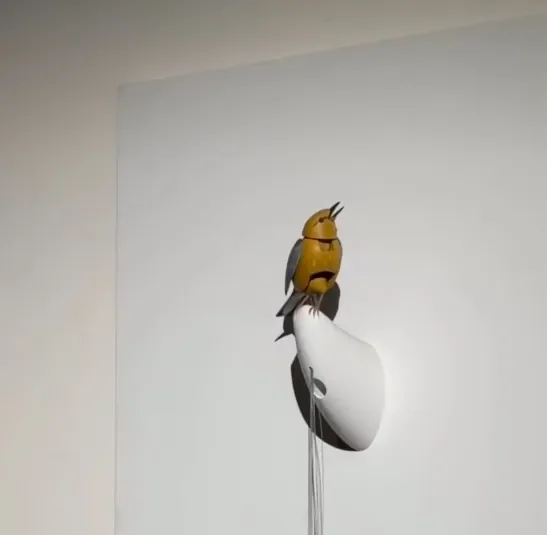
- In October 2026 the category got an unexpected spotlight. Kelly Clarkson publicly accused Art of Play, a Brooklyn curiosity shop, of snubbing her when she asked to buy Molly, a wall-mounted singing and dancing bird automaton. She says she was quoted $15,000. The shop says Molly was never for sale because she is fixed to the wall and used in its magic shows. The two accounts still conflict.
- Whatever happened in the shop, the episode put a wall-mounted mechanical singing bird in front of millions of people, and exposed a huge price gap: novelty chirping birds sell for $6 to $25, while serviced vintage Swiss and German singing bird automata list at roughly $1,600 to $3,500 and up. Almost nothing credible sits in between.
- That gap is the new headline opportunity: an attainable wall-hung singing bird cage in the $99 to $149 range with a moving bird, real recorded song and quality materials, sold as a statement piece rather than a toy.
- Wall mounted singing birds sit inside the broader wall clock market, valued at about $3.82 billion in 2025 and forecast to reach $6.78 billion by 2035 at a 5.9% CAGR. The singing bird segment is a small, durable, gift-driven niche inside that total.
- The category is built on one hero format: a round wall clock that plays a different bird song at the top of each hour, 12 species in total. The original version launched in 1996 and licensed sound clocks from the same developer have passed 10 million units sold.
- A second, faster growing format is the motion sensor birdsong box, a small wall or shelf unit that plays a short burst of birdsong when someone walks past. Premium versions retail around £48 and earn near-perfect review scores for calm and realism.
- Buyer complaints cluster into four repeatable themes: birds that do not match the buyer's own backyard, night mute that either does not exist or does not work well, volume that cannot be adjusted, and songs that drift out of sync with the hour after battery changes or poor setup.
- The single biggest gap is regional birdsong. Most mass market clocks play North American species, even when sold in the UK, Europe or Australia. New Zealand and Europe have native editions. A mainstream Australian native birdsong clock is hard to find, which leaves an open lane for a seller who licenses the right recordings.
- Price compression is real at the bottom. Generic 12 inch clocks now trade at $17 to $38 on eBay with a 3.7 star average, while UK high street versions sit at £12 to £15. Margin lives in licensed, regional and feature-correct products, not in generic dials.
- The highest scoring opportunity is Australian native birdsong clocks on Amazon AU and eBay AU (score 9/10), followed by attainable singing bird cages on Amazon US (8/10), British garden bird clocks on Amazon UK and regional personalised clocks on Etsy.
- The most underestimated risk is audio licensing. Bird recordings are creative works. Many free archive recordings carry non-commercial licences, so a seller who copies sounds from the internet risks takedowns. The second is riding the headlines carelessly: using a celebrity's name or the "Molly" name in listings invites takedowns and claims.
- Timing matters. The news cycle peaks now, but new product sourced today will not land before Christmas by sea. Use the moment for content and vintage resale in Q4 2026, and launch new product for the 2027 gifting season.
- Seasonality is gift-led: Christmas, Mother's Day and Father's Day, plus spring birding interest in each hemisphere. For Australian sellers, the Aussie Backyard Bird Count in October lines up neatly with the run into Christmas.
- The best entry point is a 12 inch Australian native birdsong clock with a volume switch, true light sensor and an hour reset button, launched at roughly A$59.95 to A$69.95, with a fully loaded startup cost of about $12,470 for 500 units.
1. Actionable Insights First: Executive Opportunity Summary
Why Everyone Is Suddenly Talking About Singing Birds
On the weekend of 10 and 11 October 2026, Kelly Clarkson posted on X that staff at Art of Play, a curiosity shop at 69 Atlantic Avenue in Brooklyn Heights, had treated her as if she could not afford what she wanted to buy. She compared it to the boutique scene in Pretty Woman and said the shop had lost a big sale. Art of Play was started by identical twins Dan and Dave Buck, known for playing cards and puzzles, and pairs its shop with a small theatre for close-up magic.
The item at the centre of the dispute was Molly, which the shop describes as a one-of-a-kind singing and dancing bird automaton. Turn her crank and she sings, dances and rocks back and forth like a real bird. Clarkson says she was told the piece was for sale at $15,000 and was offered something "comparable" instead. The shop says Molly was never for sale, because she is permanently attached to the wall and plays a role in its magic shows, while acknowledging that the experience Clarkson described would resonate with anyone who has felt judged in a shop. Clarkson then accused the shop of lying. The shop was hit with negative online reviews from people who had never visited, and posted supportive customer testimonials in response. As of publication the two accounts remain in conflict, and this article takes no side on what was said in the store.
What it means for sellers:
- Attention is a demand signal. Millions of people have just seen a wall-mounted mechanical singing bird described as a $15,000 object of desire. Many will search for one. Most will not spend four or five figures.
- The price ladder has a hole in it. Below $25 there are toys. Above $1,500 there are serviced antiques and Swiss craftsmanship. Between them there is almost nothing that feels special. That is where a new product can live.
- Display pieces need labels. For anyone running a physical shop or a market stall, the episode is a reminder that a display-only item with a price-like tag, or no clear "not for sale" sign, invites exactly this kind of misunderstanding. Label it, and train staff to explain it the same way every time.
- Do not borrow the names. Keep celebrity names, the shop's name and "Molly" out of product titles, ads and tags. Talk about "singing bird automata" and "mechanical singing birds" instead.
Top 3 Selling Opportunities Right Now
Opportunity 1: Australian native birdsong wall clocks
Opportunity Score: 9/10
The hourly birdsong clock has been a reliable gift for three decades, but the songs inside most of them belong to North American backyards: cardinals, chickadees, blue jays and robins that sound nothing like the robin a British buyer knows, and nothing like anything an Australian buyer hears at all. New Zealand already has a dedicated native edition with twelve local species and a reset button for re-aligning songs to the hour. Germany and wider Europe have a radio-controlled songbird clock illustrated by recognised bird artists. Australia, with some of the most distinctive birdsong on the planet, is conspicuously under-served.
The buyer case is simple. A kookaburra at noon, a magpie warble at dawn, an eastern whipbird crack, a pied butcherbird, a bellbird and a lorikeet chatter are instantly recognisable sounds for Australians, and deeply nostalgic sounds for Australians living overseas. That gives the product two markets from one SKU: domestic gift buyers and the expat diaspora.
- Profit margin range: 35% to 45% net
- Typical retail: A$59.95 to A$69.95
- Defensibility: licensed recordings plus correct species art are hard for a fast follower to copy cleanly
- Growth signal: no mainstream incumbent in the lane, and an annual national backyard bird count every October keeps birding top of mind into Christmas
Opportunity 2: Attainable wall-hung singing bird cages
Opportunity Score: 8/10
This is the opportunity the Molly story created. Mechanical singing birds have been made for well over a century, and the good ones are expensive. A French caged bird attributed to Bontems, a maker who retired from automata in 1881, was listed by one Canadian auction house at around CA$9,000. A mid-century Karl Griesbaum cage from Germany is listed on Chairish at $3,500. Serviced Reuge birds and cages from Switzerland, dating from the 1970s and 1980s, sell through a UK specialist at £1,595 to £2,000, and Reuge still makes singing birds today. At the other end of the market, battery chirping birds and novelty ornaments sell for $5 to $25 and sound like it.
Nothing credible lives in the middle. A buyer who saw a singing bird automaton on a shop wall this week, and wants something with the same sense of wonder for a hallway or study, has nowhere sensible to go. The product to build is a wall-hung brass-finish cage with a feathered bird that turns, moves its beak and tail, and sings a real licensed recording, triggered by motion or a pull cord, with a gift box and a short card on the history of singing bird automata. It does not pretend to be a Swiss antique. It sells the delight at a price people can say yes to.
- Profit margin range: 30% to 40% net
- Best price points: $99 to $149
- Defensibility: build quality, sound quality and honest storytelling, not a patent
- Growth signal: a news-driven surge of curiosity in October 2026, landing on top of steady demand for decorative bird cages and biophilic decor. Plan for 2027 gifting rather than chasing this Christmas with air freight
The motion sensor birdsong box is the closest existing product to this idea and proves the price point. A leading European version sells at £48 with a 5.0 rating from 19 reviews at one UK design retailer, with buyers praising realistic sound, automatic start and adjustable volume. The singing bird cage takes that formula and adds the one thing a box cannot give you: a bird you can watch.
Opportunity 3: Vintage singing bird clocks and mechanical automata resale
Opportunity Score: 8/10
Two resale markets sit side by side here, and the October headlines lift both.
The first is volume and low ticket. Licensed singing bird clocks have been produced in huge numbers since the late 1990s, with a discontinuation in 2006, a relaunch in 2012 at suggested retail prices of $14.95 and $24.95, and later anniversary editions. A limited 20th anniversary 8 inch edition currently lists between $46.47 and $76.89 on eBay, with a 4.1 star average from 17 ratings. Buyers are often replacing a clock they loved for years. Tested, clean units with fresh batteries and a clear photo of the dial sell well in November and December.
The second is low volume and high ticket. Wind-up singing bird cages and boxes from German, French and Swiss makers turn up at estate sales and regional auctions, sometimes untested and underpriced, then sell for many times more once serviced and properly described on specialist platforms. Recent auction comparables for similar pieces range from roughly $200 for a simple wind-up bird to $440 for a mid-century German cage and £410 for a piece attributed to Bontems. The skill is knowing what is worth servicing and being honest about condition.
- Profit margin range: 30% to 50% net on clocks, 25% to 45% on automata after servicing
- Typical acquisition: $5 to $20 for clocks, $150 to $600 for automata needing work
- Typical resale: $25 to $77 for clocks, $400 to $3,500 for serviced automata
Quick Action Items
License the sounds before you design the dial. Contact a natural sound archive or professional wildlife recordist and secure commercial rights for twelve species. Confirm the licence covers sale on a physical product, in every country you plan to sell, without a per-unit royalty that kills margin.
Specify three features the cheap clocks skip. A physical volume switch with at least two levels, a light sensor that silences songs in darkness rather than just lowering them, and an hour reset button so owners can realign songs after a battery change. Each of these answers a documented complaint.
Shoot a sound-first listing. Upload a 30 second video that plays four of the twelve songs at real volume in a real kitchen. This category is bought with the ears. A buyer who hears a kookaburra at noon converts. A buyer who reads "12 realistic bird songs" does not.
Print the bird guide, do not just mention it. Include a card that names each bird, shows which hour it sings, and gives one interesting fact. It turns a clock into a gift and gives grandparents and grandchildren something to talk about.
Build listings for gift buyers, not birders. Most units are bought for a parent or grandparent. Lead with "a different bird sings every hour", "silent at night" and "easy to read face", then the species list.
Use the headlines for content, not inventory, this quarter. Publish a short guide or video on how singing bird automata work, from bellows and clockwork to modern recorded song, and link it to whatever you already sell. Search interest from the October news cycle is a free audience. New product will not land in time for this Christmas by sea, so build the singing bird cage for 2027.
Red Flags to Avoid
Unlicensed recordings. Many recordings in community bird sound archives carry Creative Commons licences that restrict commercial use. Copying sounds from videos or archives without the right licence exposes a seller to takedowns and claims. Budget for licensing and keep the paperwork.
Generic 12 species clocks competing on price alone. Generic versions trade between $17 and $37.99 on eBay and average 3.7 stars from 34 ratings, with complaints about no night sensor, startling sounds, short songs and dial art that looks smaller than the listing photos. UK high street equivalents sit at £12.09 to £14.99. There is no room to make money here without a reason to exist.
Wellness or medical claims. Birdsong research is encouraging, but marketplaces and consumer regulators take a hard line on unsupported health claims. Say "calming" and "brings the outdoors in". Do not say "reduces anxiety" or "therapy for dementia".
Headline-jacking listings. Using a celebrity's name, a shop's name or a named piece like Molly in titles, ads or tags can breach marketplace intellectual property and publicity rules, and draws takedowns. Ride the category interest, not the people.
Overclaiming on automata. Do not describe a battery-driven reproduction as an "automaton" in a way that implies clockwork, "Swiss made" or "antique". On the resale side, never list an untested wind-up bird as working. Bellows, springs and feathers are expensive to repair, and condition disputes on high-ticket items are costly.
Button or coin cell designs in Australia. If a motion sensor unit uses button or coin batteries, Australia's mandatory button battery safety standards apply, including secured compartments and specific warnings. Designing around AA batteries or USB-C rechargeable cells avoids that compliance load.
Best Entry Point for New Sellers
Product recommendation: A 12 inch Australian native birdsong wall clock with twelve licensed species recordings, a two-level volume switch, a light sensor that silences songs after dark, an hour reset button, a silent sweep movement and a printed species guide card.
Primary marketplace: Amazon AU
Secondary marketplaces: eBay AU and Etsy, with an international listing aimed at Australians living in the UK, US and New Zealand
Price range: A$59.95 to A$69.95, roughly US$39 to US$46
Startup cost breakdown for a 500 unit first order (USD):
| Line Item | Cost | Notes |
|---|---|---|
| 12 inch Australian native birdsong clocks (500 units) | $4,200 | $8.40 FOB, custom sound chip, printed species dial, volume switch, light sensor |
| Sound chip programming and dial print setup | $450 | One-off tooling and programming charge per sound set |
| Commercial licences for 12 bird recordings | $1,800 | Planning estimate only, licence fees vary widely by archive and recordist |
| Retail packaging with species guide card | $600 | $1.20 per unit, gift-ready box and printed bird notes |
| Sea freight LCL to Sydney with local charges | $950 | Roughly $1.90 per unit at this volume |
| Customs brokerage and GST cash outlay | $770 | Duty often nil with a valid origin certificate, GST claimable if registered |
| Product photography and 30 second sound demo video | $700 | Video with real audio matters more than photos in this category |
| Trademark filing and barcodes | $600 | One class trademark plus GS1 barcodes |
| Launch advertising (8 weeks) | $1,500 | Sponsored listings timed to the spring birding and Christmas gifting window |
| Samples, sound testing and contingency | $900 | Three supplier samples plus roughly 10% buffer |
| Total startup cost | $12,470 | Roughly $24.94 fully loaded per unit at 500 units |
Why this works:
Three things make this the right first move. First, it solves the category's biggest complaint, which is that the birds do not belong to the buyer's world, and it does it for a market where no obvious incumbent exists. Second, the defensible asset is the licensed sound set and the species art, not the plastic housing, which means a competitor cannot simply order the same clock from the same factory and undercut you. Third, the economics improve sharply after the first batch. The $24.94 fully loaded per unit figure carries roughly $5,950 of one-off costs (licences, setup, photography, trademark, launch advertising and contingency) plus GST that a registered business claims back. Strip those out and a repeat order lands at roughly $12 per unit including packaging, freight and brokerage, against a retail price around US$39 to US$46. The first batch buys the asset. The second batch earns the margin.
The alternative entry point, another generic North American birdsong clock, fails on all three counts. The price floor has already collapsed, the reviews in that tier are mediocre, and nothing stops the next seller from listing the identical item for a dollar less.
The natural second product is the attainable singing bird cage. It shares the same licensed sound library, the same gift buyer and the same storytelling, at roughly double the price point. Launch the clock first to build the sound assets and reviews, then add the cage once the licences and supplier relationships are proven.
2. Quick Data Scans: Marketplace Sales Opportunity Analysis
Legend
| Score Range | Meaning | Action |
|---|---|---|
| 8 to 10 | High demand, low to moderate competition | Enter now |
| 5 to 7 | Moderate demand, moderate competition | Test carefully |
| 1 to 4 | Low demand or oversaturated | Avoid |
Marketplace Opportunity Matrix
| Marketplace | Opportunity Score | Product Segment | Est. Weekly Unit Sales | Est. Weekly Revenue | Avg Price Range | Est. Profit Margin |
|---|---|---|---|---|---|---|
| Amazon US | 8 | Hourly birdsong wall clocks with light sensor and volume control | 180 to 340 | $5,400 to $11,900 | $24 to $45 | 28% to 38% |
| Amazon US | 7 | Motion sensor birdsong wall boxes (hallway, bathroom, nursery) | 90 to 170 | $3,100 to $6,800 | $29 to $49 | 30% to 40% |
| Amazon AU | 9 | Australian native birdsong clocks (kookaburra, magpie, butcherbird, whipbird) | 25 to 60 | $1,000 to $2,700 | US$39 to US$46 | 35% to 45% |
| eBay AU | 8 | Native birdsong clocks and gift bundles | 15 to 40 | $600 to $1,800 | US$36 to US$46 | 33% to 43% |
| eBay US | 7 | Vintage and limited edition singing bird clocks (pre-owned, anniversary editions) | 40 to 90 | $1,500 to $4,500 | $25 to $77 | 30% to 50% |
| eBay US | 6 | New generic 12 inch birdsong clocks | 60 to 130 | $1,300 to $3,500 | $17 to $38 | 15% to 25% |
| Amazon UK | 8 | British garden birdsong clocks (robin, blackbird, wren, song thrush) | 70 to 150 | $1,900 to $4,800 | $22 to $40 | 30% to 40% |
| Etsy | 8 | Regional and personalised birdsong clocks, wooden frames | 20 to 55 | $1,100 to $3,600 | $49 to $79 | 38% to 50% |
| Shopify / DTC | 7 | Premium regional editions with species booklet | 15 to 45 | $900 to $3,200 | $55 to $89 | 40% to 52% |
| TikTok Shop | 7 | Motion activated chirping bird ornaments and sound boxes | 120 to 300 | $1,800 to $6,000 | $12 to $25 | 30% to 42% |
| Walmart Marketplace | 6 | Mid-price 12 inch birdsong clocks | 45 to 100 | $1,300 to $3,600 | $28 to $42 | 22% to 32% |
| Not On The High Street (UK) | 6 | Gift-boxed garden birdsong clocks | 10 to 30 | $500 to $1,800 | $45 to $65 | 35% to 45% |
| Nature store and museum wholesale | 7 | Wholesale regional birdsong clocks to nature centres and gift shops | 30 to 80 (per wholesale account mix) | $700 to $2,200 | $22 to $30 wholesale | 25% to 35% |
| Garden centre wholesale | 6 | Outdoor singing bird clocks with thermometers, motion garden birds | 25 to 70 | $600 to $2,000 | $18 to $32 wholesale | 22% to 32% |
| Temu / Shein style channels | 3 | Unbranded birdsong clocks and chirping ornaments | 200 to 600 | $1,600 to $5,400 | $6 to $12 | 3% to 10% |
| Amazon US | 8 | Attainable wall-hung singing bird cages (automaton look, moving bird, recorded song) | 40 to 90 | $4,400 to $11,700 | $99 to $149 | 30% to 40% |
| eBay US | 7 | Vintage mechanical singing bird automata (tested, serviced, cages and boxes) | 2 to 6 | $1,200 to $9,000 | $400 to $3,500 | 25% to 45% |
| 1stDibs / Chairish | 6 | Serviced Swiss and German singing bird automata | 1 to 3 | $2,000 to $9,000 | $1,500 to $4,000 | 20% to 35% after commission |
Table Notes and Methodology
Unit and revenue estimates describe what a competent single seller with an established, well-reviewed listing can expect during the peak gifting window from mid-October through late December, not total marketplace category volume. Outside that window, figures typically run at 40% to 55% of the values shown, with secondary lifts in the fortnight before Mother's Day and Father's Day in each market.
Margin figures are net after marketplace fees, payment processing, inbound and outbound shipping, an assumed 4% to 7% return rate and an advertising allocation of 8% to 12% of revenue. They exclude the seller's own labour, storage and software costs. Revenue for non-US channels is shown in US dollars for comparability.
Opportunity scores weigh four inputs equally: demand stability, competitive density, the seller's ability to differentiate on something other than price, and margin durability. Generic clocks on low-price channels score poorly despite high unit volume, because nothing protects the margin. Regional editions score highly despite lower volume, because the licensed sound set is the moat.
3. Deeper Context: Market Landscape and Buyer Intelligence
A. Market Overview
Category Definition and Size
Wall mounted singing birds covers any wall-hung product whose main appeal is recorded or synthesised birdsong. In practice it splits into four product families:
- Hourly birdsong wall clocks, which play one of twelve bird songs at the top of each hour, usually with bird illustrations on the dial. This is the core of the category and the bulk of its revenue.
- Motion sensor birdsong boxes, small wall or shelf units that play a burst of birdsong when someone walks past. Positioned as calming decor for hallways, bathrooms and nurseries.
- Motion activated singing bird figures and plaques, resin or plastic birds, often mounted on a wall bracket, fence or garden stake, that chirp when triggered.
- Outdoor singing bird clocks, weather-resistant versions, sometimes paired with a thermometer, for patios and garden walls.
- Animatronic singing birds, battery-powered birds that react to light and movement with lifelike twitches, some using recordings from the Cornell Lab of Ornithology.
- Mechanical singing bird automata, the original form of the idea: clockwork birds in cages or boxes whose song comes from tiny leather bellows and a whistle, made by houses such as Bontems in France, Karl Griesbaum in Germany and Reuge in Switzerland. Molly, the wall-mounted bird at the centre of the October 2026 Art of Play dispute, belongs to this family.
There is no reliable standalone market estimate for singing bird products, so the sensible frame is the parent category. The global wall clock market was worth about $3.82 billion in 2025 and is forecast to reach $6.78 billion by 2035 at a 5.9% CAGR, with established clock brands such as Seiko, Citizen, Bulova, Casio and La Crosse Technology among the leading names. Singing bird clocks are a small, gift-led slice of that total, but they have one rare quality: a single developer's licensed sound clocks have sold more than 10 million units since the late 1990s, which proves that a novelty clock can become a perennial.
Product Evolution and Recent Trends
Phase one, 1996 to 2006, was the invention and boom. The original singing bird clock debuted in 1996 in the Hammacher Schlemmer catalogue, with twelve North American songbirds and licensed recordings approved by the Cornell Lab of Ornithology. A wider family of wall, desk and cuckoo sound clocks followed in 1997, and an Audubon-licensed version arrived a few years later. The original was discontinued in 2006.
Phase two, 2012 to 2020, was the licensed revival. The original returned in 2012 for its 15th anniversary in 8 inch and 13 inch sizes at suggested retail prices of $14.95 and $24.95. The developer extended the sound clock idea across more than 40 licensors in 25 years, from Coca-Cola and Ford to Peanuts and, from 2021, Bob Ross.
Phase three, 2020 to 2026, is fragmentation and regionalisation. Low-cost factories now produce generic 12 species clocks for every marketplace, driving price down to the high teens. At the same time, regional editions have emerged: a New Zealand native clock with twelve local species and an overnight shut-off, a European radio-controlled songbird clock with a light sensor and dial art by well-known bird illustrators, and UK high street clocks with robin, chaffinch, nightingale and tawny owl. Motion sensor sound boxes have become the premium, design-led branch.
A fourth moment arrived in October 2026. The public dispute between Kelly Clarkson and Art of Play over Molly, a wall-mounted singing bird automaton, sent the oldest form of the category back into the news. Mechanical singing birds have always been a niche for collectors and museums. For one news cycle, they became a mass-market curiosity.
Four trends define 2026:
Regional authenticity. Buyers increasingly notice when the birds are wrong. A North American cardinal singing in a London kitchen is a novelty. A blackbird and a robin are a memory.
Smarter silence. Early clocks relied on a light sensor or simply played all night. Newer designs use fixed quiet hours, commonly 10pm to 5am on UK models, or sensors that put the birds to sleep at dusk. Night behaviour is now a deciding feature in reviews.
Wonder as a design brief. Shops like Art of Play, which mix puzzles, optical illusions and magic, show there is a buyer who wants objects that delight and surprise. Singing bird automata are the ultimate example, and the price gap below them is wide open.
Nature sound as wellbeing decor. The birdsong box market has grown on the back of a broader interest in biophilic design and nature sounds, supported by research linking birdsong to better mental wellbeing.
Leading Brands and Market Disruptors
Mark Feldstein and Associates is the category originator and still the reference brand. Its range includes the Original Singing Bird Clock, Audubon-licensed versions in 8 and 13 inch sizes, limited anniversary editions and an outdoor singing bird clock with a thermometer, all built around recordings tied to the Cornell Lab. Its 10.7 inch model uses a light sensor to silence songs after dark. Reviewers praise durability, with one replacing a clock that lasted over fifteen years, while the main complaint is that some songs do not match the calls owners hear in their own yards.
Benail and similar marketplace brands represent the generic tier. A 12 inch Benail clock trades at $17 to $37.99 across many eBay listings with a 3.7 star average from 34 ratings. Buyers like the clarity and value, but complain about the lack of a night sensor, sounds that are startling or not realistic, short songs and dial art that looks different from the photos.
Clockswise and other department store marketplace sellers sit in the middle, for example a 12 inch clock at $41.96 that splits power between one AA for the movement and two AAs for the sound.
Howard Miller has played the premium end with a polished brass songbird tabletop clock at $119 list that lowers melody volume at night using a light sensor. It is now out of stock and will not be restocked, which signals how thin the premium end of the category has become.
KooKoo leads in Europe with a 34 cm radio-controlled songbird clock featuring twelve native European species, a light sensor that silences the birds after dark and dial art by respected bird illustrators. It rates 4.6 from 27 reviews, though its audible ticking second hand is a known drawback in quiet rooms.
JML (Starlyf) and UK high street retailers compete at the floor with 12 bird clocks around £12 to £15, silent between 10pm and 5am.
Viking Sevenseas in New Zealand shows the regional model working, with twelve native NZ birds, a wooden surround, an overnight shut-off and a reset button for matching songs to the hour.
Zwitscherbox and similar motion sensor brands own the premium sound box niche, with oak and white finishes, battery power, wall or freestanding mounting and adjustable volume, selling around £48 and rating 5.0 from 19 reviews at one UK retailer.
Reuge is the reference name in mechanical singing birds. The Swiss house still makes singing birds, and serviced vintage examples from the 1970s and 1980s sell through UK specialists at £1,595 to £2,000, with clockwork and leather bellows producing the song while the bird turns, moves its head, beak and tail.
Karl Griesbaum of Germany produced mid-century singing bird cages and boxes that now trade among collectors. One boxed cage with a blue-feathered bird is listed at $3,500, marked down from $7,000.
Bontems of Paris set the standard for realistic mechanical birds in the 19th century. A caged Bontems bird dated before 1881 was listed by a Canadian auction house at around CA$9,000.
Art of Play is not a singing bird brand, but it has become the category's most talked-about shop. Founded by twins Dan and Dave Buck, its Brooklyn Heights store sells puzzles, games, illusions and curiosities alongside a small magic theatre, where Molly lives on the wall.
Private label opportunity assessment: Open, but only with a real difference. The housing, movement and sound chip are commodity parts available from many factories. The defensible layers are the licensed sound set, the regional species selection, correct bird art, and the three features cheap clocks skip: volume control, reliable night silence and an hour reset. For singing bird cages, the defensible layers are build quality, realistic movement, real recordings and honest storytelling. True clockwork bellows mechanisms are a craft business and not a realistic private label target.
Price Tiers and Popular Brands
| Tier | Price Range | Representative Products | Reseller Margin | Sourcing Strategy |
|---|---|---|---|---|
| Tier 1: Novelty chirpers | $5 to $25 | Motion activated chirping bird ornaments, resin garden birds with sound (UK high street ornaments from £4.99, motion hummingbird garden stakes around $24.30) | 25% to 40% | Trading company or factory direct at 1,000 piece MOQ. Volume game, low differentiation |
| Tier 2: Generic birdsong clocks | $12 to $38 | 10 to 12 inch plastic clocks with 12 North American or UK species (UK versions at £12.09 to £14.99, generic US versions $17 to $42) | 10% to 25% | Factory direct. Only viable with a clear feature or regional twist |
| Tier 3: Licensed and feature-complete clocks | $40 to $80 | Cornell-approved recordings, light sensor, anniversary and collector editions, radio-controlled European songbird clocks | 30% to 45% | Licensing partnership or own licensed sound set with OEM production |
| Tier 4: Premium sound boxes and decor | $45 to $90 | Motion sensor birdsong boxes in wood finishes (around £48), brass birdsong tabletop clocks ($89.25 sale, $119 list) | 35% to 50% | Design-led private label with a strong brand story and gift packaging |
| Tier 5: Regional heritage editions | $50 to $90 | Native editions for New Zealand, Europe, the UK and Australia with species booklets and wooden frames | 38% to 52% | Own licensed recordings, small batch OEM, DTC and Etsy first |
| Tier 6: Attainable singing bird cages | $99 to $149 | Wall-hung cages with a moving feathered bird and recorded song (largely an empty tier today) | 30% to 40% | Private label with licensed recordings, metal cage, quality feathers and motion trigger |
| Tier 7: Mechanical singing bird automata | $400 to $15,000+ | Vintage Griesbaum cages ($3,500 asking), serviced Reuge birds (£1,595 to £2,000), Bontems pieces (around CA$9,000), one-off showpieces like Molly (reportedly quoted at $15,000, disputed) | 25% to 45% on resale | Estate and auction sourcing, specialist servicing, sale through eBay, 1stDibs and Chairish |
B. Buyer Persona Deep Dive
Persona 1: The Gift-Buying Adult Child
Demographics: Age 32 to 55. Roughly 62% female, 38% male. Buying for a parent or grandparent aged 65 or over. Household income $70,000 to $140,000.
Purchase motivations, ranked: 1) A gift that feels personal without being complicated. 2) Something the recipient will notice every day. 3) A safe price point between $30 and $70.
Price sensitivity: Moderate. Sweet spot $35 to $60.
Pain points:
- Not knowing whether a parent will find the sounds pleasant or irritating.
- Fear that setup will be too fiddly for an older recipient and the clock will end up in a drawer.
- Uncertainty about whether it will keep the household awake at night.
- Dial art that looks cheap when it arrives.
What they are solving for: A thoughtful, low-risk gift.
Decision factors: Night mute, easy setup, gift box presentation, review photos of the real dial.
Brand loyalty: Low, but strongly influenced by a brand they remember from their own parents' kitchen.
Persona 2: The Retired Backyard Birder
Demographics: Age 60 to 80. Roughly 55% female, 45% male. Owns a home with a garden and feeders.
Purchase motivations, ranked: 1) Hearing the birds they actually see. 2) Learning calls by ear. 3) Replacing a much-loved older clock.
Price sensitivity: Low to moderate. Sweet spot $40 to $80 for the right birds.
Pain points:
- Songs that do not match the calls they hear outside, sometimes because the recording is a breeding song rather than the everyday call.
- Volume too low to hear across the kitchen, especially if hearing is fading.
- Small dials that are hard to read.
- Birds on the dial that are not local.
What they are solving for: A daily, accurate connection to their own garden.
Decision factors: Species list, recording source, dial legibility, volume options.
Brand loyalty: High. They buy the brand that got the birds right.
Persona 3: The Expat Missing Home
Demographics: Age 28 to 60. Australians, New Zealanders and Britons living abroad. Often buying for themselves or for another expat.
Purchase motivations, ranked: 1) Nostalgia and a sense of home. 2) A conversation piece. 3) Teaching children born overseas what home sounds like.
Price sensitivity: Low. Sweet spot $50 to $90, with high tolerance for international shipping if the product is right.
Pain points:
- Native birdsong products are hard to find outside their home country.
- Cross-border shipping costs and delivery times.
- Generic products with a flag on the box but the wrong birds inside.
What they are solving for: Emotional connection to a place.
Decision factors: Authentic species, quality of recordings, gift presentation.
Brand loyalty: High once found. This persona refers friends inside expat communities.
Persona 4: The Calm Home Seeker
Demographics: Age 25 to 45. Roughly 68% female. Urban apartment or townhouse, often renting, interested in biophilic and nature-inspired decor.
Purchase motivations, ranked: 1) A calmer atmosphere at home. 2) Nature sounds without opening windows onto traffic. 3) Good-looking design.
Price sensitivity: Moderate. Sweet spot $35 to $55.
Pain points:
- Hourly clocks feel too repetitive or too loud.
- Cheap sound boxes sound tinny and synthetic.
- Battery life on motion units that trigger many times a day.
- No volume control.
What they are solving for: A small daily moment of calm.
Decision factors: Sound realism, adjustable volume, finish quality, rechargeable power.
Brand loyalty: Moderate, driven by design brands they already follow.
Persona 5: The Wonder-Seeking Decorator
Demographics: Age 28 to 50. Roughly 55% female, 45% male. Urban or inner-suburban, design-literate, buys from curiosity shops, museum stores and makers' markets. Many heard of singing bird automata for the first time through the October 2026 headlines.
Purchase motivations, ranked: 1) An object that makes guests stop and ask "what is that?". 2) Craft and mechanical charm rather than a screen. 3) A story worth telling.
Price sensitivity: Moderate. Sweet spot $90 to $180. Curious about the $15,000 version, but not a buyer for it.
Pain points:
- Real automata are priced as fine antiques and need servicing.
- Cheap singing bird cages look and sound like toys, with stiff plastic birds and tinny electronic chirps.
- Listings that oversell, calling a battery decoration an "antique automaton".
- Fear of buying something fragile that stops working after a month.
What they are solving for: A piece of everyday magic on the wall.
Decision factors: Video of the bird moving and singing, metal cage, real feathers, real recordings, clear description of the mechanism, gift presentation.
Brand loyalty: Moderate. Loyal to shops and makers with a point of view.
Persona 6: The Family Arranging a Care Move
Demographics: Age 45 to 65. Buying for a parent moving into assisted living or aged care.
Purchase motivations, ranked: 1) A familiar, homely object for a new room. 2) An audible cue that marks the passing of the day. 3) Low maintenance.
Price sensitivity: Moderate. Sweet spot $40 to $70.
Pain points:
- Clocks that sing at night and disturb neighbouring residents.
- Batteries that run flat with nobody noticing.
- Songs that drift out of sync and confuse the time.
- Small faces that are hard to read.
What they are solving for: Comfort and routine in an unfamiliar space.
Decision factors: Large clear numerals, reliable quiet hours, long battery life, easy hour reset.
Brand loyalty: Low, but word of mouth inside care facilities is strong.
Persona 7: The Collector and Automaton Enthusiast
Demographics: Age 45 to 75. Searching for a specific older clock edition, or for vintage mechanical singing birds from makers such as Reuge, Griesbaum and Bontems.
Purchase motivations, ranked: 1) Finding the exact clock they remember. 2) Completing a set. 3) Replacing a clock that finally stopped.
Price sensitivity: Low for the right edition. Sweet spot $30 to $80.
Pain points:
- Listings that do not state whether the sounds still work.
- Faded dials and yellowed plastic.
- Battery corrosion damage hidden in photos.
- Wind-up birds sold as working that have tired bellows or broken springs.
- Few specialists who can service mechanical singing birds.
What they are solving for: A specific memory.
Decision factors: Edition, maker, tested sound, servicing history, clear video of the bird in motion.
Brand loyalty: Very high to the original developer and licensed editions.
C. Keyword and Search Trends
Search Volume and Term Structure
Search behaviour divides into five intent classes, and the most profitable are not the largest.
Class 1: Category discovery. Terms like singing bird clock, bird song clock, bird wall clock and bird sound clock. Highest volume, roughly 25,000 to 45,000 combined US monthly searches in December, falling to roughly 8,000 to 14,000 in mid-year. Competitive and dominated by generic listings.
Class 2: Brand and edition. Terms like Audubon singing bird clock, original singing bird clock and Mark Feldstein clock. Moderate volume, roughly 5,000 to 12,000 at peak, with strong conversion for anniversary and replacement models.
Class 3: Regional and feature. Terms like UK bird song clock, New Zealand bird clock, Australian bird call clock, bird clock silent at night and bird clock with volume control. Lower volume, roughly 2,000 to 6,000 combined, but the highest conversion and the thinnest competition. This is where independent sellers should concentrate.
Class 4: Sound decor. Terms like birdsong motion sensor, bird sound box and nature sound wall decor. Rising volume, roughly 3,000 to 8,000 at peak, attracting buyers who are not birdwatchers.
Class 5: Mechanical and automaton. Terms like singing bird automaton, mechanical singing bird, singing bird cage and wind up bird in cage. Historically small, roughly 1,000 to 3,000 combined monthly, but spiking sharply in October 2026 on the back of the Art of Play headlines. Expect elevated interest for several weeks, then a new, higher baseline as the idea sticks.
All volumes are directional estimates for planning, not audited figures.
Seasonal Demand Patterns
| Window | Dates | Share of Annual Volume | Demographic Skew | Seller Action |
|---|---|---|---|---|
| Christmas gifting | Mid-October to 20 December | 40% to 48% | Adult children buying for parents and grandparents, 60% female | Stock landed by early October. Gift box imagery, delivery cut-off messaging |
| Mother's Day | Mid-April to mid-May (US, AU), March (UK) | 10% to 14% | Gift buyers, strongly female recipients | Run "a garden she can hear indoors" creative. Bundle with guide card |
| Father's Day | June (US, UK), August to early September (AU) | 6% to 9% | Gift buyers for retired fathers and grandfathers | Lead with backyard birder angle and outdoor clock thermometer |
| Spring birding season | March to May (Northern), September to November (Southern) | 12% to 16% | Self-purchasers, birders, garden owners | Push regional editions and species education content |
| Baseline months | January to February, July to August | 18% to 24% | Replacement buyers, housewarming, aged care moves | Lean ad spend. Focus on reviews and replacement keywords |
Rising and Declining Queries
| Direction | Query Theme | Est. YoY Change | Interpretation |
|---|---|---|---|
| Breakout | Singing bird automaton, mechanical singing bird (news-driven, October 2026) | Sharp spike | Celebrity dispute put the product type in front of a mass audience. Expect a fast rise and partial fade |
| Rising | Singing bird cage decor, wind up bird in cage | +25% | Spillover from automaton curiosity into decor searches |
| Rising | Native or local bird song clock (UK birds, NZ birds, Australian birds) | +35% | Buyers now expect the birds to match where they live |
| Rising | Motion sensor birdsong box | +30% | Wellness and nature sound decor bringing in non-birders |
| Rising | Bird clock silent at night or light sensor | +22% | Night mute is now a filter, not a feature |
| Rising | Bird song clock for elderly parent | +18% | Gift intent with large face and easy setup requirements |
| Rising | Outdoor singing bird clock | +15% | Garden and patio decor crossover |
| Stable | Audubon or original singing bird clock | 0% to +5% | Mature replacement demand that spikes every Christmas |
| Declining | Generic cuckoo sound wall clock | -12% | Single novelty sound losing to richer birdsong formats |
| Declining | Battery operated chirping bird toy | -10% | Low-quality novelty fatigue, poor sound reviews |
| Declining | Bird clock replacement parts | -8% | Cheaper to replace than repair at current price points |
Consumer Insights from Community Forums and Reviews
Analysis of marketplace reviews, birding forums and gift discussion threads surfaces a consistent complaint hierarchy. These are the twelve themes that recur most often:
The birds are wrong for my garden. The most important complaint. Some owners say the recorded songs do not match what they hear in their yard, with one suspecting the recordings are breeding songs rather than everyday calls. Buyers outside North America face a bigger mismatch, hearing species they have never seen.
No night mute, or a night mute that misbehaves. Clocks without a light sensor can be loud in dark rooms. Light sensors themselves are blunt instruments: one reviewer found the clock noticeably louder in sunlight, which suggests volume is tied to ambient light rather than a buyer setting.
Volume is fixed. Some buyers find the songs too quiet, especially at night, while others find them startling. Very few clocks offer a simple volume switch.
Songs drift out of sync with the hour. Setup must be followed closely or the clock will play the wrong bird at the wrong hour, and battery changes can throw it out. Better regional models include a reset button for exactly this reason.
Battery sensitivity. Many clocks split power across one AA for the movement and two AAs for sound, and at least one UK listing warns that rechargeable or heavy-duty batteries may cause timekeeping errors.
Small or hard to read dials. Bird art crowds the numerals, and an 8 inch face is hard to read across a room.
Dial art that looks cheap on arrival. Buyers report birds that are smaller or different from listing photos, and one described the background as looking dirty.
Short songs and limited options. Owners want longer clips and the option to choose which hours sing.
Ticking in quiet rooms. Even well-reviewed models with audible second hands draw complaints in bedrooms and living rooms.
Toy-like singing bird cages. Buyers who want an automaton-style piece complain that budget cages have stiff plastic birds, synthetic chirps and flimsy wire, and look nothing like the mechanical birds that inspired them.
Automaton servicing and condition. On the vintage side, tired bellows, slipping springs and moulted feathers are the common faults, and specialist repair is scarce and costly. Buyers want proof of servicing and video of the bird working.
Early failures. A minority report second hands stopping shortly after setup. Failures are rare but damage gift purchases disproportionately.
What these complaints tell a seller:
The category's unsolved problems are not about the idea, which buyers love. They are about the details: the right birds, a night that is truly quiet, a volume you can choose and a clock that stays in sync. At the top of the category, the problem is price: buyers who fall for a mechanical singing bird find only toys or antiques. Incumbents have spent three decades selling the same twelve birds on the same dial. A seller who gets the details right, and gets the birds right for a specific place, has a genuine product story rather than a cheaper copy.
4. Tools and Resources: Sourcing Decision Framework
Private Label Sourcing Calculator
| Product Type | Factory Price | MOQ | Shipping | Duties | Landed Cost | Amazon Fees | Total Cost | Retail Price | Profit Margin |
|---|---|---|---|---|---|---|---|---|---|
| 10 inch birdsong wall clock (12 sounds, light sensor, plastic frame) | $4.80 | 500 | $1.40 | $1.20 | $7.40 | $9.70 | $17.10 | $29.99 | 43.0% |
| 12 inch feature-complete birdsong clock (volume switch, light sensor, hour reset, silent sweep) | $7.20 | 500 | $1.80 | $1.80 | $10.80 | $12.85 | $23.65 | $44.99 | 47.4% |
| 12 inch regional native edition (licensed local recordings, species dial, guide card) | $8.40 | 500 | $1.90 | $2.10 | $12.40 | $13.60 | $26.00 | $49.99 | 48.0% |
| 13 inch wood frame heritage edition (MDF or bamboo frame, booklet, gift box) | $11.50 | 1,000 | $2.60 | $2.88 | $16.98 | $17.90 | $34.88 | $69.99 | 50.2% |
| Motion sensor birdsong wall box (USB-C rechargeable, two volume levels, wood finish) | $6.20 | 500 | $0.90 | $1.55 | $8.65 | $10.80 | $19.45 | $39.99 | 51.4% |
| Outdoor birdsong clock with thermometer (weather resistant housing, dual scale thermometer) | $9.40 | 500 | $2.20 | $2.35 | $13.95 | $14.30 | $28.25 | $49.99 | 43.5% |
| Wall-hung singing bird cage (brass-finish metal cage, feathered bird with head, beak and tail movement, licensed recordings, motion and pull-cord trigger, USB-C) | $21.50 | 300 | $4.60 | $5.38 | $31.48 | $29.30 | $60.78 | $129.99 | 53.2% |
| Motion chirping resin bird, two pack (robin, wren or cardinal, AA powered, wall bracket) | $3.20 | 1,000 | $0.60 | $0.80 | $4.60 | $7.20 | $11.80 | $19.99 | 41.0% |
Standard Assumptions Used
Factory price methodology. Factory prices are planning estimates for FOB quotes from Guangdong and Zhejiang clock and sound module factories at the stated MOQ, based on typical pricing for quartz wall clocks with a programmable sound chip. They are not negotiated quotes. Custom sound programming usually carries a small one-off setup charge, and first orders typically price 10% to 20% above repeat orders.
Shipping assumptions. Sea freight LCL to a US marketplace warehouse, including drayage and inbound placement. Round clocks ship in rigid boxes and are volume-limited, which is why freight per unit is high relative to factory price. Air freight would add roughly $2.50 to $5.00 per clock.
Duty rates. Electrically operated wall clocks generally fall under HTS heading 9105, where one common subheading carries a base rate of 30 cents each, plus 6.9% on the case, plus 5.3% on the battery. The calculator applies a 25% of factory price allowance to cover the base rate, additional tariffs on Chinese-origin goods, and processing and harbour fees. Motion sensor sound boxes, singing bird cages and resin bird figures may classify under different headings. Tariff treatment for Chinese-origin goods has changed repeatedly, so confirm classification and current duties with a customs broker before every order. Australian imports from China commonly qualify for reduced or nil duty with a valid certificate of origin, with 10% GST payable at the border.
Fee breakdown. Amazon figures combine a 15% referral fee with an FBA fulfilment charge scaled by size tier. Clocks in rigid 12 to 14 inch boxes fall into large standard size and carry higher fulfilment fees than their weight suggests.
Margin notes. Margins are gross after landed cost and marketplace fees only. They exclude recording licence amortisation, advertising (8% to 12% of revenue at steady state), and returns (4% to 7% for clocks). A 40% calculated margin therefore translates to roughly 25% to 30% net contribution in a mature account. The generic 10 inch clock shows a healthy calculated margin on paper, but only at a $29.99 price that the generic tier rarely holds.
Recording licences. Budget separately for commercial rights to each species recording. Many recordings in community archives use Creative Commons licences with a non-commercial condition, which rules out use on a product for sale. Professional sound libraries and individual recordists will license commercial use, and terms range from a one-off fee to a per-unit royalty. Get the licence in writing before you approve the sound chip.
Additional Strategy Tables
Strategy A: Bundle Architecture
| Bundle | Contents | Target Persona | Bundle Price | Sum of Parts | Est. Margin |
|---|---|---|---|---|---|
| Backyard Birder Gift Set | Feature-complete birdsong clock, printed species guide, batteries, wall hook | Gift-Buying Adult Child, Retired Backyard Birder | $54.99 | $66.96 | 44% |
| Home Sounds Expat Pack | Regional native clock, illustrated bird poster, gift box, international insert | Expat Missing Home | $79.99 | $96.97 | 47% |
| Calm Hallway Set | Motion sensor birdsong box, USB-C cable, adhesive and screw mounts | Calm Home Seeker | $44.99 | $52.97 | 41% |
| Garden Chorus Set | Outdoor birdsong clock with thermometer, two motion chirping birds | Retired Backyard Birder, gift buyers | $64.99 | $79.97 | 42% |
| Curiosity Cabinet Set | Wall-hung singing bird cage, illustrated card on the history of singing bird automata, spare feather set, gift box | Wonder-Seeking Decorator | $149.99 | $174.97 | 39% |
| Care Room Comfort Set | Large numeral birdsong clock with fixed quiet hours, spare battery pack, setup card in large print | Family Arranging a Care Move | $59.99 | $69.97 | 43% |
Strategy B: Seasonal Inventory Planning Calendar
| Month | Action | Market Notes |
|---|---|---|
| January to February | Review sales data, request supplier quotes for the next season, lock recording licences | Lowest demand. Plan rather than spend |
| March to April | Approve samples, finalise dial art and packaging, place production order | Northern spring and Mother's Day traffic in the UK and US |
| May to June | Production and quality control, sound testing every species track | Father's Day in the US and UK |
| July | Ship by sea, allowing 5 to 7 weeks to marketplace warehouses | Book freight early to avoid peak season rates |
| August to September | Inventory landed, listings live, reviews seeded through early buyer programs | Australian Father's Day and southern spring birding |
| October | Scale advertising, tie content to the national backyard bird count in Australia | Gift research begins in all markets |
| November to mid-December | Peak selling, gift messaging, delivery cut-off banners | 40% to 48% of annual volume |
| Late December | Stop paid acquisition after last delivery date, clear slow SKUs in January | Returns window opens. Watch for sync and volume complaints |
Sourcing Methodology Notes
Test every track, not one sample. Ask the factory to send a sample with the final sound chip and listen to all twelve hours. Sound chips are often loaded with the wrong file order, which produces a magpie at 7am that should have sung at noon.
Specify the night logic in writing. State whether the clock silences on darkness, lowers volume on darkness, or uses fixed quiet hours. Ask for the sensor threshold and test it in a dim hallway, a lamp-lit living room and full daylight.
Demand a reset button. An hour reset button costs very little and directly removes the sync complaint that follows battery changes.
Check the dial print at full size. Reviews punish birds that look smaller or blurrier than the listing. Approve a printed dial proof, not a screen image.
Quiet movement as standard. Specify a silent sweep movement. Ticking draws complaints in bedrooms and care rooms.
Battery guidance on the box. If the movement is sensitive to rechargeable batteries, print that clearly. It prevents a timekeeping complaint that is not really a defect.
Compliance by market. Confirm the battery compartment design meets local child safety rules, especially if any variant uses button or coin cells, and keep test reports on file for marketplace requests.
For singing bird cages, judge the bird, not the cage. Ask for video of the sample bird in motion before ordering. Check that movement is smooth rather than jerky, that feathers are real or convincingly finished and securely fixed, that the speaker sits low in the base so song seems to come from the bird, and that the motor is quiet enough not to drown the song. Budget a spare feather set in the box, because it is the first thing buyers notice wearing.
Key Takeaways
The idea is proven and the details are not. A clock that sings a different bird every hour has sold for three decades and passed 10 million units for one developer. What buyers complain about is not the concept but wrong birds, poor night behaviour, fixed volume and songs that drift.
Regional birdsong is the open lane. New Zealand and Europe have native editions. Australia, with some of the most recognisable birdsong anywhere, lacks an obvious mainstream product. The licensed sound set is the moat.
Generic is a trap. The generic 12 bird clock trades in the high teens on eBay with mediocre ratings, and UK high street versions sit around £12. Competing there means competing with nothing but price.
Motion sensor sound boxes widen the buyer base. They bring in calm-home and nursery buyers who would never search for a bird clock, at price points that support healthy margins.
The Molly moment opened the top of the category. A wall-mounted singing bird automaton at the centre of a celebrity dispute, reportedly quoted at $15,000, showed millions of people that this product type exists. Between $25 toys and $1,500 antiques there is room for a well-made $99 to $149 singing bird cage.
Licensing is the hidden cost and the hidden protection. Sellers who skip it take legal risk. Sellers who pay for it own something competitors cannot copy from the same factory.
Sources and References
- NBC Philadelphia, Kelly Clarkson says a Brooklyn store snubbed her. The shop says the item she wanted was not for sale
- TMZ, Kelly Clarkson responds to Brooklyn store over $15K bird
- Just Jared, Shop reveals what Kelly Clarkson tried to buy
- Fox News, Kelly Clarkson calls out Art of Play in Brooklyn
- Brooklyn Paper, Art of Play brings magic and curiosity to Brooklyn Heights
- The House of Automata, Reuge Singing Bird Cage
- The House of Automata, Reuge Singing Bird
- The House of Automata, Singing Bird in Silver Cage
- Chairish, Karl Griesbaum Mechanical Singing Bird Cage Automaton
- Miller and Miller Auctions, Bontems Caged Singing Bird Automaton
- LiveAuctioneers, singing bird automaton price results
- Better Living Through Design, Animatronic Singing Birds
- Spherical Insights, Top 20 Companies in the Global Wall Clocks Market 2026 to 2035
- Licensing International, MFA Licensed Sound Clocks Stand the Test of Time
- Drug Store News, Original Singing Bird Clock Returns to Retail
- eBay, Mark Feldstein Limited Edition 20th Anniversary Singing Bird Clock 8 Inch
- eBay, Benail Singing Bird Wall Clock 12 Inch
- Desertcart, Mark Feldstein Singing Bird Wall Clock 10.7 Inch
- Kohl's, Clockswise 12 Inch Round Decorative Singing Bird Wall Clock
- Boots, JML Starlyf Birdsong Wall Clock
- The Range, Singing Bird Wall Clock with Native Sounds
- The Range, Chirping Bird Ornament
- Galaxus, KooKoo Songbirds 34 cm Wall Clock
- Howard Miller, Song Birds of North America III Tabletop Clock
- McLeods Booksellers, NZ Birdsong Clock
- Oliver Bonas, Motion Sensor Birdsong Zwitscherbox
- Home Depot, Motion Activated Singing Hummingbird Garden Statue
- Garden Center Magazine, Outdoor Singing Bird Clock Thermometer
- BBC Science Focus, Watching or listening to birds can help boost mental wellbeing
- TariffLens, HTS 9105.21.80
Data Collection Methodology: Pricing was checked against retailer and marketplace listings available in October 2026, with sale pricing noted where it differs from list pricing. Details of the October 2026 Art of Play dispute are drawn from published news reports and both parties' public statements. Accounts of what was said in the store conflict, and this article reports both without taking a side. Market sizing uses the parent wall clock category because no credible standalone estimate exists for singing bird products. Complaint themes were drawn from marketplace reviews and product listings, and each theme was cross-checked against at least one specific listing or review before inclusion. Weekly unit estimates, search volumes and query trends are directional planning figures, not audited data. Sourcing figures are planning estimates rather than negotiated quotes.
Seasonal Adjustment Notes: Weekly figures in the marketplace table describe the mid-October to late December gifting window. Off-peak performance typically runs at 40% to 55% of stated values. Multiplying weekly figures by 52 would overstate annual revenue by roughly 40% to 60%. Tariff treatment for Chinese-origin goods should be verified with a customs broker at the time of each order.