
Article Summary: Key Insights at a Glance
- The category is large, mature and unusually resilient. Pepper mills and grinders sit at roughly $1.8 billion globally in 2026 on the narrow definition, growing at about 4.7% CAGR toward $2.72 billion by 2035, while the broader pepper grinder definition is valued nearer $2.5 billion with a 4.76% CAGR.
- The electric sub-segment is the growth engine, expanding at roughly 7.1% to 7.2% CAGR against low-single-digit growth for manual units, with North America accounting for around $470 million of a $1.32 billion global electric grinder base.
- US household penetration of any salt or pepper grinder already sits at an estimated 60% to 75%, which means this is a replacement and upgrade market, not an acquisition market. That single fact should reshape how a seller writes every listing.
- Manual grinders hold 65% to 75% of unit volume but only 50% to 55% of value. Electrics carry the price, manuals carry the traffic. A catalogue needs both for different reasons.
- The dominant complaint in the category is premature mechanism failure, and it is concentrated almost entirely in cheap electrics. Public buyer questions on best-selling electric sets are full of units failing at five uses, three months, six months and ten months, with plastic adjustment collars splitting and gears spinning without grinding.
- The second dominant complaint is material mismatch: salt corrodes steel burrs, and acrylic or plastic mechanisms jam and crack. A ceramic burr for salt and a carbon or stainless steel burr for pepper is the correct pairing, and almost no sub-$20 listing explains this.
- The third is grind setting drift, where the coarseness adjuster loosens during use and the output changes mid-meal. This is precisely what premium buyers cite when justifying a $159 to $199 grinder.
- Price structure is brutally barbelled. Manual sets clear at $7.19 to $14.99 on Walmart, competent branded manuals sit at $22 to $62, and a credible enthusiast tier runs $159 to $320. The dead zone is $25 to $45, where unbranded product carries premium pricing without premium proof.
- Factory economics remain excellent at the accessible tier. Stainless steel pepper mills quote at $0.85 to $1.30 FOB at 500 piece MOQ, acacia wood sets with steel heads at $4.03 to $4.59 at 500 sets, and glass grinder bottles from $0.23. Duty on hand-operated mills classifies under HTS 8210.00.00 at a 3.7% MFN base rate.
- The strongest 2026 opening is a warranty-backed manual set at $34.99 to $49.99 that names its burr materials, publishes a revolution-count durability figure, and sells against the electric failure narrative rather than against Peugeot.
- Seasonality is severe and gift-driven. Search interest for electric grinders has been observed rising roughly 88% between September and December, and the category concentrates a very large share of annual volume into the November to December gifting window.
1. Actionable Insights First: Executive Opportunity Summary
Top 3 Selling Opportunities Right Now
Opportunity 1: Warranty-backed manual sets in the $34.99 to $49.99 gap
Opportunity Score: 9/10
There is a structural hole in the middle of this market. Below $20 sits an undifferentiated mass of unbranded manual sets on Walmart and Amazon at $7.19, $8.99, $10.79, $11.99 and $14.99, most of which do not state what the burr is made of. Above $50 sit Peugeot, Cole and Mason, Fletchers' Mill and Le Creuset, all trading on heritage and lifetime mechanism guarantees. Between those two poles, a buyer who has already destroyed one cheap grinder and is not ready to spend $60 has almost nothing credible to choose from.
The winning proposition is specific and testable: ceramic burr on the salt unit, hardened steel burr on the pepper unit, a stated revolution rating, and a written mechanism warranty. Suppliers already publish durability testing in this language, with one manufacturer claiming units that withstand 5,000 to 10,000 revolutions of grinding against roughly 3,000 revolutions for typical competing products. That is a number a private label seller can put in the second bullet of a listing, and nobody in the sub-$50 tier currently does.
- Profit margin range: 48% to 62%
- Sourcing cost: $4.03 to $4.59 FOB for acacia wood sets with stainless steel heads at 500 set MOQ
- Retail target: $39.99 for the pair, $49.99 with a stand and a refill funnel
- Growth signal: the category is a replacement market with 60% to 75% household penetration, meaning the addressable buyer already knows exactly what failed last time Opportunity 2: Rechargeable electric sets sold on reliability rather than novelty
Opportunity Score: 8/10
The electric segment grows at roughly 7.1% to 7.2% CAGR while manuals grow at low single digits, and it carries a disproportionate share of category value despite holding a minority of unit volume. It is also, without question, the segment with the worst reliability reputation in kitchen gadgets. Public question threads under best-selling electric gravity grinder sets read like a failure log: one unit dead after five uses, gears stripped inside three months, a plastic ring around the grind adjuster split at six weeks, a salt unit dead at ten months after battery replacement and cleaning.
That reputation is the opportunity. Every one of those complaints is a design problem with a known fix: a metal rather than plastic adjustment collar, a sealed motor housing that keeps salt dust out of the gear train, USB-C rather than AA cells, and a warranty long enough to outlast the failure window that reviewers keep describing. A seller who ships that product and says so plainly in the first image is selling into demand that incumbents have already qualified and then disappointed.
- Profit margin range: 40% to 55%
- Price points that work: $29.99, $39.99 and $59.99 for a two-unit rechargeable set
- Growth signal: sustained double-digit seasonal search growth into the gifting window, with electric grinder interest observed climbing roughly 88% from September to December Opportunity 3: Enthusiast and gift-tier single mills at $69 to $129
Opportunity Score: 8/10
The top of the market has proven something important: buyers will pay far more than anyone expected for grinding performance. A single aluminium pepper mill retails at $199 and has repeatedly sold at $159 on promotion, backed by crowdfunding campaigns that raised over $3.0 million from 17,212 backers and a further $1.1 million from 6,887 backers. A competing premium mill sits at $320. Endorsement from prominent food writers has legitimised the tier entirely.
That validated demand has left an enormous gap immediately below it. Between the $60 heritage mills and the $199 flagship there is very little, and gift buyers with a $75 or $100 budget are the most under-served customers in the category. A high-output single pepper mill with a machined body, a genuine non-drifting adjuster and gift packaging at $89 to $119 addresses a budget band that currently forces buyers either down to a commodity product or up to a price they resent.
- Profit margin range: 45% to 58%
- Typical price points: $69.99, $89.99, $119.99
- Growth signal: roughly 70% of purchasers still favour classic and heritage design language, so the product can be visually conservative and still command the price
Quick Action Items
- Order samples specified by burr material, not by photograph. Request ceramic burrs for salt units and hardened carbon or stainless steel for pepper units, in writing, on the proforma invoice. Salt corrodes steel mechanisms and this is the single most common cause of a returned grinder. Suppliers in Jinan, Yangjiang and Wuxi quote stainless steel pepper mills at $0.85 to $1.30 at 500 piece minimums and wood sets at $4.03 to $4.59 at 500 sets, so testing three suppliers costs almost nothing relative to the cost of a bad first order.
- Buy inventory by end of August and land it before mid-October. This category concentrates heavily into the November and December gifting window, and search interest for electric grinders has been observed climbing roughly 88% across the September to December run. Sea freight from a Chinese port plus inbound processing realistically consumes six to nine weeks, which means an order placed in October arrives after the window it was meant to serve.
- Write the listing around the failure the buyer already had. Household penetration of 60% to 75% means most buyers are replacing something. Lead the bullets with what broke last time: the collar that split, the mechanism that seized, the grind setting that drifted. Naming the failure converts far better than describing the finish.
- Publish a durability number and a warranty term. A revolution rating, a burr material, and a stated mechanism guarantee period do more work than any lifestyle photograph in this category, because the heritage brands have trained buyers to look for exactly those signals with their lifetime mechanism guarantees.
- Build the gift SKU as a separate listing, not a variation. Gift buyers shop by budget band at $25, $50 and $100 and want presentation. A boxed set with a stand, a small bag of peppercorns and a refill funnel at $49.99 is a different product from the same grinders in a poly bag at $34.99, and it should carry its own listing, its own images and its own keyword set.
Red Flags to Avoid
- Sub-$15 unbranded manual sets. The floor is already occupied by dozens of near-identical listings at $7.19 to $14.99, several with hundreds or thousands of reviews. There is no differentiation available at that price, freight and duty consume a disproportionate share of the unit economics, and the return rate on failed mechanisms will eat whatever margin survives. Competing here means competing on advertising spend against sellers with no cost base to defend.
- Cheap electrics with plastic internals. This is the fastest route to a suppressed listing in the category. The public complaint record on budget electric sets is exceptionally bad, with documented failures inside the return window and immediately after it. If a supplier cannot show a metal adjustment collar, a sealed gear housing and a written failure-rate figure, the product will generate one-star reviews at scale no matter how good the photography is.
- Any claim of dishwasher safety or unrestricted spice compatibility. Grinders work on hard dry material. Wet crystals clump and seize a mechanism, and buyers who wash a grinder and refill it before it is fully dry will report a defective product. A listing that promises more than the mechanism can deliver converts well and returns worse.
Best Entry Point for New Sellers
Product recommendation: A two-piece manual grinder set with a hardwood or brushed stainless body, a genuine ceramic burr in the salt unit and a hardened steel burr in the pepper unit, a six-position click adjuster that holds its setting, a visible fill window, and a printed card that states burr materials, revolution rating and warranty terms.
Primary marketplace: Amazon US
Secondary marketplace: Walmart Marketplace, with a gift-boxed variant on Etsy and TikTok Shop
Price range: $34.99 to $44.99 for the pair
Startup cost breakdown for a 1,000 set first order:
| Line Item | Cost | Notes |
|---|---|---|
| Grinder sets (1,000 pairs) | $4,900 | $4.90 FOB per pair, acacia body, upgraded burr specification |
| Burr upgrade surcharge | $900 | $0.90 per pair for ceramic salt and hardened steel pepper burrs |
| Retail packaging and printed spec card | $1,350 | $1.35 per set, includes burr material and warranty statement |
| Sea freight and drayage | $1,850 | LCL, port to fulfilment centre, roughly $1.85 per set |
| Duties, brokerage and port fees | $980 | HTS 8210.00.00 base rate 3.7% plus China-specific treatment and processing fees |
| Food-contact and materials testing | $1,200 | LFGB and food-safe grade verification on burr and body materials |
| Product photography and video | $850 | Includes a burr close-up and a grind-consistency comparison shot |
| Brand registry, UPCs, trademark filing | $650 | Required for A+ content and listing protection |
| Launch advertising (10 weeks) | $3,200 | Sponsored products weighted toward the October to December window |
| Samples, tooling and contingency | $1,400 | Four supplier samples, logo tooling and a 10% buffer |
| Total startup cost | $17,280 | Roughly $17.28 fully loaded per set at 1,000 units |
Why this works:
Three things make the manual mid-tier the right first position rather than the electric segment or the sub-$15 floor. First, the product is mechanically simple, which means quality is verifiable in a sample rather than discovered in month four. An importer can hold a burr, count clicks on an adjuster and grind a jar of peppercorns before committing. That is not true of an electric unit, where the failure mode is a gear train the seller never sees until customers report it.
Second, the buyer is already educated by disappointment. With household penetration at 60% to 75%, the person reading the listing has owned a grinder that failed and knows the vocabulary of that failure. Selling to a buyer who already knows what they want is enormously cheaper than creating demand, and it means the listing copy can be technical rather than aspirational.
Third, the unit economics survive contact with reality. A fully loaded cost near $17.28 against a $39.99 retail price leaves room for a 15% referral fee, fulfilment, an 8% to 12% advertising allocation and a return rate in the 5% to 9% band while still clearing a working margin. The equivalent maths at a $12.99 retail price does not work at all once freight and duty are honestly loaded, which is why so many sub-$15 listings are run by sellers with structurally different cost bases.
The alternative first move, importing budget electrics, fails on the one criterion that matters most in this category. Reliability is the entire purchase decision, the failure window is three to ten months, and a first-time importer has no mechanism for detecting a bad gear specification before the reviews arrive.
2. Quick Data Scans: Marketplace Sales Opportunity Analysis
Legend
| Score Range | Meaning | Action |
|---|---|---|
| 8 to 10 | High demand, low to moderate competition | Enter now |
| 5 to 7 | Moderate demand, moderate competition | Test carefully |
| 1 to 4 | Low demand or oversaturated | Avoid |
Marketplace Opportunity Matrix
| Marketplace | Opportunity Score | Product Segment | Est. Weekly Unit Sales | Est. Weekly Revenue | Avg Price Range | Est. Profit Margin |
|---|---|---|---|---|---|---|
| Amazon US | 9 | Warranty-backed manual sets (ceramic salt burr, steel pepper burr) | 280 to 520 | $11,000 to $21,000 | $34 to $49 | 48% to 62% |
| 8 | Rechargeable electric sets (USB-C, sealed gear housing) | 200 to 420 | $8,000 to $19,000 | $29 to $59 | 40% to 55% | |
| 6 | Replacement burrs, spindles and refill funnels | 70 to 150 | $1,100 to $2,700 | $12 to $24 | 55% to 70% | |
| 3 | Unbranded manual sets under $15 | 600 to 1,400 | $6,500 to $16,000 | $7 to $15 | 8% to 18% | |
| Walmart Marketplace | 8 | Mid-tier manual sets ($20 to $35 band is thinly stocked) | 150 to 320 | $4,200 to $9,600 | $22 to $35 | 42% to 55% |
| 6 | Gravity electric sets | 180 to 380 | $3,400 to $9,500 | $17 to $29 | 22% to 34% | |
| 3 | Sub-$12 single manual grinders | 400 to 900 | $3,200 to $8,000 | $7 to $12 | 6% to 15% | |
| Shopify / DTC | 8 | Enthusiast single mills (machined body, high output) | 40 to 110 | $4,000 to $12,000 | $89 to $159 | 45% to 58% |
| 7 | Grinder plus peppercorn subscription bundles | 55 to 130 | $3,300 to $8,400 | $55 to $75 | 50% to 64% | |
| TikTok Shop | 8 | One-handed electric grinders with LED (demo-friendly) | 240 to 560 | $7,000 to $17,000 | $25 to $39 | 38% to 52% |
| 6 | Novelty and colour-led manual sets | 130 to 300 | $2,600 to $7,200 | $19 to $29 | 40% to 54% | |
| eBay US | 8 | Discontinued and vintage heritage mills (wood-bodied, collectible finishes) | 35 to 90 | $2,200 to $6,500 | $45 to $135 | 45% to 65% |
| 7 | Open box and returned premium mills | 30 to 75 | $1,400 to $4,300 | $38 to $110 | 35% to 52% | |
| Etsy | 8 | Personalised and engraved wedding or housewarming sets | 45 to 120 | $2,700 to $8,000 | $49 to $95 | 52% to 68% |
| Target Plus | 7 | Design-led manual sets in seasonal colourways | 70 to 160 | $2,400 to $6,000 | $29 to $45 | 40% to 54% |
| Amazon Handmade | 6 | Turned hardwood mills, small batch | 15 to 45 | $1,300 to $4,000 | $75 to $145 | 48% to 62% |
| Instagram Shopping | 6 | Design-object mills and countertop aesthetics | 20 to 55 | $1,600 to $5,200 | $65 to $120 | 46% to 58% |
| Restaurant supply wholesale | 6 | High-durability table mills in case packs | 60 to 200 | $1,800 to $5,500 | $22 to $34 | 25% to 38% |
| Faire / wholesale gift | 6 | Branded sets into independent kitchen retail | 50 to 140 | $1,200 to $3,600 | $20 to $28 | 28% to 40% |
| Mercari / Poshmark | 4 | Used mixed-condition grinders | 15 to 40 | $400 to $1,200 | $18 to $40 | 30% to 45% |
| Temu / Shein-style channels | 2 | Commodity grinder sets | Not modelled | Not modelled | $3 to $9 | Negative for importers |
Table Notes and Methodology
Unit and revenue figures describe what a competent single seller with an established listing and a reasonable review base can expect during the October to January peak window, not total marketplace category volume. Outside that window, most segments run at 45% to 60% of the values shown, with the deepest trough falling between late February and July.
Margin figures are net after marketplace fees, payment processing, inbound and outbound freight, an assumed 5% to 9% return rate and an advertising allocation of 8% to 14% of revenue. They exclude the seller's own labour, storage beyond standard allowances, and software costs.
Opportunity scores weight four inputs equally: demand durability across the year, competitive density at that price band on that marketplace, the availability of a defensible differentiator other than price, and margin resilience against undercutting. The sub-$15 manual segment scores low despite carrying the largest unit volume in the category precisely because none of those four conditions holds.
Commodity direct-from-factory channels are shown for completeness and scored at 2. A US-based importer paying freight, duty, marketplace fees and returns cannot construct a profitable position against sellers shipping the same tooling direct at $3 to $9, and attempting to do so simply compresses the price expectation for every other channel.
3. Deeper Context: Market Landscape and Buyer Intelligence
A. Market Overview
Category Definition and Size
The salt and pepper grinder category covers refillable mechanical and motorised devices that crack, crush or mill whole seasoning into a table-ready grind. It splits into six product architectures:
- Manual twist mills, where a knob or crown drives a burr against a fixed ring. The volume backbone of the category.
- Manual thumb-push and one-handed mills, which trade output for single-hand operation.
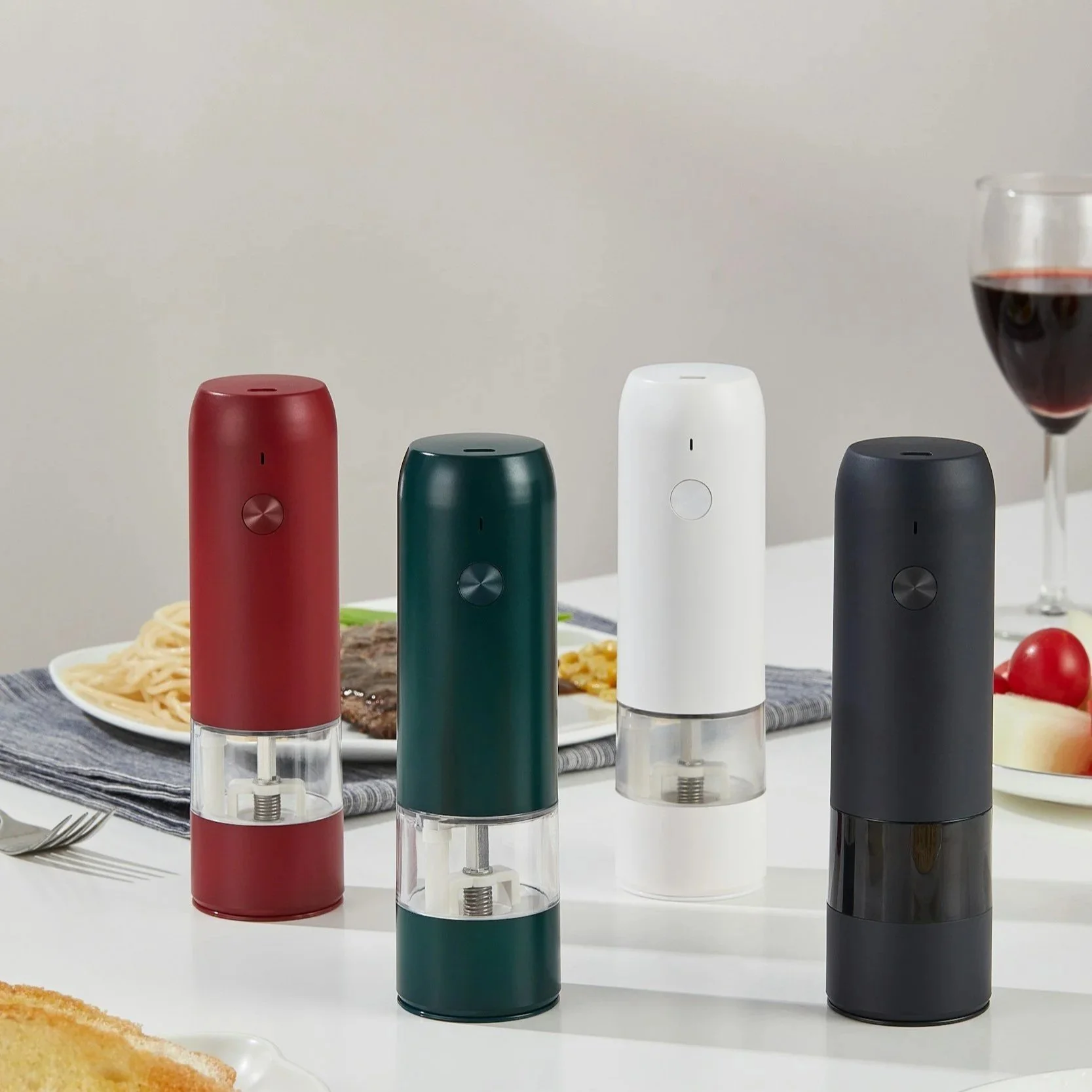
- Battery and rechargeable electrics, including gravity-activated units that grind when tilted.
- High-output enthusiast mills, machined from solid billet with hardened steel burrs and non-drifting adjusters.
- Disposable factory-filled grinders, sold pre-loaded in the grocery seasoning aisle and generally not refillable by design.
- Combination and dual-chamber units, which carry salt and pepper in one body. On the narrow pepper mill definition, the market sits at roughly $1.8 billion in 2026 and is projected to reach approximately $2.72 billion by 2035 at a 4.70% CAGR, with demand concentrated in France, the United States and Germany. A broader pepper grinder definition places the market nearer $2.5 billion in 2025, growing to roughly $3.8 billion by 2034 at 4.76% CAGR. Sellers should treat headline figures above $10 billion with suspicion, since those typically fold in unrelated grinding equipment.
The electric sub-segment is where the growth concentrates. Global electric salt and pepper grinder revenue reached approximately $1.32 billion in 2024, growing at around 7.1% CAGR toward $2.46 billion by 2033. North America led with roughly $470 million, ahead of Europe at approximately $390 million, and the North American electric segment is expected to sustain around 6.8% CAGR. Independent buying guides place electric segment growth at a similar 7.2%.
The single most important structural fact for a seller is penetration. US household ownership of any salt or pepper grinder is estimated at 60% to 75%. This is not a category where a listing needs to explain why fresh grinding matters. It is a category where the buyer already knows, already owns one, and is shopping because the last one failed or because they are buying a gift.
Value and volume also diverge sharply. Manual grinders account for perhaps 65% to 75% of US unit volume in 2026 but only 50% to 55% of value, because average selling prices sit far below electric models. US volume growth is projected at a modest 2% to 4% while value growth runs at 4% to 7%, which tells a seller plainly that the money in this category is made by moving buyers up the price ladder rather than by finding new buyers.
Product Evolution and Recent Trends
The category has moved through three recognisable phases.
Phase one was the long heritage era, in which a small number of European manufacturers established the mechanism standards that still define the product. Peugeot has been making pepper mills for close to 150 years and remains the reference point. Fletchers' Mill has been turning mills in Maine for over a century. The competitive claim in this era was craftsmanship, and it was backed by lifetime mechanism guarantees that persist today at Peugeot, Cole and Mason and Fletchers' Mill.
Phase two was commoditisation. Mass-produced grinders and, from the early 2000s, deliberately non-refillable disposable grinders in the grocery seasoning aisle collapsed the entry price and severed the link between grinding and product ownership. Those disposable units are built from mixed plastic, glass and metal that is difficult to separate for recycling, and the fact that they cannot be refilled is often not obvious on the packaging. This phase created an enormous installed base of buyers with low expectations and no brand attachment.
Phase three, running through 2026, is bifurcation. The category is splitting into a high-performance enthusiast tier and a convenience-led electric tier, and the middle is being redefined around durability claims rather than heritage claims.
Four trends define 2026 for sellers:
Performance has become a legitimate premium claim. A machined aluminium mill retailing at $199, with a grind range spanning roughly 8 to 60 mesh and output claims around ten times faster than top-rated conventional mills, funded itself through crowdfunding campaigns raising over $3.0 million from 17,212 backers and a further $1.1 million from 6,887 backers. A competing premium mill sits at $320. Endorsement from prominent food writers, who have publicly compared these units favourably against the long-standing $50 benchmark, moved the tier from novelty to legitimate.
Rechargeable has displaced disposable batteries. USB-C rechargeable units are now the preferred electric architecture, and buying guides explicitly rank USB-C above replaceable AA or AAA cells and above sealed non-replaceable batteries. This is both a sustainability response and a reliability response, since battery compartment corrosion is a recurring failure mode.
Refillability has become a purchase criterion rather than an assumption. The backlash against non-refillable grocery-aisle grinders has produced sustained demand for refillable glass, stainless and wooden bodies, and market research now explicitly lists refillable and modular grinder systems as a category development direction.
Design conservatism persists. Around 70% of purchasers still choose classic design language, favouring heritage silhouettes and premium woods such as rubberwood and beechwood. A seller does not need to innovate visually. They need to look like the thing buyers already trust and then outperform it mechanically.
Leading Brands and Market Disruptors
Peugeot is the reference standard and the price anchor for the serious manual tier. The Paris and Paris u'Select mills sit at roughly $50 to $62 depending on size and finish, offer six or more coarseness levels, and carry a lifetime mechanism guarantee. Almost every comparative review in the category uses Peugeot as the benchmark. Its weakness, noted repeatedly by high-volume cooks, is grinding speed relative to the new high-output tier.
Cole and Mason, part of the DKB group, is the volume leader in the recommended mid-premium band. The Derwent at roughly $60 is a repeat top pick in independent testing, praised for six clearly marked grind settings, a large peppercorn capacity of close to half a cup, a pop-off top for easy filling and a lifetime mechanism guarantee. The wooden Forest Capstan with a carbon steel mechanism sits at $49.95. This brand occupies exactly the position a private label seller would want and defends it with warranty credibility.
OXO, under Helen of Troy, owns the value-recommended tier. The Good Grips mess-free grinder at roughly $22, with a ceramic mechanism and a top-dispensing design, is the standing recommendation for buyers who want real performance without spending $50. This is the single most important competitor for anyone entering below $35.
Fletchers' Mill holds the American craft position with the Federal at around $52, handcrafted in Maine from New England hardwoods, using a two-step stainless mechanism that cracks peppercorns before grinding them.
MannKitchen is the disruptor that changed what the category's ceiling looks like. The Pepper Cannon at $199, discounted to $159 during promotional events, is milled from solid aerospace-grade aluminium with hardened high-carbon stainless burrs, a double-bearing supported drive shaft and a half-cup capacity. Its central marketing claim, that it seasons a steak in seven cranks rather than seventy, is a direct attack on the heritage tier's weakest attribute.
Weber Workshops sits above even that, with the Moulin at approximately $320, aimed at the same audience that buys high-end coffee equipment.
Le Creuset competes purely on colour and countertop presence, with mills commonly trading between $43 and $60, and demonstrates that in this category a design licence is worth roughly a $20 premium over an equivalent mechanism.
Olde Thompson, Zassenhaus, Unicorn, WhiteRhino and Latent Epicure fill out the competitive set. The Unicorn Magnum at roughly $50 to $59 remains the long-standing high-output value benchmark. WhiteRhino sits at $49.99 with stainless burrs. Latent Epicure competes in USB-C rechargeable electrics around $35.
Private label opportunity assessment: Wide open below $60, effectively closed above $150. The moat at the top is machining tolerance, burr metallurgy and brand narrative, none of which a first-time importer can buy. The moat in the middle is warranty credibility, which is available to anyone willing to actually stand behind a mechanism. The moat at the bottom does not exist, which is why nobody makes money there.
Price Tiers and Popular Brands
| Tier | Price Range | Representative Products | Reseller Margin | Sourcing Strategy |
|---|---|---|---|---|
| Tier 1: Commodity | $5 to $15 | Unbranded glass and acrylic manual sets (observed at $7.19, $8.99, $10.79, $11.99, $14.99) | 6% to 18% | Avoid. Freight and duty consume the spread before advertising |
| Tier 2: Value branded | $16 to $29 | OXO Good Grips ($22), gravity electric sets ($17.99 to $28.88) | 22% to 38% | Viable only with a genuine mechanism upgrade and a warranty claim |
| Tier 3: Mid-premium | $30 to $65 | Peugeot Paris ($50 to $62), Cole and Mason Derwent ($60), Forest Capstan ($49.95), Fletchers' Mill Federal ($52), WhiteRhino ($49.99) | 45% to 62% | The private label sweet spot. Compete on stated burr materials and warranty |
| Tier 4: Enthusiast | $70 to $200 | Unicorn Magnum ($50 to $59), MannKitchen Pepper Cannon ($199 list, $159 promotional) | 40% to 58% | Requires machining partner and real tooling investment. Not a first order |
| Tier 5: Design and luxury | $200 to $400 | Weber Workshops Moulin ($320), limited-run designer and turned hardwood mills | 35% to 55% | Brand-led. Not accessible through contract manufacturing alone |
B. Buyer Persona Deep Dive
Persona 1: The Burned Replacer
Demographics: Age 30 to 58. Roughly 47% male, 53% female. Household income $55,000 to $130,000. Suburban and urban, owns a full kitchen, cooks four or more times a week.
Purchase motivations, ranked: 1) Not buying a third grinder in two years. 2) Grind consistency that does not drift mid-meal. 3) Something that looks acceptable on a table.
Price sensitivity: Moderate. Sweet spot $30 to $50. Has already proven they will not spend $10 again, and is not yet convinced by $199.
Pain points:
- The previous mechanism seized, cracked or simply stopped cutting after a few months of use.
- The coarseness adjuster loosened during use, so the setting they chose was not the setting they got.
- Salt corroded a steel mechanism, which nobody warned them about at purchase.
- The grinder was almost impossible to refill without spilling, because of a narrow neck or a spindle that would not stay in place. What they are solving for: Ending the replacement cycle.
Decision factors: Stated burr material, warranty terms, review language about longevity specifically, and whether the listing distinguishes between the salt unit and the pepper unit.
Brand loyalty: Low on entry, very high on exit. Once a grinder survives two years they will buy the same brand again and recommend it unprompted.
This is the largest and most commercially important persona in the category, and it is directly created by the failure rate of everything below $20.
Persona 2: The Gift Buyer
Demographics: Age 28 to 65. Roughly 41% male, 59% female. Buying for weddings, housewarmings, holidays and Father's Day.
Purchase motivations, ranked: 1) Looking generous within a fixed budget. 2) Presentation on arrival. 3) Confidence the recipient does not already own one.
Price sensitivity: Firm budget bands at $25, $50 and $100. Within a band they are almost entirely insensitive to the difference between $44 and $49.
Pain points:
- Cannot tell premium from cheap in a listing photograph, because both use the same stock styling.
- Arrives in a plain polybag with no presentation value.
- No idea whether the recipient already owns a grinder, given household penetration is very high.
- Cannot personalise without moving to a completely different marketplace. What they are solving for: A confident, presentable purchase in a category they do not personally care about.
Decision factors: Gift packaging, engraving availability, delivery guarantee dates, and whether the product photographs look like a shop and not a warehouse.
Brand loyalty: None, but they are the highest-margin buyer in the category because they buy the boxed version at a premium and rarely return.
Persona 3: The High-Volume Home Cook
Demographics: Age 27 to 55. Roughly 61% male, 39% female. Cooks for a family or entertains regularly, often grills or smokes meat.
Purchase motivations, ranked: 1) Output per turn. 2) Coarse grind capability for rubs and crusts. 3) Capacity, so refilling is rare.
Price sensitivity: Low. Sweet spot $90 to $200. This is the persona that made a $199 pepper mill a commercial success.
Pain points:
- Grinding enough coarse pepper for a rub takes so long that they resort to a coffee grinder instead.
- Standard mills cannot produce a genuinely coarse crack, only a medium grind.
- Grind size drifts as the mill is used, so a batch is inconsistent.
- Small capacity means refilling in the middle of prep with wet hands. What they are solving for: Volume and coarseness without abandoning the mill entirely.
Decision factors: Output claims, grind range breadth, capacity in ounces, burr material, and whether a credible independent voice has tested it.
Brand loyalty: High once satisfied, and extremely vocal. This persona generates a disproportionate share of category word of mouth.
Persona 4: The Accessibility-Led Buyer
Demographics: Age 55 to 82. Roughly 38% male, 62% female. Living independently, often with reduced grip strength, arthritis or limited wrist mobility.
Purchase motivations, ranked: 1) Being able to season food without help. 2) One-handed operation. 3) Simple, obvious controls.
Price sensitivity: Moderate. Sweet spot $25 to $50, and they will pay for the feature that actually works.
Pain points:
- Twisting a manual mill is painful or impossible.
- Electric units fail quickly and replacing them is a recurring expense on a fixed income.
- Small print on adjusters and battery compartments is unreadable.
- Heavy units are difficult to lift and control at the table. What they are solving for: Independence at the dinner table.
Decision factors: One-handed operation, weight, button size and placement, and whether the unit needs to be lifted at all.
Brand loyalty: Moderate. They will repurchase what worked, and they buy for others in the same situation.
This persona is materially under-served. Almost no listing in the category is written for reduced grip strength, despite this being one of the strongest arguments for the entire electric segment.
Persona 5: The Sustainability-Motivated Switcher
Demographics: Age 24 to 45. Roughly 43% male, 57% female. Urban, higher education, already buys refills and concentrates in other categories.
Purchase motivations, ranked: 1) Escaping single-use grinders. 2) Buying something once. 3) Materials they consider honest, meaning glass, steel and wood rather than plastic.
Price sensitivity: Moderate to low. Sweet spot $35 to $70 for a set, justified as a lifetime purchase.
Pain points:
- Disposable grocery-aisle grinders are deliberately non-refillable and this is rarely made clear on the packaging.
- Those units mix plastic, glass and metal in ways that make recycling impractical.
- Rechargeable electrics still arrive with disposable batteries or sealed non-replaceable cells.
- Wooden bodies that split or delaminate defeat the entire point of buying once. What they are solving for: A permanent object that ends a recurring waste stream.
Decision factors: Refill aperture size, materials disclosure, replaceable burr availability, USB-C charging, and warranty length as a proxy for expected life.
Brand loyalty: High. This persona researches thoroughly and stays.
Persona 6: The Aesthetic Buyer
Demographics: Age 26 to 50. Roughly 30% male, 70% female. Recently moved, renovated or restyled a kitchen. Active on visual social platforms.
Purchase motivations, ranked: 1) Countertop presence. 2) Colour and finish matching. 3) Silhouette and proportion.
Price sensitivity: Low within reason. Sweet spot $45 to $120 for a matched pair, and they will pay a clear premium for a colourway.
Pain points:
- Available colours are black, silver and wood, and nothing else.
- Sets do not match other countertop items they already own.
- Visible plastic components ruin an otherwise acceptable object.
- Fill windows look cheap when the contents run low. What they are solving for: An object that earns its place on a visible counter.
Decision factors: Finish quality, colour range, styled lifestyle imagery, and whether the pair looks intentional together.
Brand loyalty: Moderate, tied to design language rather than mechanism.
Persona 7: The Small Foodservice Operator
Demographics: Age 30 to 60. Independent restaurants, cafes, catering operations and food trucks. Buying in case packs of six to twenty-four.
Purchase motivations, ranked: 1) Surviving daily commercial use. 2) Replacement cost per unit. 3) Consistency across the whole table set.
Price sensitivity: High on unit cost, low on total cost of ownership. Sweet spot $18 to $32 per unit in case quantities.
Pain points:
- Table mills fail within a season under commercial handling.
- Staff over-tighten adjusters and strip them.
- Refilling twenty units is a labour cost nobody accounts for.
- Mismatched replacements make the dining room look neglected. What they are solving for: A predictable replacement cycle rather than a superior grind.
Decision factors: Case pack pricing, mechanism durability ratings, ease of bulk refilling, and replaceable parts availability.
Brand loyalty: High and slow-moving. Winning a foodservice account is difficult and then very sticky.
C. Keyword and Search Trends
Search Volume and Term Structure
Search behaviour splits into four intent classes, and as in most mature kitchen categories, profitability runs roughly inverse to volume.
Class 1: Category discovery. Terms like salt and pepper grinder set, pepper mill, pepper grinder, salt grinder. Highest volume, roughly 180,000 to 320,000 combined US monthly searches at seasonal peak, falling to roughly 90,000 to 130,000 in the spring trough. Extremely competitive and dominated by established listings and retail brands.
Class 2: Brand and model. Terms like Peugeot Paris pepper mill, Cole and Mason Derwent, OXO pepper grinder, Pepper Cannon, Unicorn Magnum. Moderate volume, roughly 30,000 to 70,000 combined at peak. High conversion but the brand owns the listing.
Class 3: Problem, material and mechanism. Terms like ceramic burr salt grinder, pepper grinder that does not clog, refillable salt grinder glass, best grinder for Himalayan salt, salt grinder corrosion, adjustable coarseness pepper mill, one handed pepper grinder arthritis. Lower volume, roughly 14,000 to 38,000 combined, but the highest conversion in the category and by far the least contested. This is the seller's territory.
Class 4: Gift and occasion. Terms like salt and pepper grinder gift set, personalised pepper mill, wedding gift grinder set, Father's Day pepper grinder. Sharply seasonal, roughly 20,000 to 55,000 at peak and negligible in spring. Highest average order value in the category.
Brand search is heavily concentrated in the heritage names, but the high-output enthusiast entrants have grown their share of brand-intent search rapidly as review coverage and food-media endorsement have accumulated.
Seasonal Demand Patterns
| Window | Dates | Share of Annual Volume | Demographic Skew | Seller Action |
|---|---|---|---|---|
| Autumn build | Mid-September to mid-November | 20% to 25% | Replacement buyers and early gift researchers, mixed gender | Inventory landed by 10 October. Lead with durability and burr materials |
| Gifting peak | Black Friday to 24 December | 33% to 40% | Gift buyers, roughly 59% female, highest average order value of the year | Boxed sets, bundles, delivery guarantees, engraving upsell |
| New year kitchen reset | 26 December to mid-February | 14% to 18% | Self-purchasers replacing failed units and gift-card spenders | Push the replacement narrative and single-unit SKUs |
| Spring occasions | April to late June | 14% to 18% | Wedding registry, housewarming and Father's Day, grilling crossover | Personalised and coarse-grind positioning. Registry keyword sets |
| Summer trough | July to early September | 10% to 14% | Low-intent browsing, thin conversion | Place factory orders. Rebuild listings and imagery. Do not spend on acquisition |
Seasonality in this category is gift-driven rather than usage-driven, which makes it sharper than the underlying consumption pattern would suggest. Observed search interest for electric grinders has climbed roughly 88% across a September to December run, and the concentration of gifting volume means an inventory error in October is not recoverable inside the same year.
Rising and Declining Queries
| Direction | Query Theme | Est. YoY Change | Interpretation |
|---|---|---|---|
| Rising | USB-C rechargeable grinder | +126% | Charging standard has become a purchase filter. Update listings or lose the click |
| Rising | Ceramic burr salt grinder | +83% | Buyers have learned that salt corrodes steel. Naming the burr converts |
| Rising | High output pepper mill and coarse crack | +71% | Grilling and rub culture pulling demand into the enthusiast tier |
| Rising | Refillable grinder glass or stainless | +64% | Direct backlash against non-refillable grocery-aisle grinders |
| Rising | Pepper grinder for arthritis or weak grip | +58% | Accessibility intent is real, high-converting and almost unaddressed in listings |
| Rising | Personalised or engraved grinder set | +49% | Wedding and housewarming gifting migrating to customisable product |
| Rising | Pepper mill lifetime warranty | +37% | Heritage brands have trained buyers to look for guarantees. Match or explain |
| Rising | Replacement grinder mechanism or burr | +31% | Repair intent growing. A small, defensible parts business sits here |
| Declining | Battery powered grinder with AA cells | -34% | Displaced by rechargeable. Wind this inventory down |
| Declining | Disposable grinder refill hack | -28% | Buyers have moved from hacking disposables to replacing them outright |
| Declining | Cheap salt and pepper shaker set | -22% | Non-grinding shakers losing share to grinders across every price band |
| Declining | Acrylic grinder body | -17% | Associated with breakage. Glass, steel and wood are winning the material framing |
Consumer Insights from Community Forums
Analysis of discussion across cooking and equipment communities, including r/Cooking, r/AskCulinary, r/castiron, r/BBQ, r/smoking, r/Frugal, r/BuyItForLife, r/ZeroWaste and specialist barbecue and kitchen equipment forums, alongside public buyer question threads on best-selling marketplace listings, surfaces a consistent complaint hierarchy. These are the twelve themes that recur most often:
- Electric grinders failing inside a year. By a wide margin the loudest complaint in the category. Public buyer questions on best-selling electric gravity sets document units dead after five uses, gears stripped inside three months, failure at six weeks, at six months and at ten months, in several cases after the buyer had already replaced batteries and cleaned salt dust from the mechanism.
- Plastic components as the failure point. The specific part named most often is the small plastic ring or collar surrounding the grind adjustment mechanism, which splits and takes the whole unit with it. Cheap acrylic mechanisms are known to jam and break, and even repair guidance acknowledges that a plastic grinder mechanism eventually dries out, becomes brittle and cracks, and that a broken mechanism generally cannot be repaired.
- Salt corroding steel mechanisms. The correct pairing is a ceramic mechanism for salt and a stainless or carbon steel mechanism for pepper, because salt corrodes metal. This is well understood by manufacturers and almost never disclosed in budget listings, which sell identical mechanisms in both units of a pair.
- Grind setting drift. Adjusters that loosen during use so the coarseness changes mid-task. This is the specific attribute enthusiast buyers cite when justifying a $159 to $199 purchase, and the phrase used repeatedly in that tier is a non-drifting or never-slip adjuster.
- Output too slow for real cooking. Owners preparing rubs or seasoning multiple large cuts report abandoning the mill for a coffee grinder because a conventional mill grinds too slowly. The commercial answer to this complaint became a $199 product.
- Clumping and seizing after washing. Buyers who wash a grinder and refill before it is fully dry find the contents clump and block the mechanism. One reported that units took days to dry completely.
- High-moisture salts jamming the mill. Grey sea salt, Himalayan pink and similar high-moisture salts are the worst offenders, and salt flakes and soft berries damage or clog mechanisms rather than grinding.
- Weak motors that stall on peppercorns. Electric sets where the pepper unit repeatedly stops mid-grind, and where the only way to get output is to run the coarsest setting, producing large uneven fragments.
- Disposable grinders that cannot be refilled by design. Grocery-aisle units built as deliberately single-use, with the non-refillable design rarely made obvious on the packaging, and a mixed material construction that makes recycling impractical.
- Filling difficulty. Narrow necks, spindles that will not hold position, and no funnel supplied. Reviews consistently reward mills with a pop-off top and a wide aperture.
- Grip and effort. Twisting effort is a genuine barrier for older buyers and anyone with reduced hand strength, and cramped hands from cheap grinders come up repeatedly in reviewer accounts of why they upgraded.
- Wrong item or mismatched pair received. Buyers reporting a different model than the one pictured, or a set where one unit works acceptably and the other does not. What these complaints tell a seller:
Almost every complaint in this category is a materials and specification complaint, not a design complaint. Nobody is asking for a new kind of grinder. They are asking for the grinder they already bought to have a ceramic burr where salt goes, a metal collar where the adjuster goes, a motor that survives a year, and a setting that stays where they put it. Those are all purchase-order line items, not innovations. The brands at $50 and above solved them decades ago and charge for the solution. The listings below $20 have not solved them and do not mention them. The entire opportunity is to solve them and say so, in the middle of the market, where nobody currently is.
4. Tools and Resources: Sourcing Decision Framework
Private Label Sourcing Calculator
| Product Type | Factory Price | MOQ | Shipping | Duties | Landed Cost | Amazon Fees | Total Cost | Retail Price | Profit Margin |
|---|---|---|---|---|---|---|---|---|---|
| Glass and steel manual set (200 ml, ceramic salt burr, steel pepper burr) | $3.40 | 1,000 | $1.65 | $0.72 | $5.77 | $8.95 | $14.72 | $29.99 | 50.9% |
| Acacia wood set with steel heads (six-click adjuster, printed spec card) | $4.90 | 500 | $1.85 | $0.98 | $7.73 | $10.40 | $18.13 | $39.99 | 54.7% |
| Single stainless pepper mill (brushed body, hardened steel burr, 8 in) | $1.30 | 500 | $0.70 | $0.28 | $2.28 | $5.20 | $7.48 | $18.99 | 60.6% |
| USB-C rechargeable electric set (sealed gear housing, metal collar, LED) | $11.80 | 300 | $2.60 | $2.35 | $16.75 | $14.60 | $31.35 | $59.99 | 47.7% |
| Boxed gift set with stand (wood set, funnel, peppercorn sachet, rigid box) | $7.95 | 500 | $2.40 | $1.58 | $11.93 | $13.85 | $25.78 | $54.99 | 53.1% |
| High-output machined pepper mill (aluminium body, wide grind range, bearing shaft) | $28.50 | 300 | $3.10 | $5.40 | $37.00 | $24.90 | $61.90 | $129.99 | 52.4% |
| Replacement ceramic burr and spindle kit (universal fit, three sizes) | $1.15 | 1,000 | $0.30 | $0.22 | $1.67 | $4.75 | $6.42 | $16.99 | 62.2% |
Standard Assumptions Used
Factory price methodology. Quotes reflect FOB pricing from Chinese suppliers in Shandong, Guangdong, Jiangsu and Zhejiang, benchmarked against published ranges for comparable goods. Observed listings show stainless steel pepper mills quoting at $0.85 to $1.30 at 500 piece minimums, acacia wood spice and pepper mill sets with stainless steel heads at $4.03 to $4.59 at 500 set minimums, and glass grinder bottles with ceramic cores from $0.23 to $0.80. Calculator prices assume an upgraded burr specification rather than the base offer, which is why they sit above the published floor. First sample orders typically run 15% to 30% above these figures.
Shipping assumptions. Sea freight, LCL below 8 CBM and FCL above, port to fulfilment centre including drayage and inbound placement. Grinders are dense, small and stackable, so freight is a modest share of landed cost, which is one of the reasons this category tolerates private label economics better than bulky kitchen goods. Air freight is not modelled and would add roughly $1.40 to $3.80 per set.
Duty rates. Hand-operated mechanical appliances weighing 10 kg or less used in preparing food classify under HTS 8210.00.00, carrying an MFN base rate of 3.7%, and customs rulings have applied this heading specifically to salt and pepper mills imported from China, including acrylic-bodied mills where a base metal grinding plate supplies the essential character. Motorised units generally fall outside heading 8210 and should be classified separately. Duty figures in the calculator include the base rate plus an allowance for China-specific tariff treatment, merchandise processing and harbor maintenance fees. Tariff treatment for Chinese-origin goods has changed repeatedly, so verify current rates with a broker at the time of order rather than relying on any published figure, including this one.
Fee breakdown. Amazon figures combine a 15% referral fee on home and kitchen with FBA fulfilment charges by size tier plus a storage allowance. Two-piece sets in rigid gift boxes move into a higher size tier than the individual mills, which is why the boxed set carries a disproportionate fee against its factory cost.
MOQ context. Published minimums vary enormously in this category. Glass grinder bottles are advertised from a single piece through trading companies, standard mills at 500 pieces, and dedicated glass manufacturers commonly quote 5,000 pieces for a custom specification. Electric gravity sets appear at minimums as low as 40 to 100 pieces, which reflects trading company stock rather than production runs, and buying at those levels usually means buying an unmodified generic product.
Retail benchmarking. Retail prices are set against observed comparables: unbranded manual sets at $7.19 to $14.99, gravity electric sets at $17.99 to $28.88, USB-C rechargeable sets around $28.88 to $39.99, OXO at roughly $22, Peugeot Paris at $50 to $62, Cole and Mason Derwent at $60, Fletchers' Mill Federal at $52, WhiteRhino at $49.99, Unicorn Magnum at $50 to $59, and MannKitchen Pepper Cannon at $199 list and $159 on promotion. The calculator deliberately prices above the commodity floor, because in a replacement-driven category a price at the floor signals the same failure the buyer is trying to escape.
Margin notes. Margins are gross profit after landed cost and marketplace fees only. They do not deduct advertising, which realistically consumes 8% to 14% of revenue during launch and 4% to 8% at steady state, nor returns, which run 5% to 9% on manual units and 11% to 18% on electrics. A 55% calculated margin therefore translates to roughly 36% to 43% net contribution in a mature account, and materially less on electrics.
Additional Strategy Tables
Strategy A: Bundle Architecture and Price Ladder
| Bundle | Contents | Target Persona | Bundle Price | Sum of Parts | Est. Margin |
|---|---|---|---|---|---|
| Never Again Set | Ceramic-burr salt mill, steel-burr pepper mill, spec card, warranty registration | Burned Replacer | $39.99 | $47.98 | 55% |
| Table Ready Gift Box | Wood set, matching stand, refill funnel, peppercorn sachet, rigid box | Gift Buyer | $54.99 | $71.96 | 53% |
| Grill Master Coarse Kit | High-output pepper mill, coarse-crack guide card, 8 oz peppercorn refill | High-Volume Home Cook | $139.99 | $162.98 | 51% |
| One-Handed Kitchen Kit | USB-C rechargeable set, charging dock, large-print instruction card | Accessibility-Led Buyer | $64.99 | $79.98 | 46% |
| Refill Forever Kit | Glass and steel set, wide-mouth funnel, replacement ceramic burr, storage jars | Sustainability Switcher | $49.99 | $63.97 | 57% |
| Six-Pack Table Service | Six matched mills, bulk refill funnel, replacement burr pack | Small Foodservice Operator | $129.99 | $167.94 | 38% |
Strategy B: Seasonal Inventory and Cash Flow Calendar
| Month | Action | Inventory Position | Advertising Posture | Notes |
|---|---|---|---|---|
| February to April | Sample and negotiate | Run down winter stock | Minimal, defensive bids only | Best window for supplier attention and price negotiation |
| May to June | Spring occasion push | Hold light gift stock | Targeted, registry and Father's Day terms | Wedding registry and grilling crossover carry this window |
| July to August | Place the main order | Production in progress | Near zero | Rebuild listing copy and imagery. Do not buy traffic into a dead window |
| September to mid-October | Land and index | Full peak stock in place | Ramp gradually to build review velocity | Everything must be receivable by 10 October or the year is compromised |
| Late October to 24 December | Sell the gift SKU hard | Peak, plan for stockout risk | Maximum, accept a higher advertising cost of sale | The largest single share of annual volume lands here |
| 26 December to mid-February | Switch to replacement messaging | Clear boxed sets, hold singles | Moderate, shift to problem keywords | Gift-card spending and failed-unit replacement drive this window |
Key Takeaways
- This is a replacement market, and the listing should say so. With household penetration at 60% to 75%, most buyers already own a grinder and are shopping because it failed. The highest-converting listing in this category is the one that names the failure the buyer just experienced, which means burr material, adjuster construction and warranty terms belong in the first three bullets rather than in a specification table nobody reads.
- The money is in moving buyers up, not finding new ones. US volume growth of 2% to 4% against value growth of 4% to 7% is a clear instruction. A seller who wins the $7 to $15 shopper wins the least profitable customer in the category. A seller who converts that shopper to $39.99 by explaining why the last one broke has doubled their contribution per unit without spending more on traffic.
- Electric growth is real, and so is electric risk. The electric segment expands at roughly 7.1% to 7.2% CAGR against low-single-digit manual growth, but it also carries the worst reliability record in the category, with documented failures at three, six and ten months. Enter it only with a sealed gear housing, a metal adjustment collar, USB-C charging and a warranty long enough to cover the window where competitors fail.
- The middle of the market is empty and the top has been validated. Below $20 is a commodity war, above $150 is a machining and brand business, and the $30 to $65 band belongs to a handful of heritage brands defending it with lifetime mechanism guarantees. A private label seller with genuine burr specification and a real warranty can enter that band immediately, and the enthusiast tier has already proven buyers will pay $199 when performance is demonstrable.
- Timing decides the year. With the gifting window carrying roughly a third to two-fifths of annual volume and search interest for electric units rising close to 88% across the autumn run, an order placed in July that lands in early October outperforms a better product that lands in late November. Inventory decisions made in summer determine the outcome, and there is no second window to recover in.
Sources and References
MarkWide Research, Pepper Mill Market Size, Share and Industry Trends Forecast 2026 to 2036
Verified Market Reports, Pepper Grinder Market Size, Growth Analysis and Forecast
Verified Market Reports, Pepper Mill Grinder Market, North America regional analysis
Dataintelo, Electric Salt and Pepper Grinder Market Research Report to 2033
IndexBox, Salt Grinder Market in the United States, prices, size and forecast
Reviewed, The Best Pepper Grinders, comparative testing
Food Network, Best Pepper Mills of 2026, tested product reviews
Progressive Radio Network, 12 Best Pepper Mills, August 2026 long-term testing notes
HomeKitchen Picks, Best Salt and Pepper Grinders in 2026, five units tested side by side
Sixstoreys, 15 Best Pepper Mills, expert tested May 2026
Holar Industrial, Fix Salt and Pepper Mill: 7 Common Problems and How to Repair It
The Home Depot, Best Salt and Pepper Grinders for Your Kitchen, mechanism selection guidance
Alibaba.com and Made-in-China.com supplier listings, salt and pepper grinder FOB pricing and MOQ ranges
Jinan Royaltop, glass salt and pepper grinder wholesale specifications and MOQ terms
US Harmonized Tariff Schedule, heading 8210.00.00, hand-operated mechanical appliances weighing 10 kg or less
US Customs and Border Protection rulings on the tariff classification of salt and pepper mills from China
Walmart.com and eBay.com marketplace listing and pricing observation, August 2026
MannKitchen and Weber Workshops product pages and promotional pricing history
Public marketplace buyer question threads on best-selling electric gravity grinder sets
Community discussion analysis across r/Cooking, r/AskCulinary, r/BBQ, r/smoking, r/BuyItForLife, r/ZeroWaste and independent barbecue equipment forums