
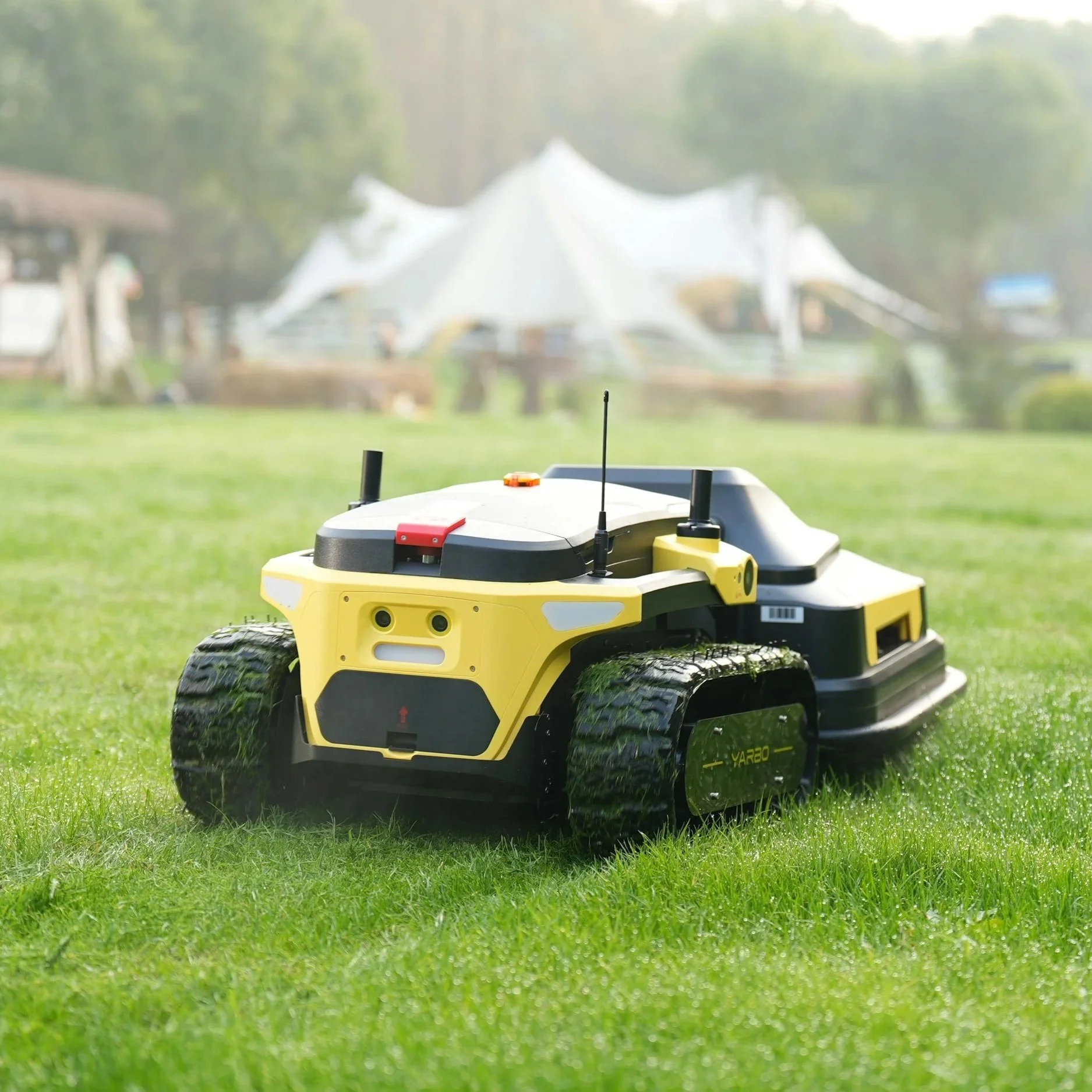
Article Summary: Key Insights at a Glance
- The robotic lawn mower category is growing fast, but nobody agrees on how big it is. Credible 2026 estimates range from $2.7 billion to $11.8 billion, with forecast growth between 7.5% and 15% a year. The spread comes from definitions (residential only versus commercial and professional units), not from doubt about the direction.
- Husqvarna still leads with over 18% global share, and the top five brands hold roughly 54% of the market. The real story is underneath that number: Chinese wire-free challengers (Segway Navimow, Mammotion, Ecovacs, eufy, Anthbot, Sunseeker) are winning online, where the growth is.
- The technology has flipped. Wire-free navigation (RTK-GPS, LiDAR and AI vision) is now the default for new mid-range and premium models, and all-wheel drive has fallen to roughly $1,299 at entry level.
- Buyer complaints cluster into five repeatable themes: lost RTK signal under trees and near walls, uncut edge strips of 2 to 10 inches that still need a trimmer, getting stuck on bumps, roots and holes, surprise subscription and cellular fees, and weak app support and connectivity.
- The central seller insight: the robot is not the opportunity, the gaps around it are. New mower resale runs at 5% to 12% margin against brands selling direct. Accessories and fixes that solve the five complaint clusters carry 30% to 60% margins.
- The highest-scoring opportunity is replacement blades and disc kits. Owners are told to budget roughly $30 to $60 per season on blades, every robot uses them, and they are cheap, light and repeat-purchase.
- Garages, RTK antenna mounts, traction wheel kits and flush mowing strips directly answer the top buyer complaints and form a natural "fix my robot" bundle ladder from $39 to $149.
- The used and refurbished mower channel is strong because the upgrade cycle is brutal. Owners of 2023 and 2024 boundary-wire and first-generation RTK units are selling to move to LiDAR and AWD models, and spring demand spikes predictably.
- Private label mowers are a red flag for new sellers. Firmware, navigation software, safety certification, battery shipping rules, warranty liability and stacked tariffs on China-origin machinery make the mower itself a brand-level game, not a seller-level one.
- The best entry point for 2026 is a blade and accessory brand with $4,000 to $9,000 of startup capital, launched on Amazon US and Amazon UK/DE ahead of the Northern Hemisphere spring, with Amazon AU and eBay AU covering the Southern Hemisphere season from September.
1. Actionable Insights First: Executive Opportunity Summary
The Editorial Thesis
Robotic mowers are sold on a promise: never mow again. Owners then discover three things the box did not mention. The mower loses its position under the big tree in the back corner. It leaves a strip of grass along every fence and bed that still needs a trimmer. And some brands switch off app control, anti-theft tracking or updates after year one or two unless you pay again.
None of those complaints are fixed by selling another robot. They are fixed by the products and services that sit around the robot: antenna mounts, garages, blades, traction wheels, flush mowing strips, repair parts, installation help and verified used units. That is where margin lives for independent sellers in 2026.
Top 3 Selling Opportunities Right Now
Opportunity 1: Replacement blades and cutting disc kits
Opportunity Score: 9/10
Every robotic mower uses small pivoting razor-style blades or compact disc blades that dull, chip and need flipping or replacing through the season. Buying guides now tell owners to budget roughly $30 to $60 per season on blades, which makes this a recurring consumable attached to a durable good. The category is dominated by brand-direct accessory stores and a scattering of generic Amazon listings with vague fitment.
The seller angle is clarity. Buyers want to know exactly which pack fits their model, how many seasons it lasts and whether the screws are included. A private label brand that organises listings by mower model (Worx Landroid, Husqvarna Automower, Segway Navimow, Mammotion Luba and Yuka, Ecovacs Goat, Gardena Sileno) and prints a fitment chart on the pack wins the click and the reorder.
- Profit margin range: 45% to 60% after marketplace fees, before advertising
- Best price points: $12.99, $16.99 and $24.99 packs, plus two-season value packs at $34.99
- Growth signal: every wire-free robot sold in 2025 and 2026 is a blade customer in 2026 and 2027, and installed base compounds each season
Opportunity 2: The "fix my robot" accessory set (garages, RTK antenna mounts, traction wheels)
Opportunity Score: 8/10
These three products map directly onto the top complaint clusters. Poor RTK base placement is the number one cause of lost positioning, and troubleshooting guides repeatedly tell owners to mount the antenna higher, away from metal, glass and tree canopy. Most bundled mounts are short stakes. A proper wall or pole mount kit with a long extension cable solves a real, urgent problem.
Garages protect the robot from sun, rain and debris, and they are among the most visible upgrades an owner buys in the first month. Traction and off-road wheel kits answer the "stuck on a slope" and "spinning on wet grass" complaints, which are common on two-wheel-drive models.
- Profit margin range: 30% to 45% (garages sit at the lower end due to size and freight)
- Best price points: $29.99 to $39.99 for mounts, $44.99 for wheel kits, $99 to $119 for garages
- Growth signal: brands themselves now sell garages, off-road wheels and antenna kits in official accessory stores, which validates demand and sets a high reference price for compatible alternatives
Opportunity 3: Verified used and refurbished robots, plus local setup service
Opportunity Score: 8/10
The upgrade cycle in this category is unusually fast. In 2025 the headline feature was wire-free RTK. In 2026 it is sensor fusion (LiDAR, cameras and RTK together), AI edge trimming and all-wheel drive at mid-range prices. That leaves a large pool of perfectly usable 2023 to 2025 units that owners want to offload, often with blades, garages and spare parts included.
Buyers want these units but fear three things: a dead battery, a locked account and missing boundary or antenna hardware. A seller who confirms battery health, factory resets and unbinds the account, includes all installation hardware and offers a local setup visit is solving the exact anxiety that keeps buyers away from private listings.
- Profit margin range: 20% to 35% on resale, 30% to 50% when paired with a paid setup visit
- Typical acquisition: $250 to $900 per unit off-season
- Typical resale: $450 to $1,500 in spring
- Growth signal: the jump from boundary-wire to wire-free and then to multi-sensor navigation has created two back-to-back upgrade waves inside three seasons
Quick Action Items
- Pick your fitment lane first. Choose three to five mower families with large installed bases and build blade and accessory SKUs for those only. Vague "universal" listings get returns and one-star reviews.
- Order samples of the brand accessories you are replacing and measure them. Fitment accuracy is the product.
- Launch before the season, not during it. For the US, UK and Europe, inventory should be live by February. For Australia and New Zealand, by August.
- Write listings in complaint language. "Stops RTK signal drops under trees" and "cuts the edge strip your robot misses" convert better than feature lists.
- Set up a used-unit acquisition routine from October to February in the Northern Hemisphere, when owners upgrade and prices soften.
- Get a customs broker to classify every SKU before you place a purchase order. Blades, garages, wheels and antenna mounts can fall under different tariff codes with different duty stacks.
Red Flags to Avoid
- White label robotic mowers. Thin margin, heavy warranty exposure, firmware you do not control, lithium battery shipping rules, safety certification costs and a price war with brands selling direct. Budget boundary-wire robots on major marketplaces already carry weak review scores, with some sitting around 3.3 stars.
- Selling new branded mowers without authorisation. Brands selling direct to consumers control pricing and promotions. Unauthorised resellers get undercut by flash sales and may void manufacturer warranties.
- "Universal" accessory claims. Wheel hubs, blade screws, antenna threads and garage footprints vary widely. One wrong fitment claim can sink a listing.
- Subscription-dependent products. If you sell anything that depends on cellular connectivity, disclose ongoing costs in the title and bullets. Undisclosed renewal costs are already a visible complaint theme in this category.
- Tariff exposure on bulky items. Garages and edging strips carry high freight per unit. A duty change can wipe out the margin on the whole shipment.
- Theft and security products that overpromise. Tracker mounts and locks help, but claims of "theft-proof" invite returns and complaints.
Best Entry Point for New Sellers
The recommended entry point is a model-specific replacement blade line on Amazon US and Amazon UK/DE, expanding into RTK antenna mount kits and garages once review velocity is established. This keeps startup capital low, avoids lithium batteries and electronics certification, and builds a repeat customer base that can be cross-sold into bundles.
Startup Cost Breakdown
| Cost Item | Low Estimate | High Estimate | Notes |
|---|---|---|---|
| Samples (brand blades, mounts, garages for measurement) | $250 | $600 | Buy the originals you are replacing, plus 3 to 5 supplier samples |
| First blade order (3 fitment SKUs, 1,000 packs each) | $2,400 | $4,800 | FOB roughly $0.80 to $1.60 per pack depending on count and steel grade |
| Freight, duty and customs broker | $700 | $1,500 | Small, dense cartons; verify duty classification before ordering |
| Packaging design and fitment chart printing | $200 | $500 | Model-specific fitment chart is the key conversion asset |
| Product photography and listing creative | $300 | $800 | Include close-ups of fitment and screw type |
| Marketplace registration, brand registry, trademark filing | $350 | $1,000 | Trademark filing protects the brand from listing hijacks |
| Launch advertising (first 60 days) | $600 | $1,500 | Target mower model names and 'replacement blades' queries |
| Total | $4,800 | $10,700 | Most sellers land between $4,000 and $9,000 by starting with two SKUs |
2. Quick Data Scans: Marketplace Sales Opportunity Analysis
Legend
| Score Range | Meaning | Action |
|---|---|---|
| 8 | High demand, low to moderate competition, healthy margin | Enter now |
| 6 | Moderate demand or moderate competition | Test carefully with limited inventory |
| 3 | Low demand, oversaturated, or margin crushed by brand-direct pricing | Avoid |
Score colours: green = 8 to 10, yellow = 5 to 7, red = 1 to 4. The example scores above show the colour for each band.
Marketplace Opportunity Matrix
Weekly figures are ShelfTrend estimates for a single established seller during peak season in that marketplace's hemisphere, based on listing counts, review velocity, price bands and category seasonality. Treat them as planning ranges, not guarantees. Revenue is shown in USD for comparability.
| Marketplace | Opportunity Score | Product Segment | Est. Weekly Unit Sales | Est. Weekly Revenue | Avg Price Range | Est. Profit Margin |
|---|---|---|---|---|---|---|
| Amazon US | 9 | Replacement blades and disc kits (model-specific packs) | 250 to 500 | $4,000 to $9,000 | $12.99 to $24.99 | 45% to 60% |
| Amazon US | 8 | RTK antenna wall and pole mount kits with extension cable | 60 to 140 | $1,800 to $4,900 | $24.99 to $39.99 | 35% to 45% |
| Amazon US | 8 | Robot mower garages and weather shelters | 40 to 90 | $4,000 to $9,900 | $89 to $119 | 28% to 35% |
| Amazon US | 3 | New robotic mowers (branded resale) | 5 to 15 | $6,000 to $30,000 | $899 to $2,499 | 5% to 12% |
| Amazon UK and DE | 8 | Blades, garages and antenna mounts (Europe is the most mature robot market) | 150 to 350 | $2,500 to $7,000 | £11 to £95 / €13 to €110 | 40% to 55% |
| eBay US | 8 | Used and refurbished robots with full hardware kit | 4 to 10 | $3,200 to $12,000 | $450 to $1,500 | 20% to 35% |
| eBay US | 8 | Repair parts (sensors, drive wheels, boundary wire repair kits, charging contacts) | 80 to 160 | $1,600 to $4,800 | $15 to $39 | 40% to 55% |
| Walmart Marketplace | 6 | Blades, garages and traction wheel kits | 60 to 150 | $1,200 to $4,500 | $15 to $99 | 30% to 45% |
| TikTok Shop US | 6 | Garage, anti-theft and blade bundles shown in yard videos | 30 to 80 | $1,000 to $3,500 | $29 to $69 | 30% to 45% |
| Shopify DTC | 7 | Edge solution kits (flush mowing strip plus blade subscription) | 20 to 50 | $1,500 to $5,000 | $49 to $149 | 45% to 60% |
| Facebook Marketplace and local | 7 | Used robots plus paid setup and mapping visits | 2 to 6 | $1,200 to $6,000 | $400 to $1,200 plus $150 to $350 setup | 30% to 50% |
| Lowe's Marketplace | 5 | Garages and edging strips | 10 to 30 | $700 to $3,000 | $59 to $119 | 25% to 35% |
| Amazon AU | 7 | Blades, garages and antenna mounts (September to March season) | 40 to 100 | $700 to $2,500 | A$19 to A$169 | 40% to 55% |
| eBay AU and UK | 6 | Used robots and repair parts | 20 to 60 parts, 1 to 4 robots | $800 to $4,000 | $15 to $1,200 | 25% to 45% |
| Etsy | 5 | Handmade timber robot garages and dock covers | 5 to 15 | $600 to $2,500 | $119 to $249 | 40% to 55% |
| Temu and ultra-discount platforms | 2 | Generic blades and covers | High volume, tiny orders | Low | $3 to $15 | Under 10% |
Table Notes and Methodology
- Unit and revenue estimates reflect an established seller with 50 or more reviews during peak months (March to June in the Northern Hemisphere, September to December in the Southern Hemisphere). Expect 20% to 40% of these volumes in the off-season, with a secondary spike around Black Friday and Prime Day promotions on robots, which pulls accessory demand forward.
- Margins are after marketplace referral and fulfilment fees, before advertising and returns. Budget 8% to 15% of revenue for advertising in the first season.
- New branded mower resale scores red because brands sell direct at the same or lower prices, run frequent flash sales and control warranty terms. Robots regularly appear at steep discounts on deal sites, which makes reseller pricing impossible to hold.
- Europe scores high on accessories because it is the most mature robot mower region, with the deepest installed base and the longest history of boundary-wire and dealer-installed units that need parts.
- Temu-style platforms score red because blade packs become a race to the bottom on price, fitment accuracy cannot be communicated and reviews do not accumulate into a brand asset.
- Garages sit lower on margin than their price suggests because freight and oversize fulfilment fees consume a large share. Flat-pack design is essential.
3. Deeper Context: Market Landscape and Buyer Intelligence
A. Market Overview
Category Definition and Size
A robotic lawn mower is a battery-powered, self-docking mower that cuts little and often on a schedule, mulching clippings back into the lawn. The category splits into three navigation families: boundary-wire models that follow a buried perimeter cable, RTK-GPS wire-free models that use a satellite reference station or network corrections for centimetre-level positioning, and vision and LiDAR models that map the yard with cameras and lasers. The newest premium units fuse all three.
Market sizing varies more than in almost any category ShelfTrend covers. The table below shows why.
| Research Source | 2026 Estimate | Forecast | CAGR | What It Measures |
|---|---|---|---|---|
| Global Market Insights | $3.5B | $6.8B by 2035 | 7.5% | Residential and commercial robots; Husqvarna leads with over 18% share |
| The Business Research Company | $3.56B | $6.25B by 2030 | 15.2% | Global robots across 16 geographies; Europe largest and fastest |
| Mordor Intelligence | $2.74B | $5.32B by 2031 | 14.18% | Battery autonomous mowers; flags subscription and software revenue |
| Persistence Market Research | $7.5B | $15.9B by 2033 | 11.4% | Includes commercial scaling of wire-free platforms |
| Grand View Research | $10.3B | $22.0B by 2033 | 11.4% | Broad definition; North America 38.2% share in 2025 |
| Fortune Business Insights | $11.81B | $30.30B by 2034 | 12.5% | Broad definition; Europe 41.86% share in 2025 |
| Fairfield Market Research | $11.70B | $18.42B by 2033 | 6.7% | Residential buyers 72% of value; Europe 44% of revenue |
The practical read for sellers: the consumer robot mower market is most credibly in the $3 billion to $4 billion range in 2026, growing at roughly 10% to 15% a year as wire-free models pull in buyers who refused to bury a perimeter wire. The larger figures fold in commercial, professional and autonomous ride-on equipment that independent sellers will not touch.
Regional share also varies by source. Most analysts put Europe in first place at roughly 42% to 44% of revenue, reflecting decades of dealer-installed Automower and Gardena units in Germany, Scandinavia, France and the UK. Grand View Research instead ranks North America first at 38.2%, driven by larger yards and rapid online adoption. Both agree that Asia Pacific is the fastest-growing region, with Fairfield projecting around 15% annual growth there.
For accessory sellers, that translates into a clear priority: Europe for installed-base depth and parts demand, North America for growth and new-owner accessory attach, and Australia and New Zealand as the counter-seasonal market that keeps inventory moving from September to March.
Product Evolution and Recent Trends
The category has gone through three technology generations in about five years.
Generation 1: Boundary wire (the Automower era). Reliable, proven and dealer-supported, but installation means pegging or burying hundreds of feet of wire, and wire breaks are a constant repair job. Many budget models still use this approach, and it remains the backbone of the European installed base.
Generation 2: RTK-GPS wire-free (2021 to 2025). Segway entered in 2021 with the Navimow H series, and Husqvarna launched its EPOS satellite system the same year. Wire-free went mainstream in 2025, but owners quickly found the weaknesses: positioning drops under trees and beside walls, awkward remote-control mapping runs, and uncut strips along fences.
Generation 3: Sensor fusion and AI (2026). The 2026 flagships combine RTK with 360 degree LiDAR and camera vision. Mammotion's Luba 3 AWD, a CES 2026 Innovation Award winner, fuses all three and climbs slopes up to roughly 80%. Segway expanded to five product series at CES 2026, from an entry all-wheel-drive i2 to the Terranox commercial line covering up to six acres. Ecovacs pushed AI edge trimming, with some models cutting within about 2 inches of the border. Pure-vision models such as eufy's E series skip RTK altogether.
Three further shifts matter to sellers:
- All-wheel drive moved down-market. AWD used to cost $2,500 or more. It now starts around $1,299, which will bring hilly-yard owners into the category and increase demand for traction accessories.
- Network RTK is replacing base stations. Several brands now offer cellular network corrections that remove the need for a local antenna. This reduces demand for antenna mounts over time in covered areas, but coverage is patchy and many buyers still install bases.
- Connectivity business models. Some brands include cellular connectivity for one or two years, then require renewal for remote app control, anti-theft tracking or updates. Others market "no subscription" as a selling point. This is now a live purchase criterion.
Leading Brands and Market Disruptors
Husqvarna Group (Automower, Gardena) remains the market leader, with over 18% global share according to Global Market Insights. Its strengths are dealer networks, proven reliability and service infrastructure. It launched 13 new wire-free models for the 2025 season, taking its range to 24 models, and is rolling out camera-based AI vision.
Positec (Worx Landroid, Kress) dominates the budget and mid-range boundary-wire segment and has moved into vision navigation. The Landroid M starts in the $600 to $900 range, making it the reference point for price-sensitive first-time buyers.
Segway Navimow is the most aggressive wire-free challenger. Ninebot reported Q1 2024 robot mower sales of 33,100 units, up 317% year on year. Its i Series is frequently named the best all-round choice for typical suburban yards.
Mammotion owns the premium AWD and large-yard segment with the Luba 2 and Luba 3, and competes lower down with the Yuka and Luba mini lines. It sells predominantly direct to consumers online.
Ecovacs (Goat), eufy, Dreame (MOVA), Sunseeker, Anthbot, Airseekers, Roborock, EcoFlow and Greenworks make up a fast-moving second wave, mostly selling through Amazon, brand stores and big-box retailers, often with steep promotional pricing.
Bosch, Stihl, Honda, Stiga, Deere and Ambrogio remain significant in Europe and dealer channels. Deere is developing autonomous zero-turn equipment aimed at larger properties.
Global Market Insights puts the combined share of the top five players (Husqvarna, Bosch, Worx, Deere and Ambrogio) at about 54%. Asian manufacturers compete on price and rapid product updates, supported by regional camera and electronics supply chains and direct-to-consumer sales.
Price Tiers and Popular Brands
| Tier | Price Range (US) | Typical Navigation | Example Models | Seller Relevance |
|---|---|---|---|---|
| Budget | $450 to $900 | Boundary wire or basic vision | Worx Landroid M, Redkey, Anthbot Genie promotions, Airseekers Tron SE ($899) | Large installed base, high blade and wire repair demand, weakest reviews |
| Entry wire-free | $900 to $1,400 | RTK, vision or network RTK | Segway Navimow i Series, eufy E15, Navimow i210 AWD (about $1,299) | Biggest new-owner accessory wave; antenna mounts and garages |
| Mid-range | $1,400 to $2,500 | RTK plus vision or LiDAR, often AWD | Segway Navimow X430, Ecovacs Goat A series, Husqvarna 410iQ ($1,799), Worx Landroid L ($1,499.99) | Traction kits, premium blades, edging solutions |
| Premium | $2,500 to $3,500+ | Tri-fusion LiDAR, RTK and vision, AWD | Mammotion Luba 3 AWD ($2,499 to $3,299), Husqvarna 430XH ($2,999.99), Navimow X3 | Garages, anti-theft, professional setup services |
| Commercial | $4,000 to $6,000+ | RTK fleets, large-area | Husqvarna CEORA, Navimow Terranox, Kress Mission Mega | Out of scope for most sellers; B2B service opportunity |
Promotional pricing is intense. In February 2026 alone, deal communities tracked the Anthbot Genie 600 at $599 and eufy's E18 at around $1,400, with the E15 near $1,000. Owners in those threads noted post-first-year subscription requirements and questioned whether small front wheels would bottom out on uneven lawns. Those two observations sum up the category: falling prices, rising scepticism.
B. Buyer Persona Deep Dive
The seven personas below represent the buyers of the robot and, more importantly for sellers, the buyers of everything around it.
Persona 1: The Tree-Canopy Suburbanite
Profile: 38 to 55, quarter to half-acre suburban lot with mature trees, bought an entry or mid-range RTK robot in the last 18 months.
Pain point: The mower is brilliant on the open front lawn and useless in the shaded back corner, where it throws "poor positioning" errors or wanders over the boundary. Spring leaf-out makes it worse, because a base that worked in winter suddenly loses sky view.
What they buy: Antenna wall and pole mount kits, long extension cables, and eventually a LiDAR upgrade. They read troubleshooting guides and forum threads before buying anything.
Messaging that works: "Get your RTK signal above the tree line." Diagrams showing clear sky view and mounting height outperform product shots.
Price tolerance: $25 to $60 for a fix; will spend $1,500 or more on an upgrade if fixes fail.
Persona 2: The Hillside Owner
Profile: 40 to 65, sloping or rolling block, often semi-rural. Frequently owned a two-wheel-drive robot that spun out on wet grass.
Pain point: Getting stuck on banks, in dips and on exposed roots. Two-wheel-drive mowers typically top out around 30% to 45% slope.
What they buy: Traction and off-road wheel kits, wheel spikes, lawn levelling supplies, and AWD robots (which now start near $1,299). High propensity to buy a used AWD unit if the price is right.
Messaging that works: "Stop the spin-outs on wet slopes." Show before and after on a real incline.
Price tolerance: $40 to $70 for traction upgrades.
Persona 3: The Edge Perfectionist
Profile: 35 to 60, takes pride in a striped, crisp lawn. Often a former petrol mower enthusiast who switched for convenience.
Pain point: The robot leaves a strip along every fence, wall and bed. Depending on model and border type, that strip runs from about 2 inches to as much as 10 inches, which means a trimmer still comes out every two to three weeks.
What they buy: Flush mowing strips and edging kits, edge-trimming robot upgrades, cordless string trimmers. Installation guides that explain wheel-off-the-grass borders are highly persuasive.
Messaging that works: "Finally, the edge your robot can reach." Measured close-ups matter more than lifestyle images.
Price tolerance: $50 to $150 for an edging kit; will pay for DIY guides and templates.
Persona 4: The Subscription Skeptic
Profile: 30 to 50, price-aware, researches heavily on deal sites and Reddit, dislikes recurring fees on hardware.
Pain point: Discovering after purchase that app control, GPS tracking or updates depend on a cellular plan that renews after one or two years, sometimes at an undisclosed price.
What they buy: "No subscription" robots, standalone GPS trackers and mounts, Wi-Fi range extenders for the yard, and used units with transparent terms.
Messaging that works: "One price. No renewal." Honest disclosure is itself the selling point.
Price tolerance: High for transparent value, zero for surprise costs.
Persona 5: The Time-Poor Dual-Income Parent
Profile: 32 to 48, two working adults, young kids, weekend time is the scarcest resource.
Pain point: Setup. They bought the robot to save time and lost a Saturday to mapping, app pairing and relocating the base. They also worry about kids and pets near blades.
What they buy: Professional setup and mapping visits, garages for tidy docks, pet-safety signage, and bundle packs that "just work."
Messaging that works: "Set up in one visit. Mowing by dinner." Service and convenience beat specifications.
Price tolerance: $150 to $350 for a setup visit; $100 to $200 for an all-in accessory bundle.
Persona 6: The Downsizing Retiree
Profile: 62 to 80, owns a house with a lawn they can no longer comfortably mow, often in Europe, Australia or the US Sun Belt.
Pain point: Physical difficulty with push mowers and a distrust of complicated apps. Wants a robot that runs quietly and does not need weekly intervention.
What they buy: Dealer-installed or professionally installed robots, garages, spare blade packs bought in bulk, and simple printed guides. Family members often buy on their behalf.
Messaging that works: "Quiet, simple, looked after." Phone support and clear instructions win.
Price tolerance: Moderate to high; values service over price.
Persona 7: The Tinkerer and Repairer
Profile: 25 to 55, technically confident, buys used or broken robots and fixes them. Active on forums and YouTube.
Pain point: Parts availability. Brand parts can be slow or expensive, and common failures such as joystick and Hall effect sensors on Husqvarna Automowers are cheap parts (roughly $10 to $30) that are hard to find in stock.
What they buy: Sensors, drive wheels, charging contacts, boundary wire repair kits, blade discs, batteries (where legally shippable) and broken units for parts.
Messaging that works: Exact part numbers, compatibility tables and a link to a repair video.
Price tolerance: $10 to $80 per part; buys broken units at $100 to $300.
C. Keyword and Search Trends
Search Volume and Term Structure
Search behaviour in this category has shifted from "what is a robot mower" to "which navigation type works in my yard." ShelfTrend's directional read of search patterns, marketplace autocomplete and listing titles shows the head terms ("robot lawn mower," "robotic lawn mower," "robot mower") growing steadily, while the fastest growth sits in navigation and problem-specific long-tail queries.
For accessory sellers, the most valuable queries combine a brand or model name with a part or problem ("Navimow blades," "Landroid garage," "Automower wheel," "Luba antenna mount"). These are high-intent, low-competition and convert well.
Seasonal Demand Patterns
| Period | Northern Hemisphere (US, UK, EU) | Southern Hemisphere (AU, NZ) | Seller Action |
|---|---|---|---|
| January to February | Research phase; early buyers, CES launches | Late peak; blade reorders | Finalise NH inventory; run AU clearance |
| March to April | Primary purchase spike as grass starts growing | Season winds down | Maximum ad spend in NH; list used units |
| May to June | Peak mowing; accessory attach and blade reorders | Off-season; upgrades researched | Push bundles and garages in NH |
| July | Prime Day robot discounts pull accessory demand | Winter low | Promote accessories alongside robot deals |
| August to September | Late-season fixes, repairs | Pre-season buying begins | Ship AU inventory; NH repair parts |
| October to November | Winter storage, used units listed, Black Friday robot deals | Primary purchase spike | Buy used units in NH; peak AU ads |
| December | Gift purchases, holiday robot deals | Peak mowing; attach and reorders | Gift bundles in NH; blades in AU |
Roughly 55% to 65% of annual accessory volume in each hemisphere lands in the first four months of its mowing season. Robot purchases peak slightly earlier than accessory purchases, with a two to six week lag as owners discover what they need after installation.
Rising and Declining Queries
These are ShelfTrend directional assessments based on marketplace autocomplete behaviour, listing title trends and forum topic frequency over the past 12 months. They indicate momentum, not absolute volume.
| Query Theme | Direction | Why It Matters for Sellers |
|---|---|---|
| wire-free robot mower / robot mower no wire | Rising strongly | New owner wave; antenna mounts, garages, blades |
| lidar robot mower / robot mower for trees | Rising strongly | Buyers solving RTK canopy problems; used RTK units hit the market |
| robot mower for hills / AWD robot mower | Rising | Traction kits and used AWD units |
| robot mower edge cutting / robot mower edges | Rising | Flush edging strips and trimmer bundles |
| robot mower no subscription | Rising | Transparent products win; disclose ongoing costs |
| robot mower garage / robot mower cover | Rising | Visible first-month upgrade |
| [brand] replacement blades | Rising steadily | Installed base compounding each season |
| robot mower anti theft / GPS tracker | Rising | Tracker mounts and locks, with honest claims |
| robot mower boundary wire installation | Declining | Fewer new wire installs, but repair kits stay strong in Europe |
| robot mower perimeter wire kit (new install) | Declining | Shift inventory toward repair and splice kits |
| cheapest robot mower | Flat | Price shoppers moving to used market |
D. Consumer Insights from Community Forums
ShelfTrend reviewed owner discussion across Reddit robot mower communities, deal-site comment threads, retailer reviews, brand support pages and independent troubleshooting guides. Complaints cluster into seven themes. Share estimates are directional, based on how often each theme appeared.
| Complaint Theme | Est. Share of Complaints | What Owners Say (paraphrased) | Seller Opportunity |
|---|---|---|---|
| Lost RTK or GPS positioning | 25% to 30% | Works on open lawn, fails under trees, near walls, sheds, cars or solar panels; worse when trees leaf out | Antenna mount kits, extension cables, placement guides |
| Uncut edges and corners | 15% to 20% | Still trimming along every fence and bed every few weeks | Flush mowing strips, edge kits, trimmer bundles |
| Getting stuck | 12% to 18% | Small front wheels bottom out; stuck on roots, holes, branches and wet slopes | Traction wheels, lawn levelling kits, ramp strips |
| App, connectivity and support | 10% to 15% | App will not connect; slow support; firmware update shifted the map | Setup services, Wi-Fi extenders, clear guides |
| Subscriptions and hidden costs | 8% to 12% | Cellular or anti-theft features stop after year one or two; renewal price unclear | Transparent products; standalone tracker mounts |
| Durability and parts | 8% to 12% | Sensors fail, wheels wear, wire breaks, parts slow to arrive | Repair parts, wire repair kits, used-unit parts |
| Blade wear and running costs | 5% to 8% | Blades dull fast and brand packs feel overpriced | Value blade packs with clear fitment |
Pattern 1: Owners blame the mower, but the fix is placement. Troubleshooting guides are unanimous that GPS and RTK signal loss is the number one robot mower problem and that it almost always traces to the base station's view of the sky. New foliage, a scaffold, a parked trailer or a base knocked out of position can break a setup that worked a month earlier. Reflections off metal, walls and glass (multipath) cause sudden jumps and drift. The recommended fixes are mounting the antenna higher, moving it away from reflective surfaces and adding boundary buffer zones. That is a product brief for a mount kit and a content brief for a placement guide.
Pattern 2: The "last inch" is really the last few inches. Standard robots commonly leave 2 to 4 inches uncut along fences, walls and beds, and some estimates run as high as 5 to 10 inches depending on the border. Even brands with improved edge modes acknowledge that a strip remains against vertical borders. The only consistent zero-trim solution is a flush hard border wide enough for the mower to run one wheel off the grass. Edging kits sold with the robot owner in mind, and explained that way, are almost absent from marketplaces.
Pattern 3: Budget robots attract the harshest reviews. A budget boundary-wire model on a major US retail site sits at 3.3 stars, and a high-cut Greenworks model averaged 2.8 stars on the brand's own site, with reviews citing connectivity issues and poor support. The same listing disclosed that cellular service was included for two years with an undisclosed renewal cost, and that without renewal the mower would lose app control, GPS and updates. This is the clearest evidence for why sellers should avoid white label robots and why transparency sells.
Pattern 4: Firmware updates can break working setups. Owners report mowers leaving the mapped area after updates, with troubleshooting guides recommending rolling back firmware or remapping. This creates demand for setup and remapping services, particularly among Personas 5 and 6.
Pattern 5: Repairers want parts, not new robots. Common, well-documented failures such as Automower joystick and Hall sensors are cheap DIY swaps once the part is in hand. Parts sellers who publish compatibility tables and link to repair walkthroughs earn loyal repeat customers.
4. Tools and Resources: Sourcing Decision Framework
Private Label Sourcing Calculator
Figures below are ShelfTrend planning estimates for Amazon US FBA based on typical supplier quotes, freight rates and fee schedules. FOB prices assume Chinese factories in Zhejiang, Jiangsu and Guangdong. Duty assumptions include an allowance for Section 301 and other additional duties on China-origin goods, which have changed several times through 2025 and 2026. Confirm every classification and rate with a licensed customs broker before ordering.
| Configuration | FOB Price | Typical MOQ | Freight and Duty per Unit | Landed Cost (incl. packaging) | Retail Price | Marketplace Fees | Gross Profit per Unit | Gross Margin |
|---|---|---|---|---|---|---|---|---|
| Value blade pack (30 blades plus screws, one model family) | $1.60 | 1,000 packs | $0.70 | $2.65 | $16.99 | $5.95 | $8.39 | 49.4% |
| Premium blade pack (60 blades, 0.8 mm hardened steel, two-season) | $3.20 | 1,000 packs | $1.30 | $4.90 | $24.99 | $7.55 | $12.54 | 50.2% |
| RTK antenna wall and pole mount kit (aluminium, 10 m extension cable) | $7.50 | 500 kits | $3.10 | $11.20 | $34.99 | $10.45 | $13.34 | 38.1% |
| Traction and off-road wheel set (model-specific) | $11.00 | 500 sets | $4.20 | $16.00 | $44.99 | $12.35 | $16.64 | 37.0% |
| Flush mowing strip kit (recycled rubber, 20 ft interlocking) | $9.00 | 500 kits | $7.50 | $17.20 | $59.99 | $20.20 | $22.59 | 37.7% |
| Robot mower garage (flat-pack steel frame, polycarbonate roof) | $28.00 | 300 units | $16.00 | $45.50 | $109.99 | $31.00 | $33.49 | 30.4% |
| White label boundary-wire robot mower (0.15 acre) | $210.00 | 200 units | $95.00 | $305.00 | $549.00 | $120.35 + $43.92 warranty reserve | $79.73 | 14.5% |
Reading the calculator:
- Blade packs lead on margin and capital efficiency. They are small, dense, cheap to ship, non-hazardous and repeat-purchase. A seller can test three fitment SKUs for under $5,000.
- Antenna mounts and wheel kits sit in the upper 30s to around 40% once fees are included. They are the best second SKUs because they solve urgent problems and support a higher basket value.
- Flush mowing strips carry similar percentage margins but need a lot of freight per dollar of revenue. They perform better on Shopify DTC, where there is no referral fee and shipping can be quoted by the order, than on Amazon FBA.
- Garages look attractive at $109.99 but land around 30% margin because of freight and oversize fulfilment. Only launch flat-pack designs with tight carton dimensions.
- The white label robot lands near 15% gross margin before advertising, returns and customer support, and that assumes nothing goes wrong. Add safety and radio certification, lithium battery shipping compliance, app hosting, firmware support and returns of 8% to 15%, and the model rarely works below brand scale. It is shown here as a warning, not a recommendation.
Standard Assumptions Used
- Amazon referral fee: 15% for lawn and garden accessories. Check current category rates.
- FBA fulfilment fees: Approximate 2026 small standard, large standard and oversize tiers by product dimensions and weight. Recheck with the current fee calculator.
- Freight: Sea freight consolidated LCL for accessories; roughly 14 to 18 days port to port from major Chinese ports to the US West Coast, plus inland and warehouse time.
- Duty: Allowance covers MFN rates plus additional duties on China-origin goods. Complete mowers generally classify under HTS 8433.11, mower parts under 8433.90, and cutting blades, garages, wheels and mounts may each fall under different headings by material and function. The combined US rate on China-origin mowers has shifted repeatedly; do not rely on any rate quoted more than 60 days earlier.
- Other markets: The EU applies roughly 1.7% standard duty on HS 8433 garden machinery, plus VAT and extended producer responsibility obligations. Australia applies 0% duty on most mower classifications with 10% GST on the CIF value.
- Returns: 3% to 5% for blades and mounts, 5% to 8% for garages and wheels, 8% to 15% for robots.
- Excluded from margin: Advertising (budget 8% to 15% of revenue in year one), storage fees, returns processing and overheads.
Additional Strategy Tables
Strategy A: Bundle Architecture Built Around the Complaint Clusters
Each bundle answers one of the top complaint themes and targets a specific persona. Bundling raises order value, improves conversion and makes price comparison with single brand accessories harder.
| Bundle | Components | Est. Landed Cost | Retail Price | Est. Margin After Fees | Target Persona | Best Channel |
|---|---|---|---|---|---|---|
| Season Starter Kit | Value blade pack, blade screwdriver, cleaning brush, disc scraper | $4.80 | $24.99 | 45% to 55% | All new owners | Amazon US, Amazon UK/DE, Amazon AU |
| Signal Fix Kit | RTK antenna pole and wall mount, 10 m cable, cable clips, placement guide card | $12.50 | $39.99 | 38% to 45% | Tree-Canopy Suburbanite | Amazon US, Shopify DTC |
| Hill Grip Kit | Traction wheel set, wheel spikes, spare wheel bolts | $18.00 | $54.99 | 35% to 42% | Hillside Owner | Amazon US, eBay US |
| Edge Finish Kit | 20 ft flush mowing strip, corner pieces, stakes, install template | $19.50 | $69.99 | 40% to 55% (DTC) | Edge Perfectionist | Shopify DTC, Lowe's Marketplace |
| Dock Protect Kit | Flat-pack garage, anti-theft tracker mount, reflective dock sign | $49.00 | $129.99 | 30% to 38% | Time-Poor Parent, Retiree | Amazon US, TikTok Shop |
| Full Season Pack | Premium blade pack, antenna mount, garage, cleaning kit | $62.00 | $169.99 | 32% to 40% | Gift buyers, new premium owners | Shopify DTC, Amazon |
Attach logic: A new wire-free owner typically needs blades within the first season, a better antenna position within the first month if the yard has trees, and a garage within the first two months. Sequencing follow-up offers in that order (blades first, signal fix second, garage third) matches the buyer's discovery path.
Strategy B: Used Robot Arbitrage Calendar
The used market is seasonally mispriced. Owners sell in autumn when they upgrade or stop mowing, and buyers arrive in spring.
| Month (Northern Hemisphere) | Market Behaviour | Seller Action | Target Buy / Sell Price (mid-range RTK unit) |
|---|---|---|---|
| October | Owners list units at season end; new model announcements | Start acquiring; prioritise units with full hardware | Buy $350 to $700 |
| November | Black Friday discounts on new robots trigger upgrade selling | Peak acquisition month | Buy $300 to $650 |
| December to January | Lowest used prices; storage season | Test batteries, reset accounts, clean, photograph | Buy $250 to $600 |
| February | Early buyers research; CES launches reset expectations | List premium units with setup offers | Sell $700 to $1,100 |
| March to April | Peak demand as grass starts growing | Sell the bulk of inventory; offer setup visits | Sell $750 to $1,300 |
| May to June | Late buyers; new owners wanting to downgrade or upgrade | Clear remaining units; buy broken units for parts | Sell $600 to $1,000 |
| July to September | Slow; repairs dominate | Part out broken units; sell repair parts | Parts $15 to $80 each |
Verification checklist for used units: battery health test under load, full factory reset and account unbinding (a locked account makes the unit worthless), charging station and power supply included, RTK antenna or boundary wire kit included, blade disc inspection, firmware version noted, cellular or subscription status disclosed, and a short video of the unit docking and mowing.
In Australia and New Zealand, run the same calendar six months later: buy from April to July, sell from September to December.
Seasonal Inventory Planning Calendar
| Month | US, UK and EU Inventory Focus | AU and NZ Inventory Focus | Reorder and Cash Flow Note |
|---|---|---|---|
| January | Blades, antenna mounts and garages landed in FBA and EU warehouses | Blade reorders; clear garages | Place NH top-up POs now (60 to 75 day lead time) |
| February | Full stock live; launch ads on brand plus part queries | Run down stock | Hold 20% budget for March reorder |
| March | Peak launch month; monitor stock daily | Minimal | Air freight top-ups only if sell-through exceeds plan |
| April | Peak; bundles and edge kits | Plan AU POs | Place AU POs for August landing |
| May | Peak attach; blade reorders | Minimal | Review sell-through by SKU |
| June | Sustained; garages strong | Minimal | Avoid overbuying past June |
| July | Prime Day accessory promotions | AU stock ships | Use Prime Day to clear slow SKUs |
| August | Repair parts, late fixes | AU stock landed and live | Watch AU pre-season demand |
| September | Wind-down; storage covers | Launch AU ads; pre-season peak starts | Shift ad budget to AU |
| October | Used unit acquisition; storage | Peak purchase month | Acquire used NH units with AU revenue |
| November | Black Friday robot deals drive accessory attach | Peak | Place NH season POs for January landing |
| December | Gift bundles | Peak mowing; blades | Finalise NH inventory plan |
Sourcing Methodology Notes
- Start with fitment, not factories. Buy the original brand accessories for your chosen mower families and send them to shortlisted suppliers as reference samples. Ask for dimensional drawings back before approving any tooling.
- Screen suppliers for relevant experience. Robot mower accessory factories cluster around Zhejiang, Jiangsu and Guangdong. Prioritise suppliers with existing garden-equipment or robot vacuum accessory lines, verified manufacturer status and export history to the US and EU.
- Request material certifications. For blades, ask for steel grade, hardness testing and corrosion resistance data. For garages, ask for UV-stability data on polycarbonate and powder-coat salt spray results.
- Run pre-shipment inspections. Use a third-party inspection company for the first two orders at minimum. Check blade hole alignment, screw thread pitch, wheel hub fit and garage carton dimensions.
- Negotiate standard terms. 30% deposit and 70% before shipment is common. Push for a golden sample sign-off and a written defect allowance.
- Avoid lithium batteries and electronics at the start. Replacement batteries, trackers and sensors bring shipping classification, certification and liability complexity. Add them only after the core range is stable, and only with compliant documentation.
- Protect against brand IP issues. Use "compatible with" language, never brand logos or trademarked product images, and do not copy patented edge-trimming or garage designs. Get a freedom-to-operate check on any distinctive design.
- Model tariff scenarios. Build landed cost at the current duty stack and at a stress case 15 to 25 percentage points higher. If the stress case kills the margin on a SKU, redesign or consider non-China sourcing for that item. Tariff rules change frequently, so confirm with a customs broker before every purchase order.
- Plan for right-to-repair demand. Parts and repair kits are a durable niche as the installed base ages. Keep a compatibility spreadsheet by model and year and publish it as a trust asset.
Key Takeaways
- The robotic mower market is real, growing and moving fast, but the mower itself belongs to brands. Sellers win in the ecosystem around it.
- Five complaints (signal, edges, getting stuck, subscriptions, support) define the opportunity map. Every recommended product in this guide answers one of them.
- Replacement blades are the anchor product: recurring, light, cheap to source and required by every robot.
- Antenna mounts, traction wheels, garages and edging kits form a bundle ladder that lifts order value and matches the owner's discovery path.
- Used robots are seasonally mispriced, and verified units with setup support earn a trust premium over private listings.
- Two hemispheres mean two seasons. Pair Northern Hemisphere marketplaces with Australia and New Zealand to keep inventory and cash moving year round.
- Treat tariffs as a live variable. Stress-test landed costs and confirm every classification with a customs broker.
Sources and References
- Global Market Insights, Robotic Lawn Mower Market Size and Growth Analysis 2026 to 2035: https://www.gminsights.com/industry-analysis/robotic-lawn-mower-market
- The Business Research Company, Robotic Lawn Mower Global Market Report 2026: https://www.thebusinessresearchcompany.com/report/robotic-lawn-mower-global-market-report
- Mordor Intelligence, Robotic Lawn Mower Market Report 2031: https://www.mordorintelligence.com/industry-reports/robotic-lawn-mower-market
- Persistence Market Research, Robotic Lawn Mower Market: https://www.persistencemarketresearch.com/market-research/robotic-lawn-mower-market.asp
- Grand View Research, Robotic Lawn Mowers Market 2026 to 2033: https://www.grandviewresearch.com/industry-analysis/robotic-lawn-mowers-market
- Fortune Business Insights, Robotic Lawn Mower Market: https://www.fortunebusinessinsights.com/robotic-lawn-mower-market-106531
- Fairfield Market Research, Robotic Lawn Mower Market: https://www.fairfieldmarketresearch.com/report/robotic-lawn-mower-market
- Robotlawnmower.org, Robot Lawn Mower Troubleshooting: https://robotlawnmower.org/troubleshooting/
- Robotlawnmower.org, Best Robot Lawn Mowers 2026: https://robotlawnmower.org/best-robot-lawn-mowers/
- MowScout, Common Robot Mower Problems and RTK Signal Problems: https://mowscout.com/blog/common-robot-mower-problems-and-how-to-fix-them
- RTKData, Wire-free Robot Mower RTK Accuracy Guide 2026: https://rtkdata.com/blog/wire-free-robot-mower-rtk-accuracy-guide-2026/
- Mowerbotlab, Best Robot Lawn Mower 2026 and Large Yard guides: https://mowerbotlab.com/best/best-robot-lawn-mower-2026/
- The Bot Scout, Robot Lawn Mower Price by Acreage: https://www.thebotscout.com/pricing/robot-lawn-mower-price/
- Mayfair Farms, Best Robot Lawn Mowers September 2026: https://www.mayfairfarms.com/best-robot-lawn-mowers/
- Mammotion EU, Best Robot Lawn Mower 2026: https://eu.mammotion.com/blogs/news/best-robot-lawn-mower
- MOVA Canada, Robotic Lawn Mower Edge Cutting: https://ca.mova.tech/blogs/cleaning-tips/robotic-lawn-mower-edge-cutting-canada
- Ecovacs US, Do Robot Lawn Mowers Cut to the Edge: https://www.ecovacs.com/us/blog/robot-lawn-mower-for-edge-cutting
- Simplysolved, Can Robot Lawn Mowers Do Edges: https://simplysolved.blog/robot-lawn-mowers-edge-cutting-guide
- Men's Journal via AOL, Robot Mowers 2.0: https://www.aol.com/robot-mowers-2-0-4-164309553.html
- Altversebot, Top 10 China Robot Lawn Mower Manufacturers: https://www.altversebot.com/blog/top-10-china-robot-lawn-mower-manufacturers-and-suppliers/
- Slickdeals community threads on Anthbot Genie 600, eufy E18 and E15, and Greenworks Optimow 25H: https://slickdeals.net/
- Walmart robot mower category listings: https://www.walmart.com/c/kp/mowing-robot
- Segway Navimow, Mammotion, Worx and Anthbot official accessory stores
- Gerudo Logistics, Complete 2026 Guide to Shipping Lawn Mowers from China: https://www.gerudologistics.com/machines-equipments/lawn-mowers
- First Link Partners and Gateway Lines, Section 301 China Tariffs 2026 guides
- UK HMRC Advance Tariff Rulings for robotic lawn mowers and robotic mower PCBAs