
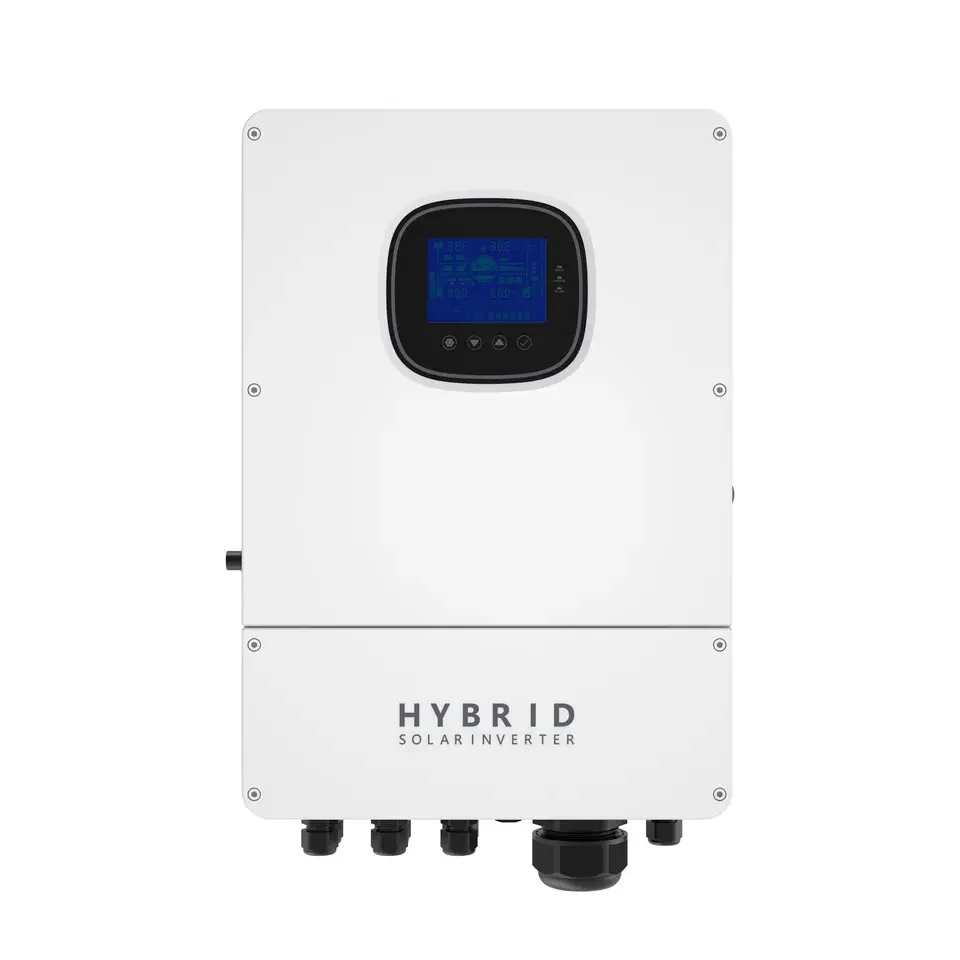
Hybrid Inverters Summary of Research
Market Size: The global hybrid solar inverter market reached $10.71 billion in 2024 and is projected to grow to $17.24 billion by 2030 at a CAGR of 8.1%
U.S. Market: Valued at $2.96 billion in 2024 with North America commanding 42.96% of global market share
Unit Shipments: Over 5.2 million hybrid inverter units shipped globally in 2024, with 940,000 units in the U.S. alone
Top Segments: Three-phase hybrid inverters dominate with 61.34% revenue share; commercial sector leads at 61.20%
Retail Sweet Spot: Mid-range residential units (5-8kW) priced $600-$1,000 show highest velocity on Amazon
Sourcing Opportunity: FOB China prices range from $150-$350 for 5kW units vs. retail prices of $550-$1,000, enabling 22-45% margins
Peak Season: Search interest peaks May-August with secondary spike in September-November for year-end buying
Growth Driver: 72% of new residential installations now integrate battery storage, up from 55% in 2022
Key Trend: 58% of commercial buyers now require AI-based energy management features
1. Introduction: Understanding the Hybrid Inverter Market
What is a Hybrid Inverter?
A hybrid inverter (also called a multi-mode inverter) is an advanced power conversion device that intelligently manages energy flow between solar panels, battery storage systems, and the electrical grid. Unlike traditional solar inverters that only convert DC power from panels to AC power for home use, hybrid inverters provide three critical functions in a single unit:
Solar Power Conversion: Converts DC electricity from solar panels into usable AC power
Battery Management: Charges and discharges connected battery systems for energy storage
Grid Integration: Seamlessly switches between grid power, solar power, and battery backup
This tri-functionality makes hybrid inverters the central nervous system of modern residential and commercial solar installations, particularly for homeowners seeking energy independence and protection against grid outages.
Market Landscape and Evolution
The hybrid inverter market has undergone significant transformation over the past decade. What began as a niche product for off-grid enthusiasts has evolved into mainstream technology driven by several converging factors:
Historical Evolution:
2015-2018: Early hybrid inverters were primarily rebranded off-grid units with limited smart features and efficiency ratings around 92%
2019-2021: Introduction of lithium-ion battery compatibility and MPPT (Maximum Power Point Tracking) technology pushed efficiency to 95-96%
2022-2024: Integration of Wi-Fi monitoring, AI-powered load management, and smartphone apps transformed hybrid inverters into smart home devices
2025: Current generation units achieve 96-98% efficiency with EV charging integration in 22% of commercial installations
Key Market Drivers:
Rising electricity costs driving residential solar adoption
Increased frequency of grid outages from extreme weather events
Federal incentives including the Investment Tax Credit (ITC) and Inflation Reduction Act funding
Growing consumer interest in energy independence and sustainability
Product Segments, Categories, and Price Ranges
The hybrid inverter market segments by capacity, phase configuration, and target application:
By Capacity:
| Segment | Capacity | Typical Price (Retail) | Primary Application |
|---|---|---|---|
| Entry-Level | 3-5kW | $300-$600 | Small homes, RVs, cabins |
| Mid-Range Residential | 5-8kW | $600-$1,200 | Average homes, light commercial |
| High-Capacity | 10-12kW | $1,100-$2,000 | Large homes, small businesses |
| Premium/Commercial | 15kW+ | $2,000-$5,000+ | Commercial, industrial |
By Phase Configuration:
Single-Phase: Accounts for 52% of units shipped; dominant in residential applications; typically 3-12kW capacity
Three-Phase: Represents 48% of market; preferred for commercial/industrial applications; higher capacity and efficiency for large loads
Leading Brands and Private Label Opportunities:
Premium Tier (Established brands with strong warranties):
Huawei: Global leader with 34.9% of C&I project quotations; known for AI integration
Sungrow: 22% market share; strong in Asia-Pacific and emerging markets
SolarEdge: Industry leader in efficiency (99% CEC); 25-year warranty option
Fronius: Austrian quality; pioneering EV charging integration
Enphase: Microinverter specialist expanding into hybrid systems
Value Tier (Strong performance at competitive prices):
Growatt: Popular on Amazon/eBay; good warranty support
Deye: Dominant in emerging markets; 3kW-80kW range
Solis: Favorable reviews for reliability and app monitoring
GoodWe: Growing presence in North America
Budget/Private Label Tier (Sourcing opportunities for sellers):
PowMr: High Amazon visibility; mixed reliability reviews
SUMRY: Amazon best-seller with 394 units monthly
Y&H: Strong value positioning in mid-range segment
ECO-WORTHY: Popular for entry-level systems
SRNE: OEM/ODM manufacturer; rebranded by multiple sellers
Sourcing Price Analysis and Landed Cost Calculator
Hybrid Inverter Sourcing Price Analysis
Factory FOB Pricing and Landed Cost Calculator for Online Sellers
Factory FOB Pricing (China) - December 2025
| Capacity | Low Volume (1-10 units) | Mid Volume (50-100 units) | High Volume (500+ units) |
|---|---|---|---|
| 3kW | $120 - $180 | $90 - $140 | $75 - $110 |
| 5kW | $180 - $280 | $140 - $220 | $110 - $170 |
| 6kW | $220 - $350 | $170 - $280 | $135 - $220 |
| 8kW | $300 - $450 | $240 - $360 | $190 - $280 |
| 10kW | $400 - $600 | $320 - $480 | $250 - $380 |
| 12kW | $500 - $750 | $400 - $600 | $320 - $480 |
Fully Landed Cost Example
5kW Hybrid Inverter | 100-Unit Order | Sea Freight to U.S. Warehouse
| Cost Component | Per Unit Cost | Notes |
|---|---|---|
| FOB China Price | $180 | Mid-volume pricing tier |
| Ocean Freight | $25 - $40 | LCL rate; FCL reduces to $15-20/unit |
| Import Duties | $22 - $36 | 12-20% depending on HTS classification |
| Customs Brokerage | $3 - $5 | Per unit allocation |
| Inland Freight (U.S.) | $8 - $15 | Port to warehouse |
| Insurance | $2 - $4 | Marine + inland coverage |
| Amazon FBA Prep (optional) | $5 - $8 | Labeling, poly bagging, inspection |
Minimum Order Quantity (MOQ) Guidelines
Profit Margin Analysis
Based on $275 average landed cost (5kW unit)
| Sale Price | Landed Cost | Gross Margin | Net Margin* |
|---|---|---|---|
| $550 | $275 | 50% | 22-28% |
| $700 | $275 | 61% | 30-38% |
| $900 | $275 | 69% | 35-45% |
Marketplace fees (8-15%) | Payment processing (2.9%) | Returns allowance (3-5%) | Advertising (5-10% of revenue)
2. Marketplace Sales Opportunity Analysis
Opportunity Score Legend
Score reflects balance of buyer demand vs. seller competition. Higher scores indicate better profit potential.
| Marketplace | Opportunity Score | Product Segment | Est. Weekly Unit Sales | Est. Weekly Revenue | Avg. Price Range | Est. Profit Margin |
|---|---|---|---|---|---|---|
| Amazon | 7 | Entry-Level (3-5kW) | 180-250 units | $72,000-$125,000 | $350-$550 | 18-25% |
| 8 | Mid-Range Residential (5-8kW) | 120-180 units | $84,000-$162,000 | $600-$1,000 | 22-30% | |
| 6 | High-Capacity (10-12kW) | 60-100 units | $78,000-$165,000 | $1,100-$1,800 | 20-28% | |
| 5 | Premium/Commercial (15kW+) | 15-35 units | $37,500-$105,000 | $2,200-$3,500 | 15-22% | |
| eBay | 8 | Entry-Level (3-5kW) | 100-150 units | $35,000-$67,500 | $320-$500 | 20-28% |
| 7 | Mid-Range Residential (5-8kW) | 70-110 units | $49,000-$99,000 | $580-$950 | 22-30% | |
| 7 | High-Capacity (10-12kW) | 40-70 units | $48,000-$105,000 | $1,050-$1,650 | 20-27% | |
| 6 | Premium/Commercial (15kW+) | 10-25 units | $22,000-$75,000 | $2,000-$3,200 | 18-24% | |
| Walmart Marketplace | 9 | Entry-Level (3-5kW) | 50-80 units | $20,000-$40,000 | $380-$550 | 22-30% |
| 8 | Mid-Range Residential (5-8kW) | 30-55 units | $21,000-$49,500 | $650-$1,000 | 20-28% | |
| 7 | High-Capacity (10-12kW) | 15-30 units | $18,000-$48,000 | $1,150-$1,700 | 18-25% | |
| DTC / Shopify Stores | 8 | Branded Systems (5-10kW) | 20-45 units | $20,000-$63,000 | $900-$1,500 | 30-45% |
| 9 | Complete Solar Kits | 15-35 units | $45,000-$140,000 | $2,800-$4,500 | 28-40% | |
| 7 | Off-Grid/RV Packages | 25-50 units | $25,000-$65,000 | $950-$1,400 | 25-35% | |
| Specialty Channels | 9 | Solar Installer B2B | 80-150 units | $64,000-$180,000 | $700-$1,300 | 15-22% |
| 8 | RV/Marine Dealers | 30-60 units | $18,000-$48,000 | $550-$900 | 25-35% | |
| 7 | Prepper/Emergency Supply | 20-40 units | $20,000-$56,000 | $900-$1,500 | 28-38% | |
| Emerging Channels | 8 | TikTok Shop | 10-25 units | $5,000-$17,500 | $450-$800 | 18-28% |
| 7 | Facebook Marketplace | 15-35 units | $7,500-$28,000 | $450-$900 | 20-30% |
Key Marketplace Insights:
Amazon (Opportunity Score: 5-8/10)
Highest volume potential across all segments
Strong brand recognition required to compete
FBA essential for Prime badge and Buy Box
Mid-range residential (5-8kW) shows best velocity at 120-180 units weekly
Competition from established sellers like PowMr, ECO-WORTHY
eBay (Opportunity Score: 6-8/10)
Lower competition than Amazon in high-capacity segment
Price-conscious buyers seeking deals
Strong international buyer base
Good for refurbished/open-box units
Entry-level segment (3-5kW) moves 100-150 units weekly
Walmart Marketplace (Opportunity Score: 7-9/10)
Underserved category with less competition
Growing customer trust for high-ticket items
Entry-level segment shows excellent opportunity (score: 9/10)
Smaller seller base creates differentiation opportunity
DTC/Shopify Stores (Opportunity Score: 7-9/10)
Highest margins (30-45%) through brand building
Complete solar kits show strongest potential
Requires marketing investment but builds long-term asset
Direct customer relationships enable upselling
Specialty Channels (Opportunity Score: 7-9/10)
B2B solar installer channel offers volume at lower margins
RV/Marine dealers underserved with growing demand
Prepper/emergency supply market shows high engagement
3. Buyer Demand and Keyword Trends Analysis
Primary Buyer Personas
Understanding who buys hybrid inverters is essential for positioning and marketing. Based on search patterns, forum discussions, and purchase behavior, five distinct buyer personas emerge:
Persona 1: The Energy Independence Homeowner
Demographics: Homeowners aged 35-55, household income $75,000-$150,000
Motivation: Rising electricity bills, desire for self-sufficiency, environmental concerns
Product Preferences: Mid-range 5-8kW systems with battery compatibility, Wi-Fi monitoring
Price Sensitivity: Moderate; willing to pay premium for reliability and warranty
Search Terms: "home solar battery system," "hybrid solar inverter for house," "best solar inverter 2025"
Decision Factors: Brand reputation, warranty length (10+ years preferred), app monitoring capability
Persona 2: The Off-Grid/Prepper Buyer
Demographics: Rural property owners, cabin owners, emergency preparedness enthusiasts
Motivation: Complete energy independence, grid failure protection, self-reliance
Product Preferences: Higher capacity 8-12kW units, off-grid capable, generator compatibility
Price Sensitivity: Low for quality; views purchase as essential investment
Search Terms: "off-grid solar inverter," "best inverter for power outages," "EMP-hardened inverter"
Decision Factors: Off-grid capability, surge capacity, low-frequency transformer design, durability
Persona 3: The RV/Mobile Living Enthusiast
Demographics: RV owners, van lifers, boaters aged 30-65
Motivation: Mobile power independence, boondocking capability, appliance operation
Product Preferences: Compact 3-5kW units, 12V/24V/48V flexibility, portable options
Price Sensitivity: Moderate to high; budget-conscious but quality-aware
Search Terms: "RV solar inverter," "camper hybrid inverter," "van life solar system"
Decision Factors: Size/weight, pure sine wave output, low idle consumption, split-phase capability
Persona 4: The DIY Solar Installer
Demographics: Technical hobbyists, YouTube learners, cost-conscious homeowners
Motivation: Cost savings on installation, learning experience, customization control
Product Preferences: All-in-one units with integrated MPPT, good documentation, forum support
Price Sensitivity: High; comparing specs per dollar across multiple options
Search Terms: "DIY solar inverter kit," "best budget hybrid inverter," "solar inverter comparison"
Decision Factors: Ease of installation, technical documentation quality, community support, parallel capability
Persona 5: The Commercial/Small Business Owner
Demographics: Business owners, property managers, agricultural operations
Motivation: Operating cost reduction, sustainability credentials, backup power
Product Preferences: Three-phase 15kW+ systems, commercial certifications, scalability
Price Sensitivity: ROI-focused; total cost of ownership matters more than upfront price
Search Terms: "commercial hybrid inverter," "business solar system," "3 phase solar inverter"
Decision Factors: Commercial certifications (UL1741, IEEE 1547), scalability, monitoring/reporting, installer support
Google Trends and Search Volume Analysis
Search interest analysis from October 2024 to November 2025 reveals important patterns:
Primary Keywords and Monthly Search Volume (U.S.):
| Keyword | Monthly Searches | Trend Direction | Competition |
|---|---|---|---|
| "hybrid solar inverter" | 14,800 | Rising (+18% YoY) | Medium |
| "solar inverter" | 49,500 | Stable | High |
| "off-grid inverter" | 8,100 | Rising (+12% YoY) | Medium |
| "best hybrid inverter" | 3,600 | Rising (+24% YoY) | Low-Medium |
| "5kw solar inverter" | 2,900 | Rising (+15% YoY) | Low |
| "solar battery inverter" | 5,400 | Rising (+22% YoY) | Medium |
| "RV solar inverter" | 2,400 | Stable | Low |
| "10kw hybrid inverter" | 1,900 | Rising (+28% YoY) | Low |
Seasonal Patterns:
Search interest demonstrates clear seasonality aligned with solar installation seasons:
Peak Period (May-August): Search volume reaches 80-100% of annual peak; "hybrid solar inverter" peaked at normalized value of 90 in August 2025
Secondary Peak (September-November): Late-year buying for tax credit capture; September shows 92 normalized value for "5kw hybrid inverter"
Low Period (December-March): Search volume drops 40-60% in winter months; minimal installation activity in northern climates
Planning Period (February-April): Research activity begins ramping; opportunity for content marketing
Rising Search Queries (2024-2025):
"hybrid inverter with EV charging" (+145% YoY)
"AI solar inverter" (+89% YoY)
"split phase hybrid inverter" (+67% YoY)
"lithium battery hybrid inverter" (+54% YoY)
"Deye hybrid inverter" (+48% YoY)
"whole home backup inverter" (+42% YoY)
Declining Search Queries:
"PWM solar controller" (-23% YoY)
"modified sine wave inverter" (-18% YoY)
"lead acid solar system" (-15% YoY)
Community Feedback and Product Improvement Opportunities
Analysis of discussions from DIY Solar Forum, Reddit r/solar, r/SolarDIY, and product reviews reveals common pain points and opportunities:
Common Complaints (Opportunity for Differentiation):
Poor Documentation and Manuals
"Settings in the manual that don't exist in the actual inverter"
"Features that are 'coming soon' or available with zero explanation"
Opportunity: Partner with manufacturers offering clear English documentation; create supplementary setup guides
Warranty and Support Issues
"Seller blamed me for failure and asked me to pay shipping back to China"
"The lower end of the AIO world does not have the best warranty support"
Opportunity: Offer U.S.-based warranty support; build reputation on responsive service
Reliability Concerns with Budget Brands
"Why are all the new hybrids crap? Problem after problem"
"High frequency inverters have half the life expectancy as low frequency inverters"
Opportunity: Focus on low-frequency transformer models; emphasize build quality over price
Software and Firmware Issues
"My only complaints are related to the rebrand company's firmware"
"The MPPT solar charger tends to get stuck at 60v"
Opportunity: Source from manufacturers with stable firmware; offer firmware update support
Noise and Heat Management
"Fans are not on all that often" (positive example from MidNite)
Thermal management critical for longevity
Opportunity: Highlight thermal design and noise levels in listings
Features Customers Value Most:
Pure sine wave output (required for sensitive electronics)
MPPT charge controller efficiency
Lithium battery compatibility (LiFePO4 specifically)
Wi-Fi monitoring with smartphone app
Parallel operation capability for expansion
Split-phase output (120V/240V) for U.S. market
Low transfer time for UPS-like operation
Generator input compatibility
4. Sources and References
The following sources were consulted in preparing this analysis:
Grand View Research, Solar Hybrid Inverter Market Size Industry Report 2030, accessed December 2025
Precedence Research, Hybrid Inverter Market Size to Hit USD 7.46 Billion by 2034, January 2025
Industry Research Biz, Hybrid Inverter Market Size Share and Report 2034, accessed December 2025
Clean Energy Reviews, Best Hybrid Inverters 2025, July 2025
Elum Energy, Top 5 Inverter Brands for PV Hybrid Systems in 2025, December 2025
DIY Solar Forum, Multiple discussion threads on hybrid inverter reliability and recommendations, July 2024 to December 2025
Made-in-China.com and Alibaba.com, Hybrid Solar Inverter wholesale pricing data, accessed December 2025
Accio Business Intelligence, Top 10 Best Selling Hybrid Solar Inverters 2025 Market Leaders analysis
Markets and Markets, Inverter Market Recent Size Share and Industry Analysis to 2031
Maximize Market Research, Solar Hybrid Inverter Market Size and Forecast 2025-2032
About This Analysis
This market research was compiled for online sellers and marketplace entrepreneurs seeking actionable intelligence on the hybrid inverter category. Data represents best available estimates as of December 2025. Market conditions, pricing, and competitive dynamics change frequently. Sellers should conduct additional due diligence including supplier verification, product testing, and regulatory compliance review before entering this market.
Disclaimer: Sales estimates, opportunity scores, and margin projections are educated assessments based on publicly available data and should be validated through actual market testing. Individual results will vary based on execution, brand positioning, and market conditions.