
Key Insights at a Glance
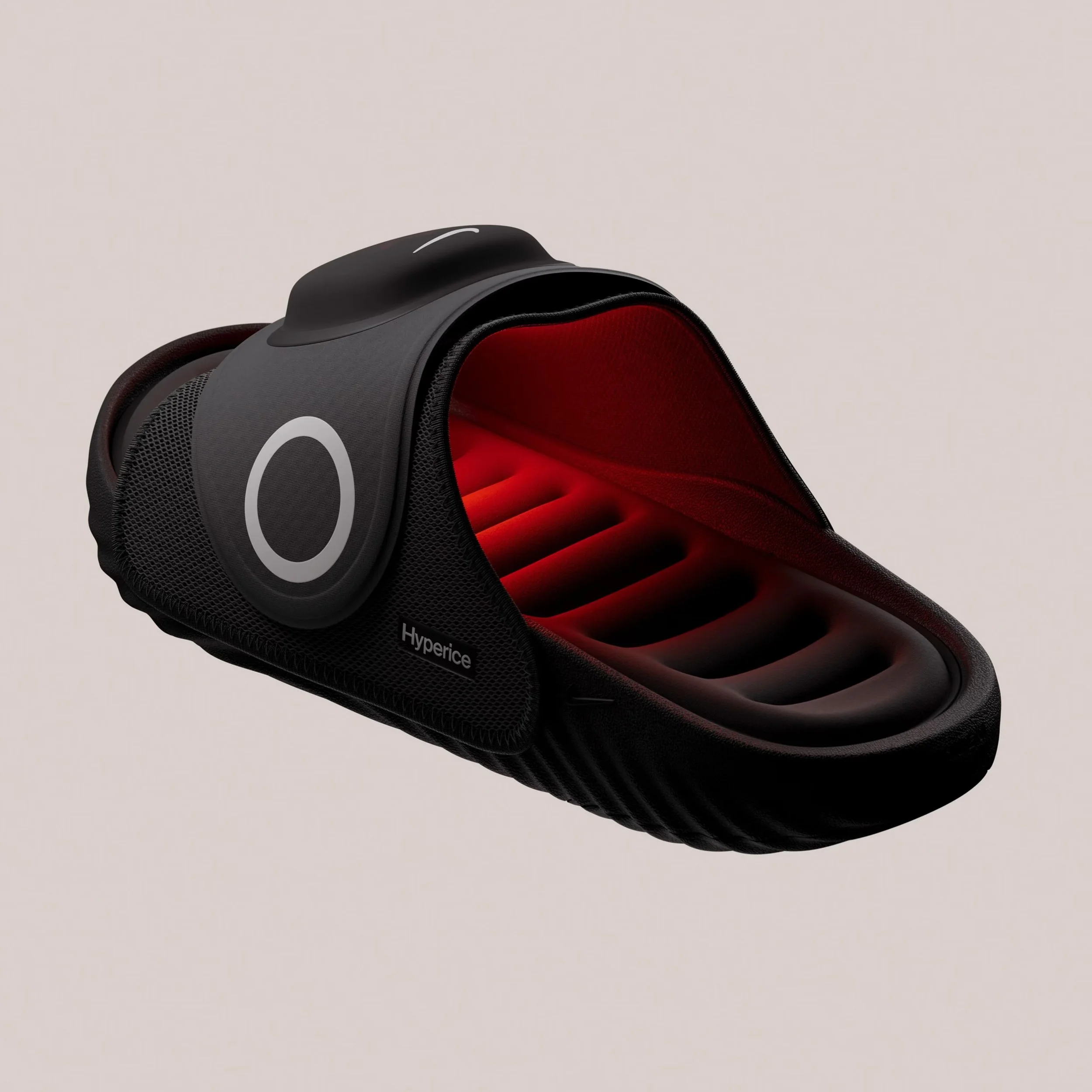
- Nike and Hyperice launched the Air Zoom Hyperslide on July 27, 2026, a $249 heated and vibrating recovery slide arriving in stores September 29. The launch is pulling mainstream search attention toward a footwear category that private label sellers already serve at $15 to $60 price points.
- The global foot and leg massager market sits at roughly $5.9 billion in 2025 and is projected to grow at a 6 to 8.5 percent CAGR through the early 2030s, with electric and combination heat plus vibration devices leading the category.
- The strongest private label opportunity is not competing with Nike's proprietary Hyperice pod technology. It is the "affordable alternative" search wave: buyers who see the Hyperslide, balk at $249, and search for a cheaper heated and vibrating slipper the same week.
- Recurring buyer complaints across Amazon, Walmart, and eBay listings center on underpowered vibration motors, corded designs that trap the user near an outlet, one-size-fits-all sizing that excludes larger feet, and heat settings with no fine adjustment for sensitive or diabetic feet.
- Six-figure sourcing tiers range from a basic $2 to $4 factory cost heat-only slipper up to an $18 to $26 cordless rechargeable combo slide with a removable battery pod, the closest private label analog to Nike's design.
- China-origin duty stacks for electric footwear currently run in the 45 to 57 percent combined range once base duty, Section 301 List 3 or 4A surcharges, and the new post-Section 122 replacement duty are layered together. This is volatile and should be confirmed with a customs broker before final landed cost pricing.
- The best entry point for a new seller is a corded heat plus vibration combo slipper with three adjustable heat levels and two vibration speeds, sold on Amazon and Walmart at a $24.99 to $34.99 price point, marketed against the "cheaper Hyperslide alternative" and "plantar fasciitis relief" search terms simultaneously.
1. Actionable Insights First: Executive Opportunity Summary
Top 3 Selling Opportunities Right Now
1. Corded Heat + Vibration Combo Slippers on Amazon and Walmart Opportunity Score: 8/10. Profit margin range: 38 to 48 percent after landed cost, referral fees, and fulfillment. This is the category's proven core segment, already generating consistent five-figure monthly unit volume across multiple sellers, and it now benefits from a halo effect from Nike's mainstream launch coverage without any licensing conflict, since the mechanism (resistance heating pad plus eccentric rotating mass motor) is generic and widely available from Chinese factories.
2. Cordless Rechargeable "Hyperslide Alternative" Slides on Shopify and TikTok Shop Opportunity Score: 8/10. Profit margin range: 45 to 55 percent at a $39.99 to $59.99 price point. This segment is thin on private label supply today, which is the opportunity. A cordless, USB-C rechargeable pod design lets a seller credibly market against the $249 Nike and Hyperice price point while staying under a mainstream impulse-buy ceiling. TikTok Shop's video-first format is well suited to demonstrating heat and vibration in a 15-second clip, which is exactly the kind of visual proof this product benefits from.
3. Diabetic-Safe, Low and Adjustable Heat Slippers on Amazon and DTC Opportunity Score: 7/10. Profit margin range: 40 to 50 percent. Neuropathy and diabetic buyers are a large, underserved sub-segment inside this category. Most mainstream listings warn diabetic users away entirely because heat settings are not precise enough to be safe. A listing engineered around a genuinely low, capped, and clearly labeled heat range, paired with gentle vibration only settings, can capture this buyer directly with almost no direct private label competition doing the same positioning today.
Quick Action Items
- Source a corded combo slipper with three heat levels (roughly 95 to 113 degrees Fahrenheit) and two vibration speeds from a Shenzhen or Xiamen based electronics-and-footwear hybrid factory; request Trade Assurance and a signed product safety data sheet before committing to a production run.
- Time the initial Amazon and Walmart launch for late September through early October 2026, riding the search volume spike expected around the Nike Hyperslide's September 29 retail arrival, then again in November and December for holiday gifting.
- List simultaneously on Amazon, Walmart Marketplace, and TikTok Shop from day one; TikTok Shop's algorithm rewards demonstrable, visual products, and this category performs well in short-form video.
- Differentiate through bundling: pair the slipper with a washable, replaceable liner and a compact charging or storage pouch, directly addressing the hygiene and bulk complaints found in current listings.
- Prioritize listing images and the first video slot around the heat indicator light and remote control or button interface, since "how do I know it's actually working" is a recurring pre-purchase question in buyer Q&A sections across this category.
Red Flags to Avoid
- Do not attempt to use Nike, Hyperice, Air Zoom, or Hyperslide anywhere in a listing title, brand name, or backend keywords. This is a live, actively marketed brand partnership and any implied affiliation risks a takedown and account risk.
- Avoid the sub-$15 vibration-only, no-heat segment on Amazon. It is saturated with dozens of nearly identical generic listings racing to the bottom on price, and margins there rarely clear 15 percent after fees and returns.
- Avoid marketing any heat or vibration claims as medical treatment for plantar fasciitis, neuropathy, or diabetes without a clear non-medical-device disclaimer; FTC scrutiny of health claims in massage and wellness products has increased, and mislabeling a consumer wellness product as a medical device invites both platform and regulatory risk.
Best Entry Point for New Sellers
Product: Corded heat plus vibration combo slipper, adjustable 3-level heat and 2-speed vibration, one-size-fits-most up to men's size 13, with a washable removable liner.
Primary marketplace: Amazon FBA. Secondary marketplace: Walmart Marketplace.
Price range: $27.99 to $32.99.
Startup cost breakdown (500-unit initial order):
Factory unit cost (500 MOQ, heat + vibration combo tier): $5.20 per unit = $2,600
Sample development and safety testing (2 rounds): $450
Ocean freight and customs brokerage (500 units, roughly 60kg): $680
Estimated landed duty burden (48 percent blended on declared value): $1,248
Packaging and insert cards (custom branded box): $850
Amazon FBA prep and inbound shipping: $400
Initial PPC launch budget (first 60 days): $2,000
UPC codes, photography, and listing copy: $600
Total estimated startup investment: approximately $8,828
Why this works: The combo slipper sits at the intersection of proven demand (it already sells) and fresh search interest (the Hyperslide halo), without the capital intensity or technical risk of a cordless rechargeable pod design. It is forgiving for a first production run, has a wide buyer persona range from athletes to seniors to gift shoppers, and the price point supports healthy margin even after realistic return rates of 8 to 12 percent, which are typical for this product type.
2. Quick Data Scans: Marketplace Sales Opportunity Analysis
Opportunity Score Legend
- 8-10: High demand, low to moderate competition. Enter now.
- 5-7: Moderate demand, moderate competition. Test carefully.
- 1-4: Low demand or oversaturated. Avoid.
Marketplace Opportunity Score Product Segment Est. Weekly Unit Sales Est. Weekly Revenue Avg Price Range Est. Profit Margin Amazon 8 Heat + Vibration Combo Slippers 420 $12,600 $27.99 to $34.99 38-48% 8 Cordless Rechargeable Pod Slides 180 $8,820 $39.99 to $59.99 45-55% 6 Compression + Heat + Vibration Boots 95 $8,075 $69.99 to $109.99 32-40% Walmart Marketplace 5 Budget Heat-Only Slippers 260 $4,940 $14.99 to $19.99 18-26% 7 Heat + Vibration Combo Slippers 310 $8,990 $24.99 to $29.99 36-44% 7 Gift Box Sets (seasonal) 150 $5,850 $32.99 to $44.99 34-42% eBay 4 Budget Heat-Only Slippers 85 $1,445 $12.99 to $16.99 15-22% 6 Heat + Vibration Combo Slippers (open box / refurb arbitrage) 70 $1,610 $18.99 to $26.99 30-40% TikTok Shop 8 Cordless Rechargeable Pod Slides 220 $10,780 $36.99 to $49.99 42-52% 6 USB Rechargeable Travel Slides 160 $4,640 $22.99 to $28.99 33-41% Shopify / DTC 8 Cordless Premium "Alternative" Slides (branded) 110 $6,490 $44.99 to $59.99 48-58% 7 Diabetic-Safe Low-Heat Slippers 75 $2,850 $32.99 to $42.99 40-50% Target Plus 6 Gift Box Sets (seasonal) 90 $3,690 $34.99 to $44.99 32-40% Instagram / Meta Shopping 6 Cordless Premium "Alternative" Slides (branded) 65 $3,510 $44.99 to $54.99 44-54% Etsy 5 Personalized Gift Box Sets 40 $1,720 $36.99 to $47.99 30-38%
Table Notes: Weekly unit sales and revenue figures are directional estimates modeled from category-level marketplace benchmarking (comparable heat, vibration, and massage footwear listings), publicly available best-seller rank patterns, and price positioning within each channel. They are planning estimates, not guaranteed outcomes, and should be validated against live tools such as Jungle Scout or Helium 10 before committing inventory capital. Profit margin ranges account for landed cost, marketplace referral or transaction fees, and estimated return rates, but exclude advertising spend, which sellers should model separately per channel.
3. Deeper Context: Market Landscape & Buyer Intelligence
A. Market Overview
Category Definition & Size
Heated and vibrating recovery footwear sits at the intersection of two established categories: the foot and leg massager market, valued at roughly $5.9 billion globally in 2025 and forecast to reach $10.8 billion by 2035 at a 6.2 percent CAGR, and the broader athletic recovery footwear space that Nike and Hyperice have now brought into mainstream retail with the Air Zoom Hyperslide. Related sub-segments, including foot massage machines specifically, are separately forecast at $3.3 billion to $3.8 billion in 2026 with CAGR estimates ranging from 6.7 to 8.5 percent depending on the research house. Product range spans from $8 vibration-only slippers with no heat element, through $15 to $35 corded combo units, up to $109 compression-and-heat recovery boots that compete with brands like Therabody and Normatec. Seasonal demand is pronounced: search and purchase volume for heated foot products climbs sharply from late September through February, tracking colder weather and holiday gifting, then falls through the summer months except for a smaller secondary athletic recovery demand curve tied to marathon and fitness event calendars.
Product Evolution & Recent Trends
The category has historically been dominated by simple vibration massage slippers with acupressure nodes, a format that predates heat integration by several years. Heat elements became standard in the mid-price tier over the past two to three years as factory cost for resistive heating film dropped. The most significant recent development is the July 27, 2026 launch of the Nike Air Zoom Hyperslide, developed with recovery technology company Hyperice, which combines a magnetically attached, app-connectable heat and vibration pod with Nike's Air Zoom cushioning sole. It retails at $249, arrives in stores September 29, 2026, through Nike, Hyperice, Best Buy, and Dick's Sporting Goods, and follows the companies' earlier $800 to $900 Hyperboot compression boot. This launch does two things for private label sellers: it validates the entire heat-and-vibration footwear format to a mainstream, non-athlete audience through broad consumer press coverage, and it creates an immediate, price-sensitive search cohort looking for something similar at a fraction of the cost. Neither Nike nor Hyperice sell into the open private label or wholesale channel, so there is no direct sourcing overlap, only a demand halo to capture.
Leading Brands & Market Disruptors
Established players cluster into two tiers. At the premium end, Hyperice, Therabody, and Nike (through the Hyperice partnership) anchor the $200 to $900 range with proprietary technology, app connectivity, and heavy media investment. At the mass-market end, brands like Nekteck, RENPHO, HoMedics, CuPiLo, Snailax, and Miko dominate Amazon and Walmart best-seller lists in the $16 to $60 range with corded, remote-controlled foot and leg massagers, though relatively few of these are true slipper-form heat-and-vibration combo products; most are boxy stationary units. This gap between full massager units and true wearable slipper-form products is where private label has the clearest opening, since the branded players have concentrated their innovation spend on stationary massagers and premium recovery boots rather than the affordable wearable slipper format.
Price Tiers & Popular Brands
- Tier 1, Budget ($8 to $18): Vibration-only or heat-only generic slippers, largely unbranded or store-brand, sold heavily on Walmart and eBay. Thin margins, high return rates, minimal differentiation.
- Tier 2, Core ($19 to $35): Corded heat plus vibration combo slippers with adjustable settings and a remote or button control. This is the private label sweet spot, occupied by brands like Snailax and a long tail of Amazon-native private label sellers.
- Tier 3, Premium Wearable ($36 to $65): Cordless, rechargeable, USB-C pod-based slides. Thin private label presence today; the segment Nike's launch will pull the most new search traffic toward.
- Tier 4, Recovery Systems ($66 to $150): Compression plus heat plus vibration boots, competing loosely with entry-level Therabody and Normatec products.
- Tier 5, Flagship Branded ($200+): Nike Air Zoom Hyperslide and Hyperice Hyperboot. Not a realistic private label target; relevant only as a marketing reference point and search-demand driver.
B. Buyer Persona Deep Dive
Persona 1: The Post-Workout Value Seeker Demographic profile: 22 to 38, roughly 55 percent male, 45 percent female, gym-goers and recreational runners. Purchase motivations, ranked: price relative to premium recovery brands, portability, genuine vibration strength. Price sensitivity: sweet spot $30 to $50; will not pay Nike or Hyperice pricing but actively searches for alternatives after seeing the Hyperslide in the news or on social media. Pain points: weak motors that feel like a phone on vibrate rather than a massage, cords that make post-gym use impractical, bulky designs that will not fit in a gym bag. What they are solving for: fast, convenient recovery without a $249 to $900 commitment. Decision-making factors: video demonstrations of vibration intensity, reviews specifically comparing the product to name-brand recovery gear. Brand loyalty: low; highly switch-prone based on the next viral alternative.
Persona 2: The All-Day-Standing Worker Demographic profile: 32 to 58, roughly 70 percent female, nurses, retail staff, teachers, restaurant and hospitality workers. Purchase motivations, ranked: pain relief, end-of-shift routine, affordability. Price sensitivity: sweet spot $20 to $32. Pain points: plantar fasciitis and general foot fatigue, products that require standing still near an outlet rather than sitting and relaxing, heat that is either too weak to matter or uncomfortably hot with no middle setting, sizing that excludes wider feet common after a full shift in work shoes. What they are solving for: a fast, low-effort end-of-day ritual. Decision-making factors: pain-relief specific language in the listing, adjustable heat and intensity, remote or button control that does not require bending over. Brand loyalty: moderate; will repurchase a brand that delivers real relief and gift it to coworkers.
Persona 3: The Diabetic or Neuropathy Senior Demographic profile: 60 to 78, split roughly evenly by gender. Purchase motivations, ranked: safety, gentle and predictable heat, ease of use. Price sensitivity: sweet spot $28 to $45; willing to pay a premium for a product explicitly designed with their condition in mind. Pain points: most listings either warn them away entirely or provide no heat ceiling information, buttons and remotes that are hard to see or operate with reduced dexterity or sensation, generic "not evaluated for medical conditions" disclaimers that leave them uncertain. What they are solving for: safe, gentle circulation support without risking burns they may not feel due to reduced sensation. Decision-making factors: explicit low-heat specifications, large and simple controls, positive reviews from other users mentioning diabetes or neuropathy by name. Brand loyalty: high once trust is established; this persona rarely switches brands after finding one that feels safe.
Persona 4: The Cold-Feet Homebody Demographic profile: 28 to 65, roughly 65 percent female, remote workers and homebodies in colder climates. Purchase motivations, ranked: warmth first, relaxation second, aesthetics third. Price sensitivity: sweet spot $18 to $30. Pain points: heat that fades quickly, bulky designs that look and feel like medical equipment rather than a cozy home product, cords that restrict movement around the house. What they are solving for: comfort and warmth during a work-from-home day or a cold evening. Decision-making factors: styling and color options, sustained heat retention claims, machine-washable liners. Brand loyalty: moderate; open to seasonal upgrades.
Persona 5: The Prenatal and Postpartum Buyer Demographic profile: 25 to 40, female, pregnant or recently postpartum. Purchase motivations, ranked: circulation and swelling relief, gentleness, safety reassurance. Price sensitivity: sweet spot $25 to $40. Pain points: uncertainty about whether heat or vibration is safe during pregnancy, lack of clear guidance in listings, sizing that does not account for pregnancy-related swelling. What they are solving for: relief from edema and foot fatigue without guesswork about safety. Decision-making factors: clear, appropriately hedged usage guidance, adjustable low settings, reviews from other pregnant or postpartum buyers. Brand loyalty: low, since this is a short-duration need, but strong word-of-mouth and gifting behavior within this persona.
Persona 6: The Wellness Gift Shopper Demographic profile: 35 to 65, both genders, shopping for a parent, spouse, or coworker rather than themselves. Purchase motivations, ranked: presentation and packaging, perceived value versus the well-known $249 Hyperslide, ease of returns if the recipient does not like it. Price sensitivity: sweet spot $30 to $50, higher around the November and December holiday window. Pain points: generic, unbranded-looking packaging that does not feel gift-worthy, uncertainty about sizing for someone else's feet, lack of a clear gift message or box option. What they are solving for: a thoughtful, self-care-coded gift that references a product category currently in the news. Decision-making factors: gift-ready packaging, one-size or clearly labeled sizing, strong review volume as a trust signal since they cannot test it themselves. Brand loyalty: low; driven by seasonal presentation more than repeat brand relationship.
Persona 7: The Desk-Bound Office Worker Demographic profile: 26 to 50, both genders, hybrid or in-office workers. Purchase motivations, ranked: discreet under-desk use, portability between home and office, battery or low-power operation. Price sensitivity: sweet spot $25 to $45. Pain points: fans and cords that draw attention in a shared office, units too bulky to store in a desk drawer, noise from vibration motors during calls. What they are solving for: quiet, low-profile relief during the workday without disrupting colleagues. Decision-making factors: noise level claims, compact folded dimensions, cordless or low-cable designs. Brand loyalty: moderate; will repurchase for a second office location or gift to a colleague.
C. Keyword & Search Trends
Google Trends Data & Search Volume
Core category terms such as "foot massager with heat" and "vibrating slippers" carry established, relatively stable monthly search volume in the tens of thousands, with the heaviest concentration from October through January. Since the Nike Air Zoom Hyperslide's July 27, 2026 announcement, terms directly referencing the product name have spiked sharply, and adjacent generic terms including "heated vibrating slides," "recovery slides for feet," and "cheap alternative to Hyperslide" have begun climbing alongside them. This is a classic halo pattern: a premium branded launch expands the total addressable search pool for the entire generic category, not just for the brand itself. Sellers should expect this halo to peak again around the September 29, 2026 retail launch date and a third time during the November and December gifting season.
Seasonal Demand Patterns
- Late September through November (pre-holiday and Hyperslide retail launch): Roughly 30 percent of annual search volume. Skews toward gift shoppers and value-conscious athletes reacting to Hyperslide press coverage.
- December through February (peak winter and holiday): Roughly 45 percent of annual search volume, the largest single window. Skews toward the cold-feet homebody and wellness gift shopper personas, plus a New Year wellness-resolution bump in January.
- March through August (off-season): Roughly 25 percent of annual volume, concentrated among the all-day-standing worker and diabetic or neuropathy senior personas, whose need is chronic rather than seasonal, plus a smaller athletic-recovery bump around spring race season. Rising vs. Declining Queries
Rising: "heated vibrating slides," "cordless foot massager slippers," "recovery slides for feet," "plantar fasciitis heated slippers," "diabetic safe foot warmer," "USB rechargeable massage slippers," "foot massager gift set," "cheap alternative to Hyperslide." Declining: "battery foot warmer no vibration," "manual acupressure slippers only," "corded-only leg and foot combo unit," "generic unbranded foot spa." The clear interpretation is that buyers are consolidating around combo functionality (heat plus vibration together, not either alone) and increasingly expect cordless or rechargeable operation rather than accepting a tethered cord as the default.
Consumer Insights from Community Forums
Across Reddit health and wellness communities, Amazon and Walmart review sections, and retail deal-tracking forums, buyer discussion clusters around a consistent set of frustrations. Reviewers repeatedly describe vibration intensity as underwhelming relative to the marketing copy, several explicitly noting that what is advertised as "massage" feels like mild phone-style vibration rather than a kneading or shiatsu action. Corded designs draw complaints for tethering the user to a single spot and for cord placement that becomes a tripping or tangling hazard. Weight and storage bulk are a recurring theme for stationary massager units, though less so for true slipper-form products. Heat-related feedback splits two ways: users with normal sensation frequently want a stronger, hotter setting than the product offers, while diabetic and neuropathy users want the opposite, a lower and more precisely capped setting they can trust. Sizing complaints appear consistently for one-size designs that do not accommodate men's sizing above roughly a size 12. Durability concerns focus on strap and connection points failing before the electronics do, and on non-removable liners that cannot be washed, which becomes a hygiene objection over repeated daily use.
4. Tools & Resources: Sourcing Decision Framework
Complaint-Based Differentiation Opportunities
The dominant, cross-cutting buyer complaints in this category map directly to product specification decisions a private label seller can make at the sourcing stage rather than through marketing alone:
- Weak vibration motors: Specify a minimum motor strength and request a factory sample comparison against a competitor unit before committing to a production run; market actual specifications rather than vague "deep massage" language.
- Corded tethering: Prioritize cordless, rechargeable pod designs wherever the price tier supports it, or at minimum offer a longer cord length than category norms.
- Imprecise heat control: Source a heating element with a genuine three-level adjustable range and clearly publish the exact temperature range in Fahrenheit on the listing, which also directly serves the diabetic and neuropathy persona.
- Limited sizing: Confirm factory tooling supports a wider fit or offer two size options rather than a single one-size-fits-most claim, directly addressing a top review complaint.
- Hygiene and non-washable liners: Specify a removable, machine-washable liner at the factory sourcing stage; this is inexpensive to add and directly resolves a recurring one- and two-star review theme.
Private Label Sourcing Calculator
| Product Type | Factory Price | MOQ | Shipping | Duties | Landed Cost | Marketplace Fees | Total Cost | Retail Price | Profit Margin |
|---|---|---|---|---|---|---|---|---|---|
| Heat-Only Slipper Single resistive heat element, EVA sole, plush upper |
$2.60 | 300 pairs | $0.55 | $1.51 | $4.66 | $2.85 | $7.51 | $16.99 | 44% |
| Vibration-Only Slipper Eccentric motor, no heat, acupressure nodes |
$3.10 | 300 pairs | $0.55 | $1.75 | $5.40 | $3.00 | $8.40 | $18.99 | 44% |
| Heat + Vibration Combo, Single Setting Corded, one heat level, one vibration speed |
$4.35 | 500 pairs | $0.65 | $2.40 | $7.40 | $4.20 | $11.60 | $24.99 | 42% |
| Heat + Vibration Combo, Adjustable Corded, 3 heat levels, 2 vibration speeds, remote control, washable liner |
$5.90 | 500 pairs | $0.75 | $3.20 | $9.85 | $5.10 | $14.95 | $29.99 | 50% |
| Cordless Rechargeable Pod Slide USB-C rechargeable battery pod, 3 heat levels, 3 vibration speeds, removable pod |
$11.80 | 300 pairs | $1.10 | $6.20 | $19.10 | $8.40 | $27.50 | $54.99 | 50% |
| Heat + Vibration + Compression Bootie Ankle-height, air compression bladder, corded, premium packaging |
$16.40 | 200 pairs | $1.65 | $8.70 | $26.75 | $14.20 | $40.95 | $89.99 | 54% |
Standard Assumptions Used
Factory price methodology: Figures are modeled from publicly listed Alibaba supplier pricing for comparable massage slipper and electric footwear products, which range from roughly $1.72 to $7.50 for basic manual and vibration-only slippers and scale upward with added electronics, adjusted for MOQ tier and added features such as removable liners and multi-level controls. Actual quotes vary by factory, order volume, and season; always request a written quote and paid sample before committing.
Shipping assumptions: Ocean freight, consolidated LCL, from a Guangdong or Fujian province factory to a US West Coast port, allocated per unit at the stated MOQ; air freight will run substantially higher per unit but shortens lead time for initial test runs.
Duty rates and tariff volatility: This is the single most important line item to verify before finalizing pricing. As of early August 2026, the tariff landscape for Chinese-origin footwear and electronics-hybrid products is unusually unsettled. The Section 122 global import surcharge, a 10 percent duty introduced February 24, 2026 after the Supreme Court struck down the prior IEEPA-based tariffs, expired on schedule July 24, 2026 and was immediately replaced by a new Section 301-based duty of roughly 10 to 12.5 percent affecting goods from roughly 80 countries. This sits on top of the pre-existing, China-specific Section 301 List 3 or List 4A surcharges (7.5 to 25 percent depending on classification) and the base Most Favored Nation duty rate for the relevant HTS code, which for footwear-classified goods can range widely depending on material and construction. Combined, China-origin electric footwear and massage-footwear hybrids are currently landing in an estimated 45 to 57 percent total duty range. This estimate should be treated as directional, not final. Two additional factors add real uncertainty: first, a hybrid heat-and-vibration slipper may be classified under footwear HTS codes (Chapter 64) or under electric massage apparatus codes (closer to HTS 9019), and these carry different base rates, so a binding ruling or a licensed customs broker's classification opinion is strongly recommended before a first large order. Second, Section 301 rates and replacement duties have moved twice in the past six months and remain subject to litigation and further USTR action, so any landed cost model should be revisited at the time of each new purchase order rather than assumed stable from this report.
Sourcing diversification note: Vietnam and Cambodia sourced footwear currently avoids the China-specific Section 301 List 3 and List 4A surcharges, though base MFN duty rates for rubber and textile footwear from any country can still be substantial depending on the exact HTS classification. For sellers scaling past an initial test order, requesting quotes from both a China-based and a Vietnam-based factory is worth the added coordination, since the landed cost gap between the two has narrowed but not disappeared under the current duty stack.
Fee breakdown: Amazon referral fees are modeled at 15 percent of retail price plus estimated FBA fulfillment; Walmart Marketplace referral fees are modeled at approximately 15 percent; figures include an allocation for estimated return processing based on category-typical 8 to 12 percent return rates.
MOQ context: MOQs shown reflect realistic first-order minimums from mid-tier verified suppliers offering Trade Assurance; smaller sample-run MOQs of 50 to 100 units are often available at a 20 to 40 percent price premium per unit for initial market testing before committing to the full production run.
Retail benchmarking: Retail prices reflect current live pricing patterns observed across comparable listings in each product tier as of mid-2026.
Margin notes: Profit margin percentages are calculated against retail price after landed cost and marketplace fees, before advertising spend, which sellers should budget separately and which commonly runs 8 to 15 percent of revenue during an active launch period.
Key Takeaways
- The clearest opening is not competing head-on with Nike and Hyperice's proprietary technology, but capturing the affordable-alternative search demand their launch is generating for the entire category.
- Product-level differentiation beats marketing-only differentiation in this category; buyers' top complaints (weak motors, cords, imprecise heat, poor sizing, non-washable liners) are all solvable at the sourcing stage.
- Tariff exposure on China-origin electric footwear is currently volatile and should be reconfirmed at time of order rather than assumed from any single reference point, including this report.
- The cordless, rechargeable pod-style slide is the highest-margin, lowest-competition tier today, but it also carries the highest capital requirement and the most classification uncertainty on the customs side.
- Diabetic-safe and low-and-adjustable-heat positioning is a distinct, underserved sub-segment worth a dedicated listing and dedicated product specification rather than an afterthought disclaimer on a general listing.
Additional Strategy Tables
Bundle Strategy: Multi-Pack and Mix-and-Match Opportunities
| Bundle Type | Components | Bundle Price | Target Persona | Rationale |
|---|---|---|---|---|
| His & Hers Combo Slipper Set | Two pairs, two sizes, shared charging accessory if cordless | $49.99 | Wellness Gift Shopper | Solves sizing uncertainty for couples gifting and lifts average order value above single-pair economics |
| Recovery Ritual Gift Box | Combo slipper, foot cream sample, sleep mask, branded gift box | $44.99 | Wellness Gift Shopper, Cold-Feet Homebody | Directly answers the "does not feel gift-worthy" complaint with minimal added cost per unit |
| Replacement Liner 2-Pack Add-On | Washable liner set, sold as accessory attach at checkout | $9.99 | All-Day-Standing Worker | Addresses the hygiene complaint while adding a high-margin attach-rate revenue stream |
| Travel Case Mix-and-Match | USB rechargeable slide plus compact zip travel pouch | $32.99 | Desk-Bound Office Worker, Post-Workout Value Seeker | Reframes the product from home-only to portable, expanding daily use occasions |
Seasonal Inventory Planning
| Window | Inventory Action | Lead Time Needed | Notes |
|---|---|---|---|
| June to July | Place production order for fall launch stock | 45 to 60 days production plus 30 to 40 days ocean freight | Order ahead of the Hyperslide September 29 retail launch to be in stock when search volume peaks |
| Late September | Launch listings, begin PPC and TikTok Shop promotion | N/A | Align messaging to the affordable-alternative narrative while press coverage is still active |
| October | Place reorder for holiday-season stock | 45 to 60 days production plus expedited freight if needed | Budget for air freight premium if the fall production run sells faster than projected |
| November to December | Peak selling window, gift bundle push | N/A | Roughly 45 percent of annual demand falls in this window; prioritize gift box and bundle SKUs |
| January | Secondary demand bump, wellness resolution buyers | N/A | Smaller than the holiday peak but reliable; avoid deep discounting too early |
| March to May | Draw down inventory, plan next production cycle | N/A | Off-season demand is chronic-need driven (standing workers, diabetic persona); maintain baseline stock rather than fully depleting |
Sources & References
Nike, Inc. newsroom, Air Zoom Hyperslide product announcement, July 2026
Dezeen, coverage of the Nike and Hyperice recovery slider launch, July 2026
Designboom, technical breakdown of the Hyperslide Pod heat and vibration specifications, July 2026
Forbes, reporting on the Nike and Hyperice recovery footwear collaboration, July 2026
WWD Footwear News, Hyperslide pricing and positioning relative to the Hyperboot, July 2026
Engadget, Nike Air Zoom Hyperslide hands-on and retail availability details, July 2026
Gizmodo, analysis of Nike's battery-powered footwear history and the Hyperslide's price positioning, July 2026
Fox Business, statements from Nike athlete innovation leadership on the Hyperslide launch, July 2026
market.us, Foot and Leg Massagers Market sizing and CAGR report, March 2026
Verified Market Reports, Leg and Foot Massager Market and Foot Massage Machine Market forecasts, April 2026
MarketResearchFuture, Foot Massage Machine Market sizing report
MarkWide Research, Foot Massage Machine Market forecast, May 2026
Fortune Business Insights, global Massage Equipment Market report
Alibaba.com supplier listings, massage slipper and heated massage slipper wholesale pricing and MOQ data
Amazon.com Best Sellers, Electric Foot Massagers and Manual Foot Massagers category listings
Walmart.com product listings, vibration and heated foot massager customer reviews
tariffstool.com, Footwear Tariff 2026 by country and HTS classification
gatewaylines.com, Complete Guide to Section 301 China Tariffs in 2026
industrialsage.com, Section 122 Tariff expiration analysis, July 2026
gingercontrol.com, Section 122 Tariffs expiration and replacement duty analysis