
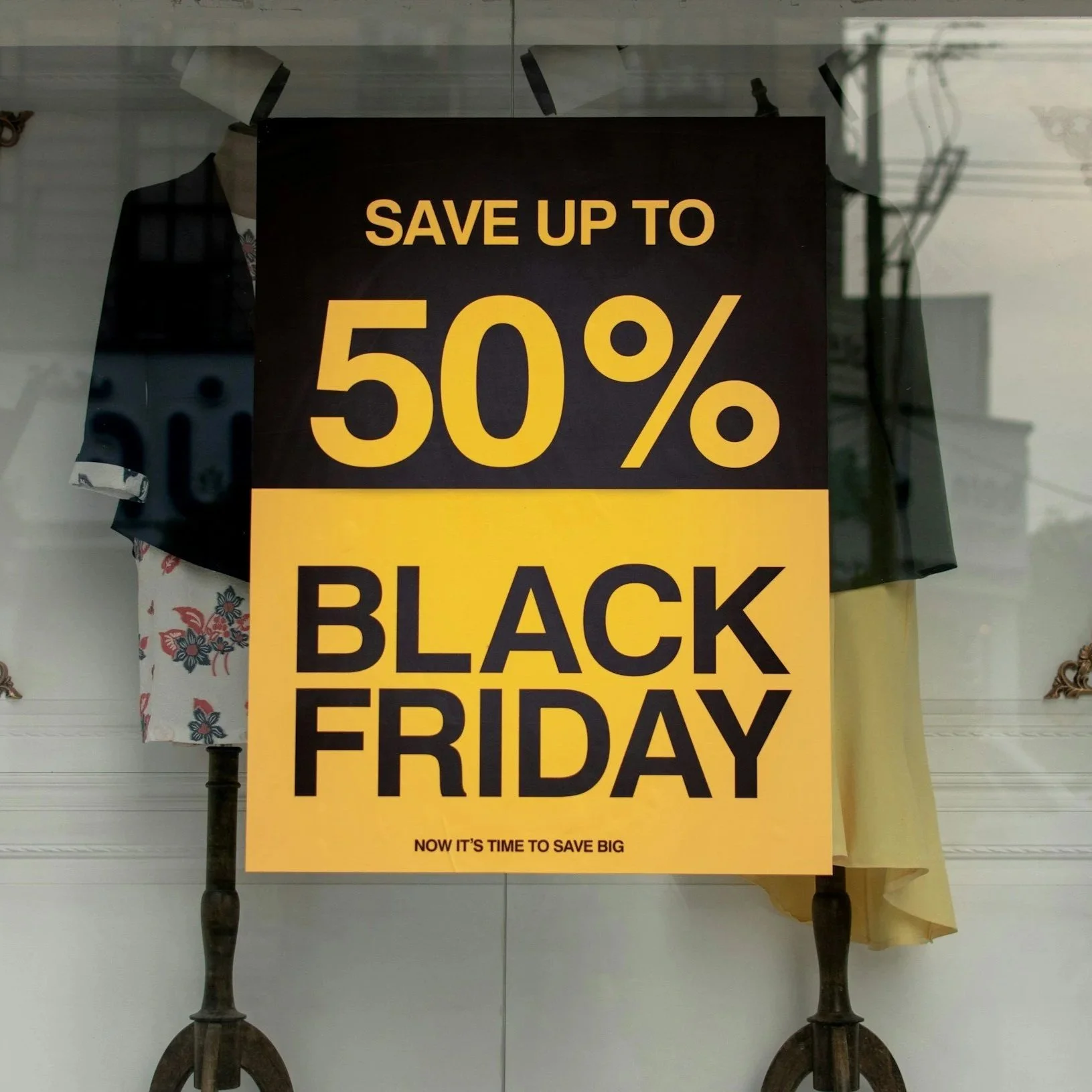
Right about now, the emails start landing. Every marketplace you sell on wants you in their big November event. Discount your listings, get a boost in search, ride the traffic wave into Christmas.
It sounds like free money. For a lot of sellers, it's anything but.
The story every seller should hear
A reseller shared an experience recently that's worth repeating. In their first year, they said yes to everything. Twenty percent off the whole store, promoted listings cranked up, every event the marketplace offered.
The week was huge. Orders everywhere.
Then a month later they sat down with the numbers. A big chunk of what they'd discounted was stock that would have sold at full price in December anyway. The traffic was real, but plenty of those buyers were going to find them regardless. They'd basically paid the marketplace, and their customers, to sell things that didn't need help.
These days they do it differently. Before the events even start, they split their inventory in two. The stale stuff goes into the sale. The proven stuff stays at full price. Their totals look smaller. Their profit doesn't.
That's the whole strategy in a nutshell. Let's unpack why it works.
Think of it as a tax
Every unit you push through a sales event comes with a cost attached. There's the discount itself, there's the promoted listing fee if you're boosting, and marketplace fees still apply on top.
Call it the sales event tax.
On some stock, that tax is a bargain. On other stock, it's pure leakage. The trick is knowing which is which before you tick the "join event" box.
Here's the bit marketplaces don't love you thinking about: their dashboards measure volume. Gross sales, units sold, conversion lift. Your bank account measures margin. Those two things can move in opposite directions during a sales week, and the dashboard will still look fantastic.
What a 20% discount actually costs you
Let's run a simple example. Say you sell an item for $60. It cost you $24 to source, you're absorbing $9 in postage, and marketplace fees run around 13% of the sale price. During the event you also boost it with an 8% promoted listing rate.
These are illustrative numbers, so swap in your own. The shape of the result is what matters.
| Per unit | Full price | 20% off + promoted |
|---|---|---|
| Sale price | $60.00 | $48.00 |
| Item cost | -$24.00 | -$24.00 |
| Postage absorbed | -$9.00 | -$9.00 |
| Marketplace fees (13%) | -$7.80 | -$6.24 |
| Promoted listing fee (8%) | $0.00 | -$3.84 |
| Profit per unit | $19.20 | $4.92 |
A 20% discount didn't cut your profit by 20%. It cut it by about 74%.
To make the same money in the sale as you would at full price, you'd need to sell roughly four units for every one you would have sold anyway. On a slow-moving item, that kind of lift can genuinely happen. On a product that already sells steadily, it almost never does. You just sell the same units for less.
The two-bucket method
So before any event goes live, go through your listings and sort them into two buckets.
Bucket one: the sale stock. This is inventory that needs a push. Stuff that's been sitting for months, items with lots of views and no buyers, seasonal leftovers, and anything you'd happily turn back into cash before the new year. For this stock, the sales event is one of the cheapest clearance channels you'll get all year. The marketplace is bringing the traffic, so let it do the heavy lifting.
Bucket two: the full-price stock. This is inventory with strong sold history and steady demand. Fresh sourcing you know will move. Items where you're one of a handful of sellers. This stock doesn't need a discount. It needs to be in stock, listed well, and shipped fast.
Here's a quick way to sort:
| Signal | Put it in the sale | Keep it at full price |
|---|---|---|
| Days listed | 90+ days with no or few sales | Recently sourced or regularly restocked |
| Sold history | Patchy or none | Consistent sales week to week |
| Views vs sales | Lots of views, few buyers (price is the blocker) | Views convert at a healthy rate already |
| Competition | Crowded, lots of identical listings | Few sellers or a clear point of difference |
| Seasonality | Off-season or a trend that's fading | Peak gifting demand in December |
| Stock depth | Overstocked, cash tied up | Limited units you can't easily reorder |
| Promoted listings | Yes, pay for the visibility | No, or a very low rate |
If an item ticks most boxes in one column, that's your answer. If it's split down the middle, lean towards full price. You can always add it to a later event if it stalls.
December buyers aren't bargain hunters
This is the part that gets missed. The shopper in late November is often hunting a deal. The shopper in December is usually hunting a gift.
Gift buyers care about different things. Is it the right item? Is it actually in stock? Will it arrive before Christmas? A 20% discount means a lot less to them than a clear dispatch time and a delivery date they can trust.
That's exactly where your full-price stock earns its keep. Instead of spending margin on discounts, spend your effort on the things December buyers pay for:
- Fast handling times and clear postage cutoffs in your listings
- Strong photos and titles so the right item is easy to find
- Gift-friendly touches if your category suits it
- Enough stock on hand that you're not cancelling orders in week three of December
Hold your price, nail the delivery promise, and let the December buyer come to you.
Same rule for promoted listings
Paid promotion follows the exact same logic. Paying to push a stale listing in front of more eyes can be money well spent. You're buying visibility it wasn't getting on its own.
Paying an ad fee on something that was already selling organically? That's just a fee on a sale you were going to make anyway.
Before you raise your ad rates across the board for the event, look at which listings were already selling without help. Turn promotion down or off on those, and put the budget behind the stock in bucket one.
Smaller totals, bigger profit
Being selective is less exciting than going all in. Your sales week won't look as impressive. You won't get the same rush of orders, and the marketplace dashboard won't throw you as many green arrows.
But the point of November isn't a big number on a dashboard. It's ending the year with less dead stock, more cash, and margin still intact on the products that carry your business.
Sort your inventory this week, before the event invites hit their deadlines. Then decide what goes in.
So, are you going all in on the November events this year, or splitting your stock first? Hit reply and tell us how you're playing it.