
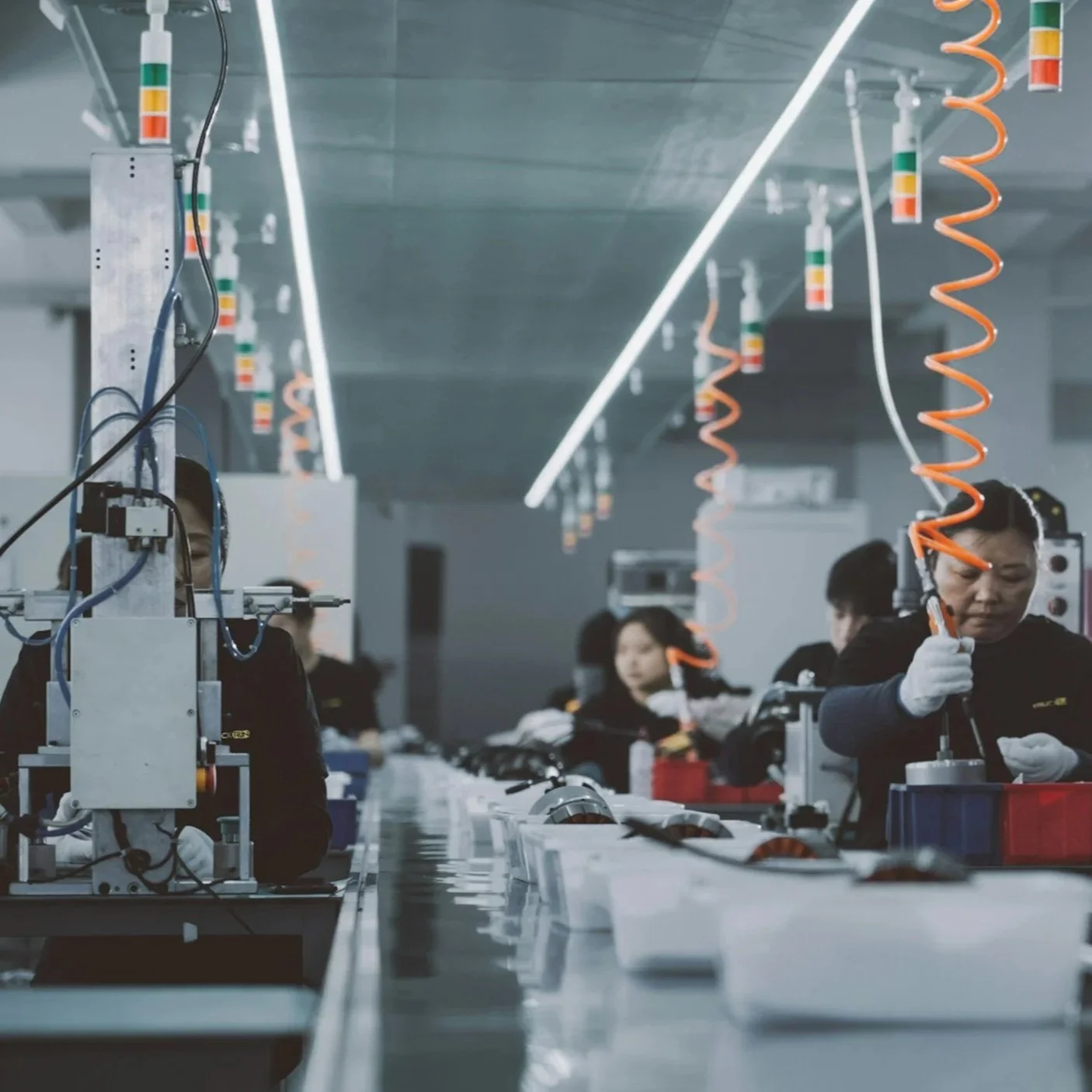
Two sellers, one idea, very different bank balances
Picture two sellers who both spot the same gap: a pet water bottle that doesn't leak in a backpack.
Seller one is a brand builder. They hire an industrial designer, pay for 3D renders, order prototypes, then commit to a custom mould. Eight months and a big chunk of savings later, they have a product. They also have no idea yet if anyone wants it.
Seller two opens 1688 and Alibaba, searches for leak-proof pet bottles, and finds a dozen factories already making one. The mould exists. The leak problem was fixed three versions ago. Seller two orders samples, picks the best one, adds their own packaging and a better listing, and is selling in six weeks.
Both sellers end up with a decent product. Only one of them still has cash left to market it.
That's the core idea of this piece. China's supply chain isn't just a cheap place to make things. It's a giant library of problems that have already been solved, tested and paid for by someone else. Smart sellers shop that library before they ever think about inventing.
What a "pre-solved" product actually is
A pre-solved product is one where the expensive, risky work is already done. Somebody else has absorbed the cost of getting it right. When you source one, you inherit all of that for the price of a sample.
Here's what's usually baked in:
- Tooling is paid for. Moulds, dies and jigs often cost thousands to tens of thousands of dollars. On an existing product, the factory has already amortised that across other buyers.
- The bugs are fixed. The hinge that snapped, the seam that split, the battery that overheated. Factories that have run a product for a few years have usually learned these lessons on someone else's returns.
- Market demand is proven. Factories don't keep making things that don't sell. If several suppliers offer the same item, that's a demand signal you didn't have to pay for.
- Materials and costs are dialled in. The factory knows the cheapest material that still works, and their quote reflects years of cost cutting.
- Compliance paperwork may exist. Some suppliers already hold test reports for common standards. Always verify for your market, but it's a head start.
- MOQs are friendlier. Existing products often come with lower minimum order quantities than a custom run, because the line is already set up.
In short, the factory has done the R&D. You're paying for the outcome, not the experiments.
The cash burn comparison
The real gap between the two paths isn't the unit cost. It's how much money you spend before you learn whether the product sells.
The figures below are illustrative ranges for a simple consumer product, not quotes. Your category will differ, but the shape of the gap rarely does.
| Stage | Custom brand builder | Pre-solved sourcer |
|---|---|---|
| Design and prototyping | $5,000 to $20,000 | $0 |
| Tooling and moulds | $10,000 to $50,000+ | $0 (already paid) |
| Samples | $1,000 to $3,000 (multiple rounds) | $200 to $800 (several suppliers) |
| First order MOQ | Often higher, new line setup | Often lower, line already running |
| Time to first sale | 6 to 12 months | 4 to 10 weeks |
| Cash at risk before demand is tested | High | Low |
That last row is the one that matters. The brand builder is placing one big bet with their capital before the market has voted. The sourcer is placing lots of small bets and letting sales data tell them where to double down.
There's also the hidden cost of time. Every month spent in development is a month of no revenue, no reviews and no learning. Trends move fast. By the time a custom product ships, the window it was built for may have closed.
Where to find pre-solved products
The trick is to search for the problem, not the product. Instead of "dog bottle", search for "leak-proof", "foldable", "one-hand" or whatever pain point your customer actually has.
- 1688. China's domestic wholesale site. Prices are closer to factory cost and you'll see what Chinese sellers are buying right now. Use an agent or a translation browser extension.
- Alibaba. Easier for overseas buyers. Filter for verified manufacturers and check how long a supplier has offered the item. A long listing history is a good sign the bugs are worked out.
- Trade shows. The Canton Fair and category shows like Yiwu's let you handle products and quiz factories about what they changed between versions.
- Factory catalogues. Once you find a good supplier, ask for their full catalogue and their "new this season" list. You'll often find better items than what's on their public listings.
- Marketplace reviews as a spec sheet. Read the 2 and 3 star reviews on bestsellers. Then look for a factory version that already fixes those complaints.
- Social signals. TikTok, Temu and Shein are fast indicators of what factories can already make at scale. If it's trending there, the supply chain behind it exists.
Validate demand before you order samples
Finding a pre-solved product is half the job. The other half is proving people are actually buying it right now, not just that a factory can make it. This is where a validation tool earns its keep.
One of the quickest checks is the Top 500 Best Selling Items report from ZIK Analytics. It's a live list of the 500 best-selling items on eBay over the last 48 hours, with country filters for the US, UK, Germany, Australia and more. Each item shows its title, image, price and sales volume.
Here's how to use it alongside your sourcing:
- Work backwards from the list. Scan the Top 500 for products in your niche, then search 1688 and Alibaba for the factory versions. You're starting with proven sellers and finding the supply chain behind them.
- Check your idea against it. Found a promising item on 1688? Look for it, or something close, in the report. Real sales volume is a much stronger signal than a supplier's listing count.
- Compare markets. Flip between country filters. A product selling well in the US but missing from the AU or UK list could be your opening.
- Spot the price ceiling. The sell price on the list, minus your landed cost from the factory, tells you fast whether the margin is worth chasing.
The point is to put real sales data between you and your first order. Sourcing a pre-solved product already cuts your development risk. Validating it against live demand cuts your inventory risk too.
ShelfTrend may earn a commission if you sign up through this link.
A good habit is to order samples from three to five suppliers of the same item. Compare them side by side. The differences in build quality will tell you more than any spec sheet.
How to stand out without custom tooling
The obvious pushback is "if anyone can buy it, how do I compete?" Fair question. The answer is that most of a product's perceived value sits outside the mould.
- Pick the best version. Most sellers grab the cheapest supplier. Paying a little more for the factory with tighter stitching or thicker plastic is already a differentiator.
- Make small, cheap tweaks. Colour, logo, a different strap, an extra accessory. Factories will often do these on existing lines with no new tooling.
- Bundle. Put two or three related pre-solved products together. A bundle is hard to copy like for like and lifts your order value.
- Own the packaging and unboxing. Packaging is cheap to customise and it's what customers photograph.
- Win on the listing. Better photos, clearer copy and a listing that answers the questions in competitors' bad reviews.
- Build the brand around the customer, not the product. A brand that stands for "gear for hikers with dogs" can sell ten sourced products. A brand built on one custom invention lives or dies with it.
This is the mindset shift. Your brand is the curation, the trust and the customer relationship. The product is a component you buy.
When going custom does make sense
This isn't an argument that custom products are always a mistake. It's an argument about order of operations. Custom makes sense when:
- You've already proven demand with a sourced version and you know exactly what to improve.
- The problem genuinely isn't solved yet. You've searched hard and no factory makes anything close.
- You need defensibility and can afford to protect it with design patents or a utility patent.
- You have the runway to survive a year of development without the product earning a cent.
The smartest path for most sellers is sourced first, custom later. Launch with a pre-solved product, collect reviews and returns data, then use your own sales as the brief for version two. At that point a custom mould is an investment backed by evidence, not a gamble.
Risks to watch
Pre-solved doesn't mean risk-free. Keep these on your radar:
- Sameness. If you change nothing, you're competing on price alone. Use the tactics above.
- IP traps. Some factory listings are knock-offs of patented designs. Check patents in your selling markets before you order, especially for anything that looks like a famous product.
- Quality drift. The sample is the factory's best work. Use a third party inspection before shipping production runs.
- Tariffs and trade rules. Duties and import rules on Chinese goods have shifted a lot in recent years. Check current rates for your category and market before you lock in pricing, and consider whether a factory in Vietnam or elsewhere can make the same item.
- Compliance. A supplier's test report may not cover your market's standards. Verify safety and labelling rules yourself, especially for kids' products, electronics and anything that touches food or skin.
The bottom line
Cash is the oxygen of a small e-commerce business. The brand builder who sinks it all into a custom mould is betting the company on one guess. The sourcer who borrows China's homework gets to make many small bets, learn from real sales and keep enough cash to market what works.
Before you pay to solve a problem, spend an afternoon checking whether a factory already solved it. Odds are, one did.
Your move this week: pick one product idea, write down the customer's main pain point, and search 1688 and Alibaba for that problem. Order samples from three suppliers. You'll learn more in a fortnight than a designer could tell you in a month.