
Article Summary: Key Insights at a Glance
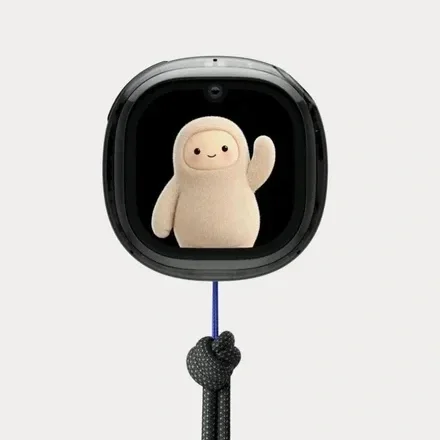
- AI keychain agents became a real retail category in September 2026. Meta closed its Connect 2026 keynote by revealing the Muse Charm, a keychain-sized device with a small screen, a fingerprint sensor, voice interaction and an animated avatar that fronts its Muse AI agent. Meta says it will ship in time for the December holidays. No price has been announced.
- The category splits into three clearly different product types: agent charms (Muse Charm), AI recorder keychains and pins (Plaud NotePin S at $179, plus hundreds of white-label Shenzhen units), and offline AI digital pets (Starboy at $249 to $399, sold as a toy for adults with no app and no internet).
- The niche data is modest but growing. The AI necklace and pendant segment is estimated at $112.58 million in 2025 rising to $130.85 million in 2026 (15.85% CAGR), and the AI recorder pen segment is forecast at a 13.7% CAGR to $3.26 billion by 2033. The broader wearable AI market is sized at $61.51 billion in 2026.
- Buyer complaints cluster into four repeatable themes: paying a subscription on top of the hardware, always-listening microphones that make owners and bystanders uncomfortable, batteries and connections that fail mid-conversation, and not knowing what the device is actually for.
- Trust is the ceiling on agent charms. Research cited by PYMNTS found only 8% of US consumers would trust Meta with their passwords, half the share that would trust ChatGPT. Agent keychains only become useful once owners hand over logins and cards.
- **Private label sellers should not try to build an agent. The profit sits around the edges: no-subscription AI recorder keychains, universal charm holders, lanyards and pouches, replacement charging cables and offline digital pet keychains for adults.
- The highest-scoring opportunity for a new seller is a universal AI charm accessory line on Amazon, TikTok Shop and Etsy, with estimated 45% to 60% gross margins after marketplace fees and landed costs under $4 per unit. Fitted cases for the Muse Charm should not be tooled until Meta publishes final dimensions.
- Gen Z has already made dangling tech mainstream. TechCrunch links the Muse Charm form factor to the post-Labubu bag charm wave and the TikTok trend of wearing old Apple Watches as keychains, which has produced thousands of keychain, lanyard and bag charm listings across major marketplaces.
- Red flags are unusually sharp. US senators have backed an FTC Section 6(b) inquiry into AI companion products and specifically called out internet-connected AI toys for young children. Recording consent laws, FCC certification, lithium battery shipping rules and a roughly 37.5% effective US duty on Chinese consumer electronics all hit this category.
- The best entry point in 2026 is a $19.99 to $34.99 charm and accessory kit, followed by a no-subscription AI recorder keychain at $59.99 to $79.99 once the accessory line proves demand.
1. Actionable Insights First: Executive Opportunity Summary
Top 3 Selling Opportunities Right Now
Opportunity 1: Universal AI charm accessories (lanyards, clips, pouches, bag charm holders)
Opportunity Score: 9/10
Every AI keychain device shipping in 2026 creates the same after-purchase need: a way to wear it, clip it, protect it and stop it getting scratched against keys. Plaud ships the NotePin S with a clip, lanyard, magnetic pin and wristband in the box, which tells you how much buyers care about wearing options. Meta demonstrated the Muse Charm on a lanyard that could go around a wrist or neck. Meanwhile the Apple Watch keychain trend has already trained buyers to shop for charm holders on Amazon, Walmart, eBay and Etsy.
The critical insight is timing. Meta has not published final dimensions for the Muse Charm, and Zuckerberg said the team was still finalizing the component layout. A seller who tools fitted cases now risks a mold that does not fit. A seller who launches universal products (adjustable silicone pouches, braided wrist lanyards with split rings, carabiner clips with quick-release, zip charm pouches sized for devices up to a standard palm footprint) can list before December and catch the launch search spike without dimension risk.
- Profit margin range: 45% to 60% gross after marketplace fees, before advertising (higher on self-fulfilled Etsy and TikTok Shop orders)
- Best price points: $14.99 single items, $19.99 to $34.99 kits
- Growth signal: the Muse Charm ships into the holiday gifting window, and the bag charm habit already exists at scale
Opportunity 2: No-subscription AI recorder keychains
Opportunity Score: 8/10
This is the product type with the clearest complaint-to-solution link. Branded AI recorders pair decent hardware with monthly transcription limits. Plaud offers 300 free transcription minutes per month, with paid tiers above that. Bee paired $49.99 hardware with a $19 monthly subscription. Buyers repeatedly describe the feeling of paying twice.
Shenzhen factories now openly market "free subscription" and "no monthly fee" AI recorders in zinc alloy keychain, magnetic card and wearable pin formats, with 32GB to 64GB storage and ChatGPT-style summarization in companion apps. A private label seller who selects a factory with a stable app, a clearly disclosed free tier and a visible recording LED can compete on the exact axis the category leaders are weakest on.
- Profit margin range: 35% to 48% gross after marketplace fees, before advertising
- Best price points: $59.99 to $89.99
- Growth signal: students and mobile professionals (sales reps, real estate agents, field technicians) are the core buyers, and both groups buy on value
Opportunity 3: Offline digital pet keychains for adult collectors
Opportunity Score: 7/10
Starboy proved that adults will pay jewelry prices for a keychain creature that does not connect to anything. Its creator described it as a toy for adults whose main job is to just hang out. Bandai says Tamagotchi merchandise sales rose roughly sevenfold in the five years from 2019, and the brand has passed 100 million units sold. The nostalgia demand is real, and the privacy angle (no microphone upload, no app, no account) is a selling point, not a limitation.
The opportunity is a $19.99 to $39.99 color-screen digital pet keychain with original character design, sold explicitly to adults and collectors. It is scored lower because design and character IP are the whole product, and because anything marketed to children with AI features now sits under active regulatory attention.
- Profit margin range: 40% to 55% gross after marketplace fees, before advertising
- Best price points: $24.99 to $39.99
- Growth signal: bag charm culture plus retro tech nostalgia among Gen Z and millennials
Quick Action Items
- List universal charm accessories before mid-November. Use "fits AI keychains, AI pins and smartwatch charms" framing rather than naming a device you cannot yet measure.
- Order samples from at least three AI recorder factories and test the companion app for a full week before committing. The app is the product; the hardware is nearly interchangeable.
- Demand a visible recording indicator on any recorder you private label. It answers the bystander consent complaint directly and gives you a listing headline.
- Stock replacement magnetic charging cables for the leading AI pins. Loose magnetic connections are a recurring complaint and cables get lost.
- Never market AI features to children. Position digital pets for adults and collectors, and keep any microphone or cloud feature off kids' products entirely.
- Budget for FCC and battery documentation on anything with Bluetooth and a lithium cell. Marketplaces increasingly request it before listing.
- Do not put "ChatGPT", "Meta" or "Muse" in product titles unless you have rights to use them. "Compatible with" phrasing in bullets is safer, and trademark takedowns in AI hardware are frequent.
Red Flags to Avoid
- Tooling fitted cases for unreleased devices. No Muse Charm dimensions or price have been announced. Wait for teardown measurements.
- AI chatbot toys for young children. Senators have urged the FTC to use its full authority against unfair or deceptive AI toy marketing, including preliminary injunctions. This is not a segment for a small importer.
- Always-listening designs. The Friend pendant drew subway ad vandalism, reviewer hostility at tech events and repeated privacy criticism. Buyers do not want to be the person accused of wearing a wire.
- Recording consent liability. Several US states require all parties to consent to recording. Listings should tell buyers to follow local law, and products should make recording obvious.
- Tariff exposure. Chinese consumer electronics currently face roughly 37.5% combined US duty (25% Section 301 plus the 12.5% forced-labor tariff that took effect on 24 July 2026). Toys under HTS chapter 95 sit closer to 20%. Rates have changed repeatedly this year; verify with a customs broker per order.
- Selling on hype alone. Humane's Ai Pin, the Rabbit R1 and the Friend pendant all launched with heavy attention and disappointed buyers. Inventory built around a news cycle can be stranded when the cycle turns.
Best Entry Point for New Sellers
The lowest-risk entry is a universal AI charm accessory kit: one braided wrist lanyard, one carabiner quick-release clip, one adjustable silicone pouch and one spare split ring, retailing at $24.99. It needs no FCC certification, no battery shipping paperwork, no app, and no knowledge of final Muse Charm dimensions. It sells to AI pin owners, Apple Watch charm users and future Muse Charm buyers at the same time.
| Startup Cost Item | Low Estimate | High Estimate | Notes |
|---|---|---|---|
| Samples (3 suppliers, 4 SKUs each) | $180 | $420 | Include express shipping |
| First production order (4 SKUs, 500 to 1,000 units each) | $3,200 | $7,800 | Silicone, braided nylon, zinc alloy hardware |
| Freight and duty (air for first batch) | $900 | $2,100 | Duty estimated at 25% to 37.5% by classification |
| Packaging, inserts and barcodes | $450 | $1,100 | Retail-ready poly or kraft boxes |
| Product photography and video | $400 | $1,200 | Lifestyle shots on bags and wrists matter most |
| Launch advertising (first 60 days) | $1,500 | $3,500 | Amazon Sponsored Products plus TikTok Shop affiliates |
| Marketplace and software subscriptions | $120 | $300 | Seller accounts, keyword tool |
| Total | $6,750 | $16,420 | Accessory-only launch, no electronics |
Adding a private label AI recorder keychain as a second phase typically adds $9,000 to $22,000 for a 500-unit order, FCC and battery documentation, app testing and extra advertising.
2. Quick Data Scans: Marketplace Sales Opportunity Analysis
Legend
| Score Range | Meaning | Action |
|---|---|---|
| 8 | High demand, low to moderate competition (scores 8 to 10) | Enter now |
| 6 | Moderate demand, moderate competition (scores 5 to 7) | Test carefully |
| 3 | Low demand, oversaturated or high compliance risk (scores 1 to 4) | Avoid |
Marketplace Opportunity Matrix
All unit and revenue figures are estimates for a single well-optimized private label listing or small listing cluster during the October to December window, when the Muse Charm launch and holiday gifting overlap. They are directional planning figures, not measured sales data.
| Marketplace | Opportunity Score | Product Segment | Est. Weekly Unit Sales | Est. Weekly Revenue | Avg Price Range | Est. Profit Margin |
|---|---|---|---|---|---|---|
| Amazon US | 9 | Universal AI charm accessories (lanyards, clips, pouches) | 180 to 350 | $2,700 to $8,700 | $12.99 to $24.99 | 45% to 55% |
| Amazon US | 8 | No-subscription AI recorder keychains | 35 to 90 | $2,100 to $7,200 | $59.99 to $89.99 | 35% to 48% |
| Amazon US | 7 | Replacement magnetic charging cables and docks | 60 to 140 | $1,000 to $2,400 | $12.99 to $19.99 | 45% to 55% |
| TikTok Shop | 9 | Bag charm holders and cute AI device pouches | 150 to 400 | $2,200 to $8,000 | $12.99 to $19.99 | 45% to 60% |
| TikTok Shop | 7 | Offline digital pet keychains (adult collectors) | 60 to 200 | $1,500 to $6,000 | $24.99 to $34.99 | 40% to 55% |
| Etsy | 8 | Personalized leather and beaded charm lanyards | 40 to 110 | $800 to $3,300 | $19.99 to $34.99 | 55% to 70% |
| eBay | 7 | Open-box and used AI recorders and pins | 15 to 45 | $1,200 to $5,400 | $79 to $149 | 20% to 35% |
| eBay | 6 | Charm accessory multi-packs | 40 to 90 | $500 to $1,400 | $9.99 to $17.99 | 40% to 55% |
| Walmart Marketplace | 6 | AI recorder keychains and accessory kits | 20 to 60 | $600 to $3,000 | $19.99 to $79.99 | 30% to 45% |
| Shopify DTC | 7 | Privacy-first branded AI recorder with no monthly fee | 10 to 40 | $700 to $3,600 | $69.99 to $99.99 | 45% to 60% |
| Amazon Business and B2B | 7 | Recorder keychains for sales and field teams (5 to 50 units) | 5 to 25 orders | $1,500 to $9,000 | $55 to $75 per unit | 30% to 40% |
| Corporate gifting distributors | 6 | Logo-engraved recorder keychains and charm kits | Project based | $2,000 to $15,000 per project | $18 to $70 per unit | 25% to 40% |
| Faire wholesale | 6 | Digital pet keychains and charm kits for gift shops | 8 to 25 orders | $800 to $3,000 | Wholesale at 50% of retail | 25% to 35% |
| Kickstarter and Indiegogo | 5 | Original-design AI pet keychain preorders | Campaign based | $20,000 to $150,000 per campaign | $59 to $149 | Varies widely |
| Facebook Marketplace and Mercari | 5 | Local resale of AI gadgets and bundles | 5 to 20 | $300 to $1,800 | $40 to $140 | 15% to 30% |
| Temu, Shein and AliExpress | 3 | Generic AI recorders and charms | Not recommended | Not recommended | $4 to $30 | Under 15% |
| Any channel | 2 | AI chatbot toys marketed to young children | Not recommended | Not recommended | N/A | Regulatory risk |
Table Notes and Methodology
- Scores weigh demand signals (news cycle, search behavior, marketplace listing density), competition intensity, compliance burden and capital required. A low-capital, low-compliance product with rising demand scores higher than a larger but riskier opportunity.
- Margins are gross margins after landed cost and core marketplace fees but before advertising. Advertising in AI hardware typically consumes 10% to 20% of revenue during launch.
- Amazon charm accessories score highest because they carry no FCC, battery or app risk and serve three device ecosystems at once: AI pins and recorders, Apple Watch charm users and incoming Muse Charm owners.
- TikTok Shop rewards visual products that look good dangling from a bag. Affiliate creators in the bag charm and "what's on my keys" genres convert strongly for low-priced accessories.
- eBay open-box resale is viable because branded AI recorders are often hard to get quickly from the manufacturer, and buyers who want one before a trip or semester will pay close to retail for a tested unit.
- Temu, Shein and AliExpress are scored as a threat rather than a channel. The same generic factory units appear there at prices a private label seller cannot match. Compete on app quality, support, warranty and trust instead.
- Kids' AI toys score 2 regardless of apparent demand. The regulatory direction is clear and the downside is severe.
3. Deeper Context: Market Landscape and Buyer Intelligence
A. Market Overview
Category Definition and Size
"AI keychain agent" is a new retail phrase, and it is being defined in public right now. For sellers, the useful definition is any keychain, charm, pin or pendant-sized device that uses AI to listen, respond, record, summarize or behave like a companion. That covers three product families with very different economics:
- Agent charms. Dedicated hardware that fronts a general AI agent capable of doing tasks. The Muse Charm is the defining example. Meta says it packs the full real-time voice and avatar stack and can do everything Muse does on other devices, processing requests in the cloud.
- AI recorder keychains and pins. Devices that capture audio and send it to an app for transcription, summaries and action items. Plaud is the best-known brand; Shenzhen factories produce hundreds of white-label equivalents.
- AI digital pets. Screen-based creatures that react to their surroundings. Starboy runs small image models locally to recognize faces and around 30 hand gestures, shivers when cold and gets anxious in loud rooms, and deliberately has no phone connection.
There is no single market size for this exact phrase. The nearest measured segments give a useful frame:
- The AI necklace and pendant segment is estimated at $112.58 million in 2025 and $130.85 million in 2026, a 15.85% CAGR (360iResearch figures cited in Alibaba sourcing research).
- The recorder pen segment, which now includes AI transcription recorders, is forecast to reach $3.26 billion by 2033 at a 13.7% CAGR.
- The global wearable AI market is sized at $61.51 billion in 2026, rising to $359.32 billion by 2034 (Fortune Business Insights), though this figure is dominated by watches, rings and earbuds.
- The keychain pendant market, the accessory side of this opportunity, was valued at $6.8 billion in 2025 with a 5.9% CAGR to 2034. Corporate gifting accounted for 37.2% of that revenue.
- AI companion software, which gives these devices a reason to exist, is estimated at $48.0 billion in 2026 growing at roughly 31% CAGR to 2033 (Grand View Research).
The honest read: the hardware niche is small today, measured in hundreds of millions of dollars, but it sits at the intersection of two much larger forces (AI companion adoption and the dangling-accessory fashion habit). The Muse Charm could expand awareness of the whole category overnight, or it could join the list of AI gadgets that did not take off. Sellers should build around whichever outcome happens.
Product Evolution and Recent Trends
2024 to 2025: the failed first wave. Humane's Ai Pin and the Rabbit R1 promised phone replacement and disappointed. The Friend pendant launched at $129 as an always-listening companion that texts you commentary, and reviewers reported snarky responses, 7 to 10 second lags, battery drain, crashes and social hostility. WIRED's reviewer stopped wearing it in public after being accused of "wearing a wire" at a tech event.
2024 to 2026: recorders quietly win. While companion devices stumbled, AI note-takers found paying customers. Plaud reported selling 200,000 units of its original Plaud Note before launching the NotePin. The NotePin S arrived at CES 2026 at $179 with a physical button, 20-hour battery, 64GB storage, Apple Find My support and four wearing options in the box.
2026: toys for adults. Starboy, from Lil Guy, launched preorders in March at $249 in aluminum up to $399 in brass, with CNC-machined metal housings, a 400 x 400 OLED screen and more than 500 animations from former Disney animators. Its creator raised $1.2 million and positions it explicitly as a toy for adults, not a companion or productivity tool.
September 2026: the big platform arrives. Meta's Muse Charm makes "AI agent keychain" a mainstream phrase. Coverage describes a 5G-connected palm-sized device with a screen avatar (known internally as Jolly), fingerprint activation and voice. Meta positions it as the fastest way to reach Muse without glasses, and plans to earn over time from small transaction fees as Muse shops with partners including Walmart, Best Buy, Gap, Sephora and Wayfair.
The fashion undercurrent. TechCrunch notes the Muse Charm is on-trend with Gen Z's post-Labubu love of bag charms, and that young people were already wearing old Apple Watches as keychains. That behavior created thousands of keychain, strap, lanyard and bag charm case listings on Amazon, Walmart, eBay and Etsy before Meta said a word.
Leading Brands and Market Disruptors
- Meta (Muse Charm): The category-defining launch. Enormous reach, but a trust problem: Oppenheimer data cited by PYMNTS found only 8% of US consumers would trust Meta with passwords.
- Plaud (NotePin, NotePin S, Note Pro): The commercial leader in AI recorders. Strong accuracy in quiet to moderate environments, but vocal Reddit frustration about missed recordings and subscription costs.
- Lil Guy (Starboy): Premium offline digital pet. Proves adults will pay jewelry prices for a keychain character.
- Friend: Always-listening companion pendant, relaunched in 2026 with a speaker at roughly double the price. A cautionary tale more than a competitor.
- Bee: Wrist and clip note-taker that requires a tap to record and shows a green indicator light. Its consent-first design is a template worth copying.
- Bandai (Tamagotchi): The original keychain pet, still growing as a fashion accessory. The benchmark for affordable virtual pet pricing.
- Shenzhen white-label factories: Hundreds of AI recorder variants in keychain, card, pen and pin formats, many marketed with "free subscription" and "no monthly fee" claims. Both your supply base and your price competition.
- OpenAI: Its pocket device developed with Jony Ive had not been released as of Meta's announcement. A launch would reshape the category again.
Price Tiers and Popular Brands
| Tier | Retail Range | Typical Products | Buyer Expectation | Seller Fit |
|---|---|---|---|---|
| Accessory | $9.99 to $34.99 | Lanyards, charm pouches, clips, cables, docks | Looks good, fits, does not scratch | Best entry for new sellers |
| Budget AI | $19.99 to $49.99 | Generic AI recorders, color-screen digital pets | Works out of the box, no hidden fees | Crowded; compete on app and support |
| Mid AI | $59.99 to $129 | Private label no-subscription recorders, Friend-style pendants | Reliable capture, clear privacy, long battery | Strong private label zone |
| Branded AI | $129 to $249 | Plaud NotePin S, Plaud Note Pro, Starboy aluminum | Polish, accuracy, brand trust | Resale and accessories only |
| Premium and platform | $249 and up (Muse Charm TBA) | Starboy brass, Muse Charm | Status, ecosystem, design | Accessories only |
B. Buyer Persona Deep Dive
Persona 1: The Mobile Professional
- Who: Sales reps, real estate agents, on-site technicians and consultants aged 28 to 55. Plaud's own analysis of 664 verified Amazon buyers found these roles across 25 reviews.
- Why they buy: Their important conversations happen away from a desk, where pulling out a phone to record is awkward.
- What frustrates them: Missed recordings after long meetings, transcription limits, and subscription costs stacked on a premium device.
- What they want to see in a listing: Battery hours, recording range, free transcription allowance stated plainly, and a visible recording light for client meetings.
- Price tolerance: $60 to $180. Will expense it if the listing reads as professional.
- Best channels: Amazon, Amazon Business, Shopify DTC.
Persona 2: The Student Note-Taker
- Who: University and graduate students, 18 to 26, buying for lectures, study groups and interviews.
- Why they buy: Lecture capture and summaries, especially for dense or fast-paced courses and for non-native English speakers.
- What frustrates them: Monthly fees, apps that lock exports behind paywalls, and devices that die halfway through a double lecture.
- What they want to see: "No monthly fee" in the title, lecture-length battery claims, multilingual transcription, simple export to notes apps.
- Price tolerance: $30 to $80. Highly price sensitive and review driven.
- Best channels: Amazon, TikTok Shop, Walmart.
Persona 3: The Gen Z Bag Charm Stylist
- Who: 16 to 27, fashion-led, already carries bag charms, plushies or a repurposed Apple Watch on a keychain.
- Why they buy: Aesthetic first. The device or charm is part of an outfit, and utility is a bonus.
- What frustrates them: Clunky cases, cheap-looking hardware, charms that snap off.
- What they want to see: Colorways, lifestyle photos on bags, sturdy clasps, matching sets.
- Price tolerance: $10 to $35 for accessories, occasionally more for a hero item.
- Best channels: TikTok Shop, Etsy, Amazon.
- Note: Many buyers in this group may be under 18. Keep this persona on the accessory side only and never market AI recording or chatbot features to minors.
Persona 4: The Muse Charm Pre-Adopter
- Who: Meta ecosystem users, smart glasses owners and early adopters aged 25 to 45 who plan to buy the Muse Charm in December.
- Why they buy accessories: To protect and wear a new device from day one, and to gift a Muse Charm with accessories included.
- What frustrates them: Waiting weeks for accessories after launch, and cases that do not fit.
- What they want to see: "Universal fit" honesty now, and precise fitted products after launch with measurements shown.
- Price tolerance: $15 to $40 for accessories.
- Best channels: Amazon, TikTok Shop.
Persona 5: The Adult Digital Pet Collector
- Who: Millennials and older Gen Z, 24 to 40, who grew up with Tamagotchi and now collect designer toys.
- Why they buy: Nostalgia, character attachment and the pleasure of a tech object with no notifications.
- What frustrates them: Low-quality screens, generic characters, and pets that demand constant attention.
- What they want to see: Original character art, rarity or variants, metal or premium finishes, and "no app, no account" as a feature.
- Price tolerance: $25 to $60 for mass market, $250 and above for premium pieces like Starboy.
- Best channels: TikTok Shop, Kickstarter, Etsy, Faire.
Persona 6: The Gift Buyer
- Who: Partners, parents and colleagues buying for a tech-curious recipient. Plaud's review analysis counted 18 gift mentions for the NotePin, the highest in its lineup.
- Why they buy: Small, premium-looking, easy to wrap, and topical because AI is in the news.
- What frustrates them: Recipients who need an account and subscription just to try the gift.
- What they want to see: Gift-ready packaging, "works out of the box", and bundle options.
- Price tolerance: $25 to $100.
- Best channels: Amazon, Etsy, Walmart. Peak demand in late November and December.
Persona 7: The Cautious Parent
- Who: Parents of children and teenagers who ask for AI toys and charms after seeing them on social media.
- Why they matter: They are the audience regulators are protecting. Senators backing the FTC's 6(b) inquiry specifically flagged internet-connected AI toys with microphones marketed to young children.
- What they want: Screen-based digital pets with no microphone, no internet and no chatbot; clear age grading and toy safety certification.
- Seller guidance: Serve this persona only with offline, non-AI-chatbot digital pets that meet toy safety standards, or not at all. Never position AI recorders or agent accessories as children's products.
C. Keyword and Search Trends
Search Volume and Term Structure
Search behavior for this category is fragmented because buyers do not yet share a vocabulary. The same intent shows up as "AI keychain", "AI pin", "AI necklace", "AI recorder", "AI note taker" and "AI pet keychain". Sellers should build listings that capture several of these phrasings at once. The trend directions below are directional, based on the September 2026 news cycle and marketplace listing patterns. Validate volumes with your own keyword tool before committing budget.
Rising and Declining Queries
| Query Cluster | Direction | Buyer Intent | Seller Action |
|---|---|---|---|
| ai keychain, ai agent keychain, muse charm | Rising sharply (launch news) | Curiosity, pre-launch research | Accessory listings with universal-fit framing |
| muse charm case, muse charm lanyard | Emerging (expected to spike at December launch) | Accessory purchase | Prepare fitted SKUs for post-launch release |
| ai voice recorder no subscription, ai recorder no monthly fee | Rising | Value-driven purchase | Lead titles with no-fee claim if true |
| ai note taker keychain, wearable ai recorder | Rising | Productivity purchase | Emphasize battery, range and indicator light |
| apple watch keychain, watch bag charm | Steady to rising | Fashion accessory | Cross-list universal charm holders |
| digital pet keychain, virtual pet keychain | Steady to rising | Nostalgia gift | Original characters, adult positioning |
| starboy keychain | Mixed | Split between AI pet and music merchandise | Avoid; the phrase collides with existing fan merchandise |
| ai pin, rabbit r1, humane ai pin | Declining | Curiosity, used market | eBay resale only, with clear condition notes |
| ai necklace companion | Flat to declining | Companion purchase | Avoid always-listening positioning |
Seasonal Demand Patterns
- September to October: Hardware announcement season (Meta Connect, Apple events). Search spikes are driven by news, and conversion is low. Build listings and reviews now.
- Mid-November to December: The highest-conversion window of the year. The Muse Charm ships into holiday gifting, and gift buyers dominate. Expect accessory demand to follow device shipping by one to three weeks.
- January: CES news, new year productivity resolutions and returning students. Strong for AI recorders.
- Mid-July: Prime Day discounts on branded recorders (the NotePin dropped to $127 in a past Prime Day event) pull buyers to the category but squeeze private label pricing.
- August to September: Back-to-school demand for student recorders and bag charms.
- May to June: Graduation and Father's Day gifting for professional recorders.
D. Consumer Insights from Community Forums and Reviews
Complaint Cluster 1: "I paid for the device, now I pay again every month"
The most repeated frustration across AI recorder and companion devices is subscription stacking. Plaud's free tier covers 300 transcription minutes a month, which its own review analysis says is enough for most buyers, but heavy users hit the wall quickly. Reddit reviewers note that a paid plan on top of a premium device raises expectations of reliability that are not always met. Bee's model of cheap hardware plus a $19 monthly fee makes the tradeoff explicit.
Opportunity: A clearly disclosed free tier, or a genuinely subscription-free device, is the single strongest listing hook in this category. Only make the claim if the factory app truly supports it long term.
Complaint Cluster 2: "I feel like a spy wearing it"
Always-listening companions created a social problem for owners. The Friend pendant's subway campaign was covered in anti-surveillance graffiti, privacy advocates warned it records bystanders without consent, and reviewers described being confronted in public. Signal's Meredith Whittaker and other critics keep making the point that chatbots are not friends.
Opportunity: Tap-to-record designs with a visible indicator light, like Bee's green light, turn a liability into a feature. "Everyone knows when you're recording" is a headline that sells to professionals.
Complaint Cluster 3: "It missed the one meeting that mattered"
Reliability complaints are sharp because the stakes are personal. One Reddit user reported a two-hour conversation captured with no audio at all. Friend reviewers described having to press their lips to the pendant and repeat themselves, with responses lagging 7 to 10 seconds. Crashes and connectivity drops through the paired phone were common.
Opportunity: Local storage that records independently of the phone connection, a physical button with haptic confirmation, and honest recording-range claims.
Complaint Cluster 4: "The battery is dead by lunch"
Friend advertised around 15 hours of battery, but testing showed rapid drain during continuous listening. Plaud's analysis of verified buyers counted 32 complaints about the magnetic charging cable feeling loose over time.
Opportunity: Replacement and spare magnetic cables, compact charging docks, and battery claims tested in real use rather than standby.
Complaint Cluster 5: "What is it actually for?"
Early reviews of the Muse Charm are skeptical about whether it needs to exist as hardware at all. Gizmodo called it the prototypical AI gadget, and New Atlas questioned why it could not simply live on a phone. Starboy leaned into the question by claiming it does nothing useful on purpose.
Opportunity: Clear single-job products sell. A recorder that records, a charm that holds a device, a pet that is purely delightful. Avoid vague "AI assistant" positioning on generic hardware.
Complaint Cluster 6: "I'm not handing my passwords to a keychain"
Agent charms only pay off when owners connect accounts and cards. Meta says credentials sit in secure storage the model cannot read, but only 8% of US consumers say they would trust Meta with their passwords.
Opportunity: This limits how fast agent charms spread, which is exactly why accessories and single-purpose devices are safer inventory bets than anything that depends on the agent succeeding.
Complaint Cluster 7: "It took weeks to arrive"
Branded AI devices are frequently out of stock or slow to ship direct, which pushes buyers to Amazon and the resale market.
Opportunity: In-stock FBA inventory and tested open-box units on eBay capture impatient buyers, especially before semesters, trips and holidays.
4. Tools and Resources: Sourcing Decision Framework
Private Label Sourcing Calculator
FOB prices are indicative mid-range estimates from current Shenzhen and Dongguan supplier listings for AI recorders, keychain recorders, silicone accessories and digital pet modules. Get at least three written quotes per SKU before ordering. Gross margin is after landed cost and Amazon referral plus FBA fees, but before advertising and returns.
| Configuration | FOB Unit | MOQ | Freight | Est. Duty | Packaging and Compliance | Landed Cost | Retail | Marketplace Fees | Gross Margin |
|---|---|---|---|---|---|---|---|---|---|
| Zinc alloy AI recorder keychain, 32GB, free-tier app | $18.00 | 500 | $1.20 | $6.75 (37.5%) | $1.80 | $27.75 | $69.99 | $9.60 | 47% |
| Magnetic card AI recorder, 64GB, indicator LED | $24.00 | 300 to 500 | $1.00 | $9.00 (37.5%) | $2.00 | $36.00 | $89.99 | $11.40 | 47% |
| Offline color-screen digital pet keychain (adult) | $6.50 | 1,000 | $0.40 | $1.30 (20.0%) | $1.10 | $9.30 | $29.99 | $7.80 | 43% |
| Universal silicone charm pouch with clasp | $1.40 | 1,000 | $0.15 | $0.52 (37.5%) | $0.35 | $2.42 | $14.99 | $5.31 | 48% |
| Braided wrist lanyard plus quick-release carabiner | $2.60 | 500 | $0.20 | $0.65 (25.0%) | $0.40 | $3.85 | $19.99 | $6.06 | 50% |
| Magnetic charging cable 2-pack plus mini dock | $2.10 | 500 | $0.15 | $0.79 (37.5%) | $0.70 | $3.74 | $16.99 | $5.61 | 45% |
| Premium kit: recorder keychain, pouch, lanyard, cable 2-pack, gift box | $24.10 | 300 | Shared | Blended | Gift box included | $37.21 | $99.99 | $12.60 | 50% |
Standard Assumptions Used
- Freight: Sea freight rates for accessories; blended air and sea for electronics. First orders shipped by air will add $0.80 to $2.50 per unit on recorders.
- Duty: 37.5% effective rate for Chinese consumer electronics and some accessories (25% Section 301 plus 12.5% forced-labor tariff), roughly 20% for toys under HTS chapter 95, and an estimated 25% for textile lanyard kits. Classification drives the rate. Confirm the HTS code and current rate with a licensed customs broker before each order, because US tariff treatment of Chinese goods changed several times in 2026.
- Compliance: FCC authorization documentation for Bluetooth and Wi-Fi devices, UN38.3 test summaries for lithium batteries, and toy safety testing for digital pets. Costs are amortized across a first order.
- Marketplace fees: Amazon referral estimated at 8% for recorders in consumer electronics and 15% for accessories and toys, plus a standard-size FBA fulfillment fee. Check current fee schedules at listing.
- Not included: Advertising (budget 10% to 20% of revenue at launch), returns (plan for 5% to 10% on electronics), storage fees and app licensing if the factory charges per device.
Additional Strategy Tables
Strategy A: Bundle Architecture and Attach Rate
| Bundle | Contents | Retail | Target Buyer | Why It Works |
|---|---|---|---|---|
| Charm Starter | Silicone pouch, split ring, carabiner | $14.99 | Gen Z stylist, AI pin owner | Impulse price point, strong on TikTok Shop |
| Wear It Your Way Kit | Wrist lanyard, neck lanyard, clip, pouch | $24.99 | Muse Charm pre-adopter, recorder owner | Mirrors the multi-mount options buyers value in branded recorders |
| Never Run Out Kit | Magnetic cable 2-pack, mini dock, travel pouch | $19.99 | Existing AI pin owners | Solves the loose-cable and lost-cable complaints |
| Lecture Ready Bundle | Recorder keychain, lanyard, cable 2-pack | $79.99 | Students | Positions the recorder as a complete study tool |
| Client Meeting Bundle | Magnetic card recorder, leather clip case, cable | $99.99 | Mobile professionals | Professional look, visible recording light as selling point |
| Collector Duo | Two digital pet keychains in variant colors | $49.99 | Adult collectors, gift buyers | Encourages trading and gifting, raises order value |
Accessory attach rates on electronics listings typically run highest when the bundle solves a problem the buyer discovers after unboxing. For AI keychains those problems are predictable: how do I wear it, how do I stop it scratching, and where did the charging cable go.
Strategy B: Muse Charm Launch Readiness Plan
| Window | Action | Risk Level | Notes |
|---|---|---|---|
| Now to mid-November | Launch universal pouches, lanyards and clips | Low | No dependency on final device dimensions |
| Now to mid-November | Collect reviews on accessory listings | Low | Reviews carry into the December demand spike |
| Launch week | Buy retail units and measure precisely | Low | Photograph fit with universal SKUs for listing images |
| Launch plus 1 to 2 weeks | Order fitted case samples from suppliers with fast tooling | Medium | Silicone molds are cheap; hard shell molds cost more |
| Launch plus 4 to 8 weeks | List fitted cases and screen protectors | Medium | Expect heavy competition from fast Shenzhen sellers |
| Ongoing | Monitor sales signals before reordering | Medium | If the device underperforms, universal SKUs still sell to other devices |
Seasonal Inventory Planning Calendar
| Month | Demand Driver | Inventory Action | Focus SKUs |
|---|---|---|---|
| January | CES news, resolutions, new semester | Restock recorders after holidays | AI recorder keychains, cables |
| February | Semester in full swing | Hold steady | Student bundles |
| March | Spring launches and preorder campaigns | Plan summer orders | Digital pets |
| April | Quiet period | Place sea freight orders for summer | Accessories |
| May | Graduation gifting | Gift packaging live | Premium kits |
| June | Father's Day | Push professional bundles | Client Meeting Bundle |
| July | Prime Day price pressure | Protect margins, avoid deep discounting | Accessories with coupons |
| August | Back to school | Peak student inventory | Lecture Ready Bundle, charms |
| September | Hardware announcements (Meta Connect, Apple) | List universal accessories, order holiday stock by sea | Charm kits |
| October | Pre-holiday research | Final sea shipments land; air freight as backup | All SKUs |
| November | Black Friday, Cyber Monday, Muse Charm launch run-up | Maximum stock, advertising ramp | Charm kits, gift bundles |
| December | Holiday gifting, Muse Charm shipping | Measure new devices, sample fitted cases | Gift bundles, universal accessories |
Sourcing Methodology Notes
- Test the app, not just the hardware. White-label AI recorders from different factories often use near-identical hardware. The companion app determines transcription quality, export options, privacy terms and whether "free" stays free. Run each sample for at least a week across meetings, lectures and noisy environments.
- Get the subscription terms in writing. Confirm whether the factory's cloud transcription is free for the life of the device, capped monthly, or subject to change. Your listing claims depend on it.
- Check the privacy policy and data location. Buyers and marketplaces increasingly ask where audio is processed and stored. Choose suppliers who can document it.
- Specify a visible recording indicator and a physical record button with haptic feedback on every recorder SKU.
- Request FCC ID documentation and UN38.3 battery test summaries before paying a deposit. Suppliers who cannot provide them should be removed from consideration.
- Avoid trademarked terms in supplier packaging. Many factory units ship with "ChatGPT" printed on boxes or in listing titles. Request neutral packaging.
- For digital pets, invest in original character design. Generic egg-shaped pets compete on price with marketplace giants. Distinct characters and variants create collectibility.
- Consider non-China assembly for accessories. Toys and simple accessories from other Asian sourcing countries can land lower by avoiding the China-specific Section 301 layer. Compare total landed cost, not FOB alone.
- Order accessories by sea and electronics in smaller, more frequent batches. Accessory demand is predictable; AI electronics can be leapfrogged by a new model within months.
Key Takeaways
- The Muse Charm has made "AI keychain agent" a mainstream phrase, but no price or dimensions exist yet. Sell around it, not on it.
- Buyers want no subscriptions, obvious recording indicators, batteries that last a full day and a clear single job.
- Universal charm accessories are the lowest-risk, highest-margin entry point and serve several device ecosystems at once.
- No-subscription AI recorder keychains are the strongest private label electronics play, provided the app is genuinely good.
- Offline digital pets for adults are a design-led opportunity with real nostalgia demand.
- Stay away from AI chatbot toys for children, always-listening designs and fitted cases for unreleased devices.
- Tariffs on Chinese electronics remain high and volatile. Build a margin buffer and confirm rates per order.
Sources and References
- TechCrunch: Meta made a Tamagotchi-like wearable for its Muse AI agent (September 2026). https://techcrunch.com/2026/09/23/meta-made-a-tamagotchi-like-wearable-for-its-muse-ai-agent/
- TechCrunch: Meta's Muse Charm looks like a Tamagotchi, but it's tapping into a much newer trend (September 2026). https://techcrunch.com/2026/09/24/metas-muse-charm-looks-like-a-tamagotchi-but-its-tapping-into-a-much-newer-trend/
- The AI Insider: Meta goes all in on Muse AI agent at Connect 2026 (September 2026). https://theaiinsider.tech/2026/09/25/meta-goes-all-in-on-muse-ai-agent-at-connect-2026-with-avatars-camera-free-glasses-and-a-keychain-device/
- PYMNTS: Meta bets a Tamagotchi-style device can sell personal AI (September 2026). https://www.pymnts.com/news/artificial-intelligence/2026/meta-bets-tamagotchi-style-device-can-sell-personal-ai/
- New Atlas: Meta introduces Muse Charm (September 2026). https://newatlas.com/consumer-tech/meta-muse-ai-agent-charm/
- Gizmodo: Mark Zuckerberg's one more thing was an AI keychain (September 2026). https://gizmodo.com/meta-muse-charm-ai-keychain-2000816515
- Gizmodo: Starboy AI keychain coverage (March and April 2026). https://gizmodo.com/starboy-ai-keychain-is-pointless-extravagant-and-weirdly-lovable-2000740949
- Hypebeast: Starboy, a digital pet you can wear (March 2026). https://hypebeast.com/2026/3/creature-starboy-wearable-digital-pet-debut-release-info
- Sources: Starboy is a weird, anti-AI wearable (March 2026). https://sources.news/p/starboy-anti-ai-wearable
- Plaud: NotePin review analysis of 664 verified Amazon purchases (July 2026). https://www.plaud.ai/blogs/articles/plaud-notepin-review
- tl;dv: Plaud NotePin review (February 2026). https://tldv.io/blog/plaud-notepin-review/
- TechCrunch: Plaud launches NotePin S and desktop notetaker (January 2026). https://techcrunch.com/?p=3079509
- The Next Web: Friend's AI pendant returns with a speaker (July 2026). https://thenextweb.com/news/friend-ai-pendant-relaunch-speaker-double-price
- Fortune: Friend AI necklace review (October 2025). https://fortune.com/2025/10/03/friend-ai-necklace-review-avi-schiffmann/
- Vantaige: Friend AI pendant review and Bee comparison (May 2026). https://vantaige.io/ai-tool/friend
- Alibaba: AI necklace market and sourcing research (August 2026). https://apparel.alibaba.com/product/ai-necklace
- Alibaba: AI recorder pen sourcing research. https://electronics.alibaba.com/product/recorder-pen
- Fortune Business Insights: Wearable AI market. https://www.fortunebusinessinsights.com/wearable-ai-market-109561
- Grand View Research: AI companion market report (June 2026). https://www.grandviewresearch.com/industry-analysis/ai-companion-market-report
- Accio: Trending keychains 2026 (August 2026). https://www.accio.com/business/trending-keychains
- Malay Mail and AFP: Tamagotchi at 30 (January 2026). https://malaymail.com/news/life/2026/01/07/still-hungry-after-30-years-tamagotchi-proves-retro-pets-never-go-out-of-style/204577
- Office of Senator Gillibrand: Letter to the FTC on AI toys (March 2026). https://www.gillibrand.senate.gov/wp-content/uploads/2026/03/260312aitoyslettertoftc1.pdf
- TariffsTool: China electronics tariff and toys tariff guides (July and September 2026). https://www.tariffstool.com/guides/tariff-on-electronics-from-china-2026
- China Briefing: US-China tariff rates (July 2026). https://www.china-briefing.com/news/us-china-tariff-rates-2025/
Seasonal Adjustment Notes: Weekly unit and revenue estimates in the marketplace table describe the October to December window. Off-peak weeks typically run at 35% to 60% of stated values, with a secondary lift in January and August. Sellers modelling annual revenue should apply a seasonal curve rather than multiplying weekly figures by 52. Muse Charm-related accessory demand is highly uncertain and depends on Meta's final price, availability and reception.