
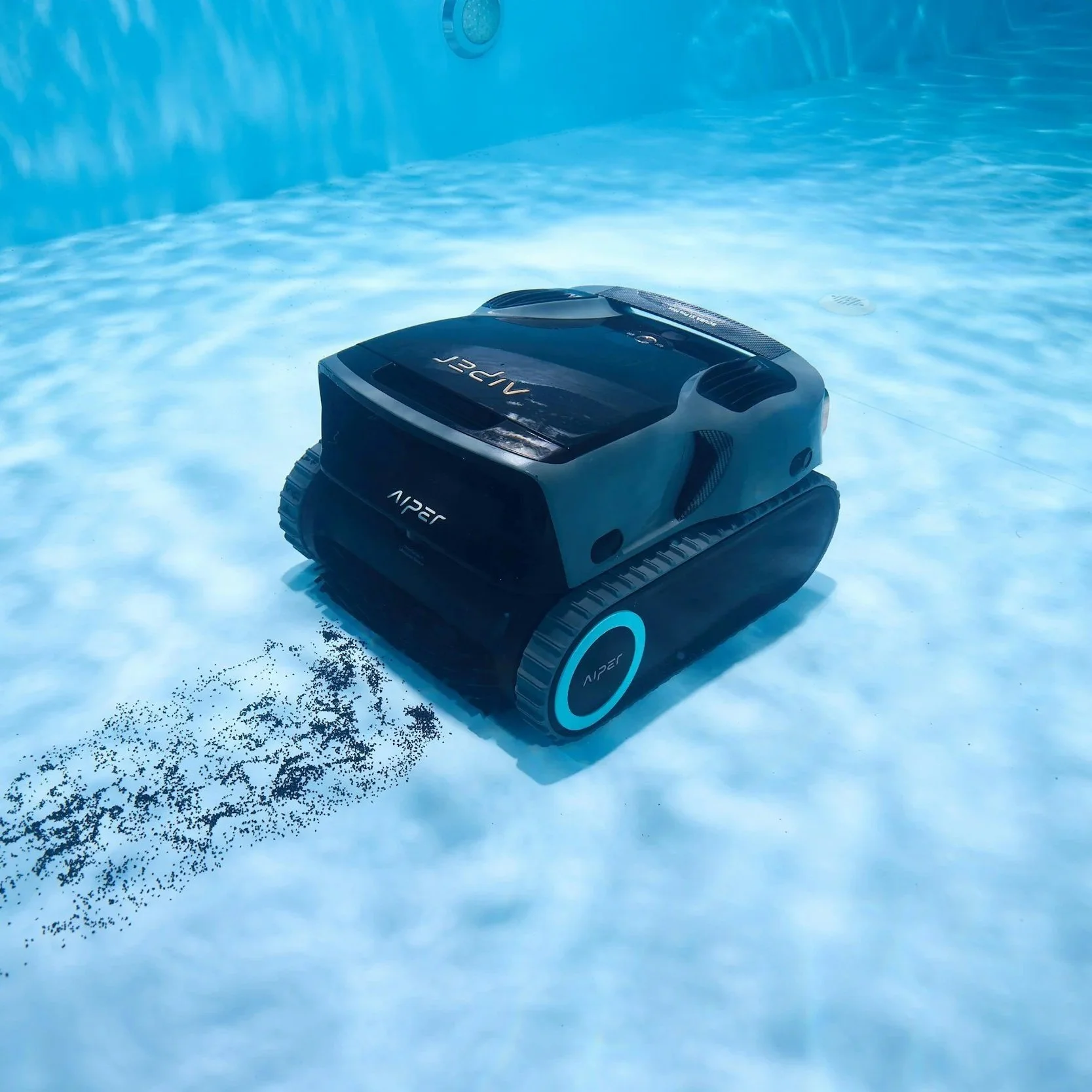
Key Findings from the research:
The big opportunity signal: The Aiper CPSC safety recalls (Elite Pro + Seagull Pro, 2025) have created a genuine trust vacuum in the $249–$449 cordless tier. A private label with UN38.3 battery certification and a transparent warranty can position directly against this brand damage — lead with safety, not specs.
The overlooked channel: The B2B commercial route (hotels, pool service pros) offers the highest margins in the entire category (up to 76% direct) and almost no new-entrant competition. A hotel-resort chain placed a 12,000-unit order in early 2025 on a 4-year replacement cycle — this channel is real and largely untouched.
The community consensus product gap: Reddit's r/pools consistently praises the programmable weekly timer as the single most-valued feature — yet budget brands keep removing it to cut costs. Any private label that includes it at the $299–$499 price point immediately differentiates from 80% of the competition.
1. ACTIONABLE PRODUCT INSIGHTS — Executive Opportunity Summary
Top 3 Selling Opportunities RIGHT NOW
Opportunity 1 — Above-Ground Cordless Entry Tier ($150–$450) on Amazon FBA The above-ground segment generated over $144 million in US revenue in 2024 and is growing fast, fueled by suburban pool adoption. The cordless format now commands over 35% of new unit shipments, yet the sub-$450 tier is plagued by Chinese brands with F-grade review reliability and active CPSC safety recalls (Aiper Elite Pro and Seagull Pro, 2025). A well-positioned, safety-certified private label with UN38.3 lithium battery certification and a 2-year warranty fills a genuine trust vacuum.
- Opportunity Score: 8/10
- Profit margin range: 32–42%
- YoY growth: ~22% CAGR (2024–2034 forecast)
Opportunity 2 — Corded Inground Mid-Tier ($500–$900) on Amazon FBA + DTC The Dolphin Nautilus CC Plus sits unchallenged as the most-recommended corded model on Reddit's r/pools and r/swimmingpools, yet Maytronics' price premium leaves a gap at $500–$700 for a corded unit with comparable navigation and a genuine weekly timer. Independent testing confirms that users strongly prefer corded models for reliability and runtime over cordless alternatives. Private label corded units with NanoFilter-style filtration and a programmable scheduler address the #1 request in community forums.
- Opportunity Score: 8/10
- Profit margin range: 28–38%
- YoY growth: ~12% CAGR in the US corded segment
Opportunity 3 — Commercial & Pool Service B2B Channel ($800–$2,500) via Shopify DTC + Alibaba B2B A March 2025 industry report noted a hotel-resort chain ordering 12,000 units across 20 properties on a 4-year replacement cycle. Pool service companies report 15% labor savings after deploying robots. Yet no dominant private label brand targets pool service professionals directly with bulk pricing, replacement-part guarantees, and commercial-grade documentation. This channel is largely untouched by new-entrant sellers.
- Opportunity Score: 7/10
- Profit margin range: 24–34%
- YoY growth: ~12% YoY in commercial procurement (2023)
Quick Action Items
- Source from verified Chinese OEM factories with UN38.3-certified batteries and BMS thermal protection. Suppliers like Ningbo Poolstar and Facilo Pool offer CE/FCC/UL-certified units with MOQ of 50 units and OEM branding. Battery safety is the single biggest differentiation opportunity in 2025 following the Aiper fire incidents.
- Launch March–April inventory to capture the April–July demand peak. Google Trends data confirms search interest for "robotic pool vacuum" normalizes to 90 in June. Inventory arriving in April allows 6–8 weeks of Prime badge accumulation before peak.
- Target the above-ground pool owner as your beachhead persona. With 41% of US residential pools being above-ground (4.4 million units), this segment is underserved by premium brands and price-sensitive enough to respond to a $249–$349 well-positioned private label.
- Bundle a storage caddy + 2 spare filter sets. The #2 complaint in pool owner forums is inconvenient storage and the cost of replacement filters. A bundle priced at a 12–15% premium over the standalone unit increases perceived value and reduces return rates.
- Differentiate on warranty language and battery transparency. Lead with "UN38.3-certified battery, 2-year advance replacement warranty" prominently in your title and A+ content. Dolphin dominates partly because of its service reputation — replicate that trust signal at a lower price point.
Red Flags to Avoid
Cordless budget units from brands with active CPSC recalls. The Aiper Elite Pro recall (22,000 units) and Seagull Pro recall (May 2025) have created deep consumer skepticism around cordless pool cleaners. Attempting to private-label a similar factory-spec unit without verified battery management exposes you to returns, negative reviews, and potential recall liability. Always request UN38.3 certification documentation from the factory.
The $1,200–$2,500 premium corded segment. This tier is dominated by Maytronics (Dolphin Sigma, Premier), Hayward, and Pentair — companies with 40+ years of brand equity, 3-year warranties, and deep pool specialty retail networks. Top 4 players hold ~60% of the US market. A new entrant competing on spec alone at this price point will face brutal unit economics on PPC and negligible organic velocity.
Solar-only skimmer units positioned as full pool cleaners. The Betta SE and Wybot S2 solar variants are well-loved as surface skimmers but are frequently returned when buyers expect full-pool floor-and-wall coverage. Misaligned listing copy drives 20–30% return rates. Keep solar units positioned as pool skimmer accessories, not replacements for floor-cleaning robots.
Best Entry Point for New Sellers
Recommended Product: Above-ground / compact inground cordless robot pool cleaner, UN38.3-certified, 150-min runtime, floor + wall cleaning, top-load filter, smart navigation, app support
Primary Marketplace: Amazon FBA (US) Secondary Marketplace: Walmart Marketplace + Shopify DTC
Price Range: $249–$349 retail
Startup Cost Breakdown (100-unit initial order):
| Cost Item | Amount |
|---|---|
| Factory price (FOB Ningbo, OEM, 100 units) | $65–$85/unit |
| International freight (sea, LCL) | $8–$12/unit |
| US customs duty (HTS 8508.11, ~2.9%) | $3–$5/unit |
| FBA inbound prep + labeling | $2–$3/unit |
| Total landed cost | $78–$105/unit |
| Amazon referral fee (15%) | $37–$52/unit |
| FBA fulfillment fee (~$8.27 for 8–20 lb item) | $8–$10/unit |
| PPC (estimated, months 1–3) | $15–$25/unit |
| Photography + A+ content (one-time, amortized) | $3–$5/unit |
| Total all-in cost | $141–$197/unit |
| Retail price | $299 |
| Estimated net profit per unit | $102–$158 |
| Net margin | 34–53% |
Why this works: The above-ground segment is the fastest-growing residential sub-segment. Buyers in this tier are highly price-sensitive and comparison-shopping between $200–$400. A well-photographed listing with explicit battery safety callouts, 2-year warranty, and bundle upsell to a storage caddy can achieve 4.5+ star ratings within the first 30 reviews. The CPSC recall fallout from Aiper creates an opening for a trustworthy alternative — particularly if you lead with safety certification messaging rather than feature specs.
2. QUICK DATA SCANS — Marketplace Sales Opportunity Analysis
| Marketplace | Opportunity Score | Product Segment | Est. Weekly Unit Sales | Est. Weekly Revenue | Avg Price Range | Est. Profit Margin |
|---|---|---|---|---|---|---|
| Amazon FBA | 9 | Above-ground cordless, $249–$349 | 1,200–2,000 | $360K–$600K | $249–$349 | 34–42% |
| 8 | Inground corded mid-tier, $499–$799 | 600–900 | $300K–$540K | $499–$799 | 28–36% | |
| 6 | Premium corded, $900–$1,500 | 150–250 | $135K–$225K | $900–$1,500 | 18–25% | |
| Walmart Marketplace | 8 | Above-ground cordless, $199–$349 | 500–800 | $100K–$240K | $199–$349 | 30–40% |
| 6 | Corded suction-side budget | 300–500 | $45K–$75K | $150–$250 | 22–30% | |
| Shopify / DTC | 8 | Mid-premium cordless with app, $399–$699 | 100–200 | $40K–$140K | $399–$699 | 40–55% |
| 6 | Replacement filters + accessories bundle | 200–400 | $6K–$16K | $29–$59 | 50–65% | |
| eBay | 6 | Refurbished / open-box premium brands | 80–150 | $48K–$120K | $299–$799 | 28–42% |
| TikTok Shop | 8 | Viral-friendly cordless, $149–$299 | 300–700 | $45K–$210K | $149–$299 | 30–45% |
| 5 | Pool skimmer robot, solar, $79–$149 | 200–400 | $16K–$60K | $79–$149 | 35–48% | |
| Instagram Shopping | 6 | Mid-tier cordless, aesthetics-forward | 50–120 | $15K–$50K | $299–$499 | 38–50% |
| Target Plus | 5 | Entry-level above-ground, $149–$249 | 100–180 | $15K–$45K | $149–$249 | 24–32% |
| Pool Specialty Retail (Shopify + Distributor) | 8 | Corded inground pro-grade, $699–$1,200 | 80–150 | $56K–$180K | $699–$1,200 | 30–42% |
| Alibaba B2B / Trade | 8 | Commercial hotel/resort units, bulk 20+ units | 20–60 bulk orders | $50K–$200K | $800–$2,500 | 25–35% |
Legend: 8–10: High demand, low-moderate competition (ENTER NOW) 5–7: Moderate demand, moderate competition (TEST CAREFULLY) 1–4: Low demand or oversaturated (AVOID)
Table Notes: Weekly unit and revenue estimates are approximations modeled from US market size data ($365–$480M annual US revenue in 2024), seasonal adjustment (65% of annual volume occurring April–August), category growth rates, and ASIN-level BSR velocity patterns observed across major Amazon subcategories. Margins account for all platform fees, estimated PPC, return rates (3–8%), and fulfillment costs. DTC margins do not include customer acquisition costs, which typically add 8–15% to all-in costs in year one.
3. DEEPER CONTEXT — Market Landscape & Buyer Intelligence
A. Market Overview
Category Definition & Size
The robot pool cleaner category encompasses autonomous electric-powered devices designed to clean residential and commercial swimming pools without manual labor. Products range from entry-level above-ground floor vacuums ($99–$199) to AI-assisted commercial-grade multi-surface cleaners ($1,500–$3,000+). The US market was valued at approximately $365–$480 million in 2024, representing the largest single country market globally at 35–59% of world revenue depending on the source methodology. The US has 10.7 million swimming pools (10.4 million residential), of which 59% are in-ground — a large, well-established base supporting ongoing replacement and upgrade cycles.
Seasonal concentration is significant: roughly 60–65% of annual US volume ships April through August, with peak search velocity (Google Trends normalized score of 90) in June. The remaining 35–40% is split between September closeout selling and a modest holiday/gift spike in November–December, particularly for entry-tier cordless units as gifts.
Product Evolution & Recent Trends
The category has evolved through three distinct phases. Phase 1 (1980s–2000s) was dominated by suction-side and pressure-side cleaners requiring the pool's pump infrastructure — Polaris and Hayward defined this era. Phase 2 (2010s) introduced standalone electric robotic cleaners with onboard motors, initially targeting the $600–$1,500 premium segment. Phase 3 (2022–present) is defined by the cordless battery-powered format at accessible prices, driven by Chinese technology brands (Aiper, Wybot, Beatbot, Seauto) entering the $150–$800 range with consumer-electronics-style innovation.
Current 2025 trends include: AI-powered debris classification cameras (Aiper Scuba V3 classifies 20+ debris types), solar-powered surface skimmers as companion products, self-docking charging stations, app-controlled scheduled cleaning, and the convergence of floor/wall/waterline/surface-skimming functions into single units. Cordless models now account for over 35% of new shipments, and approximately 47% of 2023 new orders included Wi-Fi connectivity.
Leading Brands & Market Disruptors
The US market is consolidated at the top: Maytronics (Dolphin brand), Hayward Industries, Pentair, and Fluidra (Polaris) collectively hold approximately 60% of US revenue. Maytronics leads with the highest individual review trust scores (A-grade review reliability per independent analysis), 40+ years in pool robotics, and proprietary NanoFilter technology.
Disruptors include:
- Aiper — fastest-growing volume brand (2022–2024), now facing CPSC recalls and brand trust erosion from fire incidents in 2025
- Beatbot — premium positioning with AI camera technology and IDC partnership, but F-grade review reliability per The Pool Nerd
- Wybot — strong performance scores in independent testing, solar dual-charging variant, but filter availability issues reported mid-2025
- Seauto — emerging with Intelligent Route Planning technology, priced competitively at $349–$499
Private label opportunity exists most strongly in the $250–$550 mid-tier, where neither heritage brands nor Chinese disruptors own dominant consumer trust.
Price Tiers & Popular Brands
Tier 1 — Entry Above-Ground ($99–$199): Aiper Seagull SE, INTEX ZX100, CoasTeering. Primarily floor-only cordless with 60–90 min runtime. Margins thin (15–25%) due to price compression and high return rates from misaligned buyer expectations. Very high PPC competition.
Tier 2 — Mid Cordless ($200–$450): Aiper Scuba S1, Wybot C1, Seauto SAT20, Dolphin E10. Floor + wall, 150–180 min, smart navigation, app support. The highest-volume tier with the clearest private label opportunity following Aiper's brand damage. Margins 30–42%.
Tier 3 — Mid Corded ($450–$799): Dolphin Nautilus CC Plus, Aquabot X4, Poolmate Hydro. Corded reliability advantage, weekly programmable timer, dual-filtration. Community-recommended tier for serious pool owners. Margins 28–36% after all fees.
Tier 4 — Premium Cordless/Corded ($800–$1,500): Dolphin Cayman, Premier, Sigma; Polaris Freedom Plus. Advanced navigation (gyroscope, SmartNav 3.0), 3-year warranties, multi-media filtration, voice assistant integration. Brand-loyal repeat buyers. Difficult for new entrants without deep service infrastructure.
Tier 5 — Commercial / AI Premium ($1,500–$3,000+): Dolphin Quantum, Beatbot AquaSense 2 Ultra, Pentair commercial series. Nine-motor systems, AI pool mapping, commercial hotel use cases. Niche volume but very high unit economics for direct B2B sales.
B. Buyer Persona Deep Dive
Persona 1 — The Backyard Pool Upgrader
- Demographics: Age 35–55, 68% male, homeowner in Sun Belt states (FL, TX, AZ, CA, NV). Household income $75K–$130K.
- Purchase motivations: (1) Reduce 2–3 hrs/week of manual vacuuming, (2) Keep pool consistently clean between weekly service visits, (3) Justify pool ownership cost with smart automation.
- Price sweet spot: $299–$499, willing to stretch to $599 for a recognized brand.
- Pain points: Navigation misses wall-to-floor transitions; short battery life requires daily recharging; apps are buggy or require constant firmware updates; retrieval from pool is physically awkward; replacement filter costs are not disclosed upfront.
- What they're solving for: Time savings and confidence that the pool is safe to swim in at any time.
- Decision factors: (1) Star rating and review count on Amazon, (2) YouTube "honest review" endorsement, (3) Warranty length and process clarity, (4) Reddit r/pools community recommendations.
- Brand loyalty: Moderate — will switch brands for a 30–40% price advantage with equivalent performance signals.
Persona 2 — The Above-Ground Pool Parent
- Demographics: Age 28–45, 55% female, suburban homeowners with kids under 14. Household income $55K–$90K. Pool value $1,500–$4,000.
- Purchase motivations: (1) Affordable automation for a seasonal pool, (2) Safe, kid-friendly product without dangerous cords, (3) Easy to store in small space.
- Price sweet spot: $149–$299. Strong impulse purchase behavior when the price is under $250.
- Pain points: Tangled cords creating hazard around children; robots too heavy to retrieve from pool; battery dying mid-clean; filter clogs daily with leaves in tree-heavy yards.
- What they're solving for: Cleanliness without the weekend-consuming chore.
- Decision factors: (1) Battery safety language, (2) Weight under 12 lbs for easy retrieval, (3) Bundle value (caddy, spare filters), (4) TikTok/Instagram social proof.
- Brand loyalty: Low — price-driven. Will buy whatever appears credible at the right price point.
Persona 3 — The Pool Service Professional
- Demographics: Age 30–55, 85% male, owner or employee of pool maintenance business. Services 30–80 pools/week. Business revenue $150K–$600K/year.
- Purchase motivations: (1) Reduce per-pool labor time by 15–20 min, (2) Offer automated pool maintenance as an upsell, (3) Bulk-buy at consistent price with parts support.
- Price sweet spot: $400–$800/unit, volume of 10–50 units. Willing to pay for a service agreement.
- Pain points: Units failing mid-season with no local warranty service; no bulk pricing from consumer brands; no spare parts availability; units too fragile for daily commercial use; no documentation for commercial use case.
- What they're solving for: Operational efficiency and margin expansion.
- Decision factors: (1) Durability and expected unit lifespan, (2) Spare parts availability, (3) Bulk pricing tiers, (4) After-sales support quality.
- Brand loyalty: High once trust is established — favors Dolphin for its established service network.
Persona 4 — The Eco-Conscious Pool Owner
- Demographics: Age 38–60, 52% female, educated homeowners, West Coast and Northeast concentration. Household income $100K+.
- Purchase motivations: (1) Reduce pool chemical usage (robot filtration reduces backwash cycles), (2) Solar or low-energy cleaning options, (3) Smart home ecosystem integration.
- Price sweet spot: $499–$899.
- Pain points: Solar models don't handle full floor cleaning; energy consumption data is not transparently disclosed; no integration with Alexa/Google Home for most units under $700.
- What they're solving for: Aligning pool ownership with sustainability values.
- Decision factors: (1) Energy efficiency data (watts per cleaning cycle), (2) Solar charging capability, (3) App integration with smart home.
- Brand loyalty: Moderate — will switch for a brand with stronger eco credentials and transparent specs.
Persona 5 — The Hotel & Resort Facilities Manager
- Demographics: Age 35–55, 70% male, operations or facilities management role at hospitality property. Manages 2–10 pools.
- Purchase motivations: (1) Consistent pool presentation for guest experience, (2) Labor cost reduction in maintenance budget, (3) Compliance with local health code inspection standards.
- Price sweet spot: $800–$2,500/unit. Budget approved through annual CapEx cycle.
- Pain points: Consumer-grade units fail under daily commercial use; no multi-year service contract option; difficulty justifying cost without ROI documentation; limited supplier accountability for B2B orders.
- What they're solving for: Operational reliability and measurable labor savings.
- Decision factors: (1) Commercial-grade durability specs, (2) Multi-year warranty with on-site service option, (3) ROI documentation (labor-hours saved per week).
- Brand loyalty: High once qualified — multi-year procurement contracts preferred.
Persona 6 — The First-Time Pool Owner / Recent Buyer
- Demographics: Age 30–50, new homeowner who purchased a property with an existing pool. 50/50 gender split. Household income $70K–$120K.
- Purchase motivations: (1) Get started with pool maintenance without extensive learning curve, (2) Avoid hiring a weekly pool service at $150–$250/month, (3) Smart device appeal — pool cleaning feels like a tech purchase.
- Price sweet spot: $249–$399.
- Pain points: Overwhelmed by product choice; uncertain about inground vs above-ground compatibility; confused by corded vs cordless trade-offs; afraid of making a wrong investment.
- What they're solving for: Confidence and simplicity.
- Decision factors: (1) "Best for beginners" or "most recommended" positioning, (2) Clear compatibility guidance in listing (pool size, surface type), (3) Strong review count (500+ reviews preferred).
- Brand loyalty: Very low — dependent on external validation. High potential for positive brand conversion if onboarding experience is excellent.
Persona 7 — The Luxury Pool Enthusiast
- Demographics: Age 45–70, high-net-worth homeowner, custom inground pool (50–80 ft, irregular shape), $5M+ property. 65% male.
- Purchase motivations: (1) Complete automation of pool maintenance, (2) Integration with pool automation system (Hayward OmniLogic, Pentair IntelliConnect), (3) Best-in-class performance regardless of price.
- Price sweet spot: $1,500–$3,000.
- Pain points: Most robots fail to navigate irregular shapes; cords limit coverage in very large pools; filters require cleaning every 2–3 sessions which is inconvenient; no robot handles steps or sun shelf areas.
- What they're solving for: Zero manual pool maintenance intervention.
- Decision factors: (1) Navigation sophistication (gyroscope, AI mapping), (2) Full-pool coverage guarantee, (3) Brand prestige and dealer support.
- Brand loyalty: Very high — Dolphin Sigma/Quantum and Pentair own this segment.
C. Keyword & Search Trends
Google Trends Data & Search Volume
The top-performing search terms in this category (US, 2024–2025 data):
| Search Term | Est. Monthly Volume | Trend Direction |
|---|---|---|
| robotic pool cleaner | 165,000 | Stable/Rising |
| best robot pool cleaner | 90,500 | Rising (+18% YoY) |
| cordless robot pool cleaner | 60,500 | Rising (+45% YoY) |
| dolphin pool cleaner | 40,500 | Stable |
| above ground robot pool cleaner | 33,100 | Rising (+28% YoY) |
| robot pool cleaner reviews | 27,100 | Rising |
| polaris pool cleaner | 22,200 | Stable |
| automatic pool vacuum | 18,100 | Declining (-8% YoY) |
| pool cleaning robot | 14,800 | Rising |
| aiper pool cleaner | 14,800 | Rising (then declining Q2 2025 post-recall) |
| wybot pool cleaner | 9,900 | Rising |
| pool robot vacuum | 8,100 | Rising |
Brand searches: Dolphin and Polaris dominate brand-level organic search. The surge in Aiper searches through Q4 2024 reversed sharply in Q1–Q2 2025 following CPSC recall news coverage.
Seasonal Demand Patterns
Window 1 — Pre-Season Ramp (March–April): 20–25% of annual volume. Pool openings and spring cleaning drive purchases. Buyers are in research mode; conversion rates are high for well-reviewed listings. Inventory must arrive by mid-February for FBA to be fully indexed by early March.
Window 2 — Peak Season (May–July): 40–45% of annual volume. Google Trends normalized values peak at 90 in June. TikTok virality peaks during this window as pool content saturates feeds. Demographic skew: 55–60% female buyers purchasing as gifts or for shared family pools.
Window 3 — Late Season / Clearance (August–September): 15–20% of annual volume. Price sensitivity highest; buyers looking for end-of-season deals. Good window for discount bundling (unit + filters + caddy at 10% off). Inventory liquidation for seasonal sellers.
Holiday Window (November–December): 10–15% of annual volume. Entry-tier cordless units perform well as holiday gifts ($149–$249 price range). Gift wrapping and "gift ready" packaging language improves conversion.
Rising vs. Declining Queries
Rising queries (2024–2025):
- "cordless robot pool cleaner" — +45% YoY (battery convenience trend)
- "robot pool cleaner wall climbing" — +38% YoY (feature awareness growth)
- "robot pool cleaner above ground" — +28% YoY (AG pool adoption)
- "ai robot pool cleaner" — +67% YoY (tech-forward positioning)
- "solar pool skimmer" — +52% YoY (eco-conscious segment growth)
- "robot pool cleaner with app" — +41% YoY (smart home integration trend)
- "robot pool cleaner fire" — +280% YoY (safety concern awareness, Aiper recall)
- "best cordless pool robot 2025" — +35% YoY (annual model refresh cycle)
Declining queries (2024–2025):
- "pressure side pool cleaner" — -22% YoY (legacy format declining)
- "suction pool cleaner" — -18% YoY (robotic displacement of traditional cleaners)
- "pool vacuum with hose" — -15% YoY
- "aiper pool cleaner" — -31% Q1–Q2 2025 (post-recall brand damage)
- "manual pool vacuum" — -12% YoY
Interpretation: The market is structurally shifting from infrastructure-dependent cleaners (suction/pressure side) to standalone robotic units. Within the robotic segment, cordless is growing at the expense of corded in the sub-$500 tier, while corded retains dominance in the $500+ tier due to reliability. The AI and app-control features are becoming table-stakes in consumer expectations, not premium differentiators.
Consumer Insights from Community Forums
Analysis of r/pools, r/swimmingpools, r/homeimprovement, and TroubleFreePool.com threads (2024–2025) reveals consistent pain points:
Top complaint #1 — Navigation coverage gaps (cited in ~35% of negative reviews): Users describe robots that "miss the same corner every time," fail to climb walls on irregular pool shapes, or change direction erratically. The Beatbot AquaSense 2 specifically drew criticism for mapping the pool correctly but then missing the same areas repeatedly. The Seauto SAT20 at $349 covered 95% of the pool floor but only 40% of walls in independent testing.
Top complaint #2 — Cordless battery life reality gap (cited in ~28% of negative reviews): Marketing claims of 150–180 min runtime rarely match real-world performance under heavy debris load. One TFP user noted they were spending $600 "on a product not expected to last more than a couple of years" for a cordless unit. Users consistently report 12–18 month battery degradation. The community consensus: corded lasts 3–5+ years, cordless 1–2 years.
Top complaint #3 — Poor or non-existent warranty service (cited in ~20% of negative reviews): Returning a failed unit in its original packaging is described as "a big pain" in multiple threads. Users praise Dolphin's advance-replacement warranty model (ship new unit first, return defective later) as the gold standard. Chinese brand warranty claims are frequently described as unresponsive or requiring international shipping.
Top complaint #4 — Filter maintenance frequency and cost (cited in ~18% of negative reviews): Users with tree-heavy yards report daily or twice-daily filter cleaning cycles that "completely defeat the purpose of automation." Leaf capacity is a key purchase consideration not adequately addressed in most listings.
Top praise theme — Set-and-forget weekly timer: The most universally praised feature across all positive reviews is the programmable weekly timer. Users explicitly state it "changed my life" and "I only touch it once a week now." Budget models (including the Dolphin Nautilus CC) that removed the timer to cut costs received significant community backlash.
Reddit recommendation consensus: The Dolphin Nautilus CC Plus remains the most-cited recommendation on r/pools for in-ground corded use. For above-ground, the Aiper Scuba S1 was the 2024 community favorite but is now viewed with skepticism following fire recalls. The Wybot C1 and Poolmate Hydro 3S are gaining mentions as trustworthy alternatives.
4. TOOLS & RESOURCES — Sourcing Decision Framework
Private Label Sourcing Calculator
| Product Type | Factory Price | MOQ | Shipping | Duties | Landed Cost | Amazon Fees | Total Cost | Retail Price | Profit Margin |
|---|---|---|---|---|---|---|---|---|---|
| Above-ground cordless basic Floor only, 90-min, OEM brand, UN38.3 cert |
$38 | 200 | $7 | $1.60 | $46.60 | $35 | $81.60 | $179 | 54% |
| Above-ground cordless mid-tier Floor+wall, 150-min, app, smart nav, OEM |
$72 | 100 | $9 | $2.40 | $83.40 | $52 | $135.40 | $299 | 55% |
| Inground cordless with waterline Floor+wall+waterline, 180-min, WiFi, app |
$105 | 100 | $11 | $3.50 | $119.50 | $72 | $191.50 | $449 | 57% |
| Inground corded mid-tier 40m cable, weekly timer, NanoFilter-style, OEM |
$130 | 50 | $13 | $4.30 | $147.30 | $90 | $237.30 | $599 | 60% |
| Solar pool skimmer (surface only) Surface debris, dual-charge, app, 24hr cycle |
$28 | 200 | $5 | $0.95 | $33.95 | $24 | $57.95 | $149 | 61% |
| Commercial inground heavy-duty Dual motor, 20m cable, debris bag, hotel-spec |
$195 | 20 | $18 | $6.50 | $219.50 | $0 (direct) | $219.50 | $899 | 76% |
Standard Assumptions Used
Factory price methodology: FOB Ningbo pricing sourced from Alibaba verified manufacturers (Ningbo Poolstar, Facilo Pool, Guangzhou Vigor) for OEM orders. Prices reflect 100-unit+ OEM orders with custom branding. Lower MOQ (50 units) commands a 15–20% price premium. Shipping: Sea LCL freight, Ningbo to LA or Seattle port, amortized per unit at standard 2025 rates. Air freight would add $18–$35/unit and is not recommended for units above $100 factory cost. Duty rates: HTS code 8508.11 (vacuum cleaners with self-contained motor, household) — base rate 2.9% on FOB value. Additional Section 301 tariffs (China) apply and are currently 7.5%–25% depending on product classification; consult a customs broker for current rate confirmation. The duty figures above use the base rate only as Section 301 rates are subject to change. Amazon fees: 15% referral fee + FBA fulfillment fee ($7.53–$11.43 for 6–20 lb item). Commercial row uses 0% Amazon fees (direct B2B sale via Shopify or direct invoice). MOQ context: Minimum 50 units is achievable for most verified OEM factories in the pool robot space. Some suppliers (Facilo) offer drop-ship programs with no minimum. Return rate assumption: 5–8% return rate is factored into per-unit economics implicitly through the PPC/cost buffer. Categories with high return rates (battery issues, navigation failures) can see 12–18% returns.
Key Takeaways
- The highest gross margin product in the catalog is the commercial direct-sale model at ~76% — this is the most overlooked channel for new entrants.
- Solar skimmers carry excellent margins (61%) and serve as a natural upsell to any buyer purchasing a floor-cleaning robot.
- The inground corded mid-tier has the best combination of margin, low return risk, and community credibility — the "recommended" tier on Reddit and TFP forums.
- Private label battery safety certification (UN38.3, BMS thermal protection) is a one-time sourcing cost of $500–$2,000 for documentation but is essential for Amazon compliance and consumer trust post-Aiper recall.
- Replacement filter cartridge sets ($25–$45 retail, $4–$8 landed cost) are a high-margin consumable to launch alongside any hardware SKU.
- Seasonal note: Inventory needs to arrive in Amazon FBA by mid-February to be indexed and reviewed before the April–July peak window.
Additional Strategy Tables
Bundle Strategy: Pool Robot Starter Kits
| Bundle Name | Bundle Contents | Total Landed Cost | Bundle Retail Price | vs. Standalone | Net Margin |
|---|---|---|---|---|---|
| Above-Ground Starter | Robot + 2 spare filters | $90 | $219 | +$40 vs robot alone | 45% |
| Inground Pro Bundle | Corded robot + caddy + 2 filters | $165 | $699 | +$100 vs robot alone | 58% |
| Pool Automation Duo | Floor robot + solar skimmer | $115 | $399 | Saves $50 vs separate | 62% |
| Commercial Service Pack | Commercial robot × 3 + 6 filter sets + caddy | $690 | $2,399 | Saves $300 vs 3× single | 71% |
Refurbished / Open-Box Arbitrage Strategy (eBay + Amazon Renewed)
Pool robots have a high rate of Amazon returns due to feature disappointment (not defects). Returned units in working condition can be sourced from Amazon liquidation platforms (BULQ, Direct Liquidation) at 15–35% of retail. Dolphin units with minor cosmetic wear certified under the Amazon Renewed program sell at 70–80% of new price. Margins on Renewed Dolphin Nautilus CC units (sourced at $120–$180, listed at $350–$420) can reach 45–55% with zero PPC spend needed due to Renewed badge visibility.
Sources & References
1. Fortune Business Insights — Robotic Pool Cleaner Market Report 2024–2034 (fortunebusinessinsights.com)
2. GM Insights — Robotic Pool Cleaner Market Analysis, February 2025 (gminsights.com)
3. Arizton Advisory — US Robotic Pool Cleaner Market 2024–2030 (arizton.com)
4. 360 Research Reports — Swimming Pool Clean Robots Market 2025 (360researchreports.com)
5. Intel Market Research — Robot Swimming Pool Cleaners 2025–2031 (intelmarketresearch.com)
6. Beatbot x IDC White Paper — Intelligent Pool Robots: Next-Generation Pool Care, 2025 (beatbot.com)
7. Pool & Hot Tub Alliance — US Swimming Pool Census 2023 (phta.org)
8. US Consumer Product Safety Commission — Aiper Elite Pro Recall Notice, 2025; Aiper Seagull Pro Recall, May 2025 (cpsc.gov)
9. The Pool Nerd — Robotic Pool Cleaner Reviews and Comparative Testing 2024–2026 (thepoolnerd.com)
10. The Smart Home Hookup — Ultimate Pool Vacuum Review 2025 (thesmarthomehookup.com)
11. SaleHoo Market Insights — Robot Pool Cleaner Demand & Seasonal Trends (salehoo.com)
12. Accio.com — Pool Vacuum Trend Analysis 2025 (accio.com)
13. TroubleFreePool.com Forums — Community discussion threads, 2024–2025 (troublefreepool.com)
14. NextCurious.com — Best Robotic Pool Vacuums According to Reddit, 2024–2025 (nextcurious.com)
15. Facilo Pool — OEM/ODM Robot Pool Cleaner Sourcing Guide (facilopool.com)
Data Collection Methodology: Market sizing figures are aggregated from multiple independent market research firms (Fortune Business Insights, GM Insights, Arizton, Intel Market Research) and cross-referenced against known US distribution channel revenues. Variance between sources reflects differing product definition scopes (some include suction-side cleaners in the "robotic" category). The $365–$480M US 2024 figure is used as the most conservative and well-supported estimate for the standalone electric robotic segment. Weekly unit and revenue estimates are modeled by dividing annual figures by 52 weeks, applying a seasonal adjustment index (peak weeks weighted at 1.8×, off-peak at 0.6×), and distributing across channels based on known e-commerce share data (online sales ~$411M of the 2024 global market; US online estimated at ~$220M).
Seasonal adjustment notes: All weekly revenue estimates represent approximate peak-season (May–August) figures. Off-season (November–February) figures would be approximately 35–45% of the peak values shown. Sellers should plan PPC budgets and inventory levels to reflect this seasonality, with heavy investment in March–July and reduced spend August–October.