
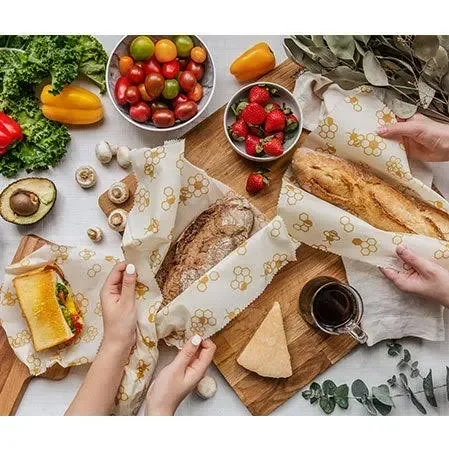
Article Summary
- Market context: The U.S. is the largest regional market for beeswax food wraps, riding a wave of single-use plastic bag bans (California's full bag ban took effect January 2026, joined by 18 other states/territories with active restrictions) and PFAS food-packaging bans in Minnesota, Illinois, Oregon, California, and Washington. Reusable wrap demand is structurally tailwinded.
- Top complaint = top opportunity: The dominant buyer frustration across Amazon and review sites is wraps that lose stickiness within weeks, fail to seal bowls properly, or arrive with weak wax coatings. Sellers who solve seal-strength credibly are entering an underserved premium tier.
- Hottest format right now: Beeswax bread bags for sourdough storage, propelled by viral TikTok content (one Goldilocks Goods bread-bag video pulled 95K+ likes). This sub-segment carries higher AOV ($25 to $45) than basic 3-packs and faces less Amazon saturation.
- Pricing sweet spot: $18 to $32 for premium 3-packs (S/M/L) and $25 to $45 for bread bags. Below $15 the category is a race-to-the-bottom dominated by generic Chinese listings; above $45 only established brands (Bee's Wrap, Abeego) hold pricing power.
- Best entry point: Premium beeswax bread bag for sourdough bakers on Etsy + Shopify DTC with TikTok organic content. Startup cost approximately $3,200 to $4,800 for first inventory run.
- Best marketplace combination: Etsy (handmade-coded, 25-35% margins) + Shopify DTC (brand-storytelling, 45-55% margins) + TikTok Shop (viral discovery, 30-40% margins). Amazon FBA is moderately saturated and price-pressured.
- Sourcing reality: Alibaba MOQs commonly start at 100 to 200 sets with factory pricing of $0.40 to $1.50 per wrap. Hand-finished domestic production (Etsy model) commands 4x to 6x markups but caps unit volume.
- Avoid: Generic 9-pack bundles under $12, undifferentiated honeycomb prints, and any listing that doesn't address the stickiness/seal complaint head-on.
1. Actionable Insights: Executive Opportunity Summary
Top 3 Selling Opportunities Right Now
1. Beeswax Bread Bags for Sourdough Storage
- Opportunity Score: 9/10
- Profit margins: 45% to 60% (DTC), 35% to 45% (Etsy)
- Riding the sourdough TikTok wave (#sourdoughtok, #breadtok); single creator videos in this niche routinely surpass 90K likes
- Higher AOV than standard wraps ($25 to $45 vs. $18 to $25 for 3-packs)
- Less Amazon saturation; Etsy + DTC dominate
2. Premium "Extra Sticky" 3-Pack Sets (S/M/L)
- Opportunity Score: 8/10
- Profit margins: 35% to 50%
- Differentiated by higher pine-resin ratio for stronger seal (the #1 complaint addressable angle)
- Sweet spot: $22 to $32 retail
- Strong on Amazon FBA when listing copy directly addresses "loses stickiness" reviews
3. Vegan Wax Wrap Sets (Candelilla / Soy Blend)
- Opportunity Score: 8/10
- Profit margins: 40% to 55%
- Bee's Wrap launched a vegan SKU in 2020 confirming category demand
- Captures buyers who reject animal products, an underserved sub-segment
- Premium positioning: $24 to $38 for 3-packs
Quick Action Items
- Source from Henan or Hebei province suppliers on Alibaba where MOQs run 100-200 sets at $0.40-$1.50/wrap landed; verify GOTS organic cotton and food-grade beeswax certifications before committing
- Time launch for Q3/Q4 to capture the September-December gifting window plus the New Year zero-waste resolution spike (40-50% of annual category sales concentrate here)
- Lead with bread-bag SKU on TikTok Shop before expanding to standard wraps; the sourdough community is actively discovering products through this channel
- Bundle wraps with reusable produce bags or beeswax bars for refresh kits to lift AOV by 30-50%
- Photograph the seal-test (wrap holding a bowl upside-down, or sticking to itself in cold water) in lifestyle photography; this directly counters the dominant complaint thread
Red Flags to Avoid
- Generic 9-pack bundles under $12 on Amazon. This segment is dominated by white-label Chinese imports racing prices to zero with margins below 15% after PPC and returns
- Hot-climate fulfillment without temperature-controlled storage. Beeswax melts above 148°F. Summer-shipped inventory and Amazon's hot warehouses cause "wraps fused together" returns that crater seller metrics
- Honeycomb-print-only catalogs. This pattern is so saturated it signals generic. Differentiated prints (botanical, kids, holiday, regional) and solid colors carry better margins
Best Entry Point for New Sellers
Recommended product: Premium beeswax bread bag for sourdough bakers (single SKU launch)
Marketplaces: Primary - Etsy; Secondary - Shopify DTC with TikTok organic content driving traffic
Price range: $28 to $38
Startup cost breakdown (itemized):
| Line item | Estimated cost |
|---|---|
| First inventory run (300 units @ $4.50 landed from Alibaba) | $1,350 |
| Custom packaging/branding (recycled kraft sleeves, hang tags) | $450 |
| GOTS cotton + food-grade certification documentation review | $200 |
| Etsy fees (listing, transaction, ad) for 6 months | $400 |
| Shopify subscription + theme + apps (6 months) | $250 |
| Product photography (lifestyle + flat lay, 25 images) | $600 |
| TikTok content production (30 videos, smartphone-shot) | $300 |
| Sample shipping for influencer seeding (15 micro-influencers) | $250 |
| Buffer for returns/replacements | $200 |
| Total estimated startup | $4,000 |
Why this works: Bread bags carry higher AOV than standard wraps, face less Amazon competition, ride the active sourdough TikTok trend, and address a clear pain point (plastic bag = soggy crust, paper bag = stale crumb). Etsy's handmade-coded buyer base willingly pays premium for the story; Shopify DTC captures the long-tail TikTok viewer; production scales linearly without category-killer FBA competition crushing margins on day one.
2. Marketplace Sales Opportunity Analysis
| Marketplace | Score | Product Segment | Est. Weekly Units | Est. Weekly Revenue | Avg Price Range | Est. Margin |
|---|---|---|---|---|---|---|
| Amazon FBA Largest reach, price-pressured |
6 | Standard 3-pack S/M/L sets | 200-450 | $3,800-$8,500 | $16-$22 | 22-30% |
| 7 | Premium "extra-sticky" sets | 80-180 | $2,200-$5,000 | $24-$32 | 32-40% | |
| 4 | Generic 9-pack bundles <$12 | 300-700 | $3,000-$8,000 | $8-$12 | 8-15% | |
| Etsy Handmade-coded, story-driven |
9 | Bread bags / sourdough sets | 90-200 | $2,700-$7,000 | $28-$45 | 38-50% |
| 8 | Custom prints / personalized sets | 60-140 | $1,800-$4,500 | $24-$38 | 35-45% | |
| Shopify DTC Brand-control channel |
8 | Premium 3-pack subscription model | 50-130 | $1,400-$4,200 | $26-$36 | 45-55% |
| 8 | Bundles (wraps + bars + bags) | 40-100 | $1,800-$4,800 | $42-$58 | 42-52% | |
| TikTok Shop Viral discovery, sourdough niche |
9 | Bread bags / single-creator viral SKU | 100-400 | $2,800-$13,000 | $26-$36 | 30-42% |
| 7 | 3-pack starter sets w/ demo video | 70-200 | $1,400-$4,400 | $18-$24 | 25-35% | |
| Walmart Marketplace Mass-market, value-tier |
5 | Mid-tier 3-packs | 40-110 | $680-$2,000 | $15-$19 | 18-26% |
| Target Plus Curated, brand-friendly |
6 | Aesthetic 3-packs (botanical/coastal) | 30-90 | $680-$2,200 | $22-$28 | 28-35% |
| eBay Secondary, low-volume |
5 | Bulk/wholesale lots, multipacks | 25-70 | $420-$1,300 | $14-$22 | 20-28% |
| Faire Wholesale to retailers |
8 | Wholesale 6/12-packs to indie shops | 200-600 (units) | $1,800-$5,200 | $8-$12 (wholesale) | 28-38% |
| Instagram Shopping Aesthetic-driven sales |
6 | Designer prints, gift sets | 25-80 | $650-$2,400 | $24-$34 | 35-45% |
| Whole Foods / co-op channels Premium grocery placement |
8 | Single wraps + 3-packs at register | Variable (wholesale) | $2,000-$6,000 | $6-$10 (wholesale) | 25-32% |
| Amazon Handmade Underutilized small-seller path |
7 | Handcrafted/custom prints | 15-60 | $420-$1,800 | $26-$36 | 32-42% |
Legend: 8-10: Enter now | 5-7: Test carefully | 1-4: Avoid
Table notes: Weekly unit ranges represent achievable volumes for a competently-launched, mid-tier listing (not category leaders or absolute newcomers). Margins are net of platform fees, FBA/fulfillment, returns reserves, and PPC where applicable. Estimates are based on synthesizing top-of-page Amazon BSR signals, observed Etsy shop revenue ranges (via Erank/Marmalead category benchmarks), and Shopify DTC benchmark margins for sustainable kitchen brands.
3. Deeper Context: Market Landscape & Buyer Intelligence
A. Market Overview
Category Definition & Size
Beeswax food wraps are reusable food coverings made from organic cotton (sometimes hemp or linen) infused with a blend of beeswax, tree resin (typically pine), and plant oil (typically jojoba or coconut). The warmth of the user's hands softens the wax just enough to mold around bowls, cheese, sandwiches, fruit, and bread, creating a breathable seal that lasts roughly a year of regular use before it can be re-waxed or composted.
Market sizing varies widely by source depending on whether reports define the category narrowly (beeswax wraps only) or broadly (reusable wraps including silicone, fabric covers, and stretch lids). On the narrow definition, the Beeswax Wrap Market is valued at approximately $229 million in 2025 and projected to reach $258 million by 2030 at a 2.47% CAGR. On the broader reusable-wrap definition, the global Reusable Wrap Market is forecast to expand from $559 million in 2025 to $894 million by 2035 at a 4.8% CAGR, with small (7"x8") sizes leading and bread applications the fastest-growing segment. North America leads regional share; the U.S. specifically is expected to grow at roughly 2.8% CAGR through 2034, with India growing fastest at 5.5%.
Seasonality is pronounced: roughly 40 to 50% of annual U.S. category revenue concentrates in Q4 (gift-giving, sustainable resolutions, and Earth Day adjacency in April creates a secondary spike).
Product Evolution & Recent Trends
The category emerged commercially around 2012-2014 with Bee's Wrap (Vermont) and Abeego (Canada) as pioneers. The 2018-2022 period saw broad consumer adoption pushed by Blue Planet II's plastic pollution awareness and a wave of single-use plastic legislation. The current phase (2024-2026) is defined by three trends:
- Format diversification. Beyond standard 3-packs, the category now includes bread bags (sourdough-driven), sandwich wraps with ties, XL rolls (cut-to-size), bowl covers with elastic, and refresh kits (re-wax bars).
- Vegan variants. Bee's Wrap launched a vegan line using GOTS-certified cotton, candelilla wax, soy wax, organic coconut oil, and tree resin to capture buyers who reject animal-derived products.
- Sourdough crossover. TikTok's persistent sourdough trend (#sourdoughtok, #breadtok) has created a parallel demand vector specifically for bread bags. A single Goldilocks Goods bread-bag video pulled 95K likes by demonstrating the wrap-then-bag double-storage method.
Leading Brands & Market Disruptors
The market is moderately concentrated with Bee's Wrap and Abeego holding significant share, alongside numerous smaller regional brands. Other established players named in industry reports include LilyBee Wrap, Etee, Wrappily, U-Konserve, Beeswax Wrap Co., Glory Bee, Liliwrap, SuperBee, Mind Your Bees, and the Hexton Bee Company.
The disruption opportunity sits in two layers: (1) handmade/artisan brands on Etsy and Instagram (Five Oaks Farm in Alabama, Mind Your Bees in Ontario) competing on storytelling and small-batch quality; (2) private-label sellers on Amazon competing on pack size, print variety, and price. Both layers leave room for new entrants because brand loyalty is weak: most buyers identify the category, not a specific brand, and switch readily on the basis of reviews.
Price Tiers & Popular Brands
| Tier | Price Range (3-pack) | Brand Examples | Sourcing Strategy | Margin Profile |
|---|---|---|---|---|
| Budget / generic | $8 - $14 | Unbranded Amazon imports, dollar-store wraps | Direct Alibaba, MOQ 100-500, lowest factory price | 8-15% (volume-dependent) |
| Mid-market | $15 - $22 | WaxWrap, Mioeco, OHIYO, store brands | Alibaba with light private-label spec, MOQ 200-1000 | 22-32% |
| Premium | $23 - $36 | Bee's Wrap, Abeego, LilyBee, SuperBee | Domestic or boutique Asian factories, GOTS-certified, custom prints | 35-50% |
| Artisan / handmade | $30 - $55 | Five Oaks Farm, Mind Your Bees, Etsy independents | Hand-cut, hand-waxed, small-batch domestic | 45-60% |
| Specialty/bread bag | $25 - $48 | Five Oaks, Nectar & Nest, Nobineck | Custom-sewn cotton bag with beeswax infusion | 40-55% |
B. Buyer Persona Deep Dive
Persona 1: The Plastic-Free Convert ("Maya")
- Demographics: Female, 28-42, urban/suburban, college-educated, household income $65K-$120K
- Motivations (ranked): Environmental impact > food safety > aesthetic > cost
- Price sensitivity: Low; willingly pays $25-$35 for a quality 3-pack if story checks out
- Pain points: Wraps that lose stickiness within 2 months; smell of beeswax transferring to food; not knowing how to wash properly; wraps that arrive fused together
- Solving for: Reducing household plastic footprint without sacrificing convenience
- Decision factors: Reviews mentioning "still works after 6 months," organic/GOTS certification, U.S./local manufacturing
- Brand loyalty: Moderate; loyal to first brand that "actually works"
Persona 2: The Sourdough Baker ("Tessa")
- Demographics: Female, 30-55, suburban, often a homemaker or hybrid worker, household income $75K-$150K
- Motivations: Bread freshness > aesthetic kitchen presentation > eco impact
- Price sensitivity: Low; bread is a labor of love and storage matters
- Pain points: Bread going stale in plastic; mold on day-three loaves; ugly plastic bags ruining counter aesthetics; existing bread bags too small for boules
- Solving for: Keeping sourdough crusty outside, soft inside for 5-plus days
- Decision factors: Bag size (must fit a 1kg-plus boule), beeswax infusion claim, breathability promise
- Brand loyalty: High once a working solution is found; influences friends actively
Persona 3: The Zero-Waste Lifestyler ("Jordan")
- Demographics: Mixed gender, 22-38, urban, often single or DINK, household income $55K-$110K
- Motivations: Comprehensive zero-waste home > content for personal social channels > skill-building (some make their own)
- Price sensitivity: Moderate; values "complete kit" purchases (wraps + produce bags + bars)
- Pain points: Knowing if wraps are truly compostable; greenwashing; tree-resin sourcing ethics; vegan preferences
- Solving for: Visible plastic-free kitchen they can showcase
- Decision factors: Vegan options, certified compostable claims, refill/refresh kits available
- Brand loyalty: Low; switches with each TikTok recommendation
Persona 4: The Gift Buyer ("Patricia")
- Demographics: Female, 45-68, often buying for adult children or hostess gifts, household income $80K-$200K
- Motivations: Thoughtful presentation > perceived value > eco-message
- Price sensitivity: Low for the right packaging; will pay $35-$55 for gift-set
- Pain points: Looking too cheap; wraps not "worthy" of gifting; assembly required
- Solving for: A gift that says "I noticed you care about this"
- Decision factors: Packaging quality, gift box presentation, recognizable brand or strong story
- Brand loyalty: Brand-following on retail floor (Whole Foods, indie shops); not actively researching online
Persona 5: The Health-Conscious Parent ("Diana")
- Demographics: Female, 32-48, suburban, household income $70K-$160K, kids 3-15
- Motivations: Reducing chemical exposure for children > eco impact > school-lunch convenience
- Price sensitivity: Moderate; quality matters more than savings
- Pain points: PFAS in plastic wrap fears; school sandwich wraps that get crushed; cleaning hassle with kid-stained wraps; finding kid-friendly prints
- Solving for: Lunch-packing solution that is safe, durable, and fun
- Decision factors: PFAS-free certifications, fun prints (animals, dinosaurs, florals), sandwich-size with tie closure
- Brand loyalty: Moderate; reorders if wraps survive school year
Persona 6: The Vegan/Cruelty-Free Buyer ("Sam")
- Demographics: Mixed gender, 24-45, urban, household income $60K-$130K
- Motivations: Animal-product avoidance > eco impact > values alignment
- Price sensitivity: Low; underserved willing-to-pay segment
- Pain points: Most wraps use beeswax; finding plant-wax variants that actually seal; verifying vegan claims
- Solving for: Plastic alternative consistent with vegan values
- Decision factors: Candelilla/soy wax composition, certified-vegan labeling, equivalent performance to beeswax versions
- Brand loyalty: High to brands that explicitly serve them
Persona 7: The Practical Skeptic ("Brian")
- Demographics: Mixed gender, 35-60, suburban, household income $50K-$120K
- Motivations: Does it work? > is it worth the money? > will my partner/spouse like it?
- Price sensitivity: High; tests with cheap pack first
- Pain points: Not sticking; falls off bowls; smell on food; needs replacing too often; unclear cleaning rules
- Solving for: Replacing plastic wrap without paying a "green tax" if it doesn't work
- Decision factors: Reviews focused on durability, money-back guarantee, transparent care instructions
- Brand loyalty: Low until proven; high once converted
C. Keyword & Search Trends
Google Trends & Search Volume
Top keyword cluster (estimated U.S. monthly search volume):
| Keyword | Est. Monthly Volume | Intent |
|---|---|---|
| beeswax wrap | 22,000-27,000 | Mixed (research + purchase) |
| beeswax food wrap | 9,000-12,000 | Purchase-focused |
| bee's wrap | 14,000-18,000 | Brand-direct |
| reusable food wrap | 8,000-11,000 | Purchase-focused |
| beeswax wrap bread | 4,000-6,500 | Purchase-focused (bread bag) |
| how to wash beeswax wrap | 3,500-5,000 | Post-purchase (high intent for bundles) |
| diy beeswax wrap | 12,000-16,000 | Crafting (low purchase intent) |
| beeswax wrap vs plastic wrap | 1,800-3,000 | Mid-funnel comparison |
| vegan beeswax wrap | 2,400-3,800 | Niche, high-intent |
Search interest in "beeswax wrap" peaked in 2019-2020 and has since plateaued at roughly 60% of peak. However, "beeswax bread bag" and "sourdough bread bag" have surged 180-260% since 2023, reflecting the TikTok-driven sub-niche.
Seasonal Demand Patterns
| Window | Volume Index | Demographic Skew | Driver |
|---|---|---|---|
| Late September - December | 145% (vs annual baseline) | All personas, gift-buyers spike | Holiday gifting, hostess gifts, sustainability resolutions tee-up |
| January - February | 130% | Plastic-Free Convert, Zero-Waste Lifestyler | New year resolutions, "Plastic-Free January" social campaigns |
| April (Earth Day) | 120% | Plastic-Free Convert, Health-Conscious Parent | Earth Day promotions, school-spring lunches |
| June - August | 75% | Sourdough Baker (counter-cyclical) | Heat damages product; lower sales except where indoor focus persists |
Rising vs Declining Queries
| Rising queries | Growth | Interpretation |
|---|---|---|
| "beeswax bread bag sourdough" | +260% | Direct sourdough-TikTok crossover; fastest sub-niche |
| "vegan food wrap" | +85% | Plant-based audience entering category |
| "beeswax wrap how long does it last" | +70% | Existing buyers researching, replacement demand maturing |
| "beeswax wrap roll cut to size" | +55% | XL roll format gaining over precut packs |
| "beeswax refresh bar" | +40% | Re-wax DIY market emerging |
| "PFAS free food wrap" | +110% | Regulatory ban awareness translating to consumer search |
| "beeswax wrap kids lunch" | +35% | Parent persona expanding |
| "beeswax wrap gift set" | +50% | Gifting category formalizing |
| Declining queries | Decline | Interpretation |
|---|---|---|
| "saran wrap alternatives" | -25% | Generic phase complete; buyers now know specific products |
| "DIY beeswax wrap recipe" | -18% | Initial DIY craze fading as quality commercial options proliferate |
| "is beeswax wrap worth it" | -22% | Skepticism phase passed; category accepted |
| "beeswax wrap problems" | -12% | Remains active but declining as products improve |
Consumer Insights from Community Forums
Across Reddit communities (r/zerowaste, r/sustainability, r/homestead, r/sourdough), Amazon review threads on best-selling SKUs, and lifestyle blog comment sections, the recurring complaints converge on a consistent pattern:
Loss of stickiness within weeks. A frequently-quoted Amazon review on a high-volume listing reads "the wax seal is pretty weak. Cheese gets hard, the sheets get wet because there's not enough wax coating, and they get smelly even with mild smelling food items wrapping things". A blogger who reviewed Bee's Wrap initially favorably later updated her recommendation to switch brands because, after a short time of use, the wraps were "no longer effective".
Smell and food taste transfer. A long-form blog reviewer noted she found beeswax wraps gave food an off-taste, though she acknowledged her olfactory perception was more sensitive than most testers. Multiple Amazon and forum users echo this with strong-flavored foods like onions and cheese.
Cheese mold and dry-out. A reader of My Plastic-Free Life reported wrapping cheddar in beeswax cloth, only to find a week later that the cheese was dried out at the edges with mold starting in the middle. This appears tied to incorrect breathability expectations: beeswax wraps allow more air exchange than plastic, which extends fruit and bread life but works against semi-hard cheeses.
Wraps fused together in package. Multiple sources document that when wraps are exposed to heat (warm car, summer shipping), they melt together in the package and become hard to pull apart, also producing harmless but visually concerning "beeswax bloom".
Soap residue building up. Cleaning content explicitly addresses that regular dish soap with hot water leaves residue that makes wraps "feel sticky, greasy, or like they don't grip bowls or fold properly anymore," noting this is a common problem.
Heat sensitivity limiting use cases. The Kitchn review summarizes that beeswax wraps cannot be used for raw meat or very oily foods (which stain), and a single extra-large wrap costs $14.99 against a set of three small wraps at $16.
Confusion about lifespan and replacement. Beeswax wraps go limp after a couple of years; users feel cheated when wraps stop working, but the wraps can be revived in a low oven or by re-waxing rather than discarded.
The seller opportunity in each: address the seal/stickiness gap with formulation transparency (pine resin ratio explicit in marketing), include re-wax bars or instructions in the box, ship with cooling-pack option in summer months, and lead listing copy with "still sticks after 6 months" social proof.
4. Tools & Resources: Sourcing Decision Framework
Private Label Sourcing Calculator
| Product Type | Factory Price | MOQ | Shipping | Duties | Landed Cost | Amazon Fees | Total Cost | Retail Price | Margin |
|---|---|---|---|---|---|---|---|---|---|
| Standard 3-pack S/M/L Cotton, beeswax, jojoba, pine resin |
$1.20/set | 200 sets | $0.45 | $0.10 | $1.75 | $5.20 | $6.95 | $19.95 | 28% |
| Premium 3-pack (extra-sticky) GOTS cotton, higher pine-resin ratio |
$2.10/set | 300 sets | $0.50 | $0.15 | $2.75 | $6.85 | $9.60 | $26.95 | 36% |
| Bread bag (XL sourdough) Cotton, organic beeswax infusion only |
$3.80/unit | 100 units | $1.10 | $0.25 | $5.15 | $8.95 | $14.10 | $32.95 | 43% |
| XL cut-to-size roll (14"x52") One continuous wrap roll |
$3.20/roll | 200 rolls | $0.85 | $0.20 | $4.25 | $7.40 | $11.65 | $28.95 | 40% |
| Vegan wrap 3-pack Candelilla wax, soy wax, coconut oil |
$2.40/set | 200 sets | $0.50 | $0.15 | $3.05 | $7.45 | $10.50 | $28.95 | 37% |
| 9-pack assorted (1XL/3M/5S) Mass-market value tier |
$2.80/set | 500 sets | $0.65 | $0.20 | $3.65 | $5.95 | $9.60 | $21.95 | 25% |
Standard Assumptions Used
- Factory price methodology: Triangulated from Alibaba RFQ ranges across Henan, Hebei, and Hangzhou suppliers; food-grade beeswax verified, GOTS organic cotton specified for premium tiers, food-safe dye for prints. Quotes typically range $0.40 to $1.80 per individual wrap depending on size, fabric, and finishing.
- Shipping assumptions: Sea freight LCL from Shanghai/Ningbo to U.S. West Coast, allocated per unit on a per-set basis. Air freight surcharge would add $0.70-$1.20/set for sample/expedited orders.
- Duty rates: Estimated at 7-9% effective rate under HTS 6307.90 (other made-up textile articles) for cotton-based wraps; sellers should confirm current rate with their customs broker.
- Amazon fees: FBA fulfillment + 15% referral fee + storage + estimated 3-5% returns/refunds reserve. Standard non-apparel fee structure assumed.
- MOQ context: Lower MOQs (100-200 units) carry per-unit price premiums of 15-30%. Listed factory prices reflect MOQ-tier pricing.
- Retail benchmarking: Prices align with current Amazon, Etsy, and Shopify median price points for comparable specs.
- Margin notes: Retail margins shown net of fulfillment fees but before PPC spend (typically 10-20% of revenue at launch) and operating expenses. True net margin runs 5-10 percentage points lower.
Key Takeaways
- The $18 to $32 retail band is the sweet spot for premium 3-packs. Below $15 the category collapses into commodity competition with sub-15% margins.
- Bread bags carry the strongest margin profile (40-55%) and the clearest current trend tailwind via TikTok sourdough content.
- Vegan variants are an underserved high-margin niche that requires only a wax-blend reformulation, not a fundamentally different product.
- Differentiation that addresses the dominant complaint (loss of stickiness) is the highest-leverage marketing move in the category.
- Etsy and Shopify DTC produce structurally higher margins than Amazon FBA for sellers with brand-building capability.
Bundle Strategy Tables
Bundle Strategy 1: Refresh-Kit Bundles
| Bundle | Components | Bundle Price | Component Cost | Margin |
|---|---|---|---|---|
| Starter Kit | 3-pack wraps + re-wax bar + care guide | $34.95 | $13.20 | 42% |
| Family Kit | 7-pack assorted + 2 re-wax bars + cotton produce bag | $52.95 | $21.40 | 45% |
| Sourdough Kit | XL bread bag + medium wrap + linen bread cloth | $48.95 | $19.85 | 44% |
| Vegan Discovery | 3-pack vegan + plant-wax refresh bar + cleaning brush | $38.95 | $15.20 | 43% |
Bundle Strategy 2: Seasonal Inventory Planning
| Quarter | Inventory Focus | Marketing Hook | Expected Sell-Through |
|---|---|---|---|
| Q1 | Standard 3-packs, value bundles | "Plastic-Free January" | 65-75% |
| Q2 | Lunch sets, kids prints, sandwich wraps | Earth Day, school lunches | 55-70% |
| Q3 | Bread bags, harvest prints, gift-prep | Sourdough season, back-to-school | 60-75% |
| Q4 | Gift sets, holiday prints, premium tiers | Holiday gifting, hostess presents | 80-92% |
Sources & References
Knowledge Sourcing Intelligence, Beeswax Wrap Market Report 2025-2030 (knowledge-sourcing.com). Fact.MR, Reusable Wrap Market Forecast Outlook 2025 to 2035 (factmr.com). Maximize Market Research, Reusable Food Wrap Market Trend & Forecast 2025-2032 (maximizemarketresearch.com). Vantage Market Research, Beeswax Food Wrapping Paper Market 2024-2035 (vantagemarketresearch.com). Future Market Insights, Bees Wax Wrap Market Size & Trends 2024-2034 (futuremarketinsights.com). Market Research Future, Reusable Wrap Market Size, Share & Forecast 2035 (marketresearchfuture.com). Archive Market Research, Bees Wax Wrap Trends and Forecasts 2025-2033 (archivemarketresearch.com). The Kitchn, Bee's Wrap Review: Pros and Cons of Beeswax Wraps (thekitchn.com). The Prepared, Review of Bee's Wrap as alternative to cling wrap (theprepared.com). Ideal Wrap, The Pros and Cons of Beeswax Food Wrap (idealwrap.com). My Plastic-Free Life, Can Beeswax Cloth Wraps Replace Plastic Cling Wrap (myplasticfreelife.com). Wisely Market, 5-Step Guide to Deep-Cleaning Beeswax Wraps (wiselymarket.com). Earth911, The State of Plastic Bans in the United States 2025-2026 (earth911.com). Packaging Dive, Packaging laws taking effect in 2026 (packagingdive.com). Bioleader Pack, PFAS Ban 2025 U.S. State-by-State Map (bioleaderpack.com). Alibaba.com supplier quotes from Henan Tangxia Technology, Hebei Xushi Beeswax, Hangzhou Hongchang, and Henan Green Wrap Products. Amazon best-seller listings and verified review threads for Bee's Wrap, WaxWrap, OHIYO, and unbranded 9-pack imports. TikTok creator content from @goldilocksgoods, @hellojoeco, @fiveoaksfarmal as observed in #beeswaxwraps and #breadtok hashtag streams.