
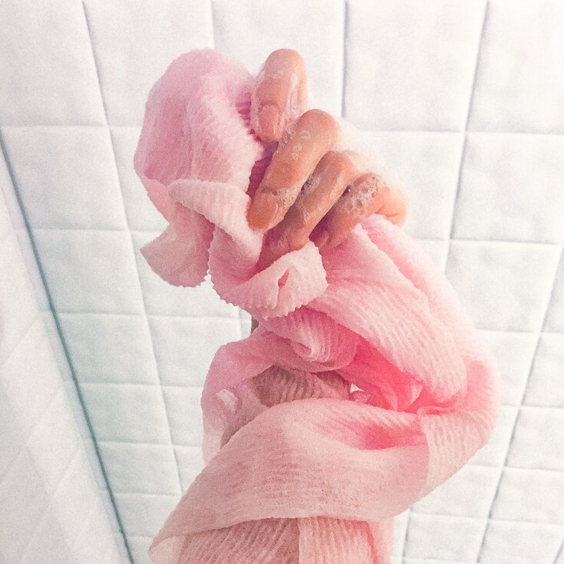
Article Summary: Key Insights at a Glance
- The Japanese shower towel (a long nylon exfoliating washcloth, typically 25 x 90 to 100 cm) sits inside a global bath brush and mesh sponge market estimated at about $500 million in 2025, forecast to reach roughly $900 million by 2033 at a 7% CAGR. The wider body sponge market is valued near $1.66 billion and growing more slowly at around 4.2%.
- Volume is huge and prices are low. The leading exfoliating towel listings on Amazon US each move 10,000 to 20,000 units a month, and the top ten average just $9.89 with a 4.5 star rating.
- The category is wide open at the point of purchase. On the core "japanese washcloth" search, the top three listings win 54.6% of clicks but only 31.8% of conversions. On "exfoliating towel for shower" the gap is wider still: 37.4% of clicks against just 14.9% of conversions. Shoppers look at the leaders, then buy something else.
- New brands are breaking in fast. A beauty accessories brand entered in 2025 with three listings that each doubled month-on-month into the top ten by August 2026, and a $9.99 newcomer with only 3,000 reviews now matches the long-time leader at about 20,000 units a month.
- Buyer complaints cluster around three problems. Roughness roulette: every brand calls its towel "hard", "medium" or "soft", but there is no shared scale, so one buyer's "too rough" is another's "too soft". Authenticity anxiety: reviews constantly warn about fake Japanese towels. Practical friction: towels that are too long to hang and dry, fray at the ends or start to smell.
- Salux, the small Tokyo company that invented the nylon bath towel in 1966, still anchors the premium end at around $13 per cloth in the US and £6.99 in the UK, with a 4.6 star rating across more than 4,000 reviews on Amazon UK alone. Its loyal buyers pay up to avoid knockoffs.
- Tariffs favour Japan and Vietnam over China. Nylon exfoliating cloths classify as toilet linen under HTS 6302.93.20, with a 9.9% base rate. China-origin goods attract further layers that have changed repeatedly in 2025 and 2026, so this guide models a 30% planning rate for China against 9.9% for Japan and Vietnam.
- The highest-scoring opportunity is a graded "grit scale" trio (soft, medium and hard in one pack, each clearly numbered and colour-coded) sold on Amazon and TikTok Shop at $14.99 to $16.99, with 48% to 52% gross margin after fees.
- A genuinely made-in-Japan premium line is the second-best play. It sells on provenance, carries a lower duty rate and answers the fake-towel complaint directly, at $17.99 to $29.99.
- Entry costs are low. A 1,500-unit first order of the graded trio, with testing, branding and eight weeks of launch advertising, comes in at about $8,850, and Chinese OEM pricing starts well under $1 a piece.
1. Actionable Insights First: Executive Opportunity Summary
Top 3 Selling Opportunities Right Now
Opportunity 1: The graded "grit scale" trio that ends roughness roulette
Opportunity Score: 9/10
The single most repeated frustration in this category has nothing to do with whether the towel works. It is that buyers cannot tell how rough it will feel until it arrives. Reviews of the same product swing from "not as scratchy as I thought" to "not for the faint of heart". One long-time Salux buyer says outright that it would be easier if each roughness grade came in a different colour. Nobody in the top ten has solved this. A three-pack containing a numbered soft, medium and hard towel, each in its own colour, with a printed grit card showing which to use where (face-safe soft is not the goal here; think arms and legs, back, and feet), turns a guessing game into a choice. It also cuts returns, because a buyer who finds one grade too rough has two others in the same box.
- Profit margin range: 48% to 52% gross, 30% to 36% net after ads and returns
- Typical factory cost: $1.30 to $1.70 for a three-pack (China or Vietnam OEM)
- Typical retail: $14.99 to $16.99
- Growth signal: several new entrants reached the top ten in under a year, and conversion share on core terms is spread thinly across dozens of listings
Opportunity 2: Genuinely made-in-Japan premium towels with proof of origin
Opportunity Score: 8/10
"Japanese" is the most valuable word in this category's titles, and also the most abused. Many top-selling listings put "Japanese" in the name while the product is made elsewhere, and reviewers repeatedly warn each other about fakes, with some saying every version they have found online seems to be a copy. Buyers who know the difference pay a premium for the original, and Salux reviews are full of warnings to check its website for how to spot fakes. Partnering with a Japanese textile maker (the nylon weaving clusters around Tokyo and the Ashikaga area are the obvious places to start) lets a brand print "Made in Japan" honestly, show the mill and the weave, and sit in the $17.99 to $29.99 band where the established Japanese brands live.
- Profit margin range: 46% to 50% gross
- Typical factory cost: $3.00 to $3.50 per towel (Japanese OEM, estimate to be confirmed by quote)
- Typical retail: $17.99 single, $29.99 two-pack
- Growth signal: Salux holds a 4.6 to 4.7 star rating across thousands of reviews, and buyers in Europe report ordering from the US because they cannot find genuine stock locally
Opportunity 3: The back-care towel for men and gym-goers
Opportunity Score: 7/10
Reaching the middle of your back is the job these towels do better than anything else in the shower, and that is the benefit buyers mention most often after "smooth skin". Men are an under-addressed segment: most listings are photographed in pink, yellow and white on female models, and some marketplace attributes even set the target audience to women. A darker, slightly shorter towel with sewn grip handles at each end, sold as a back-and-body scrubber for the gym bag, speaks to a buyer the leaders ignore. Keep it cosmetic. Say "smoother-feeling skin" and "reaches your whole back", never "clears back acne".
- Profit margin range: 46% to 50% gross
- Typical factory cost: $1.00 to $1.20 with handles (China OEM)
- Typical retail: $12.99 to $13.99
- Growth signal: men appear in reviews as reluctant converts ("he complained how rough it was"), which points to an audience buying through partners rather than for themselves
Quick Action Items
Build your own roughness scale before you build a brand. Order samples from five suppliers in at least two weave densities each. Have ten testers rate each wet and soapy on a 1 to 5 scale on the forearm and the back. Lock three grades that testers can tell apart reliably, then write those specs (yarn denier, weave and texturing) into your purchase order so every batch feels the same.
Colour-code and number every grade. Grade 1 in one colour, Grade 3 in another, Grade 5 in a third. Put the number on a sewn label, not just the box, so buyers can tell towels apart after the packaging is gone.
Be honest about origin. If the towel is made in China or Vietnam, call it "Japanese-style" and say where it is made. If it is made in Japan, prove it with mill photos and a country-of-origin label. Misleading origin claims are the fastest route to "fake" reviews in this category.
Fix the length and drying problem. Offer a standard 90 to 100 cm towel for full back reach and add a sewn hanging loop at one end. Show it drying on a hook in your listing images. Reviewers complain that long towels do not hang well and stay damp.
Finish the edges properly. Specify overlocked or bound edges and test for fraying after 30 machine washes. Buyers who cut long towels in half report fraying, and fraying looks like poor quality even when the weave is fine.
Lead with the wet feel, not the dry feel. A recurring review theme is that these towels feel very rough dry but soften when wet and soapy. Show a wet, lathered towel in the main image and explain the difference in the second.
Red Flags to Avoid
Competing in the sub-$8 lane. The top listing sells at $6.38 to $7.99 with more than 30,000 reviews, and a $3.99 product also sits in the top ten. Even Salux, the category originator, prices its standard cloth at only about $13. At these prices, FBA fees take most of the margin and a new brand has no review base to win on.
Calling a non-Japanese towel "Made in Japan". Country-of-origin marking is a legal requirement for imports, and buyers in this category actively check. False origin claims invite customs problems, listing removals and the review pattern that has already damaged many generic sellers.
Skin-condition claims. Reviews and blogs talk about back acne, eczema and rough bumps on arms. Listings that promise to treat or clear these conditions move the product into medical-claim territory and invite marketplace removals. Stick to "exfoliating", "smoother-feeling skin" and "reaches your back".
Ignoring over-exfoliation. Dermatologists warn that scrubbing too hard or too often can irritate the skin barrier, and Korean scrub attendants recommend their rougher towels only once a week. Include clear usage guidance (wet skin, light pressure, how often by grade) in every box. It protects buyers and protects your ratings.
Treating China-origin landed cost as fixed. Duties on Chinese textile goods have changed several times in 2025 and 2026. Price the product so it still works if China-origin duties rise by another 10 to 15 points, or dual-source from Vietnam.
Best Entry Point for New Sellers
Product recommendation: A "grit scale" three-pack of 25 x 95 cm nylon exfoliating towels in three clearly numbered and colour-coded grades (1, 3 and 5), with overlocked edges, a sewn hanging loop and a printed card explaining which grade suits which body area and how often to use it. Honestly labelled as Japanese-style and marked with its true country of origin.
Primary marketplace: Amazon US
Secondary marketplace: TikTok Shop, with creator-led "which grade are you?" content
Price range: $14.99 to $16.99
Startup cost breakdown for a 1,500-unit first order (three-packs) from a China or Vietnam OEM:
| Line Item | Cost | Notes |
|---|---|---|
| Finished product (1,500 three-packs) | $2,250 | $1.50 per three-pack FOB, three grades, sewn loops and grade labels |
| Ocean freight to fulfilment | $450 | LCL sea freight including drayage. Towels are light and compact |
| Duties, customs broker and bond | $800 | Modelled at a 30% China planning rate on factory value, plus broker fees. Lower if sourced from Vietnam |
| Sample rounds and grit testing | $400 | Samples from five suppliers, tester panel and a 30-wash fraying test |
| Packaging and grit card design | $500 | Retail sleeve, grade card and usage insert |
| Product photography and video | $800 | Wet lather shots, back-reach demo, drying-on-hook and grade comparison |
| Brand registry, UPCs, trademark filing | $650 | Required for A+ content and brand protection |
| Launch advertising (8 weeks) | $2,000 | Sponsored products on long-tail terms plus TikTok Shop affiliate commissions |
| Creator seeding (TikTok Shop) | $500 | Product for 40 to 60 body care, grooming and fitness creators |
| Contingency | $500 | Roughly 6% buffer for rate changes and reshoots |
| Total startup cost | $8,850 | Roughly $5.90 fully loaded per three-pack at 1,500 units |
Why this works:
Three things make the graded trio the right first move. First, it targets the category's loudest unsolved complaint (unpredictable roughness) with a product feature that can be shown in a single image. Second, it sits above the crowded sub-$10 lane without needing a premium story, because three towels for $14.99 to $16.99 is easy value for buyers to understand. Third, it builds a natural reorder path: once a buyer knows they are "a Grade 3 person", they come back for single replacements of that grade, which is the kind of loyalty generic listings never earn.
The alternative entry point, a single generic nylon towel at $7.99, fails on two counts. It competes head-on with listings that have tens of thousands of reviews, and it does nothing to answer the reason most buyers hesitate.
2. Quick Data Scans: Marketplace Sales Opportunity Analysis
Legend
| Score Range | Meaning | Action |
|---|---|---|
| 8 to 10 | High demand, low to moderate competition | Enter now |
| 5 to 7 | Moderate demand, moderate competition | Test carefully |
| 1 to 4 | Low demand or oversaturated | Avoid |
Marketplace Opportunity Matrix
| Marketplace | Opportunity Score | Product Segment | Est. Weekly Unit Sales | Est. Weekly Revenue | Avg Price Range | Est. Net Margin |
|---|---|---|---|---|---|---|
| Amazon US | 9 | Graded grit-scale three-pack (Japanese-style, honestly labelled) | 300 to 600 | $4,500 to $10,200 | $14.99 to $16.99 | 30% to 36% |
| Amazon US | 8 | Made-in-Japan premium towels | 120 to 260 | $2,200 to $6,500 | $17.99 to $29.99 | 28% to 34% |
| Amazon US | 7 | Men's back scrubber with grip handles | 120 to 250 | $1,600 to $3,500 | $12.99 to $13.99 | 27% to 33% |
| Amazon US | 3 | Generic single nylon towels | 300 to 800 | $1,900 to $6,400 | $3.99 to $7.99 | 5% to 12% |
| TikTok Shop | 9 | Grit-scale trios and "which grade are you" bundles | 250 to 600 | $3,700 to $10,200 | $14.99 to $19.99 | 26% to 34% |
| TikTok Shop | 7 | Shower ritual gift sets (towel, soap, drying hook) | 60 to 150 | $2,100 to $5,200 | $29.99 to $34.99 | 28% to 35% |
| Shopify / DTC | 8 | Replacement subscriptions by grade | 40 to 120 | $600 to $2,000 | $12 to $17 per delivery | 40% to 50% |
| Walmart Marketplace | 7 | Family multi-packs (4 to 6 towels) | 80 to 200 | $1,600 to $4,800 | $19.99 to $24.99 | 26% to 32% |
| eBay US | 6 | Imported Japanese brands and bulk lots | 40 to 120 | $500 to $1,600 | $10.55 to $13.19 each | 22% to 30% |
| Etsy | 5 | Personalised gift sets and travel pouches | 15 to 50 | $400 to $1,500 | $24 to $36 | 30% to 40% |
| Amazon UK | 7 | Grit-scale trios and Japanese imports | 60 to 160 | $1,100 to $3,000 | £6.99 to £14.99 | 25% to 32% |
| Amazon Australia | 7 | Grit-scale trios and men's back scrubbers | 40 to 110 | $600 to $1,700 | A$19.95 to A$29.95 | 25% to 32% |
| Faire wholesale | 6 | Boutique, gym and spa retail packs | 8 to 25 cases | $500 to $1,500 | $4 to $10 wholesale | 35% to 45% |
| Asian grocery and online J-beauty retailers | 6 | Made-in-Japan towels and gift sets | 30 to 90 | $500 to $1,500 | $12 to $18 | 25% to 35% |
| Temu / Shein | 2 | Ultra-cheap multi-packs | High | Low | $2 to $5 | Under 5% |
| Facebook Marketplace | 1 | Local resale | Under 10 | Under $100 | $5 to $10 | 10% to 20% |
Table Notes and Methodology
Unit and revenue estimates describe what a competent single seller with an established, well-reviewed listing can expect in an average non-peak week, not total marketplace volume. Late spring and early summer (body exfoliation and self-tan prep season in the Northern Hemisphere) and the November to December gifting window typically run 20% to 35% above these ranges. Late summer can run 10% to 20% below. New listings in this category have reached the top ten within months, and month-on-month swings of 30% or more in both directions were recorded among the leaders in mid-2026.
Margin figures are net after marketplace fees, payment processing, inbound shipping, an assumed 3% to 6% return rate and an advertising allocation of 12% to 18% of revenue. Advertising cost is moderate here because click share is concentrated but conversion share is spread across many listings, which rewards well-targeted long-tail campaigns.
Opportunity scores weigh four inputs equally: demand depth, competitive density, the seller's ability to differentiate on something other than price, and margin durability. Generic single towels score low despite high volume because the price floor sits at $3.99 to $7.99 and review counts at the top are in the tens of thousands. Ultra-low-cost platforms score lowest because their pricing leaves nothing after landed cost.
3. Deeper Context: Market Landscape and Buyer Intelligence
A. Market Overview
Category Definition and Size
A Japanese shower towel is a long, narrow washcloth woven from textured nylon or a nylon and polyester blend. It is used wet with soap or body wash to lather, cleanse and lightly exfoliate the whole body, and its length (usually 90 to 100 cm) lets the user hold both ends and scrub across the back. The category splits into six formats:
- Classic Japanese nylon towels, made in Japan in graded roughness levels. The premium, authenticity-led end of the market.
- Japanese-style nylon towels, usually made in China and sold in multi-packs. The highest-volume format.
- Hard and extra-hard towels, sold to buyers who want a more aggressive scrub, often men and long-time users.
- Korean exfoliating towels and mitts, a close cousin made from viscose rayon and designed for a soaked-skin, once-a-week deep scrub rather than daily washing.
- African-style net sponges, long, open nylon mesh cloths that overlap with the Japanese towel in function and search results.
- Handle and strap scrubbers, back-focused towels with grips or straps at each end.
There is no published market sizing for Japanese shower towels on their own, so the closest benchmarks are the adjacent categories they sit within. The global bath brush and mesh sponge market was estimated at about $500 million in 2025 and is projected to reach roughly $900 million by 2033, a 7% CAGR. The broader body sponge market was valued near $1.66 billion in 2025 and is forecast to reach about $2.5 billion by 2035, a 4.2% CAGR. The natural loofah segment is growing at around 5% a year. Japanese-style nylon towels are taking share inside these categories because they last longer than loofahs and dry faster than cotton washcloths.
On Amazon US, the top ten listings under "exfoliating towel for shower" averaged about 6,900 units a month each at an average price of $9.89 and a 4.5 star rating in mid-2026. Under the broader "japanese washcloth" term, which also pulls in disposable face towels and cotton washcloths, the top ten averaged 16,900 units a month at $11.25.
Product Evolution and Recent Trends
The category has moved through three phases.
Phase one, 1966 to the 2000s, was a Japanese household staple. Salux, a small manufacturer in Edogawa, Tokyo, invented the nylon bath towel in 1966, patented it and won a national invention prize. For decades it sold mainly in Japan and through Asian grocery stores abroad.
Phase two, the 2010s, was the beauty editor discovery. Western beauty media and early online reviewers presented the towel as a cult secret for smoother skin, and imported Japanese brands built steady Amazon followings.
Phase three, 2020 to 2026, is the mass-market wave. Short-form video made exfoliating washcloths a recurring viral product, Korean scrub towels became a parallel trend, and low-cost Japanese-style multi-packs flooded the marketplaces. In 2025 and 2026, established beauty accessories brands began entering, a sign that the category has moved from niche to mainstream.
Four trends define 2026:
Body care is getting the facial treatment. Buyers who have built multi-step face routines are now applying the same thinking to the body, with exfoliation as the first step.
The loofah is losing ground. Dermatologists and mainstream media have spent years warning that loofahs trap bacteria. A towel that rinses clean and dries fast is the obvious replacement.
Authenticity is a selling point. As cheap copies have multiplied, the phrase "made in Japan" has become a genuine differentiator, and buyers actively look for it.
Scrub culture is crossing over. Korean bathhouse scrubbing and Japanese daily towel use are blending in social content, which grows the whole category but also confuses buyers about how rough a towel should be and how often to use it.
Leading Brands and Market Disruptors
Salux remains the benchmark and the brand every competitor is compared against. Based in Edogawa, Tokyo, it sells graded towels (including a Super Hard version that reviewers call the roughest they have used) at about $13 per cloth in the US and £6.99 in the UK, with a 4.6 to 4.7 star rating across thousands of reviews. Its loyal buyers warn others about counterfeits, and competitor reviews often measure products against it ("pretty good, but not as good as Salux Super Hard"). Its weakness is accessibility: grades are hard to tell apart without reading Japanese packaging, some grades are hard to find outside Japan, and buyers in Europe report ordering from the US to get genuine stock. That gap, not the product itself, is where challengers win.
UJFQBH leads by volume with a low-cost multi-pack at $6.38 to $7.99, more than 32,000 reviews and about 20,000 units a month.
CORATED is the breakout of 2025 and 2026, matching the leader at about 20,000 units a month at $9.99 with only around 3,000 reviews, proof that a well-built new listing can scale quickly.
Kitsch, a beauty accessories brand best known for hair products, placed three listings in the top ten by August 2026, each growing between 17% and 100% month-on-month.
GOSHI owns the made-in-Japan mid-premium lane at $13.99 to $17.49, with more than 21,000 reviews and around 6,000 to 9,000 units a month, positioned on a rip-resistant dual-thread weave.
ARCH&M and Yiclick compete in the $8.49 to $9.99 multi-pack lane with large review bases and 3,000 to 9,000 units a month each.
OHE sells a hard-weave Japanese towel series to enthusiasts who want maximum scrub.
Private label opportunity assessment: Open. Chinese suppliers offer nylon exfoliating towels from well under $1 per piece, and wholesale marketplaces list retail packs from about $4 to $10 wholesale. The barriers are consistency of feel, honest origin labelling and review velocity, not technology or capital.
Price Tiers and Popular Brands
| Tier | Price Range | Representative Products | Reseller Margin | Sourcing Strategy |
|---|---|---|---|---|
| Tier 1: Commodity multi-packs | $3.99 to $8 | Generic nylon towels (UJFQBH around $6.38 to $7.99) | 5% to 15% | Avoid as a lead product |
| Tier 2: Branded value packs | $8 to $13 | Two and three-packs (ARCH&M around $8.49 to $9.99, CORATED around $9.99, Kitsch around $7.99) | 20% to 30% | China OEM, differentiate on feel and finish |
| Tier 3: Graded sets and specialist towels | $13 to $20 | Grit-scale trios, handle scrubbers, men's back towels | 30% to 38% | China or Vietnam OEM with locked specs and grade labels |
| Tier 4: Made-in-Japan premium | $13 to $30 | Original Japanese towels, Japanese-made two-packs (Salux around $13, GOSHI around $13.99 to $17.49) | 28% to 36% | Japanese mill partnership, provenance storytelling |
| Tier 5: Ritual and gift sets | $30 to $45 | Towel, soap, drying hook and pouch sets | 30% to 40% | Bundle around proven single SKUs |
B. Buyer Persona Deep Dive
Persona 1: The Smooth-Skin Upgrader
Demographics: Age 22 to 40. Roughly 70% female, 30% male. Household income $45,000 to $110,000. Follows body care creators and has already replaced a loofah or a pouf.
Purchase motivations, ranked: 1) Smoother-feeling skin. 2) A satisfying, visible scrub. 3) Something more hygienic than a loofah.
Price sensitivity: Moderate. Sweet spot $9 to $17.
Pain points:
- Not knowing whether to buy hard, medium or soft.
- Towels that feel nothing like the creator video once they arrive.
- Redness after the first few uses.
- Long towels that are awkward to hang.
What they are solving for: A visible, repeatable improvement in how their skin feels.
Decision factors: Creator demos, review photos, roughness description and colour options.
Brand loyalty: Moderate. Becomes high once they find the right grade.
Persona 2: The Back-Reach Gym-Goer
Demographics: Age 20 to 45. Roughly 70% male, 30% female. Trains several times a week and showers at the gym.
Purchase motivations, ranked: 1) Getting the whole back clean. 2) A tool that dries fast in a gym bag. 3) A firm, energising scrub.
Price sensitivity: Moderate. Sweet spot $10 to $15.
Pain points:
- Pastel colours and packaging aimed at women.
- Towels that slip out of wet hands.
- Damp towels smelling in a bag.
- Soft towels that do not feel like they are doing anything.
What they are solving for: A cleaner-feeling back after training.
Decision factors: Grip handles, darker colours, quick-dry claims and fitness creator content.
Brand loyalty: Moderate.
Persona 3: The Authenticity Loyalist
Demographics: Age 35 to 70. Roughly 60% female, 40% male. Grew up with Japanese or Asian bath culture, or discovered Salux years ago.
Purchase motivations, ranked: 1) The genuine Japanese product. 2) The exact feel they know. 3) Durability measured in years.
Price sensitivity: Low. Sweet spot $12 to $30.
Pain points:
- Counterfeits and look-alike listings.
- Not being able to find a specific grade outside Japan.
- Packaging only in Japanese with no grade guide.
- Inconsistent stock.
What they are solving for: A reliable source for a product they already love.
Decision factors: Made-in-Japan proof, brand history and seller reputation.
Brand loyalty: Very high.
Persona 4: The Self-Tan and Event Prepper
Demographics: Age 20 to 40. Roughly 90% female. Uses self-tan, spray tans or prepares for holidays and events.
Purchase motivations, ranked: 1) An even base for tan. 2) Removing old tan quickly. 3) Fast visible results.
Price sensitivity: Moderate. Sweet spot $10 to $20.
Pain points:
- Towels too gentle to lift old tan.
- Towels so rough they leave patches of irritation before tanning.
- Unclear guidance on how long before tanning to exfoliate.
What they are solving for: A streak-free tan.
Decision factors: Before-and-after content, multi-grade options and tanning-specific instructions.
Brand loyalty: Moderate to high.
Persona 5: The Dry-Skin Winter Sufferer
Demographics: Age 45 to 75. Roughly 55% female, 45% male. Lives in colder or drier climates, often in a household with older adults.
Purchase motivations, ranked: 1) Removing flaky, dry skin on legs and back. 2) A gentle option that still works. 3) Easy to use without reaching or twisting.
Price sensitivity: Moderate. Sweet spot $10 to $18.
Pain points:
- Hard towels that are too harsh on thinner skin.
- Small print and no instructions.
- Difficulty reaching the back and feet.
What they are solving for: Comfortable, less itchy skin through winter.
Decision factors: Soft grade options, clear directions and handles.
Brand loyalty: High once comfortable.
Persona 6: The Low-Waste Swapper
Demographics: Age 22 to 45. Roughly 65% female, 35% male. Reduces single-use plastic and bottled products where possible.
Purchase motivations, ranked: 1) A long-lasting replacement for loofahs and scrubs. 2) Using less body wash. 3) Fewer products in the shower.
Price sensitivity: Moderate. Sweet spot $12 to $20.
Pain points:
- Nylon is a synthetic material, which sits awkwardly with their values.
- No information on lifespan or end-of-life.
- Plastic-heavy packaging.
What they are solving for: Buying less and keeping it longer.
Decision factors: Honest lifespan claims, plastic-free packaging and a laundry wash-bag recommendation.
Brand loyalty: High toward brands that are honest about trade-offs.
Persona 7: The Gift Buyer
Demographics: Age 25 to 60. Roughly 70% female, 30% male. Buys stocking fillers, Secret Santa gifts and wellness presents.
Purchase motivations, ranked: 1) A gift that feels special but costs under $35. 2) Good presentation. 3) Something the recipient will actually use.
Price sensitivity: Moderate. Sweet spot $15 to $35.
Pain points:
- Plain polybag packaging.
- Not knowing what roughness the recipient would like.
- Cheap-looking multi-packs.
What they are solving for: An easy, useful gift.
Decision factors: Gift boxes, Japanese design cues and mixed-grade sets.
Brand loyalty: Low, but recipients often become repeat buyers.
The Smooth-Skin Upgrader and the Back-Reach Gym-Goer are the most under-served personas in 2026. One cannot predict what they will get, and the other is barely marketed to at all.
C. Keyword and Search Trends
Search Volume and Term Structure
Search behaviour divides into four intent classes.
Class 1: Category discovery. Terms like japanese washcloth, exfoliating towel and exfoliating washcloth. The "japanese washcloth" term drew around 2,214 weekly Amazon US searches in March 2026 and is muddied by disposable face towels and cotton washcloths in the results.
Class 2: Use and benefit. Terms like exfoliating towel for back, back scrubber for shower and body exfoliator. Moderate volume and good conversion.
Class 3: Grade and feel. Terms like extra rough exfoliating washcloth, hard japanese towel and gentle exfoliating towel. Lower volume, high intent and very few listings built around them. This is where independent sellers should concentrate.
Class 4: Origin and brand. Terms like made in japan exfoliating towel, salux and korean exfoliating towel. "Exfoliating towel for shower" alone drew roughly 309 to 360 weekly searches in mid-2026, which shows how much of the demand is spread across many phrasings rather than one head term.
Seasonal Demand Patterns
| Window | Dates | Relative Demand | Demographic Skew | Seller Action |
|---|---|---|---|---|
| New year reset | January to February | High | Upgraders, low-waste swappers | Routine and "ditch the loofah" content |
| Pre-summer prep | April to June | Very high | Tan preppers, upgraders | Full stock by early April. Push grit-scale trios and tan-prep guides |
| Summer | July to August | Moderate | Gym-goers, travellers | Travel pouches, men's back scrubbers |
| Back to routine | September to October | Moderate | Dry-skin buyers | Soft-grade singles and winter skin messaging |
| Gifting window | Black Friday to Christmas | Very high | Gift buyers | Boxed ritual sets under $35 |
In the Southern Hemisphere, pre-summer demand shifts to roughly September to December, which overlaps with the gifting window and makes Q4 the strongest quarter for Amazon Australia.
Rising and Declining Queries
| Direction | Query Theme | Est. YoY Change | Interpretation |
|---|---|---|---|
| Rising | Exfoliating towel for back | +35% | Back reach is the core use case. Supports handle and strap designs |
| Rising | Made in Japan exfoliating towel | +30% | Authenticity concern rising as copies multiply |
| Rising | Extra rough exfoliating washcloth | +28% | Enthusiasts want a stronger grade, mostly men and long-time users |
| Rising | Korean exfoliating towel | +25% | Bathhouse scrub culture crossover. Grows awareness of the whole category |
| Rising | Exfoliating washcloth for men | +22% | Under-served segment with almost no tailored listings |
| Rising | African net sponge | +20% | Overlapping long-cloth format competing for the same shoppers |
| Rising | Exfoliating towel sensitive skin | +18% | Buyers looking for a gentler entry grade |
| Declining | Loofah sponge | -10% | Hygiene concerns pushing buyers toward quick-dry cloths |
| Declining | Bath pouf | -12% | Seen as a low-performance, bacteria-holding option |
| Declining | Exfoliating body scrub with beads | -15% | Microplastic and abrasive-particle concerns |
Query direction and estimated change reflect relative interest signals across marketplace and web search tools and should be treated as directional rather than exact.
Consumer Insights from Community Forums
Analysis of buyer reviews on best-selling marketplace listings, international resale sites, beauty editorial and discussion in communities such as r/SkincareAddiction, r/AsianBeauty, r/malegrooming, r/BuyItForLife and r/sunless surfaces a consistent complaint hierarchy. These are the twelve themes that recur most often:
Roughness roulette. The most common theme by far. The same listing gets "not as scratchy as I thought" and "the roughest I have ever used". There is no shared scale across brands.
Too rough on first use. New users report redness and discomfort for the first few showers, and some give up before the towel softens.
Too soft to do anything. The opposite complaint, mostly from experienced users who bought a generic towel expecting the feel of a Japanese original.
Fake or copied products. Reviewers repeatedly warn about counterfeits and point others to the original maker's guide for spotting fakes.
No grade guidance in English. Imported Japanese towels often carry packaging only in Japanese, and buyers say they cannot tell which grade they have.
Too long to hang and dry. Long towels drape awkwardly on rails, take longer to dry and can stay damp.
Fraying edges. Especially when buyers cut long towels in half to make them more manageable.
Smell and mildew. Towels left bunched up or stored in a gym bag begin to smell.
Dry feel versus wet feel. Buyers judge the towel by how it feels out of the packet, which is much rougher than how it feels wet and soapy.
Over-exfoliation. Some users scrub hard every day and end up with irritated skin, unaware that the rougher grades are meant for lighter or less frequent use.
Synthetic material concerns. A smaller but growing group notes that nylon is a plastic and wants honesty about shedding and lifespan.
Women-only marketing. Men describe these towels as something their partner bought them, and very few listings show male users.
What these complaints tell a seller:
This category's unsolved problems are not demand problems. Buyers already love what a good Japanese shower towel does. What they do not get is predictability. They cannot tell how rough a towel will be, whether it is genuine, or how to use it without overdoing it. Every one of those can be specified, labelled, photographed and explained. The incumbents compete on price and on the word "Japanese". The opportunity is to compete on clarity.
4. Tools and Resources: Sourcing Decision Framework
Private Label Sourcing Calculator
| Product Type | Factory Price | MOQ | Shipping | Duties | Landed Cost | Amazon Fees | Total Cost | Retail Price | Gross Margin |
|---|---|---|---|---|---|---|---|---|---|
| Single 95 cm Japanese-style towel (China OEM, medium grade) | $0.55 | 1,000 | $0.12 | $0.17 | $0.84 | $3.86 | $4.70 | $9.99 | 53.0% |
| Grit-scale trio, three grades (China OEM) | $1.50 | 1,000 | $0.30 | $0.45 | $2.25 | $6.05 | $8.30 | $16.99 | 51.1% |
| Grit-scale trio, three grades (Vietnam OEM) | $1.70 | 1,000 | $0.32 | $0.17 | $2.19 | $6.05 | $8.24 | $16.99 | 51.5% |
| Men's back scrubber with grip handles (China OEM) | $1.10 | 1,000 | $0.30 | $0.33 | $1.73 | $5.50 | $7.23 | $13.99 | 48.3% |
| Made-in-Japan single towel (Japanese OEM, estimate) | $3.20 | 500 | $0.35 | $0.32 | $3.87 | $5.76 | $9.63 | $17.99 | 46.5% |
| Made-in-Japan two-pack (Japanese OEM, estimate) | $6.00 | 500 | $0.55 | $0.59 | $7.14 | $8.00 | $15.14 | $29.99 | 49.5% |
| Shower ritual gift set (towel, soap, hook and pouch) | $5.50 | 500 | $0.60 | $1.10 | $7.20 | $9.45 | $16.65 | $34.99 | 52.4% |
Standard Assumptions Used
Factory price methodology. Chinese factory listings for nylon exfoliating towels commonly start well under $1 per piece, and related Korean-style viscose mitts are listed from about $0.45 to $0.70. The calculator uses mid-to-upper figures to reflect locked roughness specs, overlocked edges, sewn loops and grade labels, and retail packaging. Japanese OEM pricing is an estimate for a branded towel from a Japanese weaving mill and should be confirmed by quote. Vietnam pricing assumes a small premium over China for comparable quality.
MOQ context. Trading companies will sell stock towels in quantities as low as 100 pieces, which is useful for sampling but not for a branded, graded product. Custom colours, grade labels and packaging typically push minimums to 1,000 pieces per colour or grade. Japanese mills tend to work in smaller runs but at higher unit cost.
Shipping assumptions. LCL sea freight from South China or Vietnam to a US fulfilment centre including drayage. Towels are light, flat-packed and ship efficiently. Japanese goods assume LCL from Tokyo or Yokohama.
Duty rates. US Customs has repeatedly classified nylon exfoliating bath cloths as toilet linen of man-made fibres under HTS 6302.93.20, with a 9.9% base rate. China-origin goods have carried additional Section 301 and other China-specific duties that changed several times in 2025 and 2026, and a temporary 10% surcharge on all origins ran from February to July 2026. The calculator uses a 30% planning rate for China and the 9.9% base rate for Japan and Vietnam. Gift sets use a blended 20% because soap and accessories classify separately. Confirm the current rate and classification with a licensed customs broker before every order.
Fee breakdown. Amazon fees combine a referral fee (modelled at 8% for beauty items priced at $10 or under and 15% above $10) with an estimated FBA fulfilment fee of $3.06 to $4.20 depending on size and weight tier. The lower referral rate is why the commodity leaders cluster just under $10.
Margin notes. Margins shown are gross after landed cost and marketplace fees only. They do not deduct advertising, which typically consumes 12% to 18% of revenue at launch and 7% to 10% at steady state, or returns, which run around 3% to 6%. A 50% gross margin therefore translates to roughly 30% to 36% net contribution in a mature account. The single-towel line shows why generic singles are a poor lead product: about $5.30 left per unit before advertising, in a price band where $3.99 to $7.99 competitors with tens of thousands of reviews set the pace and ad costs eat most of what remains.
Quality and compliance. Write the yarn type, denier, weave and texturing into your purchase order and keep a signed reference sample of each grade. Test for colourfastness, fraying after 30 washes and dye transfer on white towels. Mark country of origin clearly and accurately on the product and packaging. Avoid any claim that the towel treats acne, eczema, keratosis pilaris or other skin conditions.
Additional Strategy Tables
Strategy A: Bundle Architecture and Attach Rate
| Bundle | Contents | Target Persona | Bundle Price | Sum of Parts | Est. Gross Margin |
|---|---|---|---|---|---|
| Find Your Grade Trio | Grade 1, 3 and 5 towels, grit card | Smooth-Skin Upgrader | $16.99 | $26.97 | 51% |
| Gym Back Kit | Handle back scrubber, quick-dry mesh pouch, carabiner | Back-Reach Gym-Goer | $19.99 | $25.97 | 49% |
| Tan Prep Set | Grade 3 and Grade 5 towels, tan-prep timing card | Self-Tan Prepper | $14.99 | $17.98 | 48% |
| Gentle Winter Pair | Two Grade 1 towels with handles, large-print guide | Dry-Skin Winter Sufferer | $17.99 | $21.98 | 47% |
| Made in Japan Duo | Two Japanese-made towels, mill story card | Authenticity Loyalist | $29.99 | $35.98 | 50% |
| Shower Ritual Gift Box | Japanese-made towel, hinoki-scented soap, drying hook, cotton pouch | Gift Buyer | $34.99 | $44.96 | 53% |
Strategy B: Seasonal Inventory Planning Calendar
| Month | Inventory Action | Marketing Focus | Notes |
|---|---|---|---|
| January | Place main order for pre-summer demand | New year routines, "ditch the loofah" | Allow 8 to 10 weeks for production and freight |
| February to March | Receive trios and back scrubbers | Seed creators ahead of spring | Lock in duty assumptions before shipment |
| April to June | Peak stock, weekly reorder checks | Tan prep, pre-summer smooth skin | Highest demand window for grit-scale trios |
| July to August | Place Q4 gift set order | Gym and travel content | Gift boxes need longer lead times |
| September to October | Receive gift sets and soft-grade stock | Winter dry skin | Push gift sets into fulfilment by early November |
| November to December | Gift sets fully stocked | Gift guides and bundles | Use bundles rather than deep discounts |
Sourcing Methodology Notes
- Shortlist weavers, not resellers. Look for manufacturers that weave their own nylon fabric and can explain yarn and weave changes, not trading companies reselling stock towels.
- Build a reference library. Buy the top ten competing towels, including Salux in at least two grades, and rate each on your own 1 to 5 scale. Use them to brief suppliers on exactly where each of your grades should sit.
- Test wet, not dry. Rate every sample wet and lathered with a standard body wash, because that is how buyers judge it after the first shower.
- Run a wash and fray test. Machine wash samples 30 times in a laundry bag and check edges, stitching, shrinkage and colour loss.
- Check batch consistency. Ask for pre-shipment samples from the production run and compare them with your signed reference samples before releasing payment.
- Get a Japanese quote even if you start in China. A made-in-Japan line is your strongest premium play, and Japanese mills often need longer to onboard new brands.
- Plan an exchange-for-another-grade policy. Offering a free swap to a softer or harder grade costs less than the one-star review it prevents.
Key Takeaways
- Demand is proven, and the leaders are not untouchable. Clicks concentrate on a few listings, but conversions are spread widely, and new brands have reached the top ten within a year.
- Predictability is the product. A numbered, colour-coded roughness scale answers the complaint that dominates this category.
- "Japanese" has to mean something. Honest origin labelling protects your reviews, and genuine made-in-Japan stock is a defensible premium.
- Tariffs favour Japan and Vietnam. With China-origin textile duties volatile, the lower base rate on Japanese and Vietnamese goods narrows the cost gap.
- Men are the overlooked buyer. A back-focused, darker, handled towel speaks to a segment the leaders barely show in their listings.
Sources and References
Market Research Forecast, Bath Brush and Mesh Sponge Market 2025 to 2033
WiseGuy Reports, Global Body Sponge Market Research Report 2026 to 2035
Future Market Insights, Loofah Bath Sponge Market Outlook 2026 to 2036
ASInsight, Best Selling Japanese Washcloth, Amazon US product rankings, April 2026
ASInsight, Best Selling Exfoliating Towel for Shower, Amazon US product rankings, June to August 2026
CoolCuration, Salux Beauty Skin Cloth profile and pricing, October 2026
U.S. Customs and Border Protection rulings N213976 (2012) and N039810 (2008) on nylon exfoliating bath cloths and washcloths
Treayo and TariffsChart, HTS 6302.93.20.00 duty rate references, 2026
Korea Times and The Soul of Seoul on the history and use of Korean exfoliating towels
The Zoe Report, Japanese bath towel body care routine
AOL Health and mindbodygreen, dermatologist commentary on loofahs, washcloths and over-exfoliation
Alibaba, Global Sources and Faire supplier and wholesale listings, 2026
Marketplace review analysis across Amazon, eBay and international resale sites
Community discussion analysis across r/SkincareAddiction, r/AsianBeauty, r/malegrooming, r/BuyItForLife and r/sunless
Data Collection Methodology: Market sizing uses published third-party research for adjacent categories (bath brushes and mesh sponges, body sponges and loofahs), because no standalone sizing exists for Japanese shower towels. Marketplace sales estimates use third-party Amazon tracking data from March to August 2026 and should be treated as directional. Some head-term results include adjacent products such as disposable face towels. Complaint themes were derived by aggregating recurring issues across marketplace reviews, editorial coverage, expert commentary and public community discussion. Sourcing figures reflect published supplier ranges and estimates rather than negotiated quotes and should be treated as a planning baseline.
Seasonal Adjustment Notes: Weekly figures in the marketplace table describe an average non-peak week. April to June and the gifting window typically run 20% to 35% above stated ranges, and late summer can run 10% to 20% below. Sellers modelling annual revenue should apply a seasonal curve rather than multiplying weekly figures by 52. Duty rates for China-origin goods have changed repeatedly and should be verified with a licensed customs broker at the time of each order. Nothing in this guide is legal, customs or regulatory advice.