
Article Summary: Key Insights at a Glance
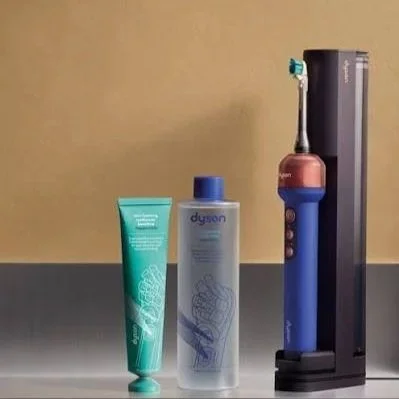
- Dyson launched the CameraJet on 1 September 2026 at $499, a sonic toothbrush with a 100,000-pixel macro camera, a machine learning system trained on roughly 470,000 dental images, and a jet that fires mouthrinse into interdental gaps within about 100 milliseconds of detecting them. It is the single most important competitive event in this category in a decade.
- The Dyson launch does not threaten small sellers. It raises the price ceiling, and a raised ceiling is the most valuable gift a premium brand can hand to the tier below it. The $60 to $180 band just became the value tier rather than the top of the market.
- The broader electric toothbrush market runs at roughly $5.1 billion in 2026, heading to about $6.8 billion by 2030 on Grand View's numbers, with other houses modelling $5.21 billion in 2025 growing to $10.47 billion by 2034 at 8.06% CAGR. The narrow smart segment sits at roughly $620 million in 2026, growing faster than the parent category.
- The economics that matter to a seller are not in the handset. Premium branded units retail at $150 to $350 against manufacturing costs of $8 to $25. Adding Bluetooth, sensors and app connectivity raises the bill of materials by only $15 to $40, while app development runs $30,000 to $150,000. Software, not hardware, is the barrier.
- The dominant buyer complaint across every price tier is replacement brush head economics. Oral-B iO heads trade around $9.25 each in a four-pack, Sonicare heads at roughly $12 each, and buyers openly compare that against generic heads sold sixteen at a time for the price of three branded ones.
- Complaint two is counterfeit anxiety. Amazon's Counterfeit Crimes Unit and Philips filed a joint lawsuit in Frankfurt in 2026 over fake Sonicare heads. Buyers in deal communities now assume any brush head listing is fake until proven otherwise, which is a trust vacuum a seller can occupy.
- Complaint three is app fatigue and data unease. Buyers repeatedly report using smart features for a week then never again, and privacy-conscious buyers are actively seeking brands that collect nothing. Dyson has pre-empted this by stating CameraJet images are not recorded or stored on the device or in the cloud.
- Regulation is a moat, not an obstacle. Powered toothbrushes are Class I devices under 21 CFR 872.6865 and exempt from 510(k), but the exemption is conditional. Bolt on UV sterilisation, a camera or a diagnostic claim and the exemption can break. Sellers who stay inside the exempt envelope ship fast while competitors stall.
- The recommended entry point for 2026 is not an AI toothbrush. It is a compatible brush head programme with verified authenticity, priced at $19.99 to $34.99 per multi-pack, at 55% to 68% margins, sold on Amazon, eBay and Walmart against a category where the incumbent has trained buyers to feel gouged.
- Seasonality is milder than most consumer electronics but real. Roughly 34% to 39% of annual category volume lands between Black Friday and mid-January, driven by gifting and New Year health resolutions, with a secondary bump in late August back-to-school for kids' oral care.
1. Actionable Insights First: Executive Opportunity Summary
Top 3 Selling Opportunities Right Now
Opportunity 1: Verified-authentic compatible brush heads with transparent supply chain
Opportunity Score: 9/10
This is the highest-conviction play in oral care in 2026, and it exists because the incumbents created the problem themselves. Branded replacement heads are priced as a razor-blade annuity. Oral-B iO Ultimate Clean heads trade at roughly $37 for a four-pack. Sonicare heads run about $12 each, meaning a two-year head budget on a flagship brush can reach $96 on top of a $399.99 handle. Quip charges $12 per head or $8 on subscription.
Buyers know this and have revolted. Deal community discussion routinely points out that generic heads can be bought sixteen at a time for roughly the price of three branded ones, with long-time users reporting no performance difference. That is a structural demand signal, not a fringe opinion.
The complication, and the opportunity, is counterfeiting. Amazon's Counterfeit Crimes Unit and Philips filed a joint lawsuit in the Regional Court Frankfurt am Main in 2026 against a seller of fake Sonicare heads, with Amazon suspending the account, removing listings and proactively refunding affected customers. Buyers have internalised the risk. Comment threads on brush head deals now open with counterfeit warnings before anyone discusses price, and one buyer described fakes so good that only a side-by-side comparison of print quality, seam finishing and interior part finish revealed them.
So the market has two failure modes. Branded heads feel extortionate. Generic heads feel risky. A seller who occupies the middle with a legitimately manufactured compatible head, sold under their own registered brand with published factory documentation, batch codes and material certification, is not competing on price. They are competing on the one thing neither incumbent nor grey-market seller offers.
- Profit margin range: 55% to 68%
- Typical price points: $19.99 to $34.99 per four or eight pack
- Landed cost: $0.55 to $1.40 per head at 5,000 to 10,000 unit volumes
- Growth signal: brush head demand is fully decoupled from handset sales cycles and grows with the installed base rather than with new unit sales
Opportunity 2: The $79 to $149 smart brush gap that Dyson just widened
Opportunity Score: 8/10
When a category's most visible new product lands at $499, everything below it gets re-anchored. A $129 brush that was previously described as expensive is now, in the buyer's mental arithmetic, a quarter of the price of the thing they read about in the news. This is the same mechanism that made $300 headphones feel reasonable after $549 flagships existed.
The gap is real and the challengers have already proved it. Laifen sells the Wave from $39.99 in ABS up to $59.99 in stainless steel, with the Wave Pro running 66,000 vibrations per minute, a 60-degree oscillation, 70-day battery life, IPX8 rating, and measured operation under 55 decibels, roughly 10 dB quieter than the Oral-B iO. Oclean's X Ultra S sits around $129.99 with 40-day battery life. Suri has built a following on repairable design and biodegradable heads.
None of these are AI toothbrushes in the Dyson sense. They do not need to be. What they demonstrate is that a well-executed mid-tier brush with a restrained app takes share from $399.99 flagships. A private label entrant sourcing a competent sonic platform at $9.50 to $10.60 FOB and layering genuine design work, honest specification claims and a non-invasive app can hold a $99 to $129 price with room to spare.
- Profit margin range: 38% to 52%
- Best price points: $89.99, $119.99 and $149.99
- Growth signal: the smart segment is compounding faster than the parent electric toothbrush category, and adding connectivity costs only $15 to $40 in bill of materials
Opportunity 3: Charging, travel and hygiene infrastructure around premium brushes
Opportunity Score: 8/10
Every $399 or $499 brush that ships creates an owner with an expensive object, a small bathroom, a proprietary charger and a travel problem. Dyson's CameraJet arrives with a refill dock that also charges, which means owners now need somewhere to put a dock, a way to travel with a device that has a liquid tank, and a way to keep a camera lens clean.
This is the least contested segment in oral care. Wall mounts, charger-integrated holders, UV-free ventilated head caddies, hard travel cases sized for oversized handles, counter mats and anti-limescale dock trays are all mechanical goods with visible quality, no firmware, no certification burden beyond ordinary consumer goods rules, and no brand incumbency worth speaking of.
The key discipline is to sell by compatibility rather than by SKU. Listings organised around "fits iO Series handles" or "fits handles up to 38 mm diameter" convert far better than generic holder listings, because the buyer arrives with a specific object in hand.
- Profit margin range: 48% to 66%
- Typical price points: $14.99 to $49.99
- Growth signal: premium handset prices are rising while bathroom counter space is not, and every price increase at the top raises the perceived value of protecting the purchase
Quick Action Items
Get brush head samples moving this week. Contact three to five Guangdong and Zhejiang oral care factories for compatible head samples against your two target handle families. Private label minimums run 50 to 500 pieces with sample production in three to seven days and mass production in 25 to 35 days. Order samples from all of them, then do the side-by-side inspection buyers say they cannot do: print quality, seam finishing, interior part finish, bristle end-rounding and shaft tolerance. Document it photographically, because that documentation becomes your listing.
Register the brand before the first order, not after. In a category defined by counterfeit anxiety, an unregistered seller has no story. Trademark filing, brand registry enrolment and GS1-issued barcodes are the cost of entry to the authenticity positioning that makes the whole play work. Budget for this in the first order cycle rather than deferring it.
Stay inside the 510(k) exemption on purpose. Powered toothbrushes are Class I under 21 CFR 872.6865 and exempt from premarket notification, subject to the limitations in 21 CFR 872.9. That exemption is conditional on the device not deviating significantly from established designs. Add UV sterilisation, radio frequency, a camera or any diagnostic claim and you may have engineered yourself into a submission you cannot afford. Establishment registration and device listing still apply even when exempt.
Time inventory to land by 1 November. The gifting and resolution window from Black Friday through mid-January carries roughly 34% to 39% of annual volume. With 25 to 35 day production and 30 to 40 day sea transit, a first order placed after mid-August is already late for the peak. If you missed it this year, target the post-holiday brush head replenishment wave in February instead, which is quieter but far less contested.
Write listings against the complaint, not the specification. Nobody searching for brush heads cares about bristle count. They care whether they are about to be sold a fake and whether they are being overcharged. Lead the first image with a cost-per-head comparison and the second with a manufacturing provenance card. This is the single highest-leverage listing decision in the category.
Red Flags to Avoid
Do not attempt an AI or camera toothbrush as a private label first product. The software is the product. Dyson states the CameraJet stack runs to roughly 16 million lines of code with a model trained on about 470,000 dental images, developed over six years. Oral-B's iO tracks 16 mouth zones and Philips' SenseIQ reads pressure, motion and coverage up to 100 times per second. A trading company cannot supply any of that. Worse, adding a camera or diagnostic function is exactly the kind of new, untested feature that can break your 510(k) exemption and turn a consumer goods launch into a regulatory project.
Do not sell brush heads that trade on someone else's trademark. The compliant framing is compatibility language in the body of the listing, never brand names in the title or on the packaging front, and never packaging that mimics trade dress. Amazon's Counterfeit Crimes Unit is actively litigating in this exact product category, and both false positives and genuine violations end the same way: account suspension. Note also that intellectual property complaint systems in this category have historically been gamed against legitimate sellers, so keep your own documentation ready before you need it.
Do not build a business on unverifiable health claims. Lab results are not clinical results, and the distinction is where regulatory trouble begins. Dyson's own 69% figure for plaque removal in hard-to-reach areas is explicitly described as laboratory testing rather than a clinical claim about long-term oral health outcomes, and its jet comparison used a proprietary proxy plaque material developed with the National University of Singapore's Faculty of Dentistry rather than a patient trial. If a market leader with a five-year research collaboration hedges its language that carefully, a first-time seller repeating a factory's marketing copy about plaque percentages is exposed on both advertising standards and device labelling rules.
Best Entry Point for New Sellers
Product recommendation: A four-pack of compatible replacement brush heads for the two highest-installed-base handle families in the US, sold under a registered private brand, with printed manufacturing provenance, a batch code, and a published material specification on the insert.
Primary marketplace: Amazon US
Secondary marketplace: eBay US, where used and value-seeking oral care buyers concentrate and where listing costs are low enough to test compatibility variants cheaply
Price range: $22.99 to $29.99 per four-pack, deliberately positioned above bargain-basement generics and roughly 25% to 35% below branded equivalents
Startup cost breakdown for a 10,000 unit first order (2,500 four-packs):
| Line Item | Cost | Notes |
|---|---|---|
| Brush heads, family A (6,000 units) | $4,800 | $0.80 FOB, DuPont-grade filament, end-rounded bristles |
| Brush heads, family B (4,000 units) | $3,800 | $0.95 FOB, more complex shaft coupling, tighter tolerance |
| Retail packaging and provenance inserts | $1,625 | $0.65 per four-pack, printed batch code and spec card |
| Individual hygiene sleeves | $700 | $0.07 per head, expected by buyers in oral care |
| Sea freight and drayage | $1,450 | Light, dense cargo. Roughly $0.58 per four-pack |
| Duties, brokerage and fees | $2,150 | HS 9603.21 classification plus current China-origin surcharges and processing fees |
| Third-party material and safety testing | $1,800 | Filament composition, heavy metals, bristle retention, end-rounding report |
| Trademark, brand registry, GS1 barcodes | $1,400 | Non-negotiable in a counterfeit-sensitive category |
| FDA establishment registration and listing | $950 | Required even where the device type is 510(k) exempt |
| Photography, provenance video and A+ content | $1,600 | Includes the side-by-side authenticity comparison sequence |
| Launch advertising (10 weeks) | $3,600 | Sponsored products weighted to compatibility long-tail terms |
| Samples, tooling adjustment and contingency | $1,900 | Five supplier samples plus a 12% buffer |
| Total startup cost | $25,775 | Roughly $10.31 fully loaded per four-pack at 2,500 packs |
Why this works:
The logic is simple enough to state in one sentence: the brush head is the only part of an AI toothbrush that a small seller can actually make, and it is the part buyers are angriest about.
Three specifics support that. First, the recurring purchase belongs to the installed base rather than to new unit sales, so a seller is not exposed to whether Dyson, Oral-B or Philips wins the handset war. Every handset sold by anyone enlarges the head market. Second, the fully loaded cost of roughly $10.31 against a $24.99 four-pack leaves genuine room after referral fees, fulfilment and returns, and returns in this category run low because the product either fits or it does not, which the buyer determines in thirty seconds. Third, and most importantly, the competitive weakness in the segment is not price. It is trust. Branded heads are trusted but resented. Generic heads are cheap but suspected. Nobody is currently selling a head that is both affordable and demonstrably real, which is an unusual gap to find in a category this mature.
The alternative entry point, importing a smart or AI toothbrush, fails on the things that actually decide outcomes. The software cannot be sourced, the accuracy and plaque claims cannot be substantiated, the regulatory exemption becomes uncertain the moment a novel sensor is added, and the buyer will compare a nameless brush against a Laifen at $59.99 and an Oral-B iO7 bundle that periodically drops to $120 from $230. That is not a fight worth picking with a first order.
2. Quick Data Scans: Marketplace Sales Opportunity Analysis
Legend
| Score Range | Meaning | Action |
|---|---|---|
| 8 to 10 | High demand, low to moderate competition | Enter now |
| 5 to 7 | Moderate demand, moderate competition | Test carefully |
| 1 to 4 | Low demand or oversaturated | Avoid |
Marketplace Opportunity Matrix
| Marketplace | Opportunity Score | Product Segment | Est. Weekly Unit Sales | Est. Weekly Revenue | Avg Price Range | Est. Profit Margin |
|---|---|---|---|---|---|---|
| Amazon US | 9 | Compatible replacement brush heads (registered brand, verified authenticity) | 900 to 1,700 | $21,000 to $42,000 | $19 to $35 | 55% to 68% |
| 8 | Charging docks, wall mounts and travel cases (premium handle compatible) | 300 to 620 | $8,500 to $19,000 | $15 to $45 | 48% to 62% | |
| 6 | Mid-tier sonic brushes with restrained apps | 180 to 360 | $16,000 to $38,000 | $79 to $149 | 34% to 46% | |
| 3 | Flagship AI and camera brushes (authorised resale) | 40 to 95 | $16,000 to $47,000 | $299 to $499 | 7% to 13% | |
| eBay US | 9 | Multi-pack brush heads and bulk head lots | 550 to 1,100 | $11,000 to $26,000 | $16 to $32 | 52% to 66% |
| 8 | Discontinued handles, chargers and legacy spares | 120 to 260 | $4,200 to $10,500 | $18 to $60 | 50% to 65% | |
| 6 | Open box and refurbished premium handles | 70 to 150 | $7,000 to $19,000 | $85 to $190 | 26% to 38% | |
| Walmart Marketplace | 8 | Value four and eight pack brush heads | 320 to 700 | $7,000 to $17,500 | $18 to $29 | 50% to 62% |
| 6 | Kids and family oral care multi-packs | 150 to 340 | $4,000 to $9,500 | $22 to $34 | 42% to 55% | |
| Shopify / DTC | 8 | Subscription brush head programme (quarterly auto-ship) | 180 to 420 | $4,000 to $10,000 | $19 to $27 | 58% to 70% |
| 6 | Branded mid-tier brush plus head bundle | 45 to 110 | $5,500 to $14,000 | $109 to $159 | 44% to 56% | |
| TikTok Shop | 8 | Cost-per-head comparison led head packs | 400 to 950 | $8,000 to $22,000 | $19 to $29 | 44% to 58% |
| 7 | Tongue cleaners, whitening and adjacent oral care | 250 to 600 | $4,500 to $12,000 | $14 to $26 | 48% to 62% | |
| Amazon Renewed | 6 | Certified refurbished premium handles | 35 to 80 | $4,500 to $12,000 | $110 to $220 | 20% to 31% |
| Target Plus | 6 | Family oral care and bathroom organisation crossover | 90 to 200 | $2,800 to $6,800 | $22 to $48 | 38% to 50% |
| Instagram Shopping | 5 | Design-led brushes and bathroom aesthetics | 25 to 65 | $2,500 to $7,500 | $79 to $145 | 42% to 55% |
| Dental practice wholesale | 7 | Practice-dispensed head packs and patient starter kits | 60 to 160 | $1,900 to $5,200 | $26 to $38 (wholesale) | 35% to 48% |
| Costco / club channel | 4 | High-volume branded head multi-packs | n/a for third party | n/a | $41 for 12 heads | 6% to 11% |
| Faire / independent retail | 6 | Design-forward brushes into pharmacy and boutique retail | 40 to 110 | $2,600 to $7,400 | $48 to $72 (wholesale) | 30% to 42% |
| Mercari | 5 | Single heads, partial packs and open box spares | 80 to 190 | $1,200 to $3,400 | $9 to $22 | 45% to 60% |
| Etsy | 5 | Handmade holders, travel cases and bathroom storage | 35 to 95 | $1,100 to $3,200 | $22 to $48 | 50% to 64% |
| Brand DTC subscription (direct competitor channel) | 3 | Manufacturer-run head subscriptions | n/a for third party | n/a | $8 to $12 per head | not accessible |
Table Notes and Methodology
Unit and revenue estimates describe what a competent single seller with an established, well-reviewed listing can expect in a normal trading week, not total marketplace category volume. They exclude the launch period, during which a new listing typically achieves 20% to 35% of these figures for the first six to ten weeks while review velocity builds.
Margin figures are net after marketplace referral fees, fulfilment, payment processing, inbound freight, an assumed 3% to 6% return rate on consumables and 8% to 14% on handsets, and an advertising allocation of 10% to 16% of revenue. They exclude the seller's own labour, warehousing and software subscriptions. Brush heads carry unusually low return rates for a physical good because compatibility is verified by the buyer within seconds of opening the box, which is why their net margins hold up better than the headline percentages of other categories.
Opportunity scores weight four inputs equally: demand durability independent of handset launch cycles, competitive density at the segment level, the seller's ability to differentiate on something other than price, and exposure to brand or regulatory takedown risk. Flagship AI and camera brushes score low despite the highest revenue per unit precisely because a third-party reseller has no differentiation and no margin durability against a manufacturer that discounts its own stock. A premium handle bundle that lists at $230 and trades at $120 in a promotional window destroys a reseller's entire spread in a single week.
The two channels marked as not accessible to third parties are included deliberately. Club channel bulk head packs and manufacturer-run subscriptions are not places to sell, but they are the two price points every seller in this category is measured against. A buyer who has seen twelve branded heads at $41 in a warehouse club will not pay $34.99 for four, and a seller who models against Amazon list prices rather than against those two reference points will overprice their first launch.
Estimates for TikTok Shop assume video-led selling built around the cost-per-head comparison rather than product demonstration, because the product itself does not demonstrate well on video while the price arithmetic does.
3. Deeper Context: Market Landscape and Buyer Intelligence
A. Market Overview
Category Definition and Size
An AI toothbrush is a powered toothbrush that does something with the data it collects beyond counting to two minutes. The category divides into four architectures, and the distinction matters enormously to a seller because the sourcing, certification and competitive dynamics are completely different at each level.
- Connected brushes. Bluetooth transmits brushing duration and frequency to an app. The app displays it. There is no interpretation. Most sub-$60 brushes marketed as smart sit here, and the intelligence is marketing rather than engineering.
- Position-tracking brushes. Accelerometers and gyroscopes infer where in the mouth the brush is. Oral-B's iO tracks 16 zones. Oclean's cheaper units track 8 zones using a six-axis gyroscope. This is genuine sensor fusion and it is where most of the real smart market sits by volume.
- Adaptive brushes. The device changes its own behaviour based on sensed conditions. Philips' SenseIQ reads pressure, motion and coverage up to 100 times per second and reduces power automatically rather than just flashing a warning light. This is the current mainstream premium benchmark.
- Optical and diagnostic brushes. The device sees inside the mouth. As of September 2026 this category consists of exactly one mainstream product, and it launched yesterday.
Sizing depends heavily on which definition an analyst uses, and sellers should be careful about which number they plan against. The whole toothbrush market, manual included, runs at roughly $9.04 billion in 2026 heading to about $16.27 billion by 2034 at 7.63% CAGR, with Asia Pacific holding around 34.72% of it and manual brushes still commanding roughly 79.23% of unit share in 2026. That last figure is the important one. Electric brushes remain a minority of the actual toothbrush market by volume, which means the growth runway is a conversion story rather than a saturation story.
Within that, the electric toothbrush segment is modelled at roughly $5.10 billion in 2026 rising to about $6.82 billion by 2030 at 7.8% CAGR on Grand View's numbers, with other research houses putting $5.21 billion in 2025 growing to $10.47 billion by 2034 at 8.06% CAGR. The smart electric subset is estimated at about $4.26 billion in 2026 on a broad definition, or roughly $620 million in 2026 on a narrow one that counts only genuinely intelligent devices, growing to about $1.03 billion by 2032 at 8.94% CAGR. OEM-side analysis puts the narrow smart segment's growth rate nearer 12% to 15%, which is roughly double the parent category.
The spread between those figures is not sloppiness. It reflects a genuine definitional problem that also affects sellers directly: a brush with a Bluetooth chip and a timer app counts as smart in one dataset and does not in another. When evaluating a supplier's claim that they manufacture smart toothbrushes, the first question is which of the four architectures above they actually build.
Two structural facts define the economics. Sonic brushes hold roughly 55% of the global market by revenue against oscillating-rotating designs. And premium branded units retail at $150 to $350 against manufacturing costs of $8 to $25, a spread that has attracted challenger brands relentlessly for the last five years and shows no sign of closing.
Seasonality is milder here than in most consumer hardware because the product is partly a consumable. Roughly 34% to 39% of annual volume falls between Black Friday and mid-January on gifting and New Year resolution demand, with a secondary late-August lift for children's oral care and a low but steady replacement head baseline that runs all year.
Product Evolution and Recent Trends
The category has moved through three phases and entered a fourth on 1 September 2026.
Phase one, roughly 2012 to 2018, was connectivity for its own sake. Brushes gained Bluetooth and apps that mostly restated what a timer already told you. Quip built a substantial business in this period on the opposite proposition, arguing that most smart features were gimmicks that only raised prices, and reviewers largely agreed that its brush performed comparably to far cheaper competitors.
Phase two, 2018 to 2023, was position tracking and pressure sensing becoming genuinely useful. Oral-B's iO magnetic drive and 16-zone tracking, and Philips' SenseIQ adaptive intensity, established the $299 to $399 flagship tier that still defines the ceiling for the incumbents.
Phase three, 2023 to mid-2026, was the challenger squeeze. Laifen, Oclean, Suri and others attacked from below with hardware that matched or beat the flagships on specifications a buyer can verify. The Laifen Wave Pro runs 66,000 vibrations per minute with a 60-degree oscillation and 70-day battery life at a price under the incumbents' mid-range, and independent measurement puts it under 55 decibels, roughly 10 dB quieter than the Oral-B iO. Suri built a following on repairability and biodegradable heads. Oclean pushed a privacy position, stating that its app collects no user data at all. The incumbents responded with discounting rather than product, and iO7 bundles listed at $230 now routinely trade near $120.
Phase four began on 1 September 2026. Dyson launched the CameraJet at $499 and moved the competitive frontier from sensing to seeing.
Four trends define the year ahead:
Optical sensing becomes the premium differentiator. Dyson's approach is to put a 100,000-pixel macro camera in the head and run a machine learning system it calls Gap Optical Targeting that analyses 28 live camera images per second to find interdental spaces, then fires a targeted burst of mouthrinse into the identified gap within roughly 100 milliseconds. The company says the software stack runs to around 16 million lines of code and the model was trained on approximately 470,000 dental images gathered across six years of development.
Convergence of brushing, flossing and rinsing into one device. The CameraJet integrates a 12.5 millilitre mouthrinse tank with a diaphragm pump and pressure chamber designed to maintain flow at any orientation, including horizontally against the rear surfaces of teeth, which Dyson calls an anti-gravity tank because it avoids the air-pocket problem of straw-fed reservoirs. The dock refills the tank in about three seconds while charging. For sellers this matters enormously: it collapses three product categories into one, which hollows out separate water flosser demand at the premium end while creating a new consumables category.
Consumables become the strategic battleground. Dyson is developing proprietary oral care consumables to accompany the hardware, including a non-foaming toothpaste formulated without sodium lauryl sulfate and a low-foaming mouthrinse, specifically because foam obscures the camera's field of view. Its brush heads carry RFID tags that let the handle count sessions and prompt replacement. Read that carefully. The market leader in premium engineering has just built a product where the toothpaste, the rinse and the head are all locked to the device by physics and by silicon. Every other brand in the category will now be asked by its board why its consumables are not similarly defended.
Privacy moves from a niche concern to a launch-day talking point. Dyson pre-empted the obvious objection by stating that the camera operates only when live viewing or automatic jetting is active, and that images are not recorded or stored on the toothbrush or in the cloud. That the company felt the need to say this on day one confirms what smaller brands have already discovered, which is that data collection is now an active purchase objection.
Leading Brands and Market Disruptors
Dyson is the disruptor and it is worth understanding precisely what it has and has not done. The CameraJet launched 1 September 2026 at $499 in Ceramic Ultra Blue and Ceramic Pink, shipping with the brush, refill dock, two standard brush heads and a charging cable, with a sensitive head variant to follow. Beyond the camera and jet, it uses variable sonic oscillation that adjusts brushing angle to keep bristles moving where conventional sonic action stalls against the tooth surface, and a dual-bristle head with firmer inner bristles for surface stains and softer outer bristles for the gumline. Company laboratory testing claims up to 69% more plaque removed in hard-to-reach areas than market-leading premium electric toothbrushes in a brush-only variable mode, and its jet geometry work used a proxy plaque material developed over a five-year collaboration with the National University of Singapore's Faculty of Dentistry. Dyson is explicit that these are laboratory results rather than clinical outcome claims. That candour is itself commercially significant, because it sets the standard of evidence every competitor and every private label seller will now be judged against.
Procter and Gamble (Oral-B) holds the volume position in the US premium tier. The iO Series 10 sits at $399.99 with an iOSense smart charger that gives live colour-coded feedback across six mouth zones without requiring a phone, and recharges in around three hours. The iO Series 9 sits at $299.99 with functionally identical cleaning and the same 16-zone AI position detection, which means the Series 10 premium buys a charging base rather than a better brush. Its structural weakness is consumables resentment: iO Ultimate Clean heads trade around $37 per four-pack, and even its older CrossAction heads list near $28.99 for three before coupons.
Philips (Sonicare) is the technical counterweight. The 9900 Prestige also lists at $399.99, frequently trading at $300 to $320, and takes the opposite design philosophy: a seamless handle with no display, where SenseIQ reads pressure, motion and coverage up to 100 times per second and physically reduces intensity rather than warning the user. Independent evaluation credits it with a statistically significant reduction in excessive user-applied pressure and less gingival abrasion. Its weaknesses are a 16-hour charge time and head costs near $12 each. Philips refreshed its Sonicare ranges in May 2026 under a new brand platform with updated packaging and sustainability commitments.
Laifen is the most instructive challenger for a private label seller to study, because it proves the mid-tier thesis. The Wave sells from $39.99 in ABS, $49.99 in aluminium alloy and $59.99 in stainless steel, with bundles including three heads near $84. The Wave Pro adds a 170 gram stainless body, 66,000 vibrations per minute, 60-degree oscillation, 70-day battery, IPX8 and USB-C charging that removes the proprietary dock problem entirely. Reviewers consistently praise it for having an app that stays out of the way, which is a design decision rather than a technical achievement and therefore fully copyable.
Oclean competes on value and privacy. The X Ultra S sits near $129.99 with 40-day battery life, the Ultra X 20 at around €119.90, and clearance channels have moved the X Lite as low as $22. Its 8-zone tracking using a six-axis gyroscope claims up to 38% more plaque removal through supplementary guidance to missed areas. Its differentiating position is that its app collects no user data, which it markets directly at privacy-conscious European buyers.
Suri occupies the sustainability and repairability niche, with biodegradable heads and a repairable design, and has become a reviewer favourite at around £85. Quip persists on the subscription model at roughly $45 upfront plus $5 per quarter, with heads at $12 or $8 on subscription, and is the clearest example of a brand whose recurring revenue exceeds its hardware revenue. Feno points toward the next frontier, positioning oral devices as diagnostic tools that may eventually flag systemic health conditions through gum analysis.
Private label opportunity assessment: Closed at the optical and adaptive tiers. Genuinely open at the consumables, accessories and restrained mid-tier levels. The moat at the top is software, training data, clinical and laboratory validation infrastructure, and the regulatory appetite to defend novel sensing claims. None of that can be bought from a trading company at any MOQ. The moat around brush heads, holders, cases, docks and a competently specified $99 sonic brush is close to zero, and the incumbents have voluntarily surrendered the consumables ground by pricing it as an annuity.
Price Tiers and Popular Brands
| Tier | Price Range | Representative Products | Reseller Margin | Sourcing Strategy |
|---|---|---|---|---|
| Tier 1: Consumables and accessories | $9 to $49 | Replacement heads, travel cases, wall mounts, dock trays, tongue cleaners (branded heads run $9.25 to $12 each) | 48% to 68% | Direct private label from Guangdong and Zhejiang at 500 to 10,000 MOQ. This is the entry tier |
| Tier 2: Entry powered | $18 to $59 | Basic sonic units, Oclean X Lite clearance ($22), Laifen Wave ABS ($39.99), Quip base ($45) | 22% to 36% | Factory quotes at $2.66 to $10.60 FOB depending on MOQ. Crowded and price-led |
| Tier 3: Mid-tier smart | $79 to $169 | Laifen Wave Pro, Oclean X Ultra S ($129.99), Suri 2.0, Oral-B iO7 promotional bundles ($120 from $230) | 34% to 52% | ODM platform plus own industrial design and app. The realistic private label ceiling |
| Tier 4: Flagship adaptive | $249 to $399 | Oral-B iO Series 9 ($299.99), iO Series 10 ($399.99), Philips Sonicare 9900 Prestige ($399.99) | 7% to 14% | Authorised distribution only. Margin destroyed by manufacturer promotional cycles |
| Tier 5: Optical and diagnostic | $449 and above | Dyson CameraJet ($499), emerging diagnostic-positioned devices | not accessible | Not a third-party seller category. Sell into the ownership experience instead |
B. Buyer Persona Deep Dive
Persona 1: The Head Cost Rebel
Demographics: Age 32 to 58. Roughly 54% male, 46% female. Household income $60,000 to $140,000. Owns a mid or premium branded handle bought two to five years ago and has no intention of replacing it.
Purchase motivations, ranked: 1) Cutting the ongoing cost of ownership without downgrading the clean. 2) Confidence that what arrives is genuine. 3) Buying enough at once to not think about it again for a year.
Price sensitivity: High on unit price, low on pack price. Sweet spot $19 to $30 per multi-pack, but will spend $60 on an annual supply in one transaction.
Pain points:
- Branded head pricing that feels punitive. Paying roughly $9.25 to $12 per head for a moulded plastic component with nylon filament is the single most cited grievance in the category.
- Not knowing whether a cheaper head is a legitimate compatible product or a counterfeit of the branded one.
- Coupon and subscription mechanics that make the real price impossible to compare across listings.
- Cheap generics that fit but wear out faster, which converts a saving into a false economy.
- No way to verify what filament or moulding standard a head actually uses.
What they are solving for: Escaping a razor-blade model without accepting a quality downgrade or a legal grey area.
Decision factors: Cost per head displayed explicitly, review volume, evidence of authenticity, and a clear statement of compatibility by handle model.
Brand loyalty: None to the handset brand. Very high to a compatible head brand that proves itself, because switching costs are emotional rather than financial once trust is established.
This is the single largest and most under-served persona in the category and it should be the primary target of a new seller's first product.
Persona 2: The Dyson Curious Premium Buyer
Demographics: Age 34 to 55. Roughly 45% male, 55% female. Household income $150,000 and above. Already owns Dyson products in at least one other category.
Purchase motivations, ranked: 1) Buying the best available version of an everyday object. 2) Novelty and engineering appreciation. 3) A genuine belief that better technique will reduce dental costs later.
Price sensitivity: Very low on the device, moderate on everything after. Sweet spot $300 to $500 for the handset. Notably, this buyer resists paying premium prices for accessories, which is the seller opportunity.
Pain points:
- Uncertainty about whether laboratory plaque percentages translate to real outcomes at the dentist.
- No obvious place to put a device that now comes with a refill dock in a bathroom with limited counter space.
- Travelling with a device that contains a liquid tank and a camera.
- Whether a mouth-facing camera creates a privacy exposure regardless of the manufacturer's stated policy.
- Being locked into proprietary consumables, particularly toothpaste and rinse formulations chosen to keep a camera lens clear rather than chosen by the buyer.
What they are solving for: Best-in-class execution of a daily ritual, with the least possible compromise.
Decision factors: Brand engineering reputation, independent review verdicts, clarity of the data policy, and the availability of accessories that do not look cheap next to a $499 device.
Brand loyalty: Extremely high to the handset brand, essentially zero to accessory brands, which they buy on aesthetics and fit.
Persona 3: The App-Fatigued Pragmatist
Demographics: Age 28 to 50. Roughly 51% male, 49% female. Technically competent, owns several connected devices, and has grown tired of all of them.
Purchase motivations, ranked: 1) A brush that works properly with no phone involved. 2) Long battery life and universal charging. 3) Quiet operation.
Price sensitivity: Moderate. Sweet spot $70 to $130. Will pay a premium specifically for the absence of features.
Pain points:
- Buying a smart brush, using the app enthusiastically for a week, and never opening it again. This is the most consistently reported smart toothbrush experience in consumer discussion.
- Apps that require account creation to unlock functions built into hardware already paid for.
- Voice prompts and alerts that are unclear or irritating rather than helpful.
- Proprietary chargers that must travel with the device, when USB-C exists.
- Noise, particularly with premium oscillating-rotating designs, which measure noticeably louder than good sonic alternatives.
What they are solving for: Competence without ceremony.
Decision factors: Battery life in days rather than charges, USB-C support, measured decibel figures, and reviews that explicitly say the app is optional.
Brand loyalty: Moderate. They stay with whoever respects their time.
Persona 4: The Privacy-Conscious Buyer
Demographics: Age 30 to 52. Roughly 58% male, 42% female. Skews toward European and urban North American markets and toward technical and legal professions.
Purchase motivations, ranked: 1) Verifiable data minimisation. 2) Local processing rather than cloud storage. 3) The device functioning fully if the account is never created.
Price sensitivity: Moderate. Sweet spot $80 to $150. Will accept fewer features in exchange for less data collection.
Pain points:
- Health-adjacent data automatically linked to an account and synced to cloud storage as standard practice.
- Vague privacy disclosures that describe categories of collection rather than specifics.
- A camera pointed into their mouth, regardless of the manufacturer's assurances about not storing images.
- Brands that later change their data policy after the hardware is purchased.
- No way to use the device if the manufacturer discontinues the app.
What they are solving for: Getting the benefit of the hardware without joining a data pipeline.
Decision factors: Explicit no-collection claims, offline functionality, app store privacy labels, and jurisdiction of the manufacturer.
Brand loyalty: High once earned, and unusually vocal in reviews and forums, which makes this persona disproportionately valuable relative to its size.
Persona 5: The Dentist-Directed Patient
Demographics: Age 38 to 70. Roughly 44% male, 56% female. Recently told by a hygienist to change technique, often after a gum health warning or a period-of-concern note on their chart.
Purchase motivations, ranked: 1) Doing what the dentist said. 2) Not damaging gums further through over-brushing. 3) Evidence the device actually helps.
Price sensitivity: Moderate to low when framed as health spending. Sweet spot $120 to $300.
Pain points:
- Not knowing whether pressure sensors actually work or simply flash a light after the damage is done.
- Being sold on a plaque percentage they cannot evaluate.
- Difficulty distinguishing marketing claims from clinical evidence.
- Sensitivity at higher intensity settings, which reviewers note is common and usually fixed by reducing vibration level rather than returning the device.
- Confusion about whether oscillating-rotating or sonic action is right for their specific diagnosis.
What they are solving for: Turning a professional instruction into a purchase they will not regret.
Decision factors: Adaptive pressure reduction rather than pressure warning, whether a clinician can review the data, gentleness options, and evidence quality.
Brand loyalty: High to whatever the dental practice recommends, which makes practice wholesale a genuinely valuable channel.
Persona 6: The Parent Buying for the Household
Demographics: Age 30 to 48. Roughly 38% male, 62% female. Two or more children in the home, typically buying in late August and again in December.
Purchase motivations, ranked: 1) Getting children to brush for the full duration without a fight. 2) Cost control across three or four users. 3) Hygiene separation between family members' heads.
Price sensitivity: Very high on a per-person basis. Sweet spot $25 to $70 per user, and multi-packs strongly preferred.
Pain points:
- Head costs multiplied across a household turning into a meaningful monthly line item.
- Colour-coded rings that fall off or fade, making it impossible to tell whose head is whose.
- Gamified apps that hold a child's attention for days rather than months.
- Storing four brushes and their chargers in one bathroom.
- Children pressing far too hard, and no affordable brush that actually corrects for it.
What they are solving for: A household routine that works without daily supervision and without a recurring cost shock.
Decision factors: Multi-pack pricing, distinct head identification, durability, and whether the same head fits multiple family handles.
Brand loyalty: Low, but purchase frequency is the highest of any persona in the category.
Persona 7: The Gift Buyer
Demographics: Age 28 to 65. Roughly 41% male, 59% female. Buying between mid-November and late December, often for a partner or parent.
Purchase motivations, ranked: 1) Something that looks impressive out of the box. 2) Avoiding the implication that the recipient's hygiene needs improving. 3) Fitting a budget band cleanly.
Price sensitivity: Firm bands at $50, $100 and $200, with a small segment willing to go to $499 for a landmark gift.
Pain points:
- Not knowing which handle the recipient already owns, which makes head packs a risky gift.
- Fear that the gift reads as a criticism.
- Difficulty telling genuinely premium from merely expensive-looking in listing photographs.
- December delivery anxiety.
- Uncertainty about return policy on a personal hygiene item.
What they are solving for: A confident decision in a category they do not follow.
Decision factors: Presentation quality, gift packaging, clear return terms, and delivery guarantees.
Brand loyalty: None, but this is the highest average order value persona of the year and the one most receptive to bundles.
C. Keyword and Search Trends
Search Volume and Term Structure
Search behaviour in oral care splits into five intent classes, and as in most mature categories, the classes with the highest volume are the ones a small seller should spend the least money on.
Class 1: Category discovery. Terms like electric toothbrush, best electric toothbrush, sonic toothbrush and smart toothbrush. Very high volume, roughly 240,000 to 420,000 combined US monthly searches with a seasonal peak in late December and early January. Dominated by affiliate review sites and brand pages, expensive to bid on, and low conversion for anyone without an established brand.
Class 2: Brand and model. Terms like Oral-B iO 10, Sonicare 9900 Prestige, Laifen Wave Pro, Oclean X Ultra S and, as of this week, Dyson toothbrush and Dyson CameraJet. Combined volume runs roughly 90,000 to 180,000 and is currently spiking hard on the Dyson terms following the launch. High commercial intent but almost entirely captured by the brands' own listings and authorised retail.
Class 3: Consumable and compatibility. Terms like replacement brush heads for iO, Sonicare compatible heads, generic Oral-B heads, brush head 8 pack, and toothbrush head fits which handle. Combined volume runs roughly 65,000 to 130,000 and rises through January and February as gift recipients hit their first replacement cycle. This is where an independent seller should concentrate almost all effort. Conversion is high, competition is fragmented, and the search intent is transactional rather than exploratory.
Class 4: Complaint and verification. Terms like are these brush heads fake, genuine vs counterfeit brush heads, cheapest way to buy brush heads, electric toothbrush without app. Lower volume, roughly 18,000 to 40,000, but the highest conversion in the category by a wide margin because the searcher has already decided to buy and is only deciding from whom.
Class 5: Accessory and setup. Terms like electric toothbrush wall mount, travel case for iO, toothbrush charger holder, brush head storage. Roughly 22,000 to 48,000 combined, with a strong lift in January as new devices need somewhere to live.
The immediate tactical point: the Dyson launch has created a substantial short-term surge in Class 2 volume on Dyson-related terms. That surge is not directly monetisable by a third-party seller, but it drags attention into the whole category and lifts Class 1 and Class 5 volume behind it. A seller with accessory and consumable listings already live in September captures the spillover. A seller who starts sourcing in response to the news arrives in December, after it.
Seasonal Demand Patterns
| Window | Dates | Share of Annual Volume | Demographic Skew | Seller Action |
|---|---|---|---|---|
| Back to school | Mid-August to mid-September | 11% to 14% | Parents, 62% female, multi-pack and children's oral care weighted | Push household multi-packs and colour-coded head sets. Low advertising competition |
| Gift and promotional peak | Black Friday through 24 December | 21% to 24% | Gift buyers 59% female, highest average order value of the year | Gift packaging and bundles. Do not compete on handset price against manufacturer promotions |
| Resolution wave | 26 December to mid-January | 13% to 15% | New starters of both genders, health-framed purchasing | Accessories and setup goods for devices received as gifts. Peak accessory window |
| First replacement cycle | Mid-February to end of March | 12% to 15% | December gift recipients discovering head prices for the first time | The single best window for compatible head acquisition. Bid hard on compatibility terms |
| Steady baseline | April to early August | 34% to 39% | Replacement-driven, evenly distributed, low novelty demand | Build subscription base and review volume. Place autumn inventory orders by early July |
The baseline share looks high because it covers four and a half months, and it reveals the structural advantage of this category. Unlike seasonal hardware, roughly a third of annual volume is genuinely non-seasonal replacement demand. A consumables seller here has a far smoother cash flow profile than a seller in an equipment category, which materially reduces the working capital risk of a first order.
Rising and Declining Queries
| Direction | Query Theme | Est. YoY Change | Interpretation |
|---|---|---|---|
| Rising | Dyson toothbrush and camera toothbrush | new term | Launch-week surge. Not directly monetisable but drags category attention upward |
| Rising | Fake vs genuine brush heads | +118% | Counterfeit anxiety is now a primary purchase blocker. Authenticity positioning wins here |
| Rising | Electric toothbrush without app or account | +94% | App fatigue converting into an explicit product requirement |
| Rising | Compatible replacement heads by handle model | +71% | The core commercial opportunity of 2026. Highest intent, lowest competition |
| Rising | Toothbrush app privacy and data collection | +63% | A camera in the mouth has made an abstract concern concrete overnight |
| Rising | USB-C toothbrush and universal charging | +57% | Proprietary docks are now a stated objection rather than an accepted norm |
| Rising | Quiet electric toothbrush decibel | +44% | Measured noise figures now appear in reviews, so buyers now search for them |
| Rising | Biodegradable and repairable toothbrush | +38% | Sustainability moving from claim to specification. Head material is the pressure point |
| Rising | Toothbrush travel case and wall mount by model | +31% | Rising handset prices create protection demand. Compatibility-led listings convert best |
| Declining | Toothbrush subscription service | -34% | Subscription fatigue. Sell annual supply packs rather than recurring commitments |
| Declining | Standalone countertop water flosser | -26% | Convergence into brushing devices is compressing this segment at the premium end |
| Declining | UV toothbrush sanitiser | -22% | Post-pandemic hygiene theatre fading, and UV features complicate device classification |
| Declining | Battery-operated disposable toothbrush | -19% | Rechargeable units at $22 to $40 have removed the reason to buy disposable |
Consumer Insights from Community Forums
Analysis of discussion across oral care and consumer electronics communities, including r/electricians of the dental variety such as r/askdentists, r/Dentistry, r/oralhygiene, r/BuyItForLife, r/frugal, r/gadgets and r/AmazonSeller, alongside deal community threads on Slickdeals and long-form reviewer comment sections, produces a consistent complaint hierarchy. Twelve themes recur:
Replacement head pricing is the number one grievance, by a wide margin. Every discussion of any premium brush converges on head costs within a few comments. Users compare $37 four-packs against generic bulk options and openly describe the branded pricing as a racket. Long-time users report switching to generics years ago and noticing no difference other than cost.
Counterfeit fear now precedes price discussion. Deal threads on brush heads open with counterfeit warnings before anyone mentions the deal. One buyer described fakes convincing enough that only side-by-side comparison of print quality, seam finishing and interior part finish exposed them. Another said the lesson was learned after buying fakes from a listing that appeared to be sold by the platform itself.
Smart features get abandoned in week two. The most quoted sentiment in the category is some version of buying a brush with multiple modes and an app, using those features for a week, and never touching them again. This is not hostility to technology. It is a verdict on the current implementations.
App accounts required for hardware already purchased. Buyers object strongly to features physically present in a device being gated behind registration.
Voice prompts and alerts described as unclear or irritating. Reviewers of otherwise well-regarded value brushes single this out as the main deduction.
Proprietary chargers as a travel problem. The praise consistently directed at USB-C charging on challenger brands reveals how much friction the proprietary dock creates. One flagship takes up to 16 hours to charge, which turns a forgotten charger into a two-day problem.
Noise, particularly on oscillating-rotating flagships. Independent measurement puts a leading challenger at under 55 decibels, roughly 10 dB quieter than a premium incumbent. In a shared bathroom at 6 am that difference is meaningful.
Sensitivity at higher intensity settings. Reviewers note this is common on high-vibration models and usually resolved by dropping a level, but buyers who do not discover that setting return the product instead.
Lab claims versus clinical outcomes. More sophisticated buyers now explicitly distinguish between laboratory plaque removal percentages and clinical evidence. The market leader's own careful framing of its 69% figure as laboratory testing rather than a clinical claim will accelerate this scrutiny across every brand.
Privacy and health data. Buyers note that brushing data is automatically linked to accounts and synced to cloud storage as standard practice, and privacy-conscious buyers actively seek out brands that state they collect nothing. A camera in the mouth converts this from a background concern into a foreground objection.
Head identification in shared households. Colour rings that fall off or fade generate persistent low-level annoyance in family bathrooms and are a trivially solvable problem that nobody has solved well.
Orphaned devices when apps are discontinued. Buyers worry about spending $300 to $499 on a device whose core functionality depends on an app that a manufacturer may stop updating.
What these complaints tell a seller:
The unsolved problems in this category are not in the brushing. Brushing has been solved to a standard that exceeds what most people's technique can exploit. The unsolved problems are in the ownership: what the refills cost, whether they are real, whether the software respects you, where the thing lives, and whether it will still work in five years.
Note the shape of that list. Every item on it is either a consumable, an accessory, a piece of software restraint or a trust signal. Not one of them requires a camera, a machine learning model or 470,000 training images. The brands are competing on the part of the problem that is already solved, which leaves the part that annoys people daily entirely available.
4. Tools and Resources: Sourcing Decision Framework
Private Label Sourcing Calculator
| Product Type | Factory Price | MOQ | Shipping | Duties | Landed Cost | Amazon Fees | Total Cost | Retail Price | Profit Margin |
|---|---|---|---|---|---|---|---|---|---|
| Compatible brush heads, 4-pack (end-rounded filament, hygiene sleeves) | $3.40 | 2,500 | $0.58 | $0.86 | $4.84 | $5.47 | $10.31 | $24.99 | 58.7% |
| Compatible brush heads, 8-pack (annual supply, colour-coded rings) | $6.30 | 2,000 | $0.95 | $1.58 | $8.83 | $8.24 | $17.07 | $39.99 | 57.3% |
| Wall mount and charger shelf (adhesive plus screw fixing, fits 38 mm handles) | $2.85 | 1,000 | $0.72 | $0.49 | $4.06 | $5.10 | $9.16 | $22.99 | 60.2% |
| Hard travel case (oversized handle, vented, head slots) | $4.20 | 1,000 | $1.35 | $0.72 | $6.27 | $6.85 | $13.12 | $29.99 | 56.3% |
| Entry sonic brush (IPX7, 4 modes, USB-C, no app) | $6.40 | 3,000 | $1.10 | $1.44 | $8.94 | $9.55 | $18.49 | $39.99 | 53.8% |
| Mid-tier smart brush (gyroscope zone tracking, IPX8, 60-day battery, app) | $18.90 | 2,000 | $2.40 | $4.25 | $25.55 | $22.40 | $47.95 | $99.99 | 52.0% |
| Children's brush and head set (two handles, six heads, timer) | $9.80 | 1,500 | $1.85 | $2.20 | $13.85 | $12.90 | $26.75 | $54.99 | 51.4% |
Standard Assumptions Used
Factory price methodology. Quotes reflect FOB pricing from oral care manufacturers concentrated in Guangdong, Zhejiang and Fujian, based on published supplier ranges for comparable specifications. Observed listings show sonic toothbrush platforms quoting at $2.66 to $2.95 at MOQ 500, $9.50 to $10.30 at MOQ 1,000, $9.90 to $10.60 at MOQ 3,000 and $8.50 to $9.00 at MOQ 3,000 for higher specification units, with sample-quantity pricing running considerably higher. Prices in the calculator assume a negotiated second-order relationship rather than a first quote, which typically runs 15% to 25% above the eventual settled price. Note the wide dispersion at similar volumes: this category has unusually variable supplier pricing, and taking the first quote is a significant unforced error.
Bill of materials for smart features. Adding Bluetooth Low Energy connectivity, low-power sensors and app integration raises the hardware bill of materials by only $15 to $40 per unit. The dominant smart cost is not hardware at all. App development runs $30,000 to $150,000 as a one-off, which is why the smart tier favours sellers with volume or with the discipline to ship a deliberately simple app rather than an ambitious one.
MOQ and lead time context. Private label runs, meaning your logo on a standard design, typically require 50 to 500 pieces with sample production in three to seven days and mass production in 25 to 35 days. Full OEM and ODM projects require 500 to 3,000 pieces with 30 to 60 day lead times, and custom tooling adds a further 10 to 15 days. Genuinely custom designs generally require 5,000 pieces or more. Paid samples run $0.70 to $15 per unit and are usually refundable against a production order. Standard payment terms are 30% deposit and 70% before shipment.
Shipping assumptions. Sea freight, LCL for orders under 8 CBM and FCL above that, port to fulfilment centre including drayage and inbound placement. Brush heads are dense and light, which makes their per-unit freight unusually favourable. Travel cases and wall mounts are volumetric rather than weight-limited, which is why their freight cost is disproportionate to their factory price. Air freight is not modelled and would add roughly $0.40 to $2.20 per unit depending on the item.
Duty rates and tariff exposure. Complete electric toothbrushes classify under HTS 8509.80.5045 as electromechanical domestic appliances, with a general rate historically at 4.2% for normal trade relations countries. Replacement brush heads without a motor classify separately under HS 9603.21, which carries a zero general rate in most developed markets. That split matters commercially: importing heads is materially cheaper than importing handsets, which reinforces the consumables-first strategy on cost grounds as well as competitive ones.
Tariff treatment beyond the base rate has been unstable. Section 301 duties on Chinese goods have run from 7.5% to 25% across four waves since 2018, with some rates increased following a 2024 review. Average US duties on Chinese imports rose above 50% after the April 2025 measures, and on 20 February 2026 the Supreme Court struck down the IEEPA reciprocal tariffs, which were replaced by a temporary 10% Section 122 surcharge. Section 122 is time-limited by statute, which means the rate environment will change again. Duty figures in the calculator include the base rate plus an allowance for current China-origin treatment, merchandise processing and harbor maintenance fees. Verify current rates with a licensed customs broker at the time of each order rather than relying on any published figure, including this one.
Regulatory assumptions. Powered toothbrushes are Class I devices under 21 CFR 872.6865 with general controls, exempt from 510(k) premarket notification subject to the limitations in 21 CFR 872.9. Manual toothbrushes sit under 872.6855. Exempt status does not mean unregulated: establishment registration and device listing still apply, as do labelling requirements and the applicable parts of the Quality System Regulation at 21 CFR 820. Relevant product standards include IEC 60335-2-52 for household electrical appliances and ISO 20126 for oral care devices.
The exemption is conditional and this is where sellers get caught. It applies only to the extent the device has existing or reasonably foreseeable characteristics of commercially distributed devices of that type. Adding UV sterilisation, radio frequency, novel sensing or any diagnostic intended use can take a product outside the exemption. A first-time importer should treat the exemption boundary as a product specification constraint, not a legal footnote to be resolved later.
Fee breakdown. Amazon figures combine the referral fee applicable to health and personal care with FBA fulfilment scaled by size tier, plus a storage allowance. Brush head multi-packs sit in the most favourable size and weight tiers in the entire catalogue, which is a large part of why their net margins hold up. Sellers using their own fulfilment can typically recover 4 to 8 percentage points on the small items and 7 to 12 on the cases and mounts.
Retail benchmarking. Retail prices are set against observed comparables: branded iO heads at roughly $9.25 each in a four-pack, Sonicare heads near $12 each, Quip heads at $12 or $8 on subscription, entry brushes from $22 to $59.99, mid-tier smart brushes at $99.99 to $129.99, and flagships at $299.99 to $499. The calculator deliberately prices above the bargain floor. In a category where counterfeits are the primary anxiety, pricing at the bottom of the market actively signals the thing buyers are afraid of.
Margin notes. Margins are gross profit after landed cost and marketplace fees only. They do not deduct advertising, which realistically consumes 10% to 16% of revenue during launch and 5% to 9% at steady state, nor returns, which run 3% to 6% on consumables and 8% to 14% on handsets. A 58% calculated margin therefore translates to roughly 40% to 46% net contribution in a mature account.
Additional Strategy Tables
Strategy A: Bundle Architecture and Persona Targeting
| Bundle | Contents | Target Persona | Bundle Price | Sum of Parts | Est. Margin |
|---|---|---|---|---|---|
| The Year Supply | Eight compatible heads, hygiene sleeves, dated replacement card | Head Cost Rebel | $39.99 | $49.98 | 57% |
| Premium Handle Protection Kit | Hard travel case, wall mount, dock drip tray, microfibre cloth | Dyson Curious Premium Buyer | $59.99 | $76.96 | 59% |
| The Household Set | Four colour-coded head packs, four-slot wall organiser, name labels | Parent Buying for the Household | $69.99 | $92.95 | 54% |
| No App Required | Entry sonic brush, four heads, USB-C cable, travel cap | App-Fatigued Pragmatist, Privacy-Conscious Buyer | $54.99 | $69.97 | 51% |
| Hygienist Follow-Up Kit | Soft-filament heads, interdental brushes, tongue cleaner, technique card | Dentist-Directed Patient | $34.99 | $45.96 | 58% |
| Gift Presentation Box | Mid-tier smart brush, six heads, travel case, magnetic gift box | Gift Buyer | $139.99 | $174.96 | 49% |
Strategy B: Twelve Month Inventory and Action Calendar
| Period | Primary Action | Inventory Position | Advertising Posture | Notes |
|---|---|---|---|---|
| September to October | Capture Dyson launch spillover | Accessories and heads fully stocked | Moderate, weighted to accessory terms | Category attention is elevated. Listings must already be live to benefit |
| November to 24 December | Sell bundles and gift boxes | Peak stock, gift SKUs prioritised | Aggressive on bundle and gift terms | Do not price handsets against manufacturer promotions. Sell the packaging instead |
| 26 December to mid-January | Sell into new device owners | Accessories heavy, mounts and cases | Aggressive on setup and storage terms | Highest accessory conversion window of the year |
| Mid-February to March | Convert gift recipients to your heads | Head inventory at annual maximum | Maximum spend on compatibility long-tail | Buyers hit their first replacement and discover branded pricing. Be there |
| April to June | Build review base and repeat purchase | Steady replenishment | Low, defensive on own brand terms | Cheapest customer acquisition of the year. Test new compatibility variants |
| Early July | Place autumn and holiday production order | Committing capital | Low | 25 to 35 day production plus transit means July is the last safe order date |
| Mid-August to mid-September | Sell household and children's multi-packs | Family SKUs forward-positioned | Moderate, family and multi-pack terms | Under-contested window. Advertising costs are at their annual low |
Key Takeaways
The handset war is not your war. Dyson at $499, Oral-B and Philips at $399.99, and challengers at $39.99 to $129.99 are fighting over a product whose defining components are software, training data and validation infrastructure. A private label seller cannot acquire any of those. Watching that fight from the consumables tier is a strategy, not a retreat.
The Dyson launch is good news for small sellers, not bad news. A $499 price point re-anchors the entire category upward. It legitimises premium spending on oral care, it drives enormous free attention into a previously boring aisle, and it creates a new population of owners who need somewhere to put a device, a way to travel with it and a supply of heads. The correct response to a competitor's flagship launch is to sell into its ownership experience.
Brush head pricing is the most exploitable grievance in personal care. Branded heads at $9.25 to $12 each against landed costs near $1.20 have produced open resentment, mass generic substitution and a counterfeit epidemic. A seller offering a genuinely authenticated compatible head at a fair price is not entering a crowded market. They are filling a gap the incumbents created and the grey market cannot fill.
Regulation is the moat and the trap simultaneously. Class I status with 510(k) exemption under 21 CFR 872.6865 makes this an unusually fast category to enter, but the exemption evaporates around novel features. Sellers who deliberately specify inside the exempt envelope ship in weeks. Sellers who bolt on a UV lamp or a diagnostic claim because a factory offered it discover a regulatory project they never budgeted for.
Restraint is a feature you can source and competitors cannot copy quickly. The most consistent complaint in the category is that smart features get abandoned in week two. A brush that works fully without an account, charges over USB-C, runs quietly and has an app the buyer can ignore is a differentiated product built entirely from decisions rather than from technology. That costs nothing to specify and is worth a real price premium to at least two of the seven personas identified here.
Sources and References
Bloomberg, Dyson Announces $499 CameraJet Smart Toothbrush With AI, Built-In Camera, September 2026
Pulse 2.0, Dyson Launches $499 CameraJet Toothbrush With AI Gap Detection, Precision Jet Flossing And 470,000-Image Training Set, September 2026
ABC10, Dyson unveils $499 toothbrush with built-in camera, AI and water flosser, September 2026
Fortune Business Insights, Toothbrush Market Trends, Share and Growth Analysis to 2034
Grand View Research electric toothbrush market projections, 2025 to 2030, as cited in Relish Tech, Electric Toothbrush Market 2026: Size, Trends and OEM Opportunities
Relish Tech, Smart Toothbrush Market 2026: AI Trends and OEM Guide
Research Nester, Smart Electric Toothbrush Market Size, Share, Trends and Growth Forecast to 2036
360iResearch, Smart Toothbrush Market Size and Share 2026 to 2032
Global Newswire via Yahoo Finance, Electric Toothbrush Global Forecast Report 2026
Electric Teeth, Oral-B iO9 vs iO10 vs Sonicare 9900 Prestige comparison
Buying Nerd, Best Electric Toothbrushes in 2026: Oral-B iO Series 10 vs Philips Sonicare 9900 vs Quip Smart
MedGrade, Philips Sonicare 9900 Prestige vs Oral-B iO Series 10 clinical comparison and Best High-End Electric Toothbrushes 2026
Expert Reviews, Laifen Wave Pro review, 2026
Techlicious, Laifen Wave Review: A Serious Challenger to Oral-B and Sonicare
Live Science, Best electric toothbrushes 2026 and Laifen Wave Pro review
Tom's Guide, Best electric toothbrush in 2026 and Quip Electric Toothbrush Review
About Amazon EU, Amazon and Philips file joint lawsuit concerning sale of counterfeit toothbrush heads, 2026
Slickdeals community threads on Oral-B iO, CrossAction and Sensitive Gum Care replacement brush head pricing, 2020 to 2026
Alibaba.com seller blog, MOQ and Customization for Toothbrush B2B Orders, 2026, and supplier showroom pricing for sonic and ultrasonic toothbrush platforms
Global Sources, electric toothbrush manufacturer listings and factory price ranges
21 CFR 872.6865 Powered toothbrush and 21 CFR 872.6855 Manual toothbrush, US Code of Federal Regulations
FDA Medical Device Exemptions 510(k) and GMP Requirements database, Part 872 dental devices
US Harmonized Tariff Schedule heading 8509.80.5045 and HS 9603.21, and USITC tariff classification guidance
Gaia Dynamics, Section 301 tariff lookup and 2026 Section 122 surcharge commentary
Oclean, Smart Electric Toothbrushes and Apps: Are They Worth It, on data collection practices and European privacy sentiment