
This article is inspired by Professor Scott Galloway from the Prof G Podcast.
Here's a confession most successful sellers won't make out loud: they're not selling the best product in their category. They're not trying to. They figured out something far more profitable — that "best" is a trap, and "good enough at half the price" is a sustainable profit making strategy.
Call it the 80/50 Rule: deliver 80% of the market leader's value at 50% of the price. You're not the premium pick. You're not the bargain-bin gamble. You're the obvious, slightly-smug choice for anyone who did the math.
And the math is everywhere right now.
The strategy that built empires (and you've been buying into for years)
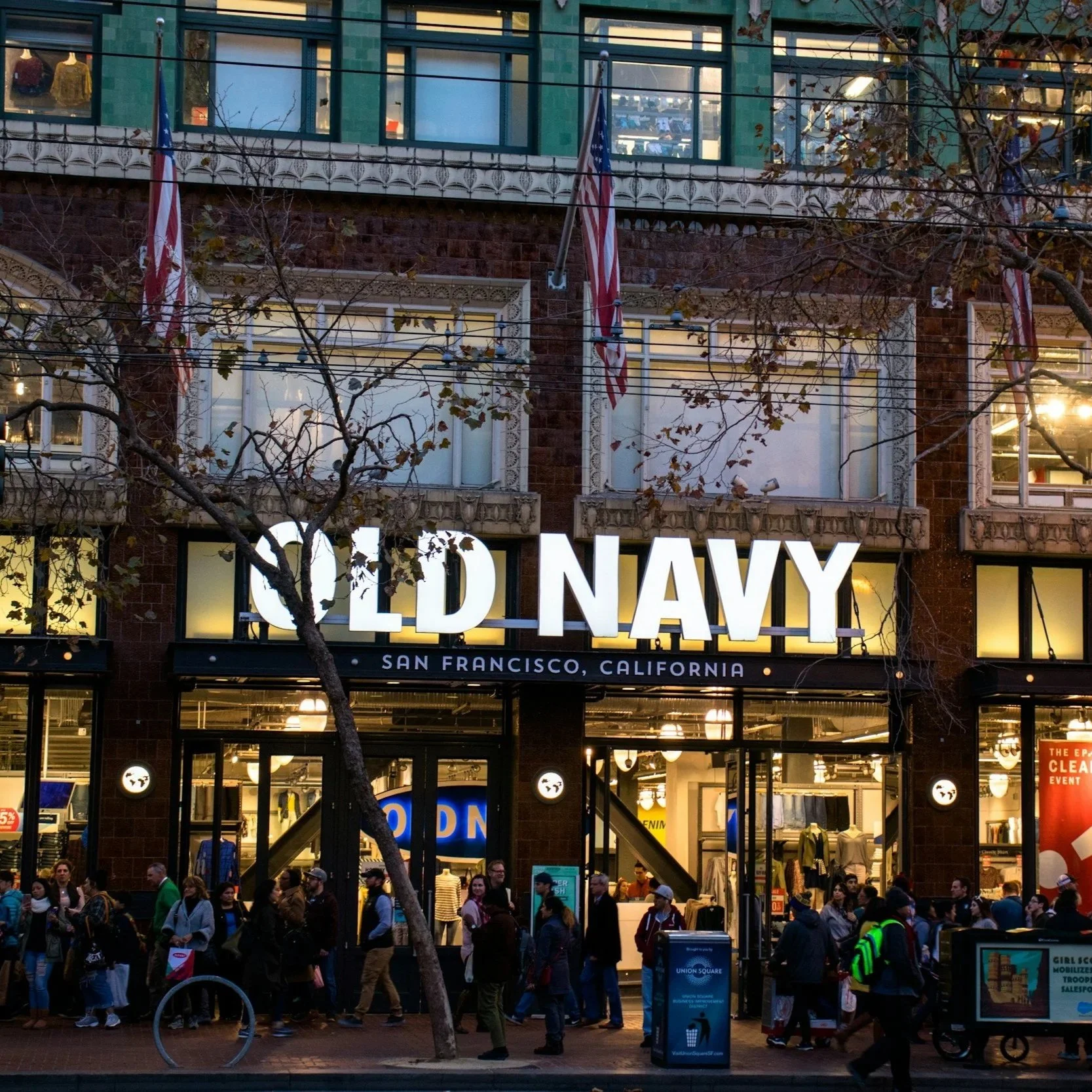
Old Navy didn't beat Gap by making nicer clothes. It made Gap-ish clothes — same trend cycle, cheaper fabric, a fraction of the price — and built a multi-billion-dollar business on shoppers who wanted to look current without paying for it.
Costco's Kirkland line does the same trick so well that the products are often made in the same factories as the name brands, just with a less famous label slapped on. Southwest stripped flying down to the only part most people cared about — getting there cheap and on time — and skipped the meals, seat assignments, and hub spaghetti that bloated everyone else's costs. Trader Joe's, Decathlon, Aldi: same playbook, different aisle.
The thread connecting all of them isn't "cheaper." It's deliberate subtraction. Each one figured out which 20% of the premium product's cost delivered almost no value to the average buyer — and cut it without flinching.
That's the whole game. So let's play it in your category.
The catch: you have to know which 80% to keep
Most sellers get this exactly backwards. They cut the visible stuff — the packaging, the part the customer touches first — and keep expensive specs nobody asked for. The result is a product that feels cheap and costs too much to make. Worst of both worlds.
The discipline is separating load-bearing features (the reasons the product exists; the things that generate one-star reviews when they fail) from signaling features (the stuff that justifies a premium price tag but doesn't change the experience for a normal human).
Your cheat sheet is the market leader's own review section. The 5-star reviews tell you what to protect. The 1-star reviews tell you the failure points that'll kill you if you copy the cheap guys. Everything mentioned in neither pile is fair game for the cost-cutting axe.
Now, four leaders worth studying right now — one per category — and how the 80/50 lens cracks each one open.
Home & Kitchen: Stanley Cups
The cautionary tale and the opportunity. Stanley's revenue rocketed from around $70M in 2020 to roughly $750M in 2023 on the back of the Quencher. But the trend has cooled — analysts are openly debating the slowdown, and competitors like Owala and Yeti have crowded in, while the broader tumbler market keeps growing toward an estimated $8B by 2033.
Here's the 80/50 read: Stanley taught the entire market what a 40oz handled tumbler should be — cup-holder fit, all-day cold retention, the straw, the handle. That education is now free to you. The load-bearing features are insulation performance and the lid/straw not leaking. The signaling features are the colorway drops, the limited editions, the brand-as-status-symbol stuff that fuels resale hype but adds nothing to the actual function. Build a tumbler that nails cold retention and a leakproof lid, skip the hype-cycle theater, price it at half — and you've got the product a tired parent buys instead of the $45 one.
Tech / Beauty: Dyson Airwrap
The Airwrap is the textbook 80/50 target: a ~$600 hair tool that beauty editors are now openly writing "dupe" roundups about, with Shark's FlexStyle repeatedly named the closest performer at a fraction of the price.
Why is this category so rippable? Because Dyson's price is propped up by a lot of signaling: the app integration, the bespoke "hair profile," the presentation case with the lid that doubles as a non-slip mat. Lovely. Almost nobody's purchase decision actually hinges on them. The load-bearing features are strong, controllable airflow, attachments that don't feel flimsy, and heat that won't fry thick hair. The dupes that win nail exactly those — and notably, the smart ones compete on warranty and replacement parts too, because a "deal" that dies in six months isn't a deal. That's your spec sheet: airflow, solid attachments, sane heat, a real warranty. Cut the app and the fancy case. Price at 40-50%.
Auto Parts: WeatherTech
WeatherTech built its name on laser-fit, vehicle-specific floor liners — and a full set can run north of $230. The entire aftermarket has noticed. Husky Liners, Smartliner, TuxMat, Yita, and others now offer liners reviewers describe as comparable protection at 30-40% less, with the whole floor mat market sitting around $10B.
The 80/50 lesson here is precise. The load-bearing feature is fit — laser-measured, edge-to-edge coverage and anti-slip anchors that actually hold. Reviewers forgive a lot, but they punish a mat that slides or leaves the footwell exposed. The signaling features are premium eco-leather textures, sleek contours, the "interior as personal style" upsell. Match the fit and the grip, run a cleaner everyday material, drop the luxury texture, and you've got the liner the practical truck owner buys — and trucks like the F-150 have been America's best-seller for forty years, so the "reasonable middle" buyer pool here is enormous.
Fashion: the Old Navy logic, applied to your niche
Fashion is where 80/50 was born, and it's also where it's most dangerous — because the wrong categories are pure signaling. (This is exactly why luxury watches are an 80/50 deathtrap: the buyer specifically wants the expensive thing.)
The rule for fashion: 80/50 works on the reasonable middle, not the aspirational top. It works on the trend-driven basics where a shopper wants the look of the moment and doesn't care whose label is inside — the Old Navy zone. It fails on status purchases where the logo is the product. Read your category honestly: if your customers are buying a feeling of exclusivity, run. If they're buying a look at a price, you're home.
Pricing the gap so it converts
Fifty percent is a great headline, but the real target is the "no-brainer" zone, usually 40-60% under the anchor price. Get too close to the leader (only 15-20% off) and shoppers just buy the brand they trust. Go too far (75%+ off) and you trip the "okay, what's wrong with it?" alarm that tanks conversion. Big enough to feel like a win, not so big it reads as a red flag.
Running the Strategy
This whole framework is really a sourcing brief in disguise. For any category you're eyeing:
- find the anchor — the dominant branded listing setting the price and review benchmark.
- map the price ladder beneath it: the ideal hunting ground is a strong leader with a gap between it and a crowd of low-quality cheap options. That gap is your 80/50 zone, and an empty one is a flashing green light.
- mine the leader's reviews to sort load-bearing from signaling, and build your sourcing spec around protecting the former while cutting the latter
- check that demand is broad, not premium-niche — 80/50 needs a big reasonable middle, not a status crowd.
The one mindset shift
Stop asking "how do I make this cheaper?" Start asking "what is this product actually for — and what is everything else?"
The market leader already spent millions answering the first question, then quietly conflated it with the second so they could charge you for both. Your entire edge is the discipline to tell them apart — and the nerve to sell the 80% on purpose, at a price that makes buying it feel like the smart move it is.