
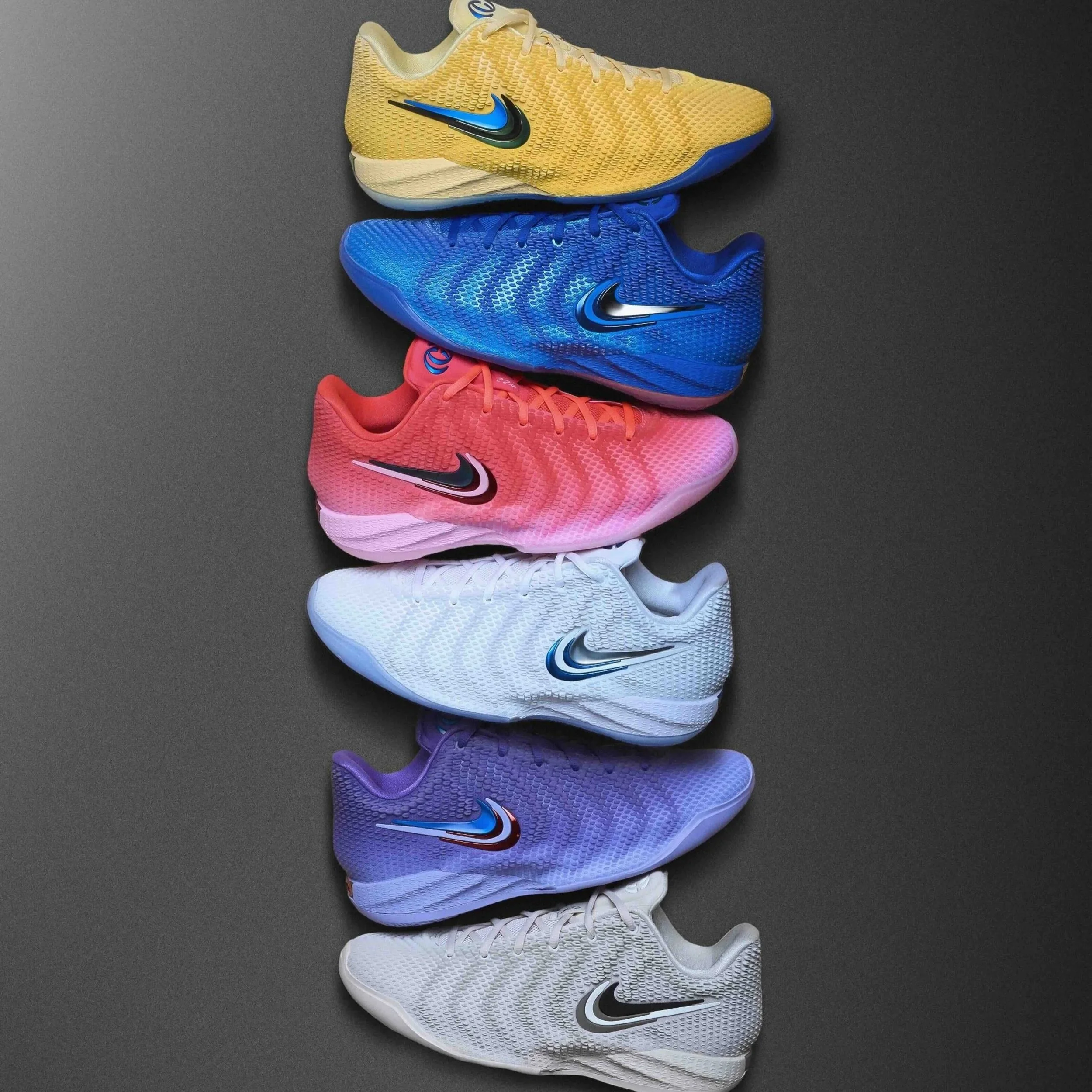
Article Summary: Key Insights at a Glance
- The global women's basketball shoe market is estimated at roughly $2.27 billion in 2026, growing from $2.12 billion in 2025 toward $3.97 billion by 2034 at a 7.2% CAGR. North America holds about 38.5% of revenue, and online stores are already the largest channel at 41.7% and the fastest growing at 9.8% a year.
- Spectator demand has exploded. The 2026 WNBA regular season drew a record 3.79 million fans, up 20.5%, and signature drops now sell out in minutes. A'ja Wilson's first Nike shoe sold out online in under five minutes, and Caitlin Clark's player edition Kobe resold on the secondary market for more than $350 against a $190 retail price.
- Playing demand is moving the other way. US girls' high school basketball participation fell from 451,600 in 2000 to 356,240 in 2025, a drop of about 21%. The market is being pulled by fans and collectors as much as by players, and sellers need to know which buyer they are serving.
- The central complaint has not changed in decades: most shoes sold to women are men's or unisex shoes in a smaller size. Buyers report heel slip, a forefoot that feels too roomy, confusing 1.5 size conversions and long break-in periods.
- The big brands have started to respond. One major brand built a women's specific last from scans of thousands of female athletes' feet, with a narrower shape, reduced forefoot volume, a redesigned heel and a raised arch. A women-only challenger brand reports seven-figure sales up about 40% and more than 80 NIL deals.
- For independent sellers, competing head-on with signature shoes is the wrong fight. The highest-scoring opportunity is a women's fit kit, built around heel-lock insoles, heel grips and performance socks, that fixes the unisex fit problem for $24.99 to $29.99 at close to 50% gross margin.
- Resale of signature models in women's sizes on secondary marketplaces scores well but carries thin margins, authentication costs and drop-day competition. Private label women's last court shoes are viable through team and club channels, but tooling, size runs and a 20% base footwear duty make them a second-stage move.
- Tariffs are the swing factor. Textile-upper athletic footwear valued over $12 a pair carries a 20% base duty in the US, with additional surcharges on Chinese-origin goods. Vietnam and Indonesia remain the practical origins for shoes, while accessories can still be sourced from China.
- Seasonality follows the basketball calendar: back-to-school in August, high school tryouts in October and November, holiday gifting in December, club and AAU season from March to July, and signature releases clustered around the WNBA season from May to October.
1. Actionable Insights First: Executive Opportunity Summary
Top 3 Selling Opportunities Right Now
Opportunity 1: A women's fit kit that fixes unisex shoes
Opportunity Score: 9/10
Most women who play basketball are wearing a shoe built on a men's last and scaled down. The result is a predictable set of problems: the heel lifts on every hard cut, the forefoot has too much volume, and the arch sits in the wrong place. Players fix this today with a patchwork of aftermarket insoles, heel grips, thick socks and runner's loop lacing learned from videos. Nobody has packaged the fix. A kit that combines a slim heel-lock insole with a deep heel cup and higher arch, adhesive heel grips, two pairs of cushioned basketball crew socks in true women's sizing, and a printed lacing guide answers the most common complaint in the category without asking the buyer to give up the shoe they already love.
- Profit margin range: 46% to 50% gross, 30% to 38% net after ads and returns
- Typical FOB: $4.80 to $5.80 per kit
- Typical retail: $24.99 to $29.99
- Growth signal: every new signature launch sells a unisex or scaled shoe to a new wave of buyers who then discover the fit problem
Opportunity 2: Signature and women's size resale on secondary marketplaces
Opportunity Score: 8/10
Signature launches from Nike, Puma and Reebok sell out fast, and smaller sizes are the first to vanish from retail. Caitlin Clark's player edition Kobes sold out within minutes and appeared on resale sites at nearly double retail. Her Caitlin 1 launched on 1 October 2026 at $140, with further colourways due on 14 October, 3 November, 24 November and 12 December, giving resellers a full holiday calendar of drops. A'ja Wilson's A'Two retails at $145 in women's sizes. Grade school sizes, which fit many adult women, retail lower and are heavily hunted.
- Profit margin range: 12% to 25% net on hyped colourways, near zero or negative on general releases
- Typical buy cost: $112 to $190 retail per pair
- Typical resale: $150 to $400 depending on colourway and size
- Growth signal: more signature lines than at any time in the sport's history, with a new release roughly every two to three weeks through the holiday window
Opportunity 3: A women's last court shoe sold direct to girls' clubs and teams
Opportunity Score: 7/10
The challenger brands have proven the idea: a basketball shoe designed around a narrower heel, higher arch and lower volume can win loyal players and grow quickly. The gap that remains is price and access. Club programmes buying for a whole roster want a reliable women's fit at $79 to $99, team colourways and bulk pricing, and the major brands rarely serve that order size well. A private label shoe built on a women's last in a Vietnamese or Indonesian factory, sold through club team stores and a direct site, can win this segment without fighting for search traffic against signature names.
- Profit margin range: 42% to 48% gross
- Typical FOB: $22 to $28 per pair
- Typical retail: $89.99 to $109.99
- Growth signal: online is the fastest-growing channel for women's basketball shoes, and team buyers increasingly order direct
Quick Action Items
Buy five unisex models in women's sizes and measure the heel gap. Before you source anything, buy the top-selling unisex and women's models in sizes 7 to 9, then measure heel cup width, toe box volume and arch height against a women's last spec sheet from your factory. This gives you the exact insole and heel-cup geometry your kit must deliver.
Publish a size conversion tool on every listing. The 1.5 size difference between men's and women's sizing confuses buyers on every unisex shoe. Put a simple conversion chart in the second image of every listing and in the packaging insert. It costs nothing and removes a major reason for returns.
Build the kit around one claim you can prove. Lead with "stops heel slip" and prove it with a slow-motion video of a hard lateral cut with and without the insole. Short-form video is the strongest sales channel for this product.
For resale, track sizes, not models. Sizes 5 to 8 in men's and grade school sizing move fastest for women buyers. Build a calendar of every signature release through December and set buying rules by size before drop day.
For private label shoes, start with one team colourway platform. Offer a single women's last silhouette in white with swappable colour accents, sold in team packs of 10 or more. This reduces size-run inventory risk while you learn which sizes move.
Red Flags to Avoid
Counterfeit and lookalike signature shoes. Copying the silhouette, logo or colourway of any player's signature shoe is trademark infringement. Marketplaces remove these listings and suspend accounts. Do not sell replicas, and buy resale stock only from authorised retail.
Custom painted branded shoes. Hand-painted versions of branded sneakers are popular on craft marketplaces, but adding a player's name, a league logo or a team mark creates trademark risk. Keep customisation to unbranded shoes or the buyer's own pair.
Medical claims about injury prevention. Research suggests shoe design can change knee loading in women athletes, but experts are clear that better shoes will not eliminate injuries such as ACL tears. Never claim a product prevents injury.
General release resale. Not every signature colourway sells out. Buying deep on a general release can leave you holding pairs that trade below retail once the season ends.
Ordering a full size run on a first shoe order. Footwear MOQs typically apply per colourway across a size run. A full run from 5 to 12 in half sizes can mean 15 or more SKUs per colour. Under-ordered sizes sell out and over-ordered sizes sit.
Best Entry Point for New Sellers
Product recommendation: A women's fit kit containing one pair of slim heel-lock performance insoles (deep heel cup, raised medial arch, low-volume forefoot), two pairs of cushioned basketball crew socks in women's sizing, a set of adhesive heel grips, spare round laces and a printed lacing and size conversion guide with a QR link to fit videos.
Primary marketplace: Amazon US
Secondary marketplace: TikTok Shop, with creator content from college, club and recreational players
Price range: $27.99 to $29.99
Startup cost breakdown for a 1,000 kit first order:
| Line Item | Cost | Notes |
|---|---|---|
| Fit kits (1,000 units) | $5,250 | $5.25 FOB per kit including insoles, two pairs of socks, heel grips and laces |
| Retail packaging and inserts | $500 | $0.50 per kit, printed conversion chart and QR fit guide |
| Sea freight and drayage | $450 | Compact and light, roughly $0.45 per kit |
| Duties and customs brokerage | $1,560 | Mixed HTS lines, roughly 25% effective rate on China origin plus broker fee |
| Wear testing and inspection | $600 | Player wear test panel plus pre-shipment inspection |
| Product photography and video | $1,000 | Slow-motion cut demos, lifestyle shots on court |
| Brand registry, UPCs, trademark filing | $650 | Required for A+ content and brand protection |
| Launch advertising (8 weeks) | $2,500 | Sponsored products and TikTok Shop affiliate commissions |
| Creator and player seeding | $700 | Kits for 40 to 50 college, club and rec league creators |
| Samples, testing and contingency | $850 | Insole samples from three suppliers plus roughly 6% buffer |
| Total startup cost | $14,060 | Roughly $14.06 fully loaded per kit at 1,000 units |
Why this works:
The fit kit attacks the one complaint every woman who plays in a unisex shoe recognises, and it does so without competing against the shoes themselves. Every signature launch, sell-out and restock creates new buyers for the kit. The product is light and compact, easy to demonstrate on video, and sits at an impulse price below most shoe accessories bundles. At roughly $14.06 fully loaded against a $27.99 to $29.99 price, there is room for fees, advertising and returns, and the kit opens a natural path into socks, ankle support, shoe bags and eventually a women's last shoe of your own.
The alternative first move, a private label basketball shoe, fails on capital and risk. A single colourway across a usable size run can tie up $15,000 to $25,000 in inventory before marketing, and the search results are dominated by the biggest names in the sport.
2. Quick Data Scans: Marketplace Sales Opportunity Analysis
Legend
| Score Range | Meaning | Action |
|---|---|---|
| 8 to 10 | High demand, low to moderate competition | Enter now |
| 5 to 7 | Moderate demand, moderate competition | Test carefully |
| 1 to 4 | Low demand or oversaturated | Avoid |
Marketplace Opportunity Matrix
| Marketplace | Opportunity Score | Product Segment | Est. Weekly Unit Sales | Est. Weekly Revenue | Avg Price Range | Est. Net Margin |
|---|---|---|---|---|---|---|
| Amazon US | 9 | Women's fit kits and heel-lock insoles (insole, socks, heel grips) | 150 to 300 | $4,200 to $9,000 | $24.99 to $29.99 | 30% to 38% |
| Amazon US | 7 | Basketball crew socks in women's sizing (3-packs) | 200 to 400 | $3,600 to $7,600 | $16.99 to $18.99 | 28% to 35% |
| Amazon US | 5 | Private label women's court shoes | 20 to 60 | $2,000 to $6,000 | $89.99 to $109.99 | 15% to 24% |
| eBay US | 8 | Signature models in women's and small men's sizes | 40 to 120 pairs | $7,000 to $30,000 | $150 to $350 | 12% to 25% |
| eBay US | 7 | Pre-owned and past season women's basketball shoes | 60 to 150 | $3,000 to $9,000 | $45 to $90 | 25% to 40% |
| StockX / GOAT | 7 | Deadstock signature drops (hyped colourways) | 20 to 60 pairs | $3,500 to $18,000 | $160 to $400 | 8% to 18% |
| TikTok Shop | 8 | Fit kits and game-day bundles | 120 to 300 | $3,300 to $9,000 | $24.99 to $34.99 | 28% to 36% |
| Shopify / DTC | 7 | Women's last court shoes and team packs | 15 to 50 | $1,500 to $5,500 | $89.99 to $109.99 | 30% to 40% |
| Club and team direct (B2B) | 8 | Team packs of women's last shoes and socks | 2 to 6 team orders | $1,800 to $6,000 | $85 to $99 per player | 32% to 42% |
| Walmart Marketplace | 6 | Insoles, socks and ankle braces | 50 to 120 | $1,000 to $2,800 | $17.99 to $29.99 | 25% to 32% |
| Amazon Australia | 6 | Fit kits and women's sizing socks | 30 to 80 | A$900 to A$2,800 | A$34.99 to A$44.99 | 26% to 34% |
| Etsy | 5 | Personalised lace charms, bag tags and shoe bags | 25 to 70 | $500 to $1,800 | $14.99 to $34.99 | 35% to 45% |
| Depop / Facebook Marketplace | 4 | Outgrown youth and women's shoes | 5 to 20 | $200 to $1,200 | $30 to $70 | 20% to 35% |
| Temu / Shein | 2 | Ultra-low-cost unbranded court shoes | High | Low | $19.99 to $39.99 | Under 5% |
Table Notes and Methodology
Unit and revenue estimates describe what a competent single seller with an established listing or account can expect in an average non-peak week, not total marketplace volume. Back-to-school in August, tryout season in October and November, and the December gifting window typically run 25% to 50% above these ranges. Resale volumes spike around specific drop dates and fall away between them.
Margin figures are net after marketplace fees, payment processing, inbound shipping, an assumed 6% to 12% return rate on footwear and 4% to 7% on accessories, and an advertising allocation of 10% to 15% of revenue. Resale margins also deduct authentication and platform seller fees, which can consume 9% to 15% of the sale price.
Opportunity scores weigh four inputs equally: demand depth, competitive density, the seller's ability to differentiate on something other than price, and margin durability. Private label shoes on Amazon score lower than the same product sold direct to teams because search traffic is dominated by signature names and established brands. Ultra-low-cost platforms score lowest because the price floor sits below a credible landed cost for a performance court shoe.
3. Deeper Context: Market Landscape and Buyer Intelligence
A. Market Overview
Category Definition and Size
Women's basketball shoes covers indoor court footwear designed, sized or marketed for women, from signature performance models to recreational and youth court shoes. The category splits into five practical segments:
- Signature performance shoes, named after WNBA stars and sold by the major brands. These carry the hype, the sell-outs and the resale market.
- Unisex team and takedown models, built on a men's last and offered in a wider size run. This is still what most women actually play in.
- Women's specific last shoes, designed from female foot data with a narrower heel, lower forefoot volume and higher arch. Small but growing fast.
- Youth and grade school shoes, sold to girls' club and school players and widely bought by adult women with smaller feet.
- Fit and performance accessories, including insoles, heel grips, socks, ankle braces and shoe bags that sit alongside every shoe purchase.
The global women's basketball shoe market is estimated at $2.12 billion in 2025 and forecast to reach $3.97 billion by 2034, a 7.2% CAGR, which puts 2026 at roughly $2.27 billion. High-tops still hold the largest share at about 42%, but low-tops are growing fastest at around 9.1% a year. Synthetic uppers account for about 45% of the market and mesh is the fastest-growing material. Online stores already hold 41.7% of distribution and are growing at 9.8% a year, against 4.8% for specialty stores. North America accounts for about 38.5% of revenue, Europe about 28.7%, and Asia-Pacific is the fastest-growing region.
Recreational players are the largest end user group at about 48%, with professional and competitive athletes at about 34%. That split matters: most buyers are not elite players, and they care as much about comfort, fit and style as they do about court performance.
Product Evolution and Recent Trends
The category has moved through three distinct phases.
Phase one, the late 1990s and 2000s, produced the first wave of women's signature shoes as the WNBA launched. Nine players had signature shoes early in the league's history, but deals dried up, and for about a decade no women's player received a signature shoe at all.
Phase two, roughly 2010 to 2022, was the unisex era. Women were largely served with men's models in smaller sizes. Brands argued that unisex sizing gave women access to the best technology, while players spent careers breaking shoes in to stop heel slip and blisters.
Phase three, 2023 to 2026, is the signature boom and the return of women's lasts. Breanna Stewart's Puma line reached its fifth model in May 2026. Sabrina Ionescu's Nike line reached the Sabrina 4 in September 2026, after the Sabrina 3 was adopted widely by men's players. A'ja Wilson's A'One sold out in under five minutes in 2025 and the A'Two followed in 2026. Angel Reese launched with Reebok, and Caitlin Clark's Caitlin 1 began rolling out in October 2026 with six colourways scheduled into December.
Four trends define 2026:
The fan buyer has arrived. WNBA attendance hit a record 3.79 million in 2026, with average crowds of 11,474. NBC averaged 1.75 million viewers, and a Sky against Fever game drew 3.31 million, the most-watched regular season game since 1997. Many signature buyers wear the shoes casually and never play competitively.
Participation is the soft spot. While viewership soars, girls' high school basketball participation has fallen about 21% since 2000, and broader survey data suggests the number of girls aged 12 to 17 playing has fallen by close to half. The playing population is smaller but more invested, often through year-round club programmes.
Women's lasts are back. A major brand designed a women's specific last from scans of thousands of female athletes' feet, with a narrower shape, reduced forefoot volume, a redesigned heel for better lockdown and a raised arch. Research co-funded by an early women's athletic brand found 11 significant differences between women's and men's feet and calves, and concluded women's shoes should not simply be scaled-down men's shoes.
Challenger brands are proving the model. A women-only basketball shoe brand founded in 2020 reports seven-figure sales up about 40% year on year, more than 80 NIL deals and a deal with a WNBA guard. Women's specific football boot brands have shown the same pattern, with revenue roughly tripling year over year.
Leading Brands and Market Disruptors
Nike dominates with an estimated 22.8% global share, plus a further 8.9% through Jordan Brand. It holds the Sabrina, A'One and A'Two, and Caitlin lines, which gives it the three most commercially powerful women's signature franchises in the sport.
Adidas holds an estimated 16.3% share. Its women's specific last work is the most visible big-brand effort to fix fit rather than simply add colourways.
Puma holds about 7.2% and has the longest-running active women's signature line in the Stewie series, praised for a lower price than competitors.
New Balance, Under Armour and Anta compete in performance and team models, with Asian brands such as Li-Ning, Peak and 361 Degrees growing in value performance.
Reebok returned to women's signature basketball with Angel Reese, its first women's signature player since 1997, and extended the deal in 2026.
Women-only challenger brands compete on fit, community and NIL relationships with college and high school players rather than on star power.
Private label opportunity assessment: Open in accessories and fit solutions, where there is no dominant brand and buyer pain is high. Moderately open in women's last team shoes sold direct to clubs. Closed in head-to-head signature competition on mainstream marketplaces.
Price Tiers and Popular Brands
| Tier | Price Range | Representative Products | Reseller Margin | Sourcing Strategy |
|---|---|---|---|---|
| Tier 1: Value court shoes | $40 to $75 | Unbranded and value brand court shoes, past season takedowns | 10% to 20% | Avoid as a lead product. Quality and fit rarely match player needs |
| Tier 2: Accessories and fit | $15 to $35 | Heel-lock insoles, basketball socks, heel grips, ankle braces, shoe bags | 45% to 55% gross | Private label from China accessory clusters at 500 to 1,000 units |
| Tier 3: Team and women's last shoes | $80 to $115 | Women-only challenger brands, Puma Stewie line, brand team models | 40% to 48% gross | Private label on a women's last from Vietnam or Indonesia, team pack sales |
| Tier 4: Signature performance | $110 to $150 | Nike A'Two around $145, Caitlin 1 around $140, Sabrina line around $130, Reebok Angel Reese 1 | Not available at wholesale for small sellers | Resale only, bought at authorised retail |
| Tier 5: Limited and player editions | $190 to $400 resale | Player edition Kobes, launch colourways, rare grade school sizes | 8% to 25% net | Drop-day buying with strict size rules |
B. Buyer Persona Deep Dive
Persona 1: The Player Who Sizes Down
Demographics: Age 18 to 34. Female. College, semi-pro, rec league or pickup player. Household income $45,000 to $110,000.
Purchase motivations, ranked: 1) Lockdown and traction for hard cuts. 2) A shoe that fits without weeks of break-in. 3) Looking current on court.
Price sensitivity: Moderate. Sweet spot $110 to $145 for shoes, $20 to $35 for fit add-ons.
Pain points:
- Heel slip in unisex models, even after lacing tight.
- Guessing the conversion between men's and women's sizes.
- Excess forefoot volume causing foot slide inside the shoe.
- Favourite models selling out in her size first.
What she is solving for: A secure fit without giving up the shoes everyone else is wearing.
Decision factors: Teammate recommendations, player reviews, fit videos and whether her size is in stock.
Brand loyalty: Moderate. Loyal to a line that fits, quick to switch if a new model runs wide.
Persona 2: The Club Basketball Parent
Demographics: Age 38 to 52. Mostly mothers, buying for daughters aged 10 to 17 in school and club programmes. Household income $70,000 to $160,000.
Purchase motivations, ranked: 1) Ankle support and fewer injuries. 2) Shoes that last a full season. 3) Keeping a fast-growing child in the right size.
Price sensitivity: High per pair, because feet grow every season. Sweet spot $70 to $110.
Pain points:
- Grade school versions that seem to have less cushioning than adult models.
- Buying two or three pairs a year as feet grow.
- Confusing youth, women's and men's sizing.
- Daughter wanting the signature shoe that is sold out.
What she is solving for: Safe, affordable, well-fitting shoes for a growing player.
Decision factors: Coach advice, durability reviews, price and team colour requirements.
Brand loyalty: Low to moderate. Follows what the team and coach recommend.
Persona 3: The Signature Collector
Demographics: Age 16 to 40. Roughly 70% female, 30% male. Follows the WNBA closely, buys for style and identity as much as performance.
Purchase motivations, ranked: 1) Supporting a favourite player. 2) Owning launch colourways. 3) Wearing the shoe off court.
Price sensitivity: Low for hyped releases. Will pay $140 to $350.
Pain points:
- Sold out within minutes on launch day.
- Resale markups of double retail on popular sizes.
- Bots and raffles that feel unfair.
- Colourways that feel designed by stereotype rather than for her.
What she is solving for: Access to the drop at a fair price.
Decision factors: Release calendars, colourway, authenticity and price relative to retail.
Brand loyalty: High to the player, moderate to the brand.
Persona 4: The Returning Player
Demographics: Age 30 to 50. Female. Played in high school or college and has returned through rec leagues, masters basketball or parent and child games.
Purchase motivations, ranked: 1) Joint protection and cushioning. 2) Stability for knees and ankles. 3) A comfortable all-session fit.
Price sensitivity: Moderate. Sweet spot $100 to $140, plus $25 to $45 for support products.
Pain points:
- Low-top styles feeling unstable after years away from the court.
- Arch fatigue in flat unisex footbeds.
- Knee soreness after games.
- Few products marketed to adult women who play recreationally.
What she is solving for: Playing again without paying for it the next day.
Decision factors: Cushioning reviews, support features and fit for women's feet.
Brand loyalty: Moderate to high once comfortable.
Persona 5: The Court Crossover Player
Demographics: Age 16 to 45. Female. Plays volleyball, netball, pickleball or futsal and buys basketball shoes for indoor grip and lateral support.
Purchase motivations, ranked: 1) Traction on indoor courts. 2) Lateral stability. 3) A lighter shoe than traditional high-tops.
Price sensitivity: Moderate. Sweet spot $80 to $120.
Pain points:
- Basketball shoes feeling heavy for her sport.
- Outsoles losing grip on dusty courts.
- Limited women's sizing in low-top models.
- Little guidance on which basketball shoes suit other court sports.
What she is solving for: One good indoor shoe for several sports.
Decision factors: Weight, traction reviews and low-top availability.
Brand loyalty: Low.
Persona 6: The Sneaker Reseller
Demographics: Age 18 to 38. Roughly 75% male, 25% female. Runs a side business buying launches and selling on secondary marketplaces.
Purchase motivations, ranked: 1) Profit per pair. 2) Fast sell-through. 3) Low authentication rejection rates.
Price sensitivity: High on buy cost, low on resale pricing.
Pain points:
- Not knowing which women's colourways will hold value.
- Women's sizing labels confusing buyers on resale listings.
- Thin margins after fees and authentication.
- Seasonal dead periods between drops.
What he is solving for: Predictable flips in a new and growing segment.
Decision factors: Release calendars, historic resale data and size demand.
Brand loyalty: None. Loyal to margin.
Persona 7: The Coach and Team Buyer
Demographics: Age 28 to 60. High school coaches, club directors and team managers ordering for 10 to 60 players.
Purchase motivations, ranked: 1) Consistent fit across a roster. 2) Team colours. 3) Bulk pricing and reliable delivery before the season.
Price sensitivity: High in total. Target $80 to $95 per player for shoes.
Pain points:
- Sizing a roster of girls when most team models use men's sizing.
- Stock gaps in smaller sizes when ordering in bulk.
- Minimum order rules from major brands that do not fit small clubs.
- Late deliveries before tryouts.
What they are solving for: A whole team in shoes that fit, on time.
Decision factors: Fit kits or size samples, delivery dates, team pricing and reorder reliability.
Brand loyalty: High once a supplier delivers on time.
The Club Basketball Parent and the Coach and Team Buyer are the most under-served personas in 2026. Both buy in volume, care about women's fit more than star power, and are poorly served by launch-driven retail.
C. Keyword and Search Trends
Search Volume and Term Structure
Search behaviour divides into four intent classes.
Class 1: Signature and hype. Player and model names such as Caitlin Clark shoes, A'Two, Sabrina 4 and Stewie 5. Very high volume around launches, dominated by brand and major retailer pages. Valuable to resellers, very hard for anyone else to rank on.
Class 2: Category discovery. Terms like women's basketball shoes, best basketball shoes for women and girls' basketball shoes. Steady volume, competitive, and rising alongside league growth.
Class 3: Fit and problem. Terms like basketball shoes for narrow feet women, heel slipping in basketball shoes, men's to women's shoe size conversion and best insoles for basketball shoes. Lower volume but the highest conversion and lowest competition. This is where independent sellers should concentrate.
Class 4: Team and youth. Terms like team basketball shoes bulk, girls' AAU basketball shoes and youth basketball shoes wide. Strongly seasonal around tryouts and club season, and often searched by parents and coaches.
Seasonal Demand Patterns
| Window | Dates | Relative Demand | Demographic Skew | Seller Action |
|---|---|---|---|---|
| Back-to-school | Late July to early September | High | Parents of school and club players | Stock youth sizes, socks and fit kits. Size conversion content |
| Tryouts and preseason | October to November | Very high | High school players, coaches, team buyers | Team packs, bulk sock orders, heel-lock insoles |
| Holiday gifting | Late November to December | Very high | Gift buyers, collectors | Signature resale peak, gift-ready fit kits and bags |
| High school and college season | January to March | Moderate to high | Active players replacing worn shoes | Replacement insoles, traction care, socks |
| Club and AAU season | March to July | High | Club players and travelling families | Team orders, multi-pair sock packs, shoe bags |
| WNBA season | May to October | High for signature | Fans and collectors | Track release calendars, resale buying windows |
Rising and Declining Queries
| Direction | Query Theme | Est. YoY Change | Interpretation |
|---|---|---|---|
| Rising | Caitlin Clark shoes and Caitlin 1 | +300% | Launch-driven spike. Huge for resale, closed for private label |
| Rising | Women's basketball shoes | +35% | League growth pulling category discovery |
| Rising | Basketball shoes for narrow feet women | +40% | Direct evidence of the unisex fit problem |
| Rising | Men's to women's shoe size conversion | +25% | Buyers confused by unisex sizing. Content opportunity |
| Rising | Low-top basketball shoes women | +30% | Matches low-tops as the fastest-growing shoe height |
| Rising | Basketball shoes for volleyball | +22% | Court crossover buyers seeking indoor grip |
| Rising | Heel lock insoles | +28% | Buyers searching directly for a fit fix |
| Declining | Pink basketball shoes women | -15% | Buyers moving away from stereotype colourways |
| Declining | High-top basketball shoes | -8% | Share shifting to low and mid-tops |
| Declining | Cheap basketball shoes | -12% | Buyers trading up as signature lines raise expectations |
Query direction and estimated change reflect relative interest signals across marketplace and web search tools and should be treated as directional rather than exact.
Consumer Insights from Community Forums
Analysis of buyer reviews on major retailer listings and discussion in communities such as r/Sneakers, r/BBallShoes, r/WNBA, r/Basketball and parent groups for club basketball surfaces a consistent complaint hierarchy. These are the twelve themes that recur most often:
Heel slip in unisex shoes. The most frequent fit complaint. Women describe the heel lifting on every cut, even with the laces pulled tight, because the heel cup was shaped for a wider male heel.
Size conversion confusion. Unisex shoes are often labelled in men's sizes. Buyers guess at the 1.5 size difference and end up returning pairs, or ordering two sizes to compare.
Too much forefoot volume. Even in the right length, many unisex models leave space above and around the forefoot, causing the foot to slide on lateral moves.
Long break-in periods. Professional players have described breaking in shoes for years to get a safe fit. Recreational players simply give up on models that never settle.
Smaller sizes selling out first. On popular unisex and signature models, sizes that fit most women disappear first, and resale prices are highest in exactly those sizes.
Resale markups. Fans are frustrated that launch shoes reappear online at close to double retail within hours.
Grade school versions with downgraded technology. Buyers with smaller feet notice that grade school versions are cheaper but sometimes use simpler cushioning or materials than the adult version.
Arch support in the wrong place. Women with higher arches report fatigue and discomfort in flat unisex footbeds, and buy aftermarket insoles that often add too much volume.
Shrink it and pink it. Women want designs and colourways built for them, not men's shoes in pastel colours. This complaint has softened as signature lines arrive but still appears often.
Knee and ankle worries. Buyers ask whether shoes can reduce injury risk, reflecting awareness of higher ACL injury rates in women's sport. Expert opinion is that shoes help with fit and stability but cannot prevent these injuries on their own.
Outsoles wearing fast outdoors. Indoor rubber compounds lose traction quickly on outdoor courts, which matters for players without regular gym access.
Limited width options. Women with wide or narrow feet find few performance models offered in widths, leaving them to choose between length and comfort.
What these complaints tell a seller:
The category's biggest unsolved problem is not technology or star power. It is fit. Buyers want a shoe that holds the heel, matches the shape of a woman's foot and comes in the right size label. The major brands are slowly fixing that at the top end. In the meantime, millions of women are playing in shoes that do not quite fit, and they are actively searching for a fix. Sellers who help them get a better fit from the shoes they already own, or who serve teams with a women's last at a fair price, are working with the strongest demand signal in the category.
4. Tools and Resources: Sourcing Decision Framework
Private Label Sourcing Calculator
| Product Type | Factory Price | MOQ | Shipping | Duties | Landed Cost | Amazon Fees | Total Cost | Retail Price | Gross Margin |
|---|---|---|---|---|---|---|---|---|---|
| Heel-lock performance insoles (deep heel cup, raised arch, low volume) | $2.80 | 500 | $0.30 | $0.70 | $3.80 | $7.55 | $11.35 | $24.99 | 54.6% |
| Women's fit kit (insoles, 2 pairs socks, heel grips, laces) | $5.25 | 500 | $0.45 | $1.31 | $7.01 | $8.70 | $15.71 | $29.99 | 47.6% |
| Basketball crew socks 3-pack (women's sizing, cushioned sole) | $2.10 | 1,000 | $0.25 | $0.44 | $2.79 | $6.30 | $9.09 | $17.99 | 49.5% |
| Lace-up ankle brace pair (figure-eight straps, low profile) | $3.60 | 500 | $0.40 | $0.90 | $4.90 | $8.70 | $13.60 | $29.99 | 54.7% |
| Ventilated shoe bag or sneaker backpack (separate shoe compartment) | $4.50 | 500 | $0.90 | $1.92 | $7.32 | $10.45 | $17.77 | $34.99 | 49.2% |
| Traction care kit (grip pad, cleaning wipes, brush) | $1.20 | 1,000 | $0.20 | $0.30 | $1.70 | $5.25 | $6.95 | $12.99 | 46.5% |
| Women's last court shoe (Vietnam origin, synthetic and mesh upper) | $24.00 | 600 pairs per colour | $2.20 | $4.80 | $31.00 | $22.50 | $53.50 | $99.99 | 46.5% |
Standard Assumptions Used
Factory price methodology. Accessory FOB figures reflect typical supplier ranges from footwear accessory and hosiery clusters in Zhejiang, Fujian and Guangdong, adjusted for the quality specifications in this guide. Court shoe FOB reflects typical quotes for a synthetic and mesh performance shoe with a rubber outsole and EVA or TPU-stabilised midsole from Vietnamese and Indonesian factories that already produce for athletic brands. The calculator assumes better-than-entry quality and branded packaging.
MOQ context. Insoles, socks and braces typically start at 500 to 1,000 units per design. Footwear MOQs commonly apply per colourway, often 600 to 1,200 pairs spread across a size run. Developing a new women's specific last can add $3,000 to $8,000 in tooling and sampling, and outsole moulds are charged per size. Using a factory's existing women's last can remove most of that cost.
Shipping assumptions. Sea freight LCL to a US fulfilment centre including drayage. Accessories ship compactly. Shoes ship in individual boxes inside master cartons, which raises freight per unit.
Duty rates. Textile-upper athletic footwear with rubber or plastic soles generally classifies under HTS 6404.11, with pairs valued over $12 carrying a 20% base rate. Chinese-origin footwear attracts additional Section 301 duties and, at the time of writing, other surcharges that can push the total well above 40%. The temporary 10% Section 122 surcharge that applied to most origins from February 2026 was scheduled to lapse around late July 2026, and proposed Section 301 duties on several other origins remain under review. The calculator applies 20% to Vietnamese-origin shoes and roughly 25% to Chinese-origin accessories. Tariff treatment has changed repeatedly in 2025 and 2026, so confirm current rates with a licensed customs broker before every order.
Fee breakdown. Amazon fees combine a 15% referral fee with an estimated FBA fulfilment fee by size tier. Shoes in boxes fall into a larger size tier than accessories.
Margin notes. Margins shown are gross after landed cost and marketplace fees only. They do not deduct advertising, which typically consumes 10% to 15% of revenue at launch, or returns, which run 6% to 12% on footwear and 4% to 7% on accessories. A 48% gross margin therefore translates to roughly 30% to 38% net contribution in a mature account. Selling the court shoe through team and direct channels avoids marketplace fees, lifting gross margin on that line into the 60% range before shipping and payment costs.
Quality and compliance. Specify outsole abrasion and slip testing, upper bond strength and insole compression set testing. Book third-party pre-shipment inspection on every footwear order. Socks and insoles should carry accurate fibre content labelling, and any product marketed to children should meet applicable children's product safety requirements.
Additional Strategy Tables
Strategy A: Bundle Architecture and Attach Rate
| Bundle | Contents | Target Persona | Bundle Price | Sum of Parts | Est. Gross Margin |
|---|---|---|---|---|---|
| Lockdown Kit | Heel-lock insoles, 2 pairs crew socks, heel grips, laces, fit guide | Player Who Sizes Down | $29.99 | $44.96 | 48% |
| Season Starter | Fit kit, ankle brace pair, ventilated shoe bag | Club Basketball Parent | $69.99 | $94.97 | 46% |
| Comeback Pack | Cushioned insoles, ankle braces, recovery socks, traction care kit | Returning Player | $59.99 | $77.96 | 47% |
| Collector Care Set | Traction care kit, shoe trees, dust bag, crease protectors | Signature Collector | $34.99 | $46.96 | 52% |
| Court Crossover Set | Low-volume insoles, grip pad, quarter socks | Court Crossover Player | $27.99 | $36.97 | 49% |
| Team Pack (12 players) | 12 pairs women's last court shoes, 36 pairs team socks, team size fitting kit | Coach and Team Buyer | $1,140.00 | $1,439.88 | 44% |
Strategy B: Seasonal Inventory Planning Calendar
| Month | Inventory Action | Marketing Focus | Notes |
|---|---|---|---|
| April to May | Place main accessory order for back-to-school. Place shoe orders for team season | Content library, creator seeding with club players | Footwear needs 90 to 120 days from order to delivery |
| June to July | Receive and inspect stock, place top-up for tryouts | Club and AAU tournament sponsorships | Lock in tariff and freight costs early |
| August | Full stock in youth and women's sizes | Back-to-school, size conversion content | Parents buy in short bursts before school starts |
| September to October | Team pack fulfilment, reorder fast movers | Tryout season messaging, coach outreach | Signature drops begin to cluster |
| November | Gift-ready bundles at fulfilment centres | Holiday gift guides, resale drop calendar | Black Friday demand, protect margin with bundles |
| December | Hold buffer stock, avoid late inbound shipments | Gifting, collector care sets | Fulfilment centre receiving slows |
| January to February | Reorder for spring club season | Replacement insoles and socks for mid-season players | Factories slow around Lunar New Year, order early |
| March | Second footwear order lands for club season | March tournament tie-ins, team orders | Plan next season's specifications from return data |
Sourcing Methodology Notes
- Start with existing women's lasts. Ask Vietnamese and Indonesian factories whether they already hold a women's specific last. Using an existing last can save several thousand dollars and months of development.
- Wear test with real players. Run a panel of 15 to 20 women players across positions for at least four weeks before approving production. Measure heel lift on video, not just comfort scores.
- Specify insole geometry in millimetres. Heel cup depth, arch height and forefoot thickness should be written into the purchase order, with tolerance limits, because small changes decide whether the insole fixes heel slip or adds volume.
- Order size runs from data. Weight footwear size runs toward women's sizes 7 to 9 and check return data after the first season before widening the run.
- Separate accessory and footwear origins. Accessories can be sourced efficiently from China. Shoes are usually better sourced from Vietnam or Indonesia to manage the duty stack.
- Protect against counterfeit claims. Avoid any design element that resembles a signature shoe or brand logo, and keep records of original design development.
- For resale, buy only from authorised retail. Keep receipts for every pair to support authentication and protect against account suspension.
Key Takeaways
- The fans are here, but the fit is not. Record crowds and sell-out drops have not fixed the core problem that most women play in shoes built for men's feet.
- Fit is the product. Heel lock, a lower-volume forefoot, a higher arch and honest sizing are the dimensions buyers care about and the ones the incumbents serve least well below the signature tier.
- Accessories are the low-risk entry point. A women's fit kit solves a widely shared problem at near 50% gross margin with modest capital.
- Resale works but is a trading business. Margins depend on picking the right colourways and sizes, and fees eat a large share of each sale.
- Team channels are the way into shoes. A women's last court shoe sold direct to clubs avoids the search battle and serves the most under-served buyers in the category.
Sources and References
Dataintelo, Basketball Shoes for Women Market Report, 2025 to 2034
Sneaker Freaker, active WNBA signature sneaker lines, September 2026
Front Office Sports, WNBA 2026 attendance and viewership growth, September 2026
Front Office Sports, A'ja Wilson Nike shoe release coverage
Front Office Sports newsletter, the women's shoe revolution
Straight Arrow News, A'ja Wilson signature Nike shoe sells out in five minutes
Just Women's Sports, Caitlin Clark signature shoe Caitlin 1 release details, 2026
NBC News, Caitlin Clark Kobe player edition sell-out and resale pricing
Sneaker Files, Nike A'Two release and pricing, October 2026
Adidas Group, women's specific last development for the Exhibit Select
Bloomberg via EBSCO, women basketball players stuck playing in men's shoes
WTOP and Associated Press, girls' high school basketball participation down 21% since 2000, January 2026
TariffLens, HTS 6404.11 footwear duty rates by origin, 2026
EightX, footwear import tariff tracker, 2026
Community discussion analysis across r/Sneakers, r/BBallShoes, r/WNBA, r/Basketball and club basketball parent groups
Data Collection Methodology: Market sizing draws on published third-party research specific to women's basketball shoes, and 2026 market value is extrapolated from the published 2025 base and CAGR. Release, price and sell-out information draws on brand and sports media coverage. Marketplace unit estimates are modelled from category signals and should be treated as directional. Complaint themes were derived by aggregating recurring issues across retailer reviews, sports media reporting and public community discussion. Sourcing figures reflect typical supplier ranges rather than negotiated quotes.
Seasonal Adjustment Notes: Weekly figures in the marketplace table describe an average non-peak week. August, October to November and December typically run 25% to 50% above stated ranges, while late spring can run 10% to 20% below outside club tournament weekends. Resale volumes are driven by specific release dates. Duty rates for footwear have changed repeatedly and should be verified with a licensed customs broker at the time of each order.