
Wait, What's Happening?
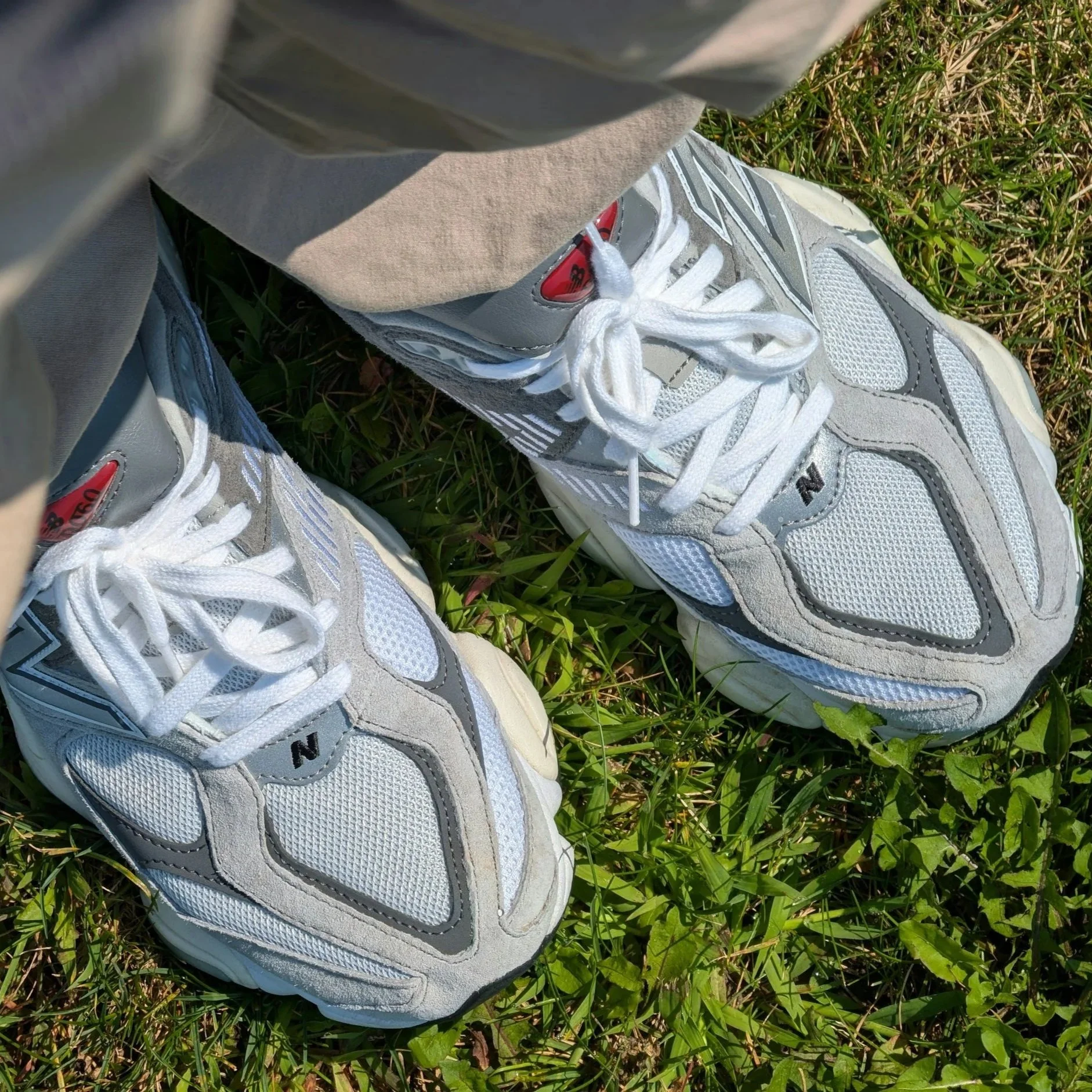
It's 1995. Your dad shuffles into the living room wearing a pair of white New Balance 990s — thick, boxy, the kind of shoe with "function over fashion" written all over it. You, deep into your Air Jordan phase, cringe. Those are dad shoes. The footwear equivalent of a beige sedan.
Fast forward to 2026 and those same sneakers are reselling for hundreds of dollars. New Balance just posted $9.5 billion in global sales — up 180% since 2020. Hoka is closing in on $2.6 billion annually, growing at nearly 16% while Nike sits flat. On Running now ranks as a top-7 sneaker brand among US teenagers. ASICS' Gel-1130 became StockX's single best-selling sneaker of 2025.
Meanwhile, Nike's Jordan Brand — the defining cultural product of an entire generation — posted a 16% revenue decline in fiscal year 2025, its worst performance in years. Nike's total revenue fell 10%, and the brand's global market share has slipped for the third consecutive year to 22.9%.
The dad shoe era didn't just arrive. It steamrolled everything that came before it.
For e-commerce entrepreneurs, this is one of the most significant market shifts in footwear in 30 years. Understanding why it happened, whether it will continue, and — most critically — what comes next, is the difference between riding a trend and getting crushed under it.
Part 1: How Gen Z Rewrote the Sneaker Rulebook
The Cultural Inversion Nobody Predicted
Gen X grew up with Michael Jordan. Millennials had Kobe, LeBron, and the Swoosh as a coming-of-age symbol. Sneaker culture for these generations was built on scarcity, basketball heritage, and the tribal identity of wearing the right logo. Nike and Jordan weren't just shoes — they were a social currency.
Gen Z inherited a completely different cultural framework. Born between 1997 and 2012, they came of age during the peak of "normcore" — the deliberate rejection of trying-too-hard fashion. Authenticity became the premium, not exclusivity. And ironically, the shoe most associated with not caring about fashion turned out to be the most authentic product on the shelf.
But it wasn't just about aesthetics. Gen Z also grew up watching their parents' knees give out from years of stylish-but-unsupportive footwear. Comfort is a genuine value for this cohort, not a compromise. The pandemic further accelerated the drift toward functional, everyday footwear that works as hard off the trail as on it.
New Balance captured this shift with almost surgical precision. The brand ranked #1 in brand equity growth among Gen Z adults in Q4 2024, registering a +18.3% lift in a single quarter according to QuestBrand by The Harris Poll. That didn't happen by accident.
The New Balance Playbook: Authenticity as a Growth Strategy
The 990 series — New Balance's original "dad shoe" — launched in 1982 at $100, making it the most expensive sneaker on the market at the time. The brand never pretended it was anything other than what it was: a serious running shoe with serious craftsmanship, still manufactured in the United States.
That "no-BS" positioning proved to be a sleeper asset. When the broader culture started rewarding authenticity over hype, New Balance already had it in its DNA. Collaborations with Aimé Leon Dore and rapper Jack Harlow drove resale values on the 2002R Protection Pack to $600+. Celebrity athletes like Shohei Ohtani gave the brand a face that resonated with younger consumers without alienating the core customer.
The result: $9.5 billion in FY2025 sales, up 19% year-over-year, and projections that suggest New Balance will continue to take shelf space from legacy competitors well into the decade.
ASICS, Hoka, and On Running: Three Brands, One Winning Formula
The other members of the "dad shoe" cohort each found their own lane within the same broader shift.
ASICS rode a tidal wave of TikTok-driven lifestyle adoption. The Gel-1130 went from a niche running community staple to a streetwear icon, recording a staggering +589% year-over-year trade growth on StockX in H1 2024, followed by another +71% in H1 2025. The brand's SportStyle line, popular in Europe and Asia for years, finally broke through in the US as Gen Z discovered it organically through social channels rather than paid marketing.
Hoka took a different route. Its maximalist cushioning — once mocked even more aggressively than New Balance's chunky silhouettes — became a performance and lifestyle icon simultaneously. With $2.587 billion in full fiscal year 2026 sales, up 15.9%, Hoka is now projecting low double-digit annual growth through 2030. Management's confidence isn't bluster: international sales are growing even faster than the overall business, suggesting Hoka's cultural penetration is still in early innings globally.
On Running weaponized cultural ambassadors. The Swiss brand's partnership with actor and style icon Zendaya resulted in a viral tennis match with co-founder Roger Federer that racked up 15 million Instagram views and 7 million TikTok views. That kind of earned media doesn't come cheap — but it converted. On Running has steadily climbed the teen brand preference rankings, and female teen mindshare is now under genuine pressure from On Running alongside UGG and Adidas.
Part 2: The Other Side — What Gen X, Y, and Millennials Actually Think
The Cultural Gap Is Real, and It's Good for Business
Here's the uncomfortable truth for Millennial and Gen X sellers who built their sneaker business around Nike, Jordan, and Adidas: the cohort making you cringe is making brands rich.
The Gen X and Millennial reaction to dad shoes is textbook generational identity defense. These are the consumers who:
- Camped outside Foot Locker for Jordan 1 retros
- Built entire social identities around the Swoosh
- Genuinely do not understand why anyone would pay $180 for something their father wore to the doctor's office
- View Hoka's maximal stack height as an aesthetic crime The "ugly" label is a feature, not a bug. Gen Z's ironic reclamation of dad aesthetics is a deliberate rejection of Millennial sneaker culture — the same psychological mechanism that made Crocs a billion-dollar brand, and Birkenstocks a fashion statement. The more violently Millennials resist it, the cooler it becomes for the generation behind them.
For sellers, this creates a genuine opportunity: the consumers most dismissive of these brands are often the same ones who haven't yet noticed how much shelf space they're losing to them.
Nike's Strategic Miscalculation — and What It Means for Sellers
Nike's decline isn't primarily about losing Gen Z to New Balance. It's about a self-inflicted strategy that handed competitors the shelf space they needed to scale.
During the pandemic, Nike's CEO John Donahoe aggressively pivoted to a direct-to-consumer model, pulling back from wholesale partnerships with retailers like Foot Locker, DSW, and smaller specialty shops. The strategy made sense on paper — higher margins, more data, more control. In practice, it opened entire bays of retail floor space that Hoka, On Running, and New Balance were thrilled to fill.
Nike's market share fell to 22.9% in 2025, losing roughly 3 percentage points year-over-year, marking the third consecutive year of decline. Jordan Brand revenue dropped 16% in fiscal year 2025. Nike shares are trading at their lowest level since 2014.
New CEO Elliott Hill has acknowledged the error and is aggressively rebuilding wholesale relationships. Early signs of stabilization appeared in Q2 FY2026 with revenue up 1%, but the wholesale rebuild is going to take years — and every month of rebuilding is another month that New Balance, Hoka, On, and ASICS entrench themselves further with retail buyers and consumers.
For e-commerce sellers: Hoka, New Balance, ASICS, and On Running are not benefiting from hype. They are benefiting from structural retail and cultural tailwinds that were years in the making, and Nike is only beginning to fight back.
Part 3: Is the Dad Shoe Trend Sustainable?
Peaking, Not Ending
On the momentum side: Hoka and New Balance are both projecting continued double-digit growth. Retail buyers at major chains like Rack Room Shoes explicitly called out Hoka, Pikolinos, Brooks, and New Balance as their top-performing predicted brands for fall 2026. "Chunky Sneakers" hit a Google Trends normalized score of 98 in November 2024 and held at 86 as of mid-2025 — still historically high, but showing the early contours of a plateau.
On the cooling side: by 2025, 45% of fashion experts were noting fatigue with oversized soles, with trends visibly shifting toward slimmer, more refined profiles. Rack Room's own senior buyer noted: "We're seeing momentum slow around oversized 'dad sneaker' silhouettes. While comfort remains essential, trends are clearly shifting toward more refined, streamlined sneaker profiles that feel polished and versatile."
The takeaway for sellers: the comfort-first era is permanent; the chunky aesthetic specifically may be cycling out. Brands that built their identity on genuine performance credentials — not just the shape of a thick sole — will outlast brands that only caught a style wave. New Balance and Hoka have that performance moat. Brands that only copied the silhouette without the substance are more vulnerable.
The Generational Clock Is Ticking
There's a deeper structural consideration here. Gen Z, the primary driver of dad shoe adoption, is now beginning to age into their late 20s. The next consumer cohort with outsized cultural influence — Gen Alpha, born from 2010 onward — is starting to enter the market.
Gen Alpha grew up on screens in ways even Gen Z didn't. Their cultural touchstones are more fragmented, more global, and more driven by micro-communities than mass moments. The uniform sneaker trend that Gen Z could rally around — one brand becoming THE shoe of the moment — is harder to replicate for a generation that curates identity across dozens of digital subcultures simultaneously.
What this means: the next big sneaker cycle will likely be characterised by faster-rotating micro-trends, premium niche brands gaining cult status before mass adoption, and collaborations with credibility-first communities (outdoor, trail running, technical fashion) rather than just celebrity faces.
Part 4: The Next Wave — 5 Brands a Smart Entrepreneur Should Be Watching
This is where the real e-commerce intelligence lives. The brands below are not yet household names for most casual sneaker buyers — but the data suggests they are where New Balance was circa 2020.
1. Mizuno — The Fastest-Growing Brand Nobody Is Talking About
Mizuno recorded a 124% increase in StockX sales in 2025, making it the single fastest-growing sneaker brand on the entire platform. Driven by lifestyle-forward silhouettes like the MXR and Wave Prophecy Moc, Mizuno has quietly built a following among buyers who want the comfort-and-chunky aesthetic without the brand saturation that now follows New Balance everywhere.
For entrepreneurs: Mizuno's retail footprint is still genuinely limited compared to its resale demand. Authorized resale and specialty retail positioning can still command meaningful premiums. This is the "pre-mainstream" window.
2. Salomon — Performance Heritage Meets Fashion Crossover
Salomon's parent company Amer Sports reported its Outdoor Performance segment revenue up 42% to $714 million in its most recent report, with direct-to-consumer sales in the segment growing 57%. The brand raised its full-year 2026 revenue growth guidance from 16-18% to 20-22% on the back of those results.
Salomon grew from a ski and trail running company with a cult following into a genuine lifestyle force — without ever abandoning the performance credibility that made people trust it. The XT-6 saw secondary market sales increase 202% during 2024. The XT-Whisper model is appearing on high fashion runways and streetwear feeds simultaneously. This is a brand that cracked the performance-to-lifestyle crossover that most brands fail at.
For entrepreneurs: Gorpcore — the aesthetic of outdoor technical wear as everyday fashion — is not a micro-trend. It's a multi-year shift with real staying power, especially among Gen Z outdoor enthusiasts and urban consumers who romanticize the outdoors without necessarily hiking. Salomon is the brand most fully positioned in this space.
3. Saucony — The Boutique Builder Going Mainstream
Saucony hit $155.9 million in Q1 2026 alone, up 20.1% year-over-year — a record quarterly result — on top of a full year 2025 in which the brand grew 31.1% to $533 million total. The growth is built on deliberately cultivated boutique-first relationships with specialty retailers, intentional market-by-market expansion, and collaborations with credibility-anchoring partners like Jae Tips and Bodega.
The brand is building the way sneaker brands with long shelf lives have always built: community first, scale second. The resale market rewarded this with +59% StockX growth in 2025, confirming that Saucony's boutique heat is translating to broader consumer desire.
For entrepreneurs: Saucony represents a less crowded conversation for affiliate content, review-driven discovery, and specialty retail curation. The brand has all the fundamentals of a multi-year winner without yet saturating the mainstream.
4. Maison Mihara Yasuhiro — The Wild Card for Resale Specialists
For sellers who operate in the premium or avant-garde resale space, Maison Mihara Yasuhiro's 91% StockX growth in 2025 is a clear signal. The Japanese brand's chunky, intentionally distressed designs occupy the intersection of fashion-forward and comfort-driven — effectively the next evolutionary step past the "standard" dad shoe aesthetic.
This is not a brand for general retail play. But for sellers targeting higher-income, fashion-literate Gen Z consumers, MMY represents exactly the kind of "before everyone else knows" opportunity that generates the best margins in sneaker commerce.
5. Asics Gel — The Brand That's Already Won and Keeps Winning
Don't overlook the fact that despite Asics having already had its massive runup, the brand is still posting record quarters and the Gel-1130 is still StockX's best-selling individual sneaker. Asics was literally punished by investors for a record quarter simply because it didn't raise its guidance aggressively enough — that is the definition of a brand that has earned sustained market confidence.
The SportStyle line continues to expand its US penetration, and the Gel silhouette family is broad enough that new colorways and models can sustain fresh demand for years without the brand feeling overexposed. For sellers, Asics is still a growth position, not a trailing one.
Part 5: The Entrepreneur's Playbook for This Market
What the Data Says About Timing
The sneaker resale market is projected to reach $30 billion by 2030 — roughly a 15% CAGR from current levels. The global primary sneaker market sits at approximately $96 billion in 2026, growing steadily. The structural conditions that enabled the dad shoe boom — comfort-first values, authenticity over hype, performance credibility as lifestyle currency — are not going away.
What is shifting is which specific brands capture that energy.
The playbook for a savvy entrepreneur:
Test early, before mainstream. Mizuno and Salomon are still in the window where early positioning in specialty retail, affiliate channels, or curated resale can build genuine category authority before the mass market arrives. The brands that will define the next five years are already visible in the data — they just haven't hit Foot Locker's top shelf yet.
Think categories, not just brands. The winners across New Balance, Hoka, On Running, Salomon, and Saucony share a common thread: they're all rooted in legitimate performance heritage. Trail running. Technical cushioning. Biomechanical research. The consumer increasingly wants the story behind the shoe, not just the logo on it. Content that educates on that story converts.
Own the collaboration signal. On StockX, the brands with the most dramatic growth — Mizuno, MMY, Uniqlo — all shared one characteristic: meaningful, community-credible collaborations. Limited collaboration drops consistently command the best resale premiums. For entrepreneurs, tracking upcoming collab announcements in the boutique sneaker space is an early-warning system for which models will spike.
Don't abandon the OGs entirely. Nike and Jordan remain the most-traded brands on StockX by volume. Nike's stabilization and the Vomero 5's 2026 cultural moment suggest the brand's comeback is real if uneven. For sellers, ignoring Nike because of its headline struggles would be a mistake — the consumer base that grew up with the Swoosh is still the largest single demographic spending on sneakers.
Watch the silhouette shift. As the chunky sole aesthetic cools, the next wave appears to be moving toward: slim low-profile runners (Samba-influenced but broader), hybrid sport-dress crossovers (the New Balance "snoafer" was not a joke — it's a signal), and technical outdoor silhouettes. These are the white spaces worth stocking into before they saturate.
Bottom Line
Your dad's shoes didn't just become cool. They became a $9.5 billion brand, a $2.6 billion brand, and the fastest-growing category in footwear — while the brands you grew up worshipping scrambled to understand what happened.
The generational inversion isn't over, but it is maturing. The chunky sole wave has crested. The underlying drivers — comfort, authenticity, performance heritage — have not. The next cycle will reward sellers who move on data before the mainstream does.
Mizuno. Salomon. Saucony. Maison Mihara Yasuhiro. These are the names that appear in the early data the same way New Balance did in 2020.
The question isn't whether there's a next wave. There always is.
The question is whether you're positioned for it before everyone else reads about it.
ShelfTrend publishes weekly market intelligence for e-commerce sellers navigating the platforms, brands, and categories that matter. Data sourced from StockX Current Culture Index 2025, Euromonitor International, The Harris Poll QuestBrand, Amer Sports earnings reports, Nike FY2025 filings, Deckers FY2026 results, and industry analyst commentary.