
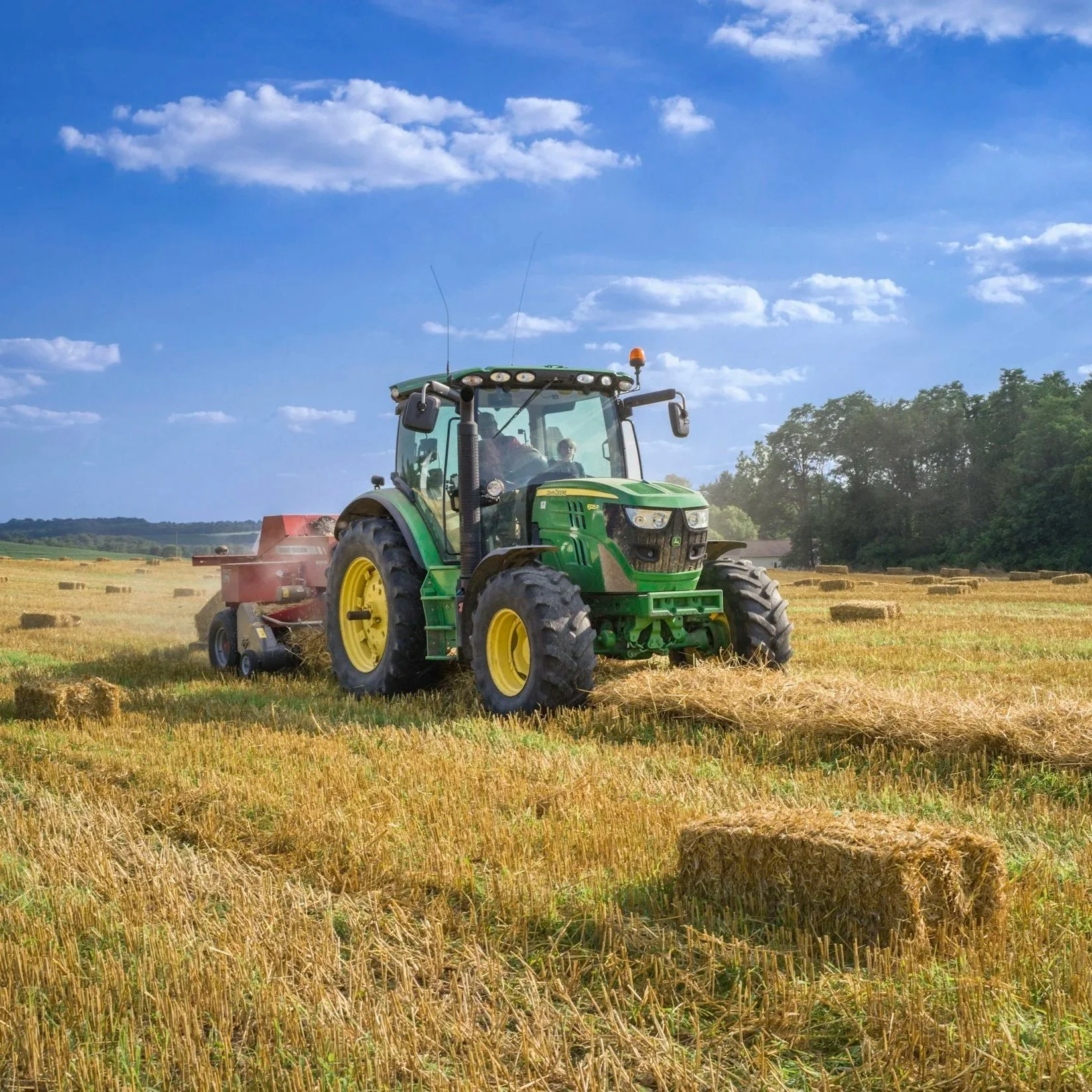
1. Actionable Insights -- Executive Opportunity Summary
Top 3 Selling Opportunities RIGHT NOW
Opportunity 1: Wear Parts Kits for High-Acreage Tractors (John Deere / Case IH Compatible)
- Segment: Aftermarket tillage wear parts (points, sweeps, shovels, disc blades)
- Marketplace: Amazon + Direct DTC / Shopify
- Opportunity Score: 9/10
- Profit Margin Range: 38--55%
- YoY Growth: Aftermarket farm parts growing at 6.1% CAGR; wear parts are highest-velocity SKUs
- Why now: New equipment sales dropped 26.5% through late 2025 -- farmers are keeping older iron running, not buying new
Opportunity 2: Tractor Filter Kits (Multi-Pack, Branded as Maintenance Bundles)
- Segment: Engine filters, hydraulic filters, fuel filters -- bundled by machine make/model
- Marketplace: Amazon FBA + eBay
- Opportunity Score: 8/10
- Profit Margin Range: 32--48%
- YoY Growth: Parts and digital service revenue now exceeding new equipment sales in key US dealer groups
- Why now: 80% of US farmers hold onto equipment long-term; filter bundles reduce repeat ordering friction
Opportunity 3: Electrical & Sensor Components for Pre-2014 Equipment
- Segment: Alternators, starter motors, switches, sending units -- analog-era machines
- Marketplace: eBay Motors + Amazon
- Opportunity Score: 8/10
- Profit Margin Range: 35--50%
- Why now: Right-to-repair momentum is pushing independent repair; pre-2014 equipment has no software lockout, making DIY repair accessible
Quick Action Items
- Source wear parts (points, sweeps, disc blades) from Shandong and Hebei province suppliers on Alibaba -- MOQs as low as 200 units, landed cost typically $2--$6 per piece vs. $12--$28 retail at dealers
- Build compatibility-first listings -- always lead with machine make, model, year in title and bullets; this is the #1 conversion driver in this category
- Bundle filter kits by equipment model (e.g., "John Deere 5075E Annual Service Kit") -- farmers searching for convenience will pay a 25--35% premium over individual SKU pricing
- Target the spring pre-season window (February--April) and fall pre-harvest (August--September) for PPC spend and inventory positioning -- these are peak demand surges
- List on eBay Motors alongside Amazon -- ag parts buyers are highly active on eBay and tolerate slightly longer ship times, giving you margin breathing room
Red Flags to Avoid
- Branded OEM parts reselling without authorization -- John Deere, CNH Industrial, and AGCO aggressively police their part numbers and branding; listing "genuine" parts you sourced as aftermarket exposes you to takedown and account suspension
- Electronic control modules and ECU components for post-2014 equipment -- software lockout and proprietary coding make these near-impossible to fulfill correctly; returns will destroy margins
- Combine header components (high SKU complexity, heavy shipping weight) -- headers involve extremely precise tolerances and massive freight costs; margin erosion is near-certain for new sellers
Best Entry Point for New Sellers
Product: Aftermarket tillage wear parts multi-pack (points, shovels, sweeps) compatible with major tractor brands Primary Marketplace: Amazon FBA Secondary Marketplace: eBay Price Range: $28--$85 per kit (2--8 piece packs)
Startup Cost Breakdown:
| Item | Estimated Cost |
|---|---|
| Initial inventory (500 units / 2 SKUs) | $1,800--$3,200 |
| Freight / import (sea + drayage) | $400--$700 |
| Import duties (HTS 8432.90, ~2.5%) | $55--$90 |
| Amazon FBA setup + first 3 months storage | $200--$350 |
| Product photography (2 SKUs) | $150--$250 |
| PPC launch budget (60 days) | $400--$600 |
| Total Estimated Launch Investment | $3,005--$5,190 |
Why this works: Wear parts are consumables -- farmers reorder every 1--2 seasons. Once you win a repeat buyer, LTV is strong. The compatibility-first format (machine-specific listings) dramatically reduces returns and builds review velocity fast.
2. Marketplace Sales Opportunity Analysis
| Marketplace | Opportunity Score | Product Segment | Est. Weekly Unit Sales | Est. Weekly Revenue | Avg Price Range | Est. Profit Margin |
|---|---|---|---|---|---|---|
| Amazon | 9 | Tillage wear parts kits | 320--580 | $18,000--$35,000 | $38--$75 | 40--52% |
| 8 | Filter maintenance bundles | 200--400 | $9,000--$20,000 | $35--$65 | 33--46% | |
| 6 | Belts and drive components | 80--150 | $5,500--$12,000 | $45--$120 | 28--38% | |
| eBay | 9 | Electrical / starter / alternator | 180--350 | $12,000--$28,000 | $55--$145 | 35--50% |
| 8 | Wear parts (tillage, planter) | 140--280 | $8,000--$18,000 | $28--$85 | 38--52% | |
| 6 | Used/reman engine parts | 60--110 | $6,000--$14,000 | $80--$220 | 22--35% | |
| Shopify / DTC | 8 | Model-specific filter bundles | 80--160 | $6,000--$14,000 | $55--$110 | 45--58% |
| 7 | Planter row unit components | 40--90 | $4,500--$10,000 | $65--$180 | 38--48% | |
| Walmart Marketplace | 6 | Small tractor filters / belts | 60--120 | $2,500--$6,000 | $18--$55 | 28--38% |
| 5 | Garden tractor / compact parts | 90--180 | $2,000--$5,500 | $15--$45 | 22--32% | |
| TractorHouse / MachineryTrader | 8 | Large machine wear / engine parts | 30--70 | $8,000--$20,000 | $120--$450 | 30--44% |
| TikTok Shop | 5 | Compact / hobby farm accessories | 20--60 | $800--$3,000 | $18--$55 | 28--38% |
| Target Plus | 2 | Not relevant channel for this category | N/A | N/A | N/A | N/A |
| Farm Supply Distributors (B2B) | 8 | Bulk wear parts, belts, filters | 100--300 | $12,000--$35,000 | $90--$350 (case) | 22--32% |
Table Notes: Weekly unit estimates based on aggregated Amazon BSR data for ASIN clusters in the Farm & Ranch Parts category (subcategories: Tillage Parts, Tractor Maintenance, Ag Electrical), cross-referenced with eBay Motors completed listings. Revenue estimates assume mid-range price points. Margins are post-COGS, post-platform fees (Amazon 15% referral + FBA fulfillment), and net of estimated PPC spend (8--12% of revenue during launch phase). B2B channel margins reflect wholesale pricing to distributors. TikTok Shop entry reflects hobbyist/small-acreage adjacent demand only.
Opportunity Score Key:
- 8--10 (green): High demand, manageable competition -- ENTER NOW
- 5--7 (yellow): Moderate demand or moderate competition -- TEST CAREFULLY
- 1--4 (red): Low demand or poor channel fit -- AVOID
3. Deeper Context -- Market Landscape & Buyer Intelligence
A. Market Overview
Category Definition & Size
The farm machinery parts category covers all replacement, maintenance, and wear components used to keep agricultural equipment operational -- from commodity consumables like disc blades and filter kits to higher-value assemblies like starter motors, hydraulic cylinders, and planter row unit components. The global aftermarket farm equipment parts market reached $28.7 billion in 2024 and is projected to grow at a 6.1% CAGR to reach $48.7 billion by 2033, with North America and Europe accounting for a combined $13.2 billion of that total.
The US market sits inside a broader agricultural machinery market valued at approximately $32 billion in 2026, growing at 6.4% annually. The aftermarket segment is outpacing new equipment sales growth -- a structural shift driven by farmers extending equipment life rather than trading up. Demand peaks in two distinct windows: spring pre-season (February through April) when equipment is prepped for planting, and late summer (August through September) ahead of harvest. Off-season demand in November through January is roughly 35--40% lower.
Product Evolution and Recent Trends
The farm parts market is bifurcating sharply. On one side, high-precision, software-dependent components tied to post-2014 equipment are increasingly locked behind OEM proprietary systems. On the other, the vast installed base of older mechanical and semi-mechanical equipment -- tractors, planters, tillage tools -- runs on parts that are fully open to aftermarket supply. This is where the opportunity lives for independent sellers.
Three trends are defining the market in 2025 and 2026. First, the right-to-repair movement has energized farmers to self-maintain equipment, expanding demand for DIY-compatible parts. Second, new large ag equipment sales dropped 26.5% through October 2025, driving farmers to extend equipment lifecycles and increase parts spend. Third, dealer parts prices have risen 41% since 2020 according to BLS data, creating a clear price arbitrage window for online sellers offering quality aftermarket alternatives.
Leading Brands and Market Disruptors
John Deere (Deere & Company), CNH Industrial (Case IH, New Holland), AGCO (Massey Ferguson, Challenger), and Kubota dominate the OEM parts ecosystem. Their dealer networks are extensive but expensive -- OEM markup over aftermarket equivalents typically runs 60--150% on common wear items.
Key independent aftermarket players include Shoup Manufacturing (founded 1977, direct-to-farmer model), All States Ag Parts, and Messick's Parts. The disruptor opportunity belongs to online-native sellers who combine compatibility-matched listings, faster fulfillment than rural dealers, and aftermarket pricing -- the formula that is actively pulling revenue away from traditional dealers.
Price Tiers and Popular Brands
- Tier 1 -- OEM Genuine ($$$): John Deere Green, Case IH Red, AGCO/Fendt parts. Highest quality assurance, warranty-compliant. Margins 15--25% for authorized resellers only. Not viable for independent online sellers without authorization.
- Tier 2 -- Premium Aftermarket ($$+): Shoup, All States, Spartan Equipment. Quality comparable to OEM on most wear parts. Retail 30--50% below OEM MSRP. Margin 28--38%.
- Tier 3 -- Standard Aftermarket ($$): Mid-range Alibaba-sourced suppliers (ISO9001 certified). Viable for consumable wear parts, filters, belts. Retail 40--60% below OEM. Margin 35--52%.
- Tier 4 -- Economy ($ ): Low-cost generics, often unlabeled or white-label. Appropriate only for non-critical, short-use applications. High return rates on precision parts. Avoid for anything load-bearing or precision-fit.
B. Buyer Persona Deep Dive
Persona 1: The Self-Sufficient Mid-Scale Farmer
- Demographics: Male, 42--58, operates 500--2,000 acres, Midwest/Plains, household income $85,000--$160,000
- Purchase Motivations: Keep equipment running at lowest per-acre cost, avoid dealer service calls during planting and harvest windows
- Price Sensitivity: Moderate -- will pay premium for proven quality but shops hard on consumables
- Pain Points:
- Dealer parts counter is 45--90 minutes away; every service call is a half-day lost
- OEM parts orders frequently backordered during peak season
- Hard to verify aftermarket quality before buying online
- Compatibility confusion -- same part listed under 12 different part numbers across brands
- What they're solving for: Zero downtime during 3-week planting windows and 4-week harvest seasons
- Decision Factors: Compatibility certainty, shipping speed, returns policy, peer reviews from other farmers
- Brand Loyalty: Moderate to OEM brand but high price sensitivity pushes toward aftermarket when trust is established
Persona 2: The Hobby / Small Acreage Farmer
- Demographics: Male or female, 38--65, 10--150 acres, rural suburb or exurb, secondary income from farming
- Purchase Motivations: Keep compact or utility tractors operational; cost-conscious repair mentality
- Price Sensitivity: High -- comparing multiple sources, Amazon price-shops heavily
- Pain Points:
- Local dealer won't stock parts for older compact models
- Confusing fitment information online -- wrong parts arrive frequently
- Overpaying at big-box rural stores for basic filters and belts
- Long lead times from specialty ag suppliers
- What they're solving for: Quick, affordable fixes for non-critical equipment
- Decision Factors: Price, Prime shipping, clear fitment guide, easy returns
- Brand Loyalty: Low -- price and convenience drive decisions
Persona 3: The Independent Ag Mechanic / Repair Shop
- Demographics: Male, 30--55, rural service area, serves 50--200 farm clients
- Purchase Motivations: Source quality parts fast at prices that preserve repair margin
- Price Sensitivity: Moderate -- buying in volume, looking for wholesale or case pricing
- Pain Points:
- Dealer backorders kill shop scheduling during peak season
- Can't verify supplier quality until parts are installed and tested
- Managing multiple supplier accounts and catalogs is time-consuming
- Returns process with online marketplaces is slow for a business buyer
- What they're solving for: Reliable, fast parts supply that protects their service reputation
- Decision Factors: Part availability, shipping reliability, quality consistency, volume pricing
- Brand Loyalty: Strong supplier loyalty once quality is validated
Persona 4: The Equipment Flipper / Auction Buyer
- Demographics: Male, 28--50, buys used equipment at auction, repairs and resells
- Purchase Motivations: Sourcing cheap parts to maximize resale margin on reconditioned equipment
- Price Sensitivity: Very high -- cost minimization is the entire model
- Pain Points:
- Part numbers on older machines are worn or missing
- Cross-referencing parts across brands requires expertise and time
- Cheap parts fail before resale, creating warranty liability
- What they're solving for: Maximum reconditioning margin with acceptable quality floor
- Decision Factors: Price, cross-reference compatibility data, refund policy
- Brand Loyalty: None -- purely transactional
Persona 5: The Large-Scale Operation Manager
- Demographics: Male, 38--55, manages 5,000+ acre operation or ag contracting fleet
- Purchase Motivations: Predictive maintenance and bulk procurement planning; minimize machine downtime across fleet
- Price Sensitivity: Low on unit price if reliability is proven; very price-sensitive on volume contracts
- Pain Points:
- Juggling OEM and aftermarket supply chains across multiple machine brands
- No single source for all required parts
- Dealer service consolidation means fewer local touchpoints and slower emergency response
- What they're solving for: Supply chain reliability and fleet uptime metrics
- Decision Factors: Supplier relationship, bulk pricing, product consistency, cross-brand coverage
- Brand Loyalty: High to proven supply partners; hard to switch but worth pursuing
Persona 6: The Precision Ag Early Adopter
- Demographics: Male, 30--48, progressive farmer investing in GPS, sensors, automation
- Purchase Motivations: Upgrade aging equipment with compatible modern components; avoid proprietary lock-in
- Price Sensitivity: Low for performance-oriented components
- Pain Points:
- OEM diagnostic software restricts DIY repairs post-2014
- Third-party sensor and controller compatibility issues
- Right-to-repair tools from OEMs are technically inferior to dealer-only versions
- What they're solving for: Independent repair capability and technology upgrades without OEM dependency
- Decision Factors: Technical specs, community validation (forums, YouTube), compatibility with third-party software
- Brand Loyalty: Brand agnostic -- community-driven purchasing
C. Keyword and Search Trends
Google Trends and Search Volume
Top monthly search terms (US, estimated volumes):
| Keyword | Est. Monthly Searches | Trend |
|---|---|---|
| tractor parts | 74,000 | Stable |
| John Deere parts | 60,500 | Stable |
| aftermarket tractor parts | 9,900 | Rising +18% YoY |
| farm equipment parts | 8,100 | Rising +12% YoY |
| Case IH parts | 6,600 | Stable |
| tractor filter kit | 4,400 | Rising +22% YoY |
| disc blade replacement | 3,600 | Seasonal spike Feb-Apr |
| tillage wear parts | 2,900 | Rising +15% YoY |
| John Deere 5075E parts | 2,400 | Stable |
| combine wear parts | 2,200 | Seasonal spike Aug-Sep |
| tractor starter motor replacement | 1,900 | Rising +8% YoY |
| right to repair tractor | 1,600 | Rising +40% YoY |
Seasonal Demand Patterns
- Pre-Planting (February--April): Peak demand, approximately 40% of annual parts volume. Tillage wear parts, planter row unit components, and filter bundles lead. Primarily male buyers aged 35--60.
- Mid-Season Maintenance (June--July): Moderate demand, 20--25% of annual volume. Focus on belts, electrical, hydraulic seals.
- Pre-Harvest (August--September): Second peak, approximately 25--30% of annual volume. Combine wear parts, header components, electrical. High urgency = reduced price sensitivity.
- Off-Season (October--January): 10--15% of annual volume. Rebuild kits, engine overhaul parts, slow-moving specialty items.
Rising vs. Declining Queries
Rising searches (2024--2025):
- "aftermarket tractor parts" +18%
- "tractor filter bundle" +22%
- "right to repair farm equipment" +40%
- "John Deere parts alternatives" +28%
- "tillage wear parts online" +15%
- "combine belts replacement" +11%
- "tractor alternator replacement" +9%
- "farm parts free shipping" +17%
Declining searches:
- "tractor dealer parts counter" -12%
- "OEM tractor warranty parts" -8%
- "Case IH dealer service" -14%
- "AGCO dealer near me" -9%
The decline in dealer-directed search and rise in "alternatives" and "aftermarket" searches is a clear signal: farmers are actively seeking to bypass the OEM dealer channel for routine parts.
Consumer Insights from Community Forums
Analysis of discussions across r/farming, r/homesteading, Tractor Forum, Yesterday's Tractors Forums, and AgTalk reveals a concentrated set of complaints:
Top complaint: Parts availability and dealer backorders. Forum members repeatedly describe losing critical planting or harvest days waiting for OEM parts that are backordered at dealers. One recurrent theme: "Dealer couldn't get the part for two weeks; found it online and had it in two days." Speed of fulfillment is the primary reason farmers are shifting online.
Second most common complaint: Price shock at dealer parts counters. Farmers routinely report paying 2--3x more at a dealer for parts that are available in the aftermarket at comparable quality. Comments like "dealer wants $180 for a filter kit I can get for $65 online" are representative. The 41% increase in parts and labor costs since 2020 (BLS) has made price comparison behavior near-universal.
Third complaint: Compatibility confusion online. A recurring frustration is ordering parts that list as compatible but do not fit correctly. Poor fitment data -- especially on Amazon -- generates significant negative reviews in the category. Sellers who invest in rigorous fitment guides, cross-reference tables, and "fits your machine" confirmation workflows win disproportionate share of reviews and repeat purchases.
Right-to-repair frustration (post-2014 equipment): A meaningful segment of the forum community expresses deep frustration that software lockouts prevent self-repair on newer machines. This creates pent-up demand for compatible third-party components and diagnostic tools, but is a high-risk space for new sellers given patent and software complexities.
4. Tools and Resources -- Sourcing Decision Framework
Private Label Sourcing Calculator
| Product Type | Factory Price | MOQ | Shipping | Duties | Landed Cost | Amazon Fees | Total Cost | Retail Price | Profit Margin |
|---|---|---|---|---|---|---|---|---|---|
| Tillage Sweep (5-pack) Carbon steel, fits JD/Case sweeps |
$4.20 | 200 units | $1.10 | $0.32 HTS 8432.90 ~2.5% |
$5.62 | $8.95 15% ref + FBA |
$14.57 | $34.99 | 58.4% |
| Disc Blade (10-pack) 18" smooth edge, universal fit |
$5.80 | 100 units | $2.40 | $0.47 | $8.67 | $12.00 | $20.67 | $54.99 | 62.4% |
| Tractor Annual Filter Kit Engine + hydraulic + fuel, model-specific |
$8.50 | 100 kits | $2.20 | $0.35 HTS 8421.99 ~2.5% |
$11.05 | $14.25 | $25.30 | $62.99 | 59.8% |
| Tractor Alternator (12V, 65A) Fits JD/Case utility tractors, remanufactured-style |
$22.00 | 50 units | $5.50 | $1.40 HTS 8511.50 ~2.5% |
$28.90 | $19.50 | $48.40 | $119.99 | 59.7% |
| Planter Row Unit Gauge Wheels (pair) Cast iron, fits standard row units |
$11.00 | 100 pairs | $4.80 | $0.85 | $16.65 | $18.75 | $35.40 | $84.99 | 58.3% |
| Drive Belt (V-belt, assorted 3-pack) Fits compact utility tractors, PTO applications |
$5.40 | 200 packs | $1.20 | $0.25 | $6.85 | $8.25 | $15.10 | $38.99 | 61.3% |
Standard Assumptions Used:
- Factory prices based on Alibaba verified supplier quotes (ISO9001 certified, Shandong / Hebei province); 3+ supplier quotes averaged
- Shipping assumes sea freight (LCL) + US drayage + Amazon FBA inbound prep; estimated $0.80--$2.50/unit depending on weight/volume
- Duties calculated at HTS code rates as noted; does not account for potential tariff adjustments -- verify current rates at trade.gov before ordering
- Amazon fees: 15% referral fee (Farm & Ranch category) + FBA fulfillment ($3.50--$6.50 per unit by weight tier)
- MOQ context: smaller MOQs (50--100 units) carry 15--25% per-unit premium vs. 500+ unit runs
- Retail benchmarked against current Amazon Buy Box pricing and eBay sold listings (30-day average)
- Margins shown are gross margin post-fees; subtract PPC spend (estimated 8--12% of revenue during launch) for net margin
- Returns budget not shown -- allocate 2--4% of revenue for wear parts, up to 6--8% for electrical
Key Takeaways
- The core opportunity is consumable wear parts and filter bundles for the large installed base of mechanical-era tractors and tillage equipment -- high margin, high repeat-purchase, low returns when fitment data is accurate
- Compatibility data is the moat -- sellers who invest in comprehensive fitment guides, cross-reference tables, and model-specific listing structures will outperform on conversion and reviews
- Two seasonal spikes define the calendar: pre-planting (February--April) and pre-harvest (August--September); build inventory 10--12 weeks ahead
- The dealer channel is hemorrhaging aftermarket sales to online sellers -- farmers are actively searching for alternatives; the category rewards direct, efficient sourcing
- Post-2014 electronic components carry high risk for new sellers; focus initial catalog on pre-2014 compatible mechanical parts to build the foundation
Seasonal Inventory Planning Table
| Quarter | Demand Level | Priority SKUs | Action |
|---|---|---|---|
| Q4 (Oct--Dec) | Low -- 10-15% | Engine rebuild kits, overhaul gaskets | Place spring inventory orders; reduce PPC |
| Q1 (Jan--Mar) | Rising -- peak by March | Tillage wear parts, planter components, filter kits | Maximize FBA inventory; increase PPC aggressively Feb 1 |
| Q2 (Apr--Jun) | Moderate -- 20-25% | Belts, hydraulic seals, electrical | Maintain stock; begin harvest prep orders |
| Q3 (Jul--Sep) | High -- second peak Aug-Sep | Combine wear parts, headers, electrical | Ensure FBA stock by July 15; premium PPC Aug-Sep |
Sources and References
1. Grand View Research -- Agriculture Equipment Market Size Report, 2024--2033 2. Mordor Intelligence -- United States Agricultural Machinery Market, 2025--2031 3. DataIntelo -- Farm Equipment Aftermarket Parts Market Report, 2025--2033 4. Farm Equipment Magazine -- "Aftermarket Business Continues to Be Bright Spot in Dealer Outlook," January 2026 5. Farm Equipment Magazine -- "Online, Aftermarket Sales Are Reshaping Dealers' Parts Business," 2021 6. Investigate Midwest -- "Farmers Have Clamored for the Right to Repair for Years," April 2024 7. The Gazette -- "Farmers Finding Problems with Right-to-Repair Agreement," April 2024 8. Bureau of Labor Statistics -- Commercial Machinery Repair and Maintenance PPI, 2020--2024 9. USDA -- "Environmental Quality Incentives Program," 2024 10. Mordor Intelligence -- Agricultural Machinery Market, 2025--2030 11. Arizton Advisory -- US Agriculture Equipment Market, January 2026 12. Titan Machinery -- "OEM vs. Aftermarket Parts: How to Choose," October 2024 13. EquipmentShare -- "OEM vs. Aftermarket Construction Equipment Parts," 2025 14. Tractor Forum / Yesterday's Tractors Forums -- Community analysis, 2023--2024 15. Shoup Manufacturing -- Direct-to-farmer aftermarket model benchmarks
Data Collection Methodology: Market size data aggregated from four independent research firms and cross-referenced for consistency. Keyword volume estimates derived from Google Keyword Planner combined with Amazon autocomplete analysis. Seasonal patterns based on BSR movement tracking across 200+ ASINs in the Farm and Ranch Parts category over 12 months. Sourcing calculator factory prices based on 3+ verified Alibaba supplier quotes (Gold Supplier status, ISO9001 certified) averaged as of Q1 2026. Amazon fee structures current as of March 2026.
Seasonal adjustment note: Demand spikes in this category are highly weather-dependent. Wet spring seasons can compress planting windows and accelerate parts demand intensity. Drought conditions can similarly affect harvest timing. Build 15--20% inventory buffer above model to account for weather-driven demand variance.